Quartz Gemstone Information
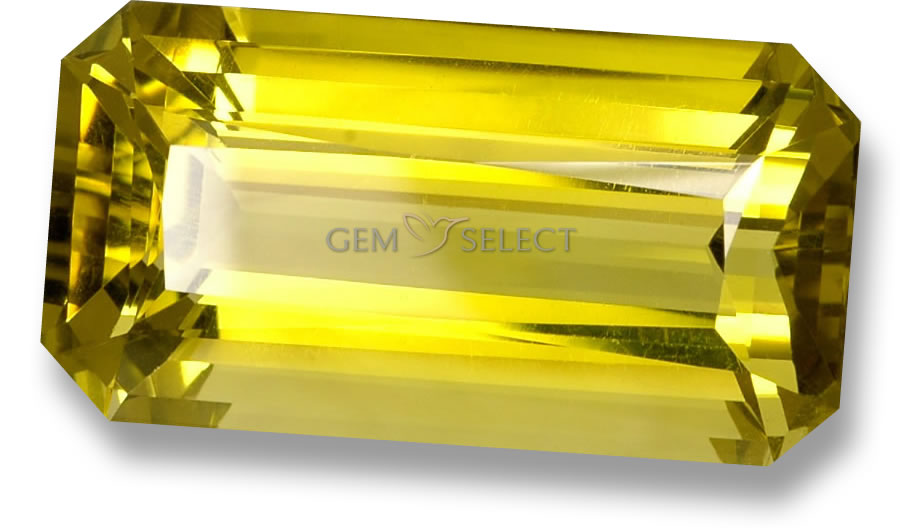
Buy Natural Quartz from GemSelect
About Quartz - History and Introduction
Quartz is one of the most important minerals on earth and makes up one of the most popular gemstone groups in the world of colored stones. It is the second most abundant mineral found in Earth's continental crust, second only to the feldspars. The name 'quartz' is thought to be derived from the German word 'quarz', which likely originated from the Slavic and Polish words meaning 'hard'. The name is descriptive in regard to quartz being the definitive mineral that measures 7 on the Mohs scale of hardness. Other gemstones are often compared to quartz when it comes to classifying them as being hard, soft or durable.
There are two main varieties of quartz, which can be further subdivided into other, more specific varietal names. All quartz gemstones share the same silicon dioxide (SiO2) chemical composition, but they have differing crystal classes and formations. The two main branches of quartz include macrocrystalline quartz and cryptocrystalline quartz. Macrocrystalline quartz includes amethyst, rock crystal, blue quartz, citrine, hawk's eye, prasiolite, quartz cat's eye, smoky quartz, rose quartz and tiger's eye. Macrocrystalline quartz is typically transparent to translucent and forms with larger crystals than cryptocrystalline quartz. Cryptocrystalline quartz forms with microscopically small crystals, which in most cases cannot be seen even under magnification. Cryptocrystalline quartz intergrown with moganite, a polymorph of quartz, is referred to as chalcedony. Chalcedony actually includes a wide variety of quartz gemstones, including agate, chrysoprase, bloodstone, jasper and carnelian. Chalcedony 'in the narrow sense' typically refers only to lighter and single-colored chalcedony, typically bluish in color. Cryptocrystalline quartz is usually opaque or translucent in clarity.
Quartz gemstones are very attractive, durable and hard. Also in most cases, quartz is fairly inexpensive and available in very large sizes. Some quartz varieties can be extremely rare, while others are very readily available. Quartz is an extremely versatile material that can be cut and carved into many shapes and sizes. It has been used for centuries in the creation of jewelry and ornamental objects. Today, quartz is not only one of the most important gemstones in the colored stone trade, but it also has many important industrial usages.
|
|
Natural Quartz
|
There is no single definitive test for identifying quartz. A number of tests are needed to reach conclusive identification. Most gem labs use a combination of traditional analysis and advanced instruments when testing quartz samples. Traditional analysis examines inclusions and color zoning usually found only in natural quartz. Infrared spectroscopy is used to graph wavelengths of infrared light that quartz stones absorb. Quartz crystals also exhibit piezoelectric properties; a trait shared with tourmaline and a few other gems. Synthetic quartz is often found in colors that do not occur naturally. In many cases, the color is simply too vivid and intense to be a natural occurrence.
Quartz gemstones are found in locations all around the world. Quartz is a major constituent of granite and other igneous rock. It is also commonly found in sedimentary rock and is a common component of metamorphic rock. Well-formed crystals can reach incredibly large sizes, often exceeding several meters in length and weighing over a hundred kilograms.
Macrocrystalline quartz deposits can be found in (but are not limited to) the following places:
- Amethyst: Brazil, Bolivia, Canada, India, Madagascar, Mexico, Myanmar (Burma), Namibia, Russia, Sri Lanka, United States (Arizona), Uruguay and Zambia
- Ametrine: Brazil and Bolivia
- Aventurine: Austria, Brazil, India, Russia and Tanzania
- Citrine: Argentina, Brazil, Madagascar, Namibia, Russia, Scotland, Spain and the USA
- Hawk's eye: Brazil, India and Sri Lanka
- Prase: Austria, Finland, Germany and Scotland
- Prasiolite: Brazil and the USA (Arizona)
- Quartz cat's eye: Brazil, India and Sri Lanka
- Rose quartz: Brazil, India, Madagascar, Mozambique, Namibia, Sri Lanka and the USA
- Rock crystal: The Alps, Brazil, Madagascar and the USA
- Smoky quartz: Brazil, Madagascar, Russia, Scotland, Switzerland and Ukraine
- Tiger's eye: Australia, India, Myanmar, Namibia, South Africa, Sri Lanka and the USA
Cryptocrystalline quartz deposits can be found in (but are not limited to) the following places:
- Australia: Agate, chrysoprase and bloodstone
- Brazil: Agate, chalcedony, carnelian, bloodstone and chrysoprase
- China: Agate and bloodstone
- India: Agate, chalcedony, bloodstone, carnelian and chrysoprase
- Kazakhstan: Chrysoprase
- Madagascar: Agate, chalcedony and chrysoprase
- Mexico: Agate
- Mongolia: Agate
- Namibia: Agate, blue chalcedony and chalcedony
- Russia: Chrysoprase
- Sri Lanka: Chalcedony
- Uruguay: Agate, chalcedony and carnelian
- South Africa: Chrysoprase
- Tanzania: Chrysoprase
- Zimbabwe: Chalcedony and chrysoprase
- USA: Agate (Montana and Wyoming), chalcedony (California), chrysocolla chalcedony (Arizona), bloodstone and blue chalcedony (California, Nevada, Oregon
Quartz Color
The color of macrocrystalline quartz is as variable as the spectrum, but clear quartz is by far the most common color followed by white or cloudy quartz. Purple (amethyst), pink (rose quartz), gray or brown to black (smoky quartz) are also common. Cryptocrystalline quartz varieties can be multicolored. In artificial light, quartz does not display a desirable quality. It looks best in daylight, particularly after sunrise and just before sunset. The deep colors are the most valuable.
Quartz Clarity and Luster
Fine quartz is transparent, which means that the light passes through the stone unhindered. In translucent quartz, the passage of light through the stone is slightly weakened. The best quality quartz is "clean", free from inclusions of any kind. Since quartz is plentiful, there is little reason to go for stones with visible inclusions, except those that define the character of the stone (e.g. cat's eye, hawk's eye or scenic stones). Luster is glassy to vitreous as crystals, while cryptocrystalline forms are usually waxy to dull, but can be vitreous. Crystals are transparent to translucent; cryptocrystalline forms are usually translucent or opaque.
Quartz Cut and Shape
Due to the roughness of the color distribution in the crystals, quartz is often cut as brilliant rounds to maximize their color. Other cuts can be used when the color is better distributed. Quartz is available in a wide range of calibrated sizes and shapes, including many fancy shapes.
Quartz Treatment
Colorless quartz is always untreated. Colored stones can occasionally be enhanced by dyes (as in the case of agate), irradiation (bombardment with low level radioactivity), or heating. Some stones may also be impregnated or coated with wax, clear resin and even foil for enhanced color, luster and stability. Synthetic quartz is also abundant. Naturally colored quartz typically exhibits color zoning.
| Chemical Formula: |
SiO2, Silicon dioxide |
| Crystal Structure: |
a-quartz: trigonal ß-quartz: hexagonal |
| Color: |
Colorless, various colors from clear to black |
| Hardness: |
7 on the Mohs scale |
| Refractive Index: |
1.544 - 1.553 |
| Density: |
2.65; 2.59 - 2.63 in impure forms |
| Cleavage: |
Indistinct |
| Transparency: |
Transparent to opaque |
| Double Refraction or Birefringence: |
0.009 |
| Luster: |
Vitreous, waxy to dull |
| Fluorescence: |
Usually none |
Please refer to our Gemstone Glossary for details of gemology-related terms.
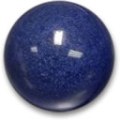 |
| Dumortierite Quartz |
Although many of the varietal names of quartz gemstones are based on the color of the mineral, scientific classification refers primarily to the microstructure of the mineral crystals. In most cases, color is a secondary identifier for cryptocrystalline quartz varieties, while macrocrystalline quartz varieties are primarily classified by color. Other quartz stones may also be classified based on locality, patterns or inclusions.
Some of the most well-known trade names for macrocrystalline quartz gemstones include the following:
Amethyst: Purple, violet or pale red-violet quartz. Amethyst is the most highly valued stone in the quartz group. The coloring agent is iron.
Amethyst quartz: Violet with whitish stripes. Amethyst quartz is a more compact formation of amethyst, layered and striped with milky quartz.
Amethyst Geode: Purple, violet or pale red-violet internal quartz crystals within rock cavities. Amethyst is the most highly valued stone in the quartz group. The coloring agent is iron.
Amethyst quartz: Violet with whitish stripes. Amethyst quartz is a more compact formation of amethyst, layered and striped with milky quartz.
Ametrine: Yellow and violet bicolored quartz. A color-zoned quartz variety that consists of violet purple amethyst and yellow-orange golden citrine.
Aventurine: Green, red-brown or gold-brown quartz. Mostly dark-green with a glittery metallic appearance caused by included fuschite (green mica), or red- to gold-brown caused by platy hematite inclusions.
Blue quartz: Mostly irradiated rock crystal.
Citrine: Light-yellow to dark-yellow, gold-brown quartz. The coloring agent is iron. Many commercial citrines are heat-treated amethyst. Natural citrines are mostly pale yellow. If heat-treated they acquire a reddish tint.
Citrine Geode: Light-yellow to dark-yellow, gold-brown internal quartz crystals within rock cavities. The coloring agent is iron. Many commercial citrines are heat-treated amethyst. Natural citrines are mostly pale yellow. If heat-treated they acquire a reddish tint.
Hawk's eye: A blue-gray to blue green quartz. Hawk's eye reflects small rays of chatoyant light which shimmer on the surface in a way that is reminiscent of a bird's eye.
Lemon quartz: A lemon-yellow variety of transparent quartz. It is closely related to citrine quartz, but is more lemon yellow in color, whereas citrine tends to have heavier orange tones. Most lemon quartz today has been irradiated to obtain its color. There are also rare specimens that may display cat's eye chatoyancy.
Mystic quartz: A very colorful product of a new high-tech enhancement process, consisting of a metallic coating applied to the pavilion of colorless quartz.
Pietersite: A rare, dark blue-gray or reddish aggregrate made up of mostly hawk's eye and tiger's eye.
Prasiolite: Leek-green quartz. Prasiolite is a very rare stone in nature. Most prasiolite is produced by heat treatment of amethyst or yellowish quartz.
Rock crystal: Colorless quartz. Material that can be cut is rare. Inclusions are comprised of goethite, gold, pyrite, rutile or tourmaline. The luster is vitreous.
Rose quartz: Strong pink to pale pink quartz colored by titanium, iron or manganese. Larger stones can be faceted. Rose quartz tends to be milky or cloudy, which deepens its color and provides the effect of adularescence. Transparent rose quartz crystals are extremely rare.
Rutile (or rutilated) quartz: Clear or smoky quartz with inclusions of rutile crystals. Rutile is the mineral name for natural crystals of titanium dioxide.
Smoky quartz: Brown to black, smoky gray quartz. The coloring is caused by natural and artificial gamma rays. Frequent inclusions are rutile needles.
Star Lemon quartz: A rare, lemon-yellow variety of transparent quartz which displays asterism. It is closely related to citrine quartz, but is more lemon yellow in color, whereas citrine tends to have heavier orange tones.
Star Rose quartz: Strong pink to pale pink quartz colored by titanium, iron or manganese in which traces of rutile needles cause six-rayed stars (asterism) when cut en cabochon.
Tiger's eye: Gold-yellow, gold-brown quartz. Similar to hawk's eye, shimmering chatoyant rays of light occur as a golden brownish color due to oxidized iron inclusions.
Tourmalinated quartz: Colorless quartz with needle-like, typically black tourmaline inclusions.
Some of the most well-known trade names for cryptocrystalline quartz gemstones include the following:
Agate: A popular variety of chalcedony quartz, usually multicolored and banded.
Agate geode: Agate geodes are rock cavities or vugs with internal agate crystal formations or concentric banding.
Agate jasper: Jasper which grows together with agate, and is yellow, brown or green blended.
Blue quartz: A turbid-blue quartz. Inclusions of crocidolite fibers cause the color.
Bloodstone: An opaque, dark-green chalcedony with red spots caused by traces of iron oxide. Is also sometimes referred to as heliotrope.
Carnelian: A solid and single-colored agate chalcedony. Carnelian ranges in color and can be yellow-orange, rich near reddish orange or orangey brown. It varies from semi-opaque to highly translucent. The coloring agent is iron. The color can be enhanced by heating.
Chalcedony: The name for all cryptocrystalline quartz varieties. Colors can range from single solid color to multiple colors and patterns. Colors are due to various metallic impurities such as iron, nickel and copper which are present during the crystallization process. Chalcedony - 'in the narrow sense' is a translucent and solid colored quartz, typically occurring in bluish-white or gray color. Blue chalcedony called "Mohave" and "Mt. Airy blue" is chalcedony from California and Nevada, USA. It is slightly to moderately grayish-blue with a light to medium color range. Blue chalcedony from Namibia, often called "African blue", varies from grayish to nearly pure blue and from light to medium dark. The most unusual and most valuable type is from Oregon. Its blues are modified by slight to moderate amounts of pink, making a noticeably lavender gem, which nonetheless is called "Holly blue."
Chrysocolla: An opaque to near transparent, blue to blue-green chalcedony colored by copper. It is the most expensive type of chalcedony quartz.
Chrysoprase: An apple green chalcedony that derives its color from nickel. It ranges from nearly opaque to nearly transparent. Its color includes olive to nearly pure greens of medium tone. Very fine and highly saturated pieces are often misrepresented as imperial jade.
Dendritic agate: Colorless or whitish quartz; a translucent chalcedony with tree- or fern-like markings called dendrites.
Dumortierite quartz: Blue quartz aggregate intergrown with dumortierite.
Fire agate: An iridescent agate with colors of red, gold, green and rarely, blue-violet, resulting from interference between light rays traveling through thin layers.
Fossil coral: A gemstone formed by ancient coral whereby the coral is gradually replaced by agate, preserving the coral skeletons and leaving flower-like patterns.
Gem silica: A trade name for a rare greenish-blue, transparent to translucent type of quartz.
Jasper: Jasper is usually considered a chalcedony, but because of its grainy structure, it is sometimes placed in a group by itself. It is usually multicolored, striped, spotted or flamed. Uniform jasper is extremely rare.
Onyx: A layered stone with a black base and a white upper layer usually with parallel banding and in some cases, it may also be unicolor.
Petrified wood: Fossilized wood that is composed mostly of jasper and chalcedony.
Prase: A leek-green quartz. Prase is a quartz aggregate, usually classified as a chalcedony. Its color agents are chlorite inclusions.
Quartz cat's eye: (Can also be transparent macrocrystalline) white, gray, green, yellow or brown quartz that exhibits cat's eye chatoyancy - a reflection of light caused by parallel fibers, needles or channels, which resemble the slit eye of a cat.
Sard: A solid-colored type of chalcedony quartz agate.
Sardonyx: A brownish to reddish type of banded agate.
Tiger's eye matrix: The name given to a mineral aggregate in which tiger's-eye-like structures alternate with layers of iron oxide, which is the host rock.
Moss agate: Colorless quartz with green, brown or red inclusions. Moss agate is a translucent chalcedony with moss-like inclusions of hornblende or chlorite.
Scenic agate: Agate chalcedony quartz where included dendrites resemble landscape-like pictures or images, usually in brown or reddish color tones.
Quartz Mythology, Metaphysical and Crystal Healing PropertiesBack to TopLeonardo da Vinci wrote that amethyst, one of the most valuable stones in the quartz family, was able to dissipate evil thoughts and quicken the intelligence.
Rock crystal and smoky quartz were once used for crystal balls that disclosed the future to fortune tellers, witches and gypsies.
Amethyst is the birthstone for those born in February, while citrine is a birthstone for November.
In Antiquity, as well as in the Middle Ages, people believed that the cosmos was represented by gemstones. Amethyst is assigned to the planet Neptune. Citrine and tiger's eye are linked to Mercury. Rose quartz is related to Venus. Chalcedony is assigned to Saturn, and smoky quartz is attributed to Pluto. The esoteric movement revived this ancient belief and the gem industry made it another marketing tool to promote certain gems.
The healing powers of gems remain a controversial issue, but have been respected for centuries by healers, shamans and medicine men. Whether these beliefs are based on fact or placebo has not been proven, but they seem to help those in need. The best approach is to wear the gemstone in contact with the skin of the troubled part of the body. Quartz is said to be of great potential benefit. The following lists ailments and the types of quartz that are attributed to them:
Headaches: Amethyst, rock crystal, tiger's eye
Eye inflammation: Rock crystal, chalcedony, hawk's eye, onyx
Sore throat: Rock crystal
Heart ailments: Rose chalcedony, rose quartz
Pancreas: Amethyst, citrine, yellow jasper
Sciatica: Amethyst, citrine, rose quartz, tiger's eye
Varicose veins: Rock crystal
Toenails: Rose quartz
| Disclaimer: Metaphysical and Alternative Crystal Healing Powers and Properties are not to be taken as confirmed advice. Traditional, Ceremonial and Mythological Gemstone Lore is collected from various resources and does not represent the sole opinion of SETT Co., Ltd. This information is not to replace the advice of your doctor. Should you have any medical conditions, please see a licensed medical practitioner. GemSelect does not guarantee any claims or statements of healing or astrological birthstone powers and cannot be held liable under any circumstances. |
Quartz is the ideal jewelry gemstone. It is readily available and fairly affordable. Even large stones can be bought at great prices. Quartz is also one of the few colored stones that you'll find in almost every jewelry retail store. Amethyst and citrine are official birthstones and are often used in birthstone jewelry. Since most quartz is untreated, there are many astrological uses for different types of quartz gemstones (carnelian for example), so you can find many planetary jewelry designs featuring quartz. Quartz is also often used for the making of fine timepieces, including bezels and moving components.
Quartz is durable enough for wearing in everyday quartz gemstone rings and it is also ideal for any other jewelry application available. Quartz gemstones can be worn by men or women as they can be found in just about any color imaginable. You can find quartz in any style of cut and shape, from cabochons to faceted stones, as well as tumbled and drilled beads. Quartz is also often carved into interesting ornamental designs, such as paperweights, animal carvings or as seals, intaglios and insignias.
Note: Buy colored gemstones by size and not by carat weight. Colored stones vary in size-to-weight ratio. Some stones are larger and others are smaller than diamonds by weight in comparison.
Chrysoprase, the bright apple-green translucent chalcedony, was a particular favorite of Frederick the Great of Prussia. It can be seen today decorating many buildings in Prague, including the Chapel of St Wenceslas.
Fine amethysts are featured in the British Crown Jewels and were also a favorite of Catherine the Great and Egyptian royalty. In former days, amethyst was a favorite stone in the high ranks of the Christian church, therefore it was called "the stone of bishops".
One of the finest known rock crystal pieces is the 12.75 inch diameter, 107 pound flawless "crystal ball" in the collection of the Smithsonian Institution in Washington D.C.
Quartz is one of the first gems to be synthetically grown on a large scale. Major development during World War II allowed for the commercial supply of crystals for radios. Today synthetic quartz is widely used in the electronics industry.
 Quartz has relatively good hardness and durability, although it does have a brittle tenacity and conchoidal fracture. It's harder than most other materials, but still softer than popular gemstones such as sapphire, ruby, emerald and diamond. Most quartz is easy to clean and to maintain. However, some forms of quartz such as agate and and chalcedony are extremely porous and so they can absorb unwanted colors quite easily. To clean your gemstones, simply use plain water and a mild soap or detergent if needed. Wipe your stones using a soft cloth and be sure to rinse well to remove any soapy residue. Avoid prolonged exposure to direct light or heat and avoid extreme temperature fluctuations. As with most gems, avoid the use of heat steamers and ultrasonic cleaners. Quartz has relatively good hardness and durability, although it does have a brittle tenacity and conchoidal fracture. It's harder than most other materials, but still softer than popular gemstones such as sapphire, ruby, emerald and diamond. Most quartz is easy to clean and to maintain. However, some forms of quartz such as agate and and chalcedony are extremely porous and so they can absorb unwanted colors quite easily. To clean your gemstones, simply use plain water and a mild soap or detergent if needed. Wipe your stones using a soft cloth and be sure to rinse well to remove any soapy residue. Avoid prolonged exposure to direct light or heat and avoid extreme temperature fluctuations. As with most gems, avoid the use of heat steamers and ultrasonic cleaners.
Always remove your quartz gems and jewelry before exercising, playing sports or engaging in harsh household chores such as dishwashing. When storing your quartz gemstones, store them separately and away from other gems to avoid scratches. If possible, wrap your gems individually using a soft cloth or place them inside a fabric-lined jewelry box for extra protection. |





