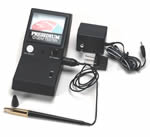


 Free Report
Included
Free Report
Included
 Worldwide
Shipping
Worldwide
Shipping
 30 Day
Returns
Free Report
Included
Worldwide
Shipping
30 Day
Returns
30 Day
Returns
Free Report
Included
Worldwide
Shipping
30 Day
Returns
|
Reviewed By Andreas Zabczyk
About Us
Overall Rating -> 9 It was fine . Wish there had been more round stones to select from Posted By Emm in January, 2026 Source: Bizrate Overall Rating -> 10 The citrine gems are beautiful. I appreciated that each stone was individually shown on the website so I could see exactly what I was getting. No mystery person selecting random stones for me. The documentation included with each gem was high quality as well. Great price and arrived as expected. Posted By Jen in December, 2025 Source: Bizrate Overall Rating -> 10 Over pretty well experience the your website no complaints about it very easy reliable service provided Posted By Blas in January, 2026 Source: Bizrate Overall Rating -> 10 good navigation and simple interface. Posted By Dave in April, 2026 Source: Bizrate Related Articles Zircon and Zirconology Zircon and Zirconology: Unveiling Earth's Oldest Mineral Synthetic Ruby and Sapphire Synthetic Ruby and Sapphire - Flame Fusion Method Shipley and the GIA Shipley and the GIA Gemstone Testers Gemstone Testers Raman Spectroscopy Raman Spectroscopy Gemstone Labs Gemstone Laboratories Thai Beryllium Scandal Thai Beryllium Scandal Gem Silica Gemstone Silica Danburite Gemstones Danburite Gemstones: Clarity & Brilliance Unveiled Certified Gemstones Certified Gemstones Jacinth Gemstones Jacinth Gemstones Singly Refractive Gems Singly Refractive Gems |

 The systematic study of gemstones has come a long way since the days when any attractive red stone was called a
  Every type of gemstone has a unique set of physical and optical properties. These include not only color and luster, but also
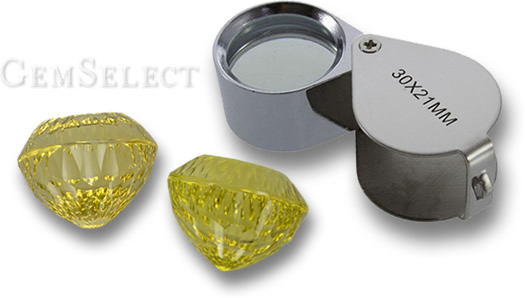
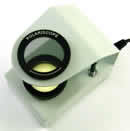
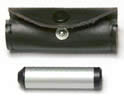
 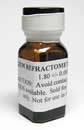 The basic gemological tools are not difficult to learn to use. They include the simple 10x loupe (a powerful tool in the hands of an expert), the refractometer (for measuring refractive index), the polariscope (for identifying singly and doubly refractive gems), and a scale accurate to the 1/100th of a carat (for measuring specific gravity).
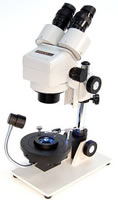
 The binocular microscope is an extremely important tool. It can be used to reliably detect signs of