

 Free Report
Included
Free Report
Included
 Worldwide
Shipping
Worldwide
Shipping
 30 Day
Returns
Free Report
Included
Worldwide
Shipping
30 Day
Returns
30 Day
Returns
Free Report
Included
Worldwide
Shipping
30 Day
Returns
GemSelect Newsletter - December 2007In our newsletter this month:
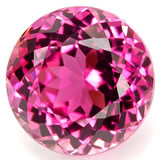
Top Grade Pink Gemstone
Gift Ideas for the Holiday Season Back to Top
We receive a lot of email at this time of year asking us for gift suggestions. So we've collected some of our best ideas for this month's newsletter. We hope this makes your holiday shopping just a little easier. If you're looking for a very special gift, a good place to start is with our top grade gems. Our staff select the finest pieces from our inventory for this group, so if you want our personal recommendations, you'll find them here. Not everything in this group is expensive, by the way; we include particularly fine examples of many inexpensive gems as well as our finest sapphire, tourmaline and spinel. A personalized gift is always appreciated, so you may wish to consider a birthstone or anniversary stone. You can make your choice by month or by signs of the zodiac. There are recognized alternative choices for many months as well. Another nice gift idea is a matched pair of gems. Well-matched pairs are actually quite difficult to find, but we buy our gems in volume and our staff spend a lot of time going through parcels of gems to put together matched pairs. We've made it a bit of a speciality and we typically have as many as 500 matched pairs in our inventory, with around 30 gem types represented. Click here to see all our matched pairs. 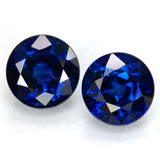
Matched Sapphire Pair
If you're looking for an inexpensive but unique gift, consider a gemstone carving. We have interesting figurines in a dozen different gem types, even some in sapphire and ruby. The carved turtles are a particular favorite and they are a traditional symbol of longevity here in Asia. If you'd like to purchase a large gemstone but are looking for something fairly inexpensive, have a look at our huge selection of cabochons. These are popular with collectors and make nice mementoes as well as stunning jewelry. We currently have over 25 types of cabochons in our stock. Finally, we are often asked what are the best value fine gemstones today. Everything seems to get more expensive every year, but in our opinion the finest value gems are tourmaline, spinel, spessartite garnet and zircon. This year we're recommending tanzanite as well, since we were recently lucky to buy some very fine pieces at an excellent price. At this time of year we take special care to make sure our customers receive their orders promptly and reliably. We've shipped gemstones to more than 70 countries and we've become experts at international shipping. So here's some advice to take the worry out of ordering an important gift online. We strongly recommend FedEx for all holiday gifts. It's fast (3 to 4 days to nearly anywhere in the world) and you can track your shipment online so you'll know exactly when it will be delivered. It is remarkably reliable as well. Just make sure your give us your correct address and provide a telephone number in case of any problems with delivery. Please note that loose gemstones may be imported duty-free to the USA, but FedEx shipments to other countries may be subject to tax and duty. If you're unsure about the situation in your country, please email us and we'll advise you about the quickest and cheapest shipment method. A final note: We cannot ship gemstones to France by FedEx due to customs clearance issues. Registered mail is the best shipping method to France, so please be sure to order early! Each month we focus on one of the lesser known gemstones. This month's featured stone is apatite. 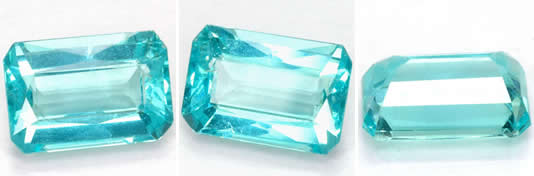
Apatite from Madagascar
Apatite, a stone seldom found in jewelry stores and virtually unknown to the general public, is beloved by collectors for its many different colors and forms. Only with the recent availability of the neon blue-green variety from Madagascar, has its jewelry use increased. The color of the best specimens of this type rivals the famed Paraiba tourmalines, but apatite is not quite as hard, so it is not recommended for rings that are worn daily. We have apatite from Madagascar in a range of greens and blues, including a number of pieces in the popular neon blue-green. To see all of our apatite gems, click here. Customer Questions Back to Top
Every month we answer questions of general interest from our customers. Please feel free to send your questions or suggestions to our support team at help@gemselect.com! Question
What is the most durable gemstone? SK, USA.
Answer
Many people would answer "diamond", since it is the hardest of all the gemstone materials. But there is more to durability than just hardness. For example, diamond has perfect cleavage, meaning it can be split with a single blow. Corundum (ruby and sapphire), while not quite as hard as diamond, has no cleavage, a property it shares with spinel. Some other gems that are quite hard, such as emerald, typically have internal fractures which are filled by oiling, and thus these gems require special care. For more information on caring for your fine gems, please see our information pages on caring for gemstones and cleaning gemstones.
Question
When you give gemological information for each gem, you include something called "color of streak". What does that mean? Why is it important? Thanks, for your answer, DN, New Zealand.
Answer
The streak test is one of the many methods used to identify gemstones. Each gemstone has an inherent color, that is, it's true color unaffected by any impurities. The color of a mineral when powdered is called the streak of the mineral. Crushing and powdering a mineral eliminates some of the effects of impurities and structural flaws, and is therefore a diagnostic test for some minerals. Streak can be determined for any mineral by crushing it with a hammer, but it is more commonly obtained by rubbing the mineral across the surface of a hard, unglazed porcelain material called a 'streak plate'. The color of the powder left behind on the streak plate is the mineral's streak.
Keep up with our new arrivals before they hit the newsletter by joining our thousands of fans and followers on our social networking pages. We love interacting with our customers - you can visit us on Tumblr, LinkedIn, Twitter, Facebook or Pinterest! To ensure you can receive our emails, please be sure to add help@gemselect.com to your list of safe contacts, or you add us into your email address book! Please feel free to contact us with any questions, comments and queries! We respond to each and every email we receive. Happy Gem Hunting!
About Us
Overall Rating -> 10 They have a wonderful selection of gems of all sorts, shapes, cuts, and quality. I am very particular about the quality of stones I buy, and found many with VVS clarity and excellent cut and polish. I am thrilled with each of the stones I purchased, and would definitely recommend GemSelect to everyone. Posted By Debsarabs in February, 2026 Source: Bizrate Overall Rating -> 10 Always get a nice gemstone. Just like the picture. Never disappointed Posted By Ron T in June, 2026 Source: Bizrate Overall Rating -> 10 IT WAS GREAT SIMPLE I WAS ABLE TO MAKE AN ACCOUNT EASY AND WAS ABLE TO FAVORITE ALL OF MY FINAL SELECTED GEMS, I JUST LOVE IT. Posted By YE in October, 2025 Source: Bizrate Overall Rating -> 10 Great site for finding specific stones and sizes for individual pieces of jewelry Posted By Designer in December, 2025 Source: Bizrate Related Articles Sapphire Gemstone Information Sapphire Gemstone Guide: Colors, Meanings, Prices in 2026 Tourmaline Gemstone Information Tourmaline Information - The most colorful gem on Earth Aquamarine Gemstone Information Aquamarine Gemstone Information: Colors, Meaning & More Emerald Gemstone Information Emerald Gemstone Information: Colors, Meaning, Prices Fire Opal Gemstone Information Fire Opal Gemstone Information: History, Properties and More Iolite Gemstone Information Iolite Gemstone: Facts, Benefits, Properties and More Jade Gemstone Information Jade Gemstone Information - GemSelect Kunzite Gemstone Information Kunzite Gemstones - The must-have pink gem for evenings Orthoclase Gemstone Information Orthoclase Gemstone Information: Unveil Its Natural Beauty Peridot Gemstone Information Peridot Gemstone: Value, Meaning, and Healing Benefits Rhodolite Garnet Gemstone Information Rhodolite Garnet: Rose-Red Gemstone Guide | GemSelect Ruby Gemstone Information Ruby Gemstone Information: Colors, Sources, Meaning and More Ruby-Zoisite Gemstone Information Ruby-Zoisite Information - A unique gemstone mixture Spessartite Garnet Gemstone Information Spessartite Garnet: Guide to the Fiery Orange Gemstone Sphene Gemstone Information Sphene Gemstone Information - GemSelect Spinel Gemstone Information Spinel Gemstone Information: Colors, History, Value & More Tanzanite Gemstone Information Tanzanite Gemstone Information: Discovery, Value & More Topaz Gemstone Information Topaz Gemstone Information: Colors, History, Value and Guide Zircon Gemstone Information Zircon Gemstone Guide: Colors, Properties, and Buying Tips Lapis Lazuli Gemstone Information Lapis Lazuli Information: Meaning, Properties, Value & Price Moss Opal Gemstone Information Moss Opal Gemstone Information: The Complete Guide Mystic Topaz Gemstone Information Mystic Topaz Information - A kaleidoscope of colors Star Ruby Gemstone Information Star Ruby Gemstone Information - GemSelect Birthstones by Month Birthstones by Month, Every Birthstone, Zodiac & Anniversary Caring for Gemstones Gemstone Care - Gemstone Information - GemSelect Color Basics Gemstone Color - A Quick Guide to Colors Diffusion Treatment Diffusion Treatment for Gemstones - GemSelect Irradiation Treatment Irradiation Treatment - Gemstone Information - GemSelect Gemstone Hardness Explained Gemstone Hardness | Mohs Scale with Images and Charts Gemstone Clarity and Cut Clarity and Cut - Gemstone Information - GemSelect Precious and Semi-Precious Gemstone Glossary Gemstone & Mineral Glossary - Gem Information | GemSelect Medicinal Gemstones Medicinal Gemstone Information - GemSelect Gemstone Treatments All About Gemstone Treatments - Information - GemSelect Fracture Filled Fracture Filled Treatment - Gemstone Information - GemSelect Gem Market Chanthaburi International Gemstone Market in Chanthaburi, Thailand Gemstone Prices Gemstone Prices: A review of what decides the amount you pay Loose Gemstones from Mine to Market Loose Gemstones From Mine to Market - Gems and Jewelry Info Precious Stones Precious & Semi-Precious Gemstone History, Legends & Myths Rare Tourmaline Rare Tourmaline Gemstones - Unique and distinctive varieties The Secret of Spinel The Secret of Spinel: Discover the Hidden Gemstone Allure of Yellow Sapphire Yellow Sapphire: Meaning, Properties & Benefits | GemSelect Kunz and Tourmaline Kunz and Tourmaline - Creating the colored gemstone market Sources for Fine Ruby Gems Sources for Fine Rubies: Origins, Characteristics and More Gem Mining in Madagascar Sapphire and Ruby Gemstone Mining in Madagascar Healing Gemstones Healing Gemstones: Could Gems Have Special Powers? Rare Garnets Rare Garnets: Tsavorite, Demantoid, Uvarovite & More Colored Gemstone Business Understanding the Colored Gemstone Business Tanzanite Prices The Story of Tanzanite: Discovery, Properties, Market & More Star Gemstones Star Gemstones Discover the Beauty of Aventurine Gemstones Aventurine Gems |