


The Story of Tanzanite
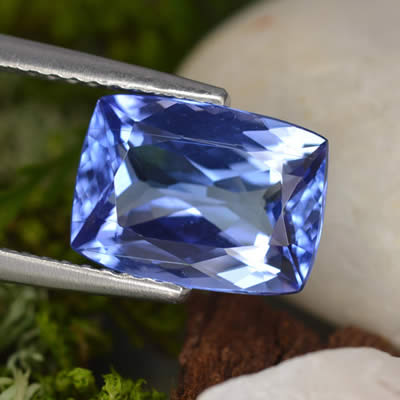
Discovery of Tanzanite
It is very unusual when a recently discovered gemstone has a huge impact on the world gemstone market. It happened with Paraiba tourmaline in the 1990s. But the case of tanzanite in the 1960s is even more intriguing.
Tanzanite, a rare violet-blue form of the mineral zoisite, was first discovered in 1967 in Tanzania. East Africa remains the only source for tanzanite and the supply is extremely limited. The limited supply, combined with a soaring demand has resulted in constantly high prices.
Physical Properties of Tanzanite
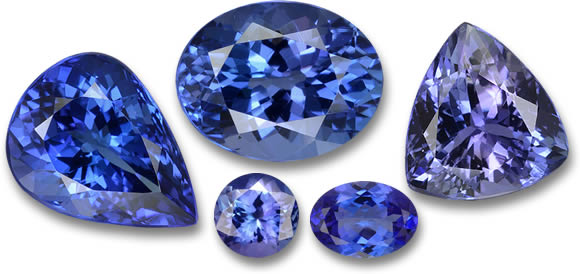
The immense popularity of tanzanite is not surprising at all. Originally the gem was known by the more pedestrian name, "blue zoisite". Though tanzanite is blue, it is routinely heated to enhance the blue and eliminate natural yellow and brown tints. Tanzanite's hardness level is similar to that of emerald; it is rated 6.5 to 7 on the Mohs hardness scale and like diamond, it has perfect cleavage. Tanzanite is more delicate than quartz, but it is still more durable than steel.
Entry into the Gemstone Market
Tanzanite got its first big push into the market with the help of Tiffany & Co., who gave it the name "tanzanite" and mounted a major advertising campaign in 1969.
Tiffany showed great enthusiasm and hype for tanzanite as Henry Platt, the grandson of Louis Comfort Tiffany, described tanzanite as being "the most beautiful blue stone to be discovered in over 2000 years".
Pricing and Rarity
Top grade, certified faceted tanzanite gems can sell for prices up to $1200 per carat, especially large tanzanite gems. Tanzanite is very rare and the demand for it has really pushed its price up.
The increasing demand for tanzanite can be attributed to both effective marketing strategies and the gem's inherent rarity. In fact, tanzanite is even scarcer than diamonds, with the supply of large, top-quality specimens dwindling as its availability diminishes.
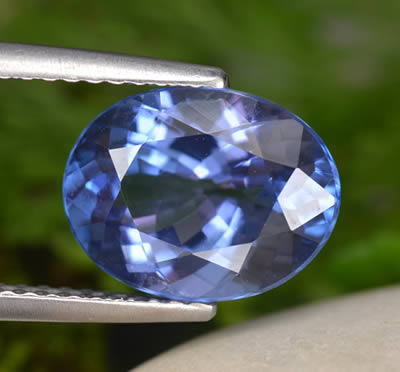
The successful marketing of tanzanite combined with limited supply causes tanzanite to fetch astonishing prices in the market.
Marketing Strategies
Prices reached new highs around 1997 when a South African group of investors bought into tanzanite mining by purchasing a mining section called Block C. They named their company TanzaniteOne and attempted to apply lessons they had learned and researched from De Beers; to control and influence as much of the supply market as possible. However, in 2024, the Tanzanian Ministry of Minerals shut down TanzaniteOne operations due to allegations of environmental damage and worker exploitation.
TanzaniteOne once had the idea to market tanzanite as 'the' birthstone. Tanzanite had already been added as an alternative birthstone for December by the American Gem Trade Association in 2002. But TanzaniteOne wanted to achieve greater recognition - they wanted tanzanite to be given on the birth of every child, regardless of the month. So they used the slogan "Be Born to Tanzanite", and made connections to Masai tribal birth practices.
Future Outlook
However, we believe that tanzanite should be cherished for its own natural beauty, rather than heavily marketed. For those who love colored gemstones, tanzanite certainly has its place.
As of 2025, China's continued and increasing interest in tanzanite is evident, with expanding markets across Asia, including Japan and India, potentially leading to significant impacts on the price and availability of tanzanite.
Experts predict that the mines in Northern Tanzania could be depleted within the next 10 to 20 years, so it is certainly worth considering tanzanite as an investment now; especially large and "intense" top grade tanzanite gems. Isn't it fascinating how such a limited resource can drive so much interest?
Frequently Asked Questions
What is tanzanite?
Tanzanite is a rare violet-blue form of the mineral zoisite, known for its striking color and limited availability.
When was tanzanite discovered?
Tanzanite was first discovered in 1967 in Tanzania, East Africa.
Where is tanzanite mined?
Tanzanite is exclusively mined in a small area in Northern Tanzania, making it one of the rarest gemstones.
Why is tanzanite so expensive?
The high prices of tanzanite stem from its extreme rarity, limited supply, and growing global demand, with top-grade stones reaching up to $1200 per carat.
Is tanzanite rarer than diamonds?
Yes, tanzanite is considered scarcer than diamonds due to its single-source origin and finite deposits.
What treatments does tanzanite undergo?
Tanzanite is routinely heated to enhance its blue color and remove yellow or brown tints, a common practice in the industry.
What is the future supply of tanzanite?
Predictions indicate that tanzanite mines may deplete within 10 to 20 years, potentially increasing its value further.


