


What can I find in this article?
- Chalcedony Colors
- Chalcedony Species
- Chalcedony Clarity and Cut
- Spiritual Meaning of Chalcedony
- Chalcedony and the Chakras
- Health Benefits of Chalcedony
- Chalcedony Price
- Chalcedony Discovery
- Where is Chalcedony found?
- How is Chalcedony formed?
- Can Chalcedony be treated?
- What jewelry is Chalcedony suitable for?
- How to care for Chalcedony
- How to tell a real Chalcedony
- What is so special about Chalcedony?
- Chalcedony - Gemological Properties
Chalcedony Gemstone Information

Chalcedony Introduction
Chalcedony exhibits a wide range of colors, from black and blue to brown, green, grey, orange, pink, red, white, yellow, and various combinations. The stone is usually translucent to opaque, with color being a key distinguishing factor. Additionally, the presence of banding, mottling, and spots in certain varieties also plays a significant role in its characteristics
Chalcedony belongs to the quartz group of minerals. Quartz is made of a mixture of silicon and oxygen and comes in two types, one with large crystals such as amethyst, citrine, rose quartz and so on and one with tiny crystals such as Chalcedony.
These quartz gemstones with tiny crystals include Jasper, Agate, Carnelian and Onyx amongst many others. They are all chemically very similar but to avoid confusion, rather than label them all chalcedony, they are given different names to identify them by color, pattern or stripes.
In the world of gemstones 'chalcedony' refers to a translucent stone with solid pale colors such as blue, violet and white.
The name chalcedony comes from the ancient Greek town of Chalcedon in modern day Turkey. We do not why this gemstone was named after this town as it was never mined locally or specifically traded there. It is possible that the blue seas of nearby Sea of Marmara reminded people of the gemstone's color.

Chalcedony is a pale colored gemstone with blue, gray, lavender, violet or white being the most common.
The color is even across the surface with no markings or color zoning. A pure deep blue is the most valuable color for chalcedony but, since this gemstone can be dyed, look out for any that are too strongly or brightly colored.
The colors are created during formation by the presence of such minerals as iron, nickel or copper within the crystal structure.
As we mentioned in the introduction Chalcedony, according to scientists, is a form of quartz made up of tiny crystals. These are called cryptocrystalline quartzes. There are many variations of these quartz gemstones and they are all structurally the same but can be differentiated by distinct patterns or colors.
So within the chalcedony family there are dozens of varieties
- Agate
- Bloodstone
- Carnelian
- Chrysoprase
- Many, many more
For simplicity, and probably marketing purposes, in the gems trade, chalcedony only includes the evenly colored translucent light blue, lilac, white gemstones. Chrysoprase, for example, is an identical stone but comes in an apple green color instead.

Gemstones usually fall into one of three categories of clarity with variations within that category.
- Opaque gemstones do not allow any light to pass through even if you hold it up to a light source.
- Translucent gemstones allow some light to shine through but you cannot clearly see through the gemstone.
- Transparent Gemstones allow light to pass through uninhibited so you can look through them and see objects or read words on the other side.
Chalcedony is generally a translucent gemstone. It sometimes has a milky interior but this is often taken as a sign of authenticity and does not detract from its value.
As a translucent gemstone lying between the transparent and opaque look, Chalcedony can be cut either as a faceted stone or as a cabochon with a flat bottom and smooth domed top. Both styles can look great and it is just a matter of preference which one to choose.
Chalcedony is a tough material which does not crack or break easily so can be carved into shapes such as flowers and animals as well as many fancy cuts quite easily.
Chalcedony has been one of the most treasured gemstones in many ancient civilizations. It is believed that as early as the Bronze Age, chalcedony was prized as a gem throughout areas surrounding the Mediterranean, owing to the discoveries of archaeologists.
Many chalcedony seals and other forms of jewelry and fabricated tools have been discovered dating back to as early as 1800 BC. Chalcedony has been used by ancient Romans, Greeks, Babylonians and Assyrians alike.
Many Native American tribes consider chalcedony to be sacred and most often use it in traditional ceremonial gatherings, particularly in efforts to stabilize and strengthen the bonds between tribes.
Chalcedony is believed to help emotional balance and it is thought to be able to strengthen stamina and endurance. It encourages kindness, responsiveness, receptivity, generosity, charity and friendliness in those who wear it. It is also thought to possess the unique ability to balance all of the energies of the body, mind and spirit.
Chakras are the energy centers within the body also known as Qi or Prana. There are seven Chakras located throughout the body influencing a physical, emotional or mental state and each has an associated color.

The seven chakras are as follows, Crown linked with the color purple, Third Eye (indigo), Throat (blue), Heart (green), Solar Plexus (yellow), Sacral (orange) and Root (red).
The color of the chalcedony will determine which Chakra it will affect. Blue Chalcedony will help unblock the Throat Chakra which emotionally concerns communication and the ability to continue or forge new relationships.
Physically, blue chalcedony can improve any issues concerning the throat and neck including tonsillitis, laryngitis, stiff necks and even sleep apnea.
See our detailed article on Chakra Gemstones here
Chalcedony is believed to have various health benefits, including promoting emotional balance, enhancing mental clarity, and fostering feelings of generosity and goodwill.
The health benefits of chalcedony quartz include healing and alleviating symptoms of fever, leukemia and various eye illnesses. Chalcedony improves mineral assimilation and combats mineral buildup in veins. It diminishes the effects of dementia and senility and increases physical energy. The eyes, gallbladder, spleen, bones and blood circulation can also be improved by the presence of chalcedony.
However, it is important to note that these claims are based on traditional beliefs and should not be considered as medical advice.

Chalcedony Price List |
||
| Color | Weight range | Price range / USD |
|---|---|---|
Lavender |
1ct + |
$1 - 15/ct |
Chalcedony is not a very expensive gemstone with most pieces being just a few dollars per carat at wholesale prices. Classic blue colors are preferred and the more translucent examples are also more liked.
Chalcedony gemstones that have been intricately carved can reach a reasonable price due to the skilled work involved in creating them as much as the material itself.

The mineral, Chalcedony includes many gemstones amongst its vartiations including the well known agates and carnelians which have a very long and illustrious history.
The name Chalcedony or at least the similar word 'Chalkedon' appears in the Book of Revelation in the bible and refers to a misty gray precious stone which fits modern descriptions of chalcedony gemstones.
In the 1st century AD, Pliny the Elder included Chalcedony as a translucent form of Jasper in his famous work, Naturalis Historia.
The earliest archaeological evidence (so far) of its use as a gemstone is found in the Mediterranean island of Crete dating back to 1800 BC where chalcedony seals have been uncovered.

Chalcedony can be found in various locations around the world, including Brazil, India, Madagascar, Mexico, Namibia, Turkey, and the United States. Chalcedony can also be found in association with other minerals such as quartz, agate, and jasper.
A source of some of the finest blue chalcedony is the California and Arizona in the USA, in fact the state stone of Nebraska is Blue Chalcedony (sometimes called Blue Agate).
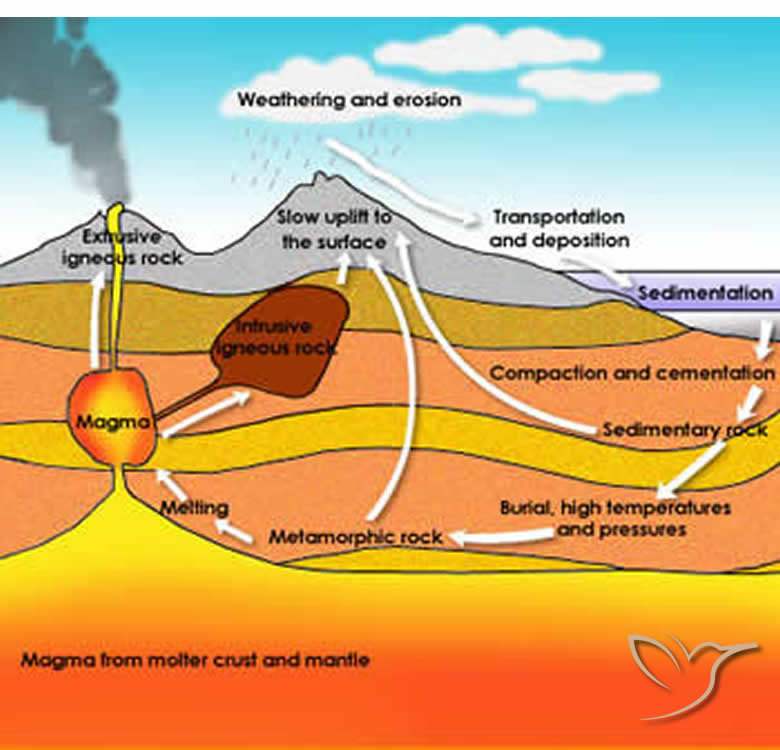
Like many other gemstones, Chalcedony was formed when hot magma or molten rock, rose to the surface crust of the earth during volcanic activity and then began to cool.
As the soft, warm molten rock cooled and hardened, gas bubbles formed creating cracks and cavities where the flows overlapped or cooled at different rates. The magma hardened into rock and the gasses escape leaving little pockets of space.
Into these pockets water, rich in silica and other minerals, flowed and settled. The water evaporated leaving just the minerals behind in the form of minute crystals - impossible to see with the naked eye. The oxygen and silica created the chalcedony and the extra minerals such as iron or copper created the colors.
Although it is not generally treated, Chalcedony can be enhanced by most of the more common treatments.
They can be bleached and then dyed - look out for extravagant colors that look a little unnatural as a sure sign. We recently heard a story from one of our customers who bought some fuschia pink chalcedony (NOT from us) which faded dramatically after a day in the sun!
Heat treatments can even out color and melt away inclusions.
Some chalcedony can be coated either all over the surface of the stone or just on the bottom of a cabochon - a simple scratch test will expose this trick.
If any gemstones sold by GemSelect receive any such treatment we will always disclose this information.
Chalcedony gemstones are rated about 7 on the Mohs hardness scale meaning they are durable enough to be used in almost any type of jewelry you choose.
See our detailed article on the Mohs hardness scale here
They are usually shaped into dome shaped cabochons or low facets (buff-tops) but can also be carved into fancy or flower shapes. These shapes are usually free of any sharp corners or edges so will not chip easily.
They are relatively inexpensive so you can let your imagination run wild with any style of jewelry open to option but a vintage look is probably the most common.
They can be found in quite large carat sizes so big chunky rings or eye-catching pendants are always a good choice.
Chalcedony is a type of quartz and is considered a hard and durable gemstone - rated at around 6.5 to 7 on Mohs Hardness Scale. Chalcedony can be cleaned easily using warm soapy water and a soft brush. Be sure to not use any objects that are harder than Chalcedony for scrubbing or cleaning - fairly unlikely as even steel is slightly less hard.
Try to not use any household chemicals when caring for or cleaning your Chalcedony gemstone or any other gemstone jewelry pieces. Chalcedony should not be exposed to prolonged periods of heat as it may cause permanent damage to the gemstone so no steam cleaners.
Chalcedony should be stored inside a fabric-lined box or wrapped in a soft cloth and it should be kept away from other gemstones and jewelry to ensure it does not scratch any softer gemstones or be scratched by other harder gemstones.

Obviously buying your gemstones from a reputable dealer is the best approach but this is not always easy when you are searching the net or scouring the shops for a great gemstone or a real bargain!
Chalcedony is not an expensive gemstone so it is barely worth the expense of an appraisal or certification so a few handy tips in identifying one would be useful.
Chalcedony is a durable gemstone rated about 6.5 to 7 on the Mohs hardness scale so it will not be scratched easily with a knife or a nail. It will also scratch a piece of glass so that could be a quick test. (Check with the owner of the gemstone or the glass before you start scratching away as it may upset them - or do it secretly!).
Chalcedony is a quartz and quite solid so if you are able to hold it, it should feel heavy. It is also conducts heat very slowly so will remain fairly cool in your hand.
As we have mentioned above, Chalcedony is technically very similar if not identical to a variety of other well known gemstones such as Agate, Onyx, Sard, Carnelian and others. Since they are so similar they can be misidentified or misnamed. This is not too much of an issue as far as money goes as they are all similarly priced but you might want a definite Chalcedony gemstone and not an Agate.
The only way to do this is to familiarize yourself with the common colors of Chalcedony - no bright colors, no stripes, no patterns and, as it is translucent, some light will come through the body of the stone.
It may sound a bit pedantic, but, for example, green chalcedony is called chrysoprase in the gem industry and orange chalcedony is carnelian - you want the light blue, lavender, white or gray version.
This is not a complete guide on how to spot a real Chalcedony but I hope it helps.
At GemSelect, we stand by our gemstones as being as we describe them and our return policy means you can feel completely assured when ordering from us.
Chalcedony is a lovely gemstone with cool lilac to blue colors with an ethereal feel about them due to their almost luminous translucence.
By the way, Chalcedony is pronounced with a k sound at the beginning and a soft c in the middle - kal- se-doh-nee, although no-one is going to object if you say Chal-se-doh-nee!
Jewelers like to work with them because of their toughness and can be worked on from any angle as there are no orientation or cleavage issues to worry about - just cut and polish the design you desire.
And the options for jewelry and ornaments for this gemstone are endless. Not just cool vintage style jewelry items such as rings and pendants but carved seals and amulets, cameos, small figurines, even bowls and bookends can be created from this versatile gemstone.
Chemical Formula: |
SiO2 - Silicon dioxide |
Crystal Structure: |
Hexagonal |
Color: |
Bluish, white, gray, purple, lavender, light-tan, yellow and brown |
Hardness: |
6.5 to 7 on the Mohs scale |
Refractive Index: |
1.530 to 1.540 |
Density: |
2.58 to 2.64 |
Cleavage: |
None |
Transparency: |
Translucent, opaque |
Double Refraction or Birefringence: |
Up to 0.004 |
Luster: |
Waxy, dull or vitreous |
Fluorescence: |
Blue-white |
Overall Rating -> 10 
IT WAS GREAT SIMPLE I WAS ABLE TO MAKE AN ACCOUNT EASY AND WAS ABLE TO FAVORITE ALL OF MY FINAL SELECTED GEMS, I JUST LOVE IT.
Posted By YE in October, 2025
Source: Bizrate

Overall Rating -> 8 
The website was easy to use and there were a lot of good options, I was satisfied.
Posted By Brielly in January, 2026
Source: Bizrate
Overall Rating -> 10
Great website, easy to navigate, and loads quickly. Have bought here before, very pleased!
Posted By SallyO in February, 2026
Source: Bizrate
Overall Rating -> 10
Recomendado Totalmente Los Productos Se Entregaron A Tiempo
Posted By Alexis in May, 2026
Source: Bizrate
Related Articles
Amethyst Gemstone Information
Amethyst Information - The finest purple colors in Gemstones
Birthstones by Month
Birthstones by Month, Every Birthstone, Zodiac & Anniversary
History of Birthstones
The History of Birthstones
World of Quartz
The World of Quartz Gemstones: Varieties, History & More
Bloodstone Gems
Bloodstone Gemstones: Properties, Origins, and Significance
Dendritic Agate
Dendritic Agate - Trees and branches trapped in a gemstone
Natural Carnelian
Natural Carnelian
Smoky Quartz and Topaz
Smoky Topaz and Quartz: Understanding Smoky Quartz
Rose Quartz Gemstones
The Charm of Pink Rose Quartz: Properties, History, and Uses
Green Amethyst
Green Amethyst
Agate Stone
All About Agate - Your Gemstone Guide
Agatized Fossil Coral
Agatized Fossil Coral - A captivating gemstone in many ways
Chalcedony Quartz
Chalcedony Quartz Guide: Colors, Value, Care Tips & More
Carnelian Gemstone Information
Carnelian Information - An orange gem with luck on its side
Fire Agate Gemstone Information
Fire Agate Gemstone Information: A Vibrant Natural Beauty
Onyx Gemstone Information
Onyx Gemstone Information - Facts, History and More
Pietersite Gemstone Information
Pietersite Information - Deep dark colored tiger's eye gem
Tiger's Eye Gemstone Information
Tiger's Eye Gemstone: Guide to Facts, Origins & Jewelry Care
