


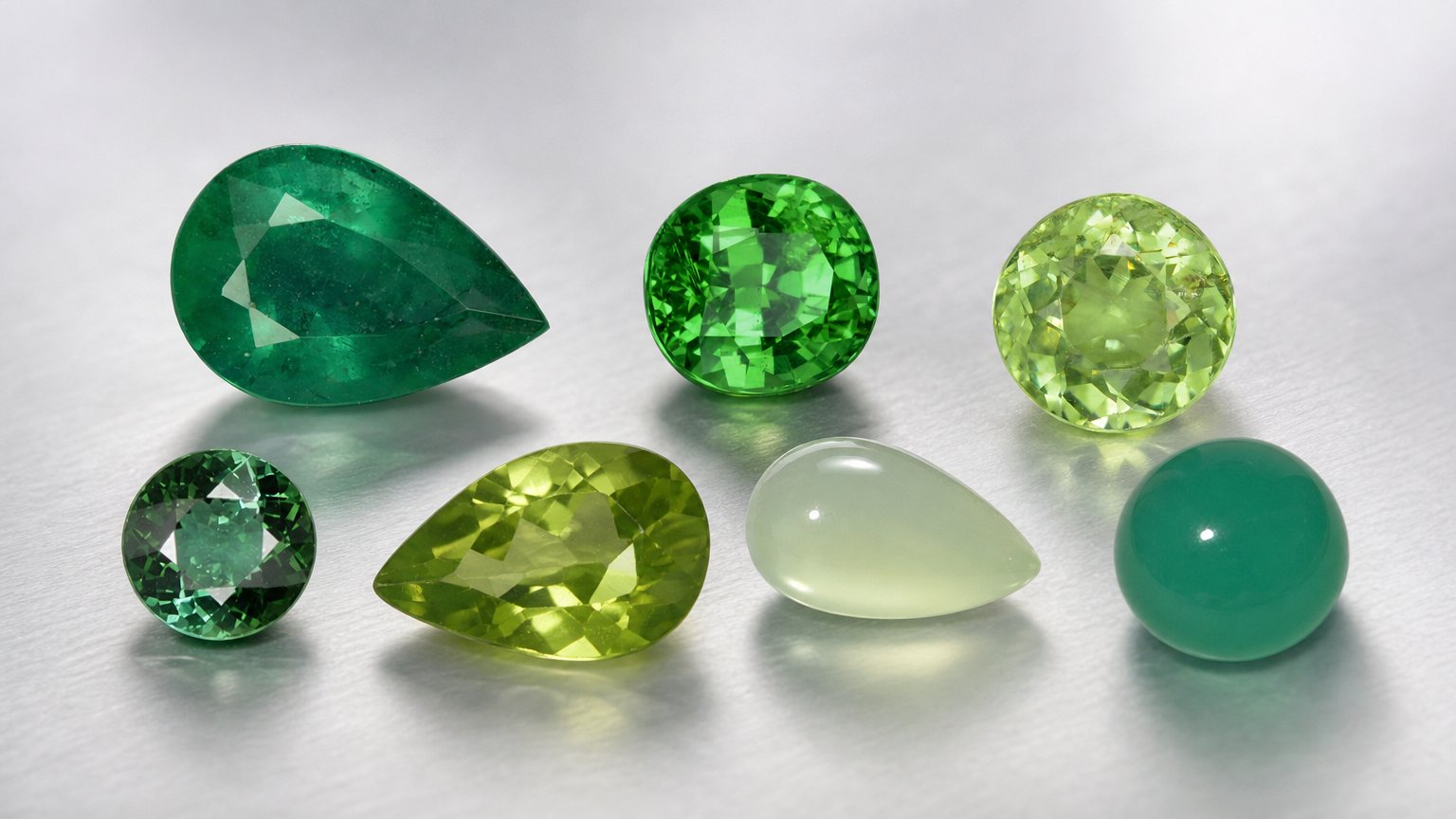
Green gemstones offer far more variety than a single emerald-like color. Natural green stones can be pale mint, yellow-green, vivid grass green, blue-green, teal, olive or deep forest green. That range makes green gemstone earrings suitable for classic studs, elegant drops and larger statement designs.
Earrings are also one of the most flexible jewelry uses for green gems. Because earrings receive less impact than rings or bracelets, buyers can consider both very durable stones and somewhat more delicate materials, as long as the setting, cleaning method and wearing habits are appropriate.
Best Natural Green Gemstones for Earrings
Emerald
Emerald is the classic precious green gemstone, prized for its saturated green color and unmistakable identity. For earrings, emerald can be an excellent choice because stones worn on the ear are less exposed to knocks than stones worn on the hand.
However, emerald must be judged carefully. Its Mohs hardness of 7.5 to 8 sounds high, but many emeralds contain natural inclusions and fractures, often called jardin. Clarity enhancement with oil or resin is common in emerald, and durability depends greatly on the individual stone. For earrings, choose emeralds with good face-up color, secure settings and disclosed treatment information.
Tsavorite Garnet
Tsavorite garnet is one of the strongest alternatives to emerald for buyers who want vivid natural green color. It is typically bright, lively and brilliant, with generally good durability for earrings. Tsavorite is especially attractive in smaller matched pairs because even modest sizes can show strong face-up color.
For green stud earrings, tsavorite is a practical choice when brilliance, clean appearance and rich color are more important than owning emerald specifically.
Demantoid Garnet
Demantoid garnet is known for bright green color and exceptional dispersion, the optical effect that creates colorful flashes of fire. It can make very lively earrings, particularly in small rounds, ovals and accent stones.
The trade-off is availability. Demantoid is relatively rare and is commonly encountered in smaller sizes, so it is often best for refined studs, small drops or accent designs rather than large matched statement earrings.
Green Tourmaline
Green tourmaline is one of the most versatile green gemstones for earrings. It occurs in lighter green, bluish-green and deep forest green shades, and many pieces are cut in elongated shapes that suit drop earrings beautifully.
Oval, pear, emerald-cut, rectangular and marquise tourmalines can create graceful vertical lines. Because tourmaline may show color zoning or different color depth from one stone to another, matching pairs should be selected by face-up appearance rather than carat weight alone.
Peridot
Peridot has a distinctive yellowish-green to olive-green color that is cheerful, recognizable and usually more accessible than many vivid green precious stones. Its color is natural rather than the result of routine color treatment, which appeals to many buyers looking for natural green gemstones.
With a Mohs hardness of about 6.5 to 7, peridot is well suited to earrings when protected from rough handling. It works especially well in studs, small drops and warm yellow-gold designs.
Green Sapphire
Green sapphire is a strong option for frequently worn earrings because sapphire is very durable, with a Mohs hardness of 9. Green sapphire can appear yellow-green, blue-green, teal or deeper green, giving buyers a broad palette beyond the classic emerald look.
For durable green gemstones for earrings, green and teal sapphire are among the most practical choices. They are suitable for studs, drops and everyday earrings, especially in secure settings.
Green Spinel
Green spinel is less common than many other spinel colors and is often more subdued than vivid emerald or tsavorite. When the color suits the design, it can be a durable and attractive choice, with good hardness and a clean, elegant appearance.
It is best considered when a softer or more unusual green is desired rather than when the goal is the brightest possible green.
Prasiolite / Green Quartz
Prasiolite, also called green quartz, is usually pale green, transparent and available in larger sizes at accessible price levels. It is useful for drop and dangle earrings where size and lightness of color matter more than intense saturation.
Natural prasiolite exists, but much commercial prasiolite obtains its green color through treatment of amethyst or other quartz material by heat and/or irradiation. Buyers should check the disclosure for the individual stone rather than assuming all examples have the same origin of color.
Prehnite
Prehnite has a soft, translucent yellow-green to mint-green appearance. It is often most attractive as a cabochon, where its glowing, cloudy translucency becomes part of the design.
Prehnite is not as hard as sapphire, garnet or quartz, but earrings are a suitable use when the stones are set securely and cleaned gently. It is particularly effective in organic, artisan and nature-inspired earrings.
Chrysoprase
Chrysoprase is a translucent apple-green chalcedony with a smooth, fresh appearance. It is not usually chosen for high brilliance; instead, it offers bold color and a polished surface, especially in cabochons, drops and larger earrings.
Because chrysoprase can look impressive in larger dimensions without needing a faceted cut, it is a good option for statement earrings with a clean green color.
Serpentine
Serpentine is useful for affordable larger designs and often displays soft yellow-green, olive or deeper green colors. It is generally better suited to earrings than high-impact jewelry because hardness can vary and some material is relatively soft.
Use serpentine for casual, decorative or statement earrings where size, pattern and earthy color are the main goals.
Green Onyx and Green Chalcedony
Green onyx and green chalcedony can be attractive for smooth cabochons and larger earrings, but treatment disclosure is especially important. Strongly colored commercial green material may be dyed or otherwise treated. If natural color is important to your project, review the individual gemstone description carefully.
Which Shade of Green Is Right for Your Earrings?
Green gemstone color categories are broad visual descriptions, not fixed gemological classifications. Still, they are helpful when choosing a pair for a specific earring style.
- Mint or pale green: prasiolite, prehnite and lighter green tourmaline create soft, airy earrings.
- Bright or vivid green: tsavorite, fine emerald and demantoid are strong choices when vivid green color is the priority.
- Yellow-green: peridot, some green sapphire and some tourmaline offer warm, lively green tones.
- Blue-green or teal: green/teal sapphire and some tourmaline suit modern designs and cooler metal colors.
- Deep or forest green: darker emerald, green tourmaline and some sapphire create a richer, more dramatic look.
- Apple green: chrysoprase gives a smooth, translucent green that works especially well in cabochons.
For earrings, face-up color is more important than how a loose stone looks from the side. A stone that appears dark in the hand may look elegant in a well-lit drop earring, while a pale stone may need a larger size or brighter metal setting to have enough presence.
Practical Comparison of Green Gemstones for Earrings
| Gemstone | Typical Green Appearance | Mohs Hardness | Earring Durability | Relative Price Level | Best Uses |
|---|---|---|---|---|---|
| Emerald | Saturated classic green to deep green | 7.5-8 | Good for earrings, but inclusions, fractures and clarity enhancement matter more than hardness alone | High to very high | Classic studs, elegant drops, fine jewelry pairs |
| Tsavorite Garnet | Bright vivid green | 7-7.5 | Generally good; excellent brilliance for small earrings | Medium-high to high | Vivid studs, refined drops, emerald alternatives |
| Demantoid Garnet | Bright green with strong fire | 6.5-7 | Suitable for earrings; often used in smaller sizes | High | Small studs, accents, delicate drop earrings |
| Green Tourmaline | Light green, bluish-green or deep forest green | 7-7.5 | Good for earrings; inspect matching and color zoning | Moderate to high depending on color and quality | Drops, elongated cuts, forest-green designs |
| Peridot | Yellow-green to olive green | 6.5-7 | Well suited to earrings with normal care | Accessible to moderate | Studs, small drops, warm green designs |
| Green Sapphire | Yellow-green, blue-green, teal or deeper green | 9 | Excellent for frequent wear | Moderate to high | Everyday studs, durable drops, teal designs |
| Green Spinel | Usually subdued green tones | 8 | Durable, but vivid green material is less common | Moderate to high | Unusual studs and refined earrings |
| Prasiolite / Green Quartz | Pale transparent green | 7 | Good for earrings; avoid assuming untreated color | Accessible | Larger drops, dangles, pale green earrings |
| Prehnite | Translucent mint to yellow-green | 6-6.5 | Suitable with gentle wear and protective settings | Accessible to moderate | Cabochons, organic drops, artisan earrings |
| Chrysoprase | Translucent apple green | 6.5-7 | Good for cabochon earrings with normal care | Accessible to moderate | Cabochons, larger earrings, apple-green designs |
| Serpentine | Olive, yellow-green or earthy green | Variable, often relatively soft | Best for protected, lower-impact earrings | Accessible | Large casual dangles and earthy designs |
Best Green Gemstones by Earring Style
Green Stones for Stud Earrings
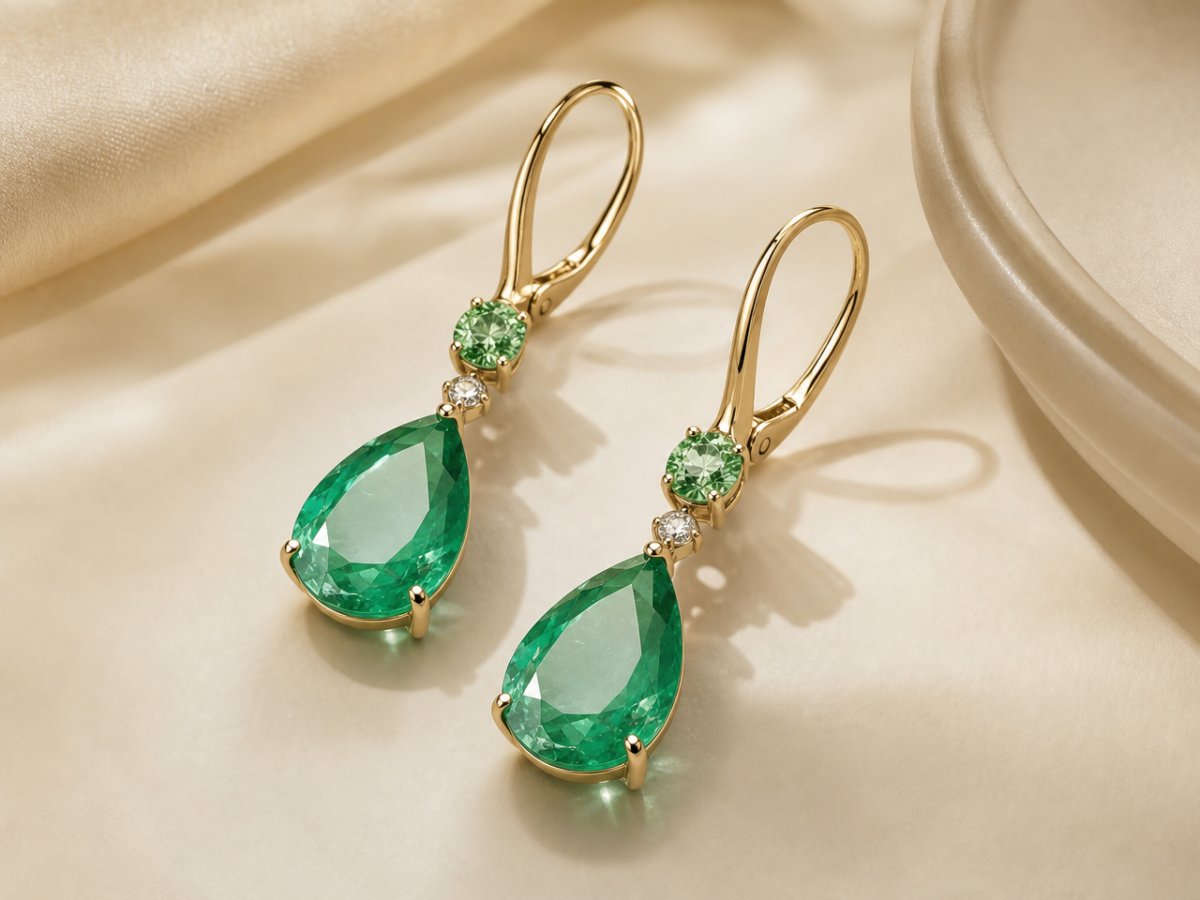
Studs work best when the stones have strong face-up color in a relatively small size. Emerald, tsavorite, green sapphire, peridot and green tourmaline are all important options. Rounds, ovals and cushions are common choices because they are easy to set and balance well on the ear.
For everyday studs, green sapphire is the most durability-focused choice. For vivid color, tsavorite is excellent. For traditional fine jewelry, emerald remains the classic, provided the pair is well matched and appropriately handled.
Green Gemstones for Drop Earrings
Drop earrings benefit from movement, length and elegant outlines. Green tourmaline is especially suitable because elongated cuts are common and the color range is broad. Emerald, peridot, prasiolite and other transparent green gems also work well in pear, oval, marquise and emerald/octagon cuts.
When choosing loose green gemstones for drop earrings, consider weight as well as size. A large stone may look impressive but feel heavy if the design adds metal, halos or multiple gems.
Dangle and Statement Earrings
For larger green gemstone earrings, buyers often prioritize dimensions, color effect and affordability over rare vivid color. Prasiolite, prehnite, chrysoprase and serpentine can provide larger visual impact without requiring the budget of large emeralds or tsavorites.
These stones can be particularly attractive in bezel settings, wire designs, cabochon drops and mixed-gem earrings. They are not rules, but practical starting points: the final choice should match the setting design, intended wear and desired visual presence.
Shapes and Cuts for Green Gemstone Earrings
Round and oval cuts are practical for studs because they are easy to match and set. Cushion cuts provide a softer outline with good color concentration. Pear shapes are excellent for drops because they naturally point downward and create movement. Marquise cuts can make earrings look longer and more delicate.
Emerald and octagon cuts deserve special attention. They are strongly associated with emerald, where the cut can emphasize color and a refined geometric style. The same shape can also look elegant in green tourmaline, sapphire, prasiolite and other transparent green stones.
Transparent stones such as tsavorite, sapphire, tourmaline and peridot are usually faceted to maximize brilliance and color return. Translucent materials such as chrysoprase and prehnite are often most appealing as cabochons, where a smooth dome highlights color, glow and texture rather than sparkle.
How to Choose Matching Green Gemstone Pairs
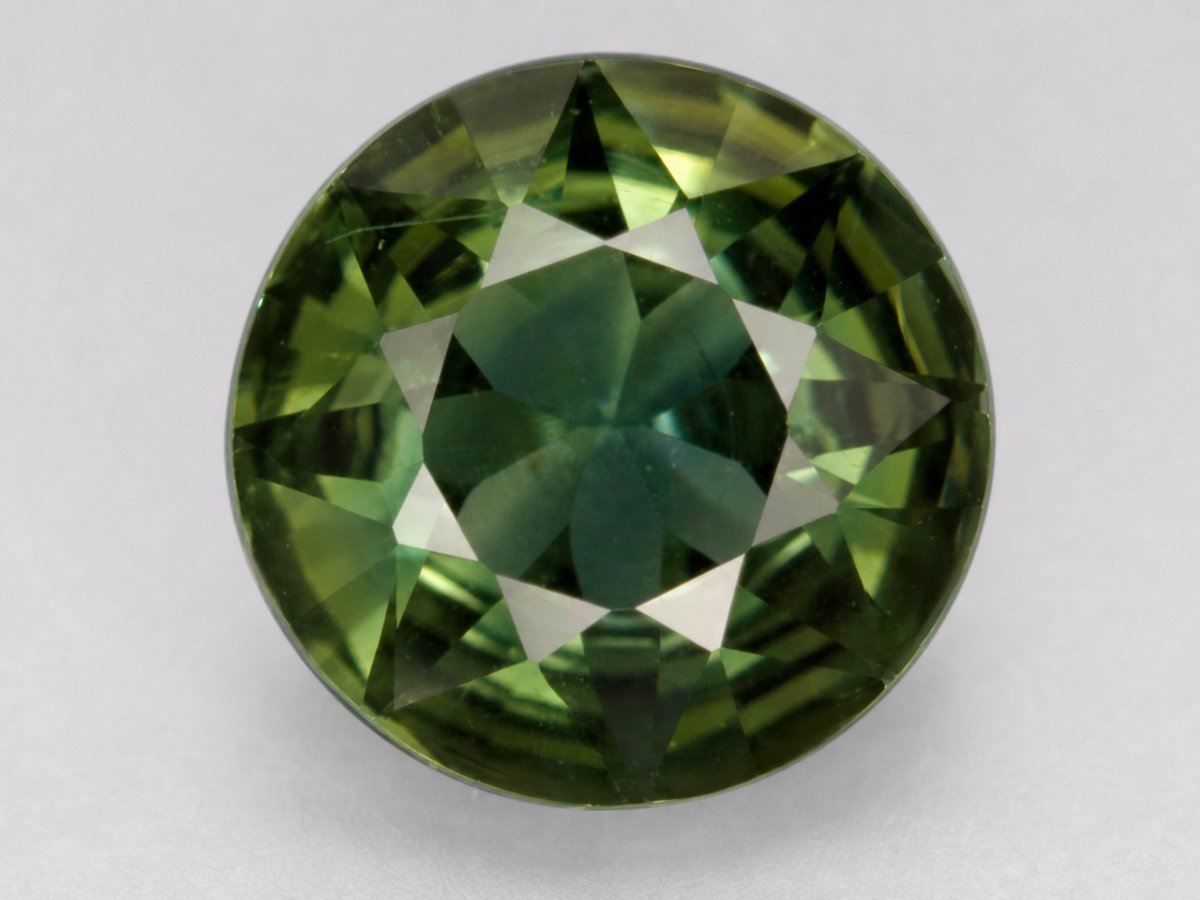
Matching green gemstones is one of the most important parts of buying loose stones for earrings. A good pair should look balanced on the ear, not merely share a similar carat weight.
Prioritize dimensions, shape, face-up color, tone, saturation, transparency, cut style and overall visual appearance. Exact carat weights do not necessarily need to match when the millimeter measurements and visible appearance are close. Two stones of the same size may weigh slightly differently because of depth, cut style or gem material density.
Natural green gemstones can show considerable variation. Emerald may differ in inclusion patterns and clarity enhancement appearance. Tourmaline can show color zoning or different green tones from end to end. Even stones from the same gem family may vary in brightness, depth and transparency.
For jewelers using standard earring settings, calibrated gemstone pairs are especially useful. Calibrated sizes, such as common round, oval or pear dimensions, help the stones fit existing mountings with less adjustment. When browsing GemSelect for green gemstone pairs, compare the measurements and photos carefully, especially if the design requires symmetry.
Transparent vs. Translucent Green Gemstones
Attractive green earrings do not have to be made from transparent faceted gems. Transparent choices such as tsavorite, sapphire, tourmaline, emerald, peridot and prasiolite are selected for brilliance, sparkle and light return. They are ideal for classic studs, refined drops and fine-jewelry styles.
Translucent green stones such as chrysoprase and prehnite create a different effect. They may not sparkle like faceted garnet or sapphire, but they offer smooth color, soft glow and larger shapes that suit artisan, minimalist or statement earrings.
The right choice depends on the design intent. If you want bright flashes of light, choose a transparent faceted stone. If you want a larger, softer or more sculptural green presence, consider cabochon materials.
Durability and Care for Green Gemstone Earrings
Earrings allow a wider gemstone selection than rings because they are less likely to strike hard surfaces. Highly durable stones such as sapphire and spinel are suitable for frequent wear. Tsavorite, tourmaline and quartz also perform well in earrings with normal care.
More vulnerable stones can still be very successful in earrings. Emerald, peridot, prehnite and serpentine should be protected from hard knocks, harsh chemicals and careless storage. Use secure settings and store earrings separately so stones do not scratch each other.
Cleaning should match the gemstone and any treatment. Many earrings can be cleaned with mild soap, lukewarm water and a soft cloth or brush, but ultrasonic and steam cleaning should not be used universally. Emeralds, especially oiled or fracture-filled stones, require gentle cleaning and should not be exposed to harsh heat, solvents or aggressive cleaning methods.
Treatment and Disclosure
Natural green gemstones may be untreated, routinely treated or treated only in some cases, depending on the material. The safest approach is to check the disclosure for the individual gemstone.
Emerald is commonly clarity enhanced with oil or resin to reduce the visibility of surface-reaching fractures. This is an accepted trade practice when disclosed, but it affects care and sometimes value. Prasiolite is another stone where disclosure matters, because much commercial green quartz obtains its color through treatment, while naturally green quartz is much less common.
Peridot is valued partly because its green color is natural and not produced by routine color treatment. For green onyx or strongly colored green chalcedony, ask whether dyeing or other treatment has been used, particularly if natural color is central to the design.
Choosing the Right Green Gemstone for Your Earrings
The best green gemstone for earrings is the one that gives the right balance of color, durability, size, style and price. Choose emerald for classic prestige and saturated green, tsavorite for vivid brilliance, sapphire for durability, tourmaline for versatility, peridot for warm yellow-green color, and prasiolite, prehnite or chrysoprase for larger or softer designs.
For any earring project, start with the style: studs need matched face-up color, drops benefit from elegant shapes, and statement earrings need suitable size and comfortable weight. Then compare matching, treatment disclosure, setting requirements and care needs before choosing your final pair.
