


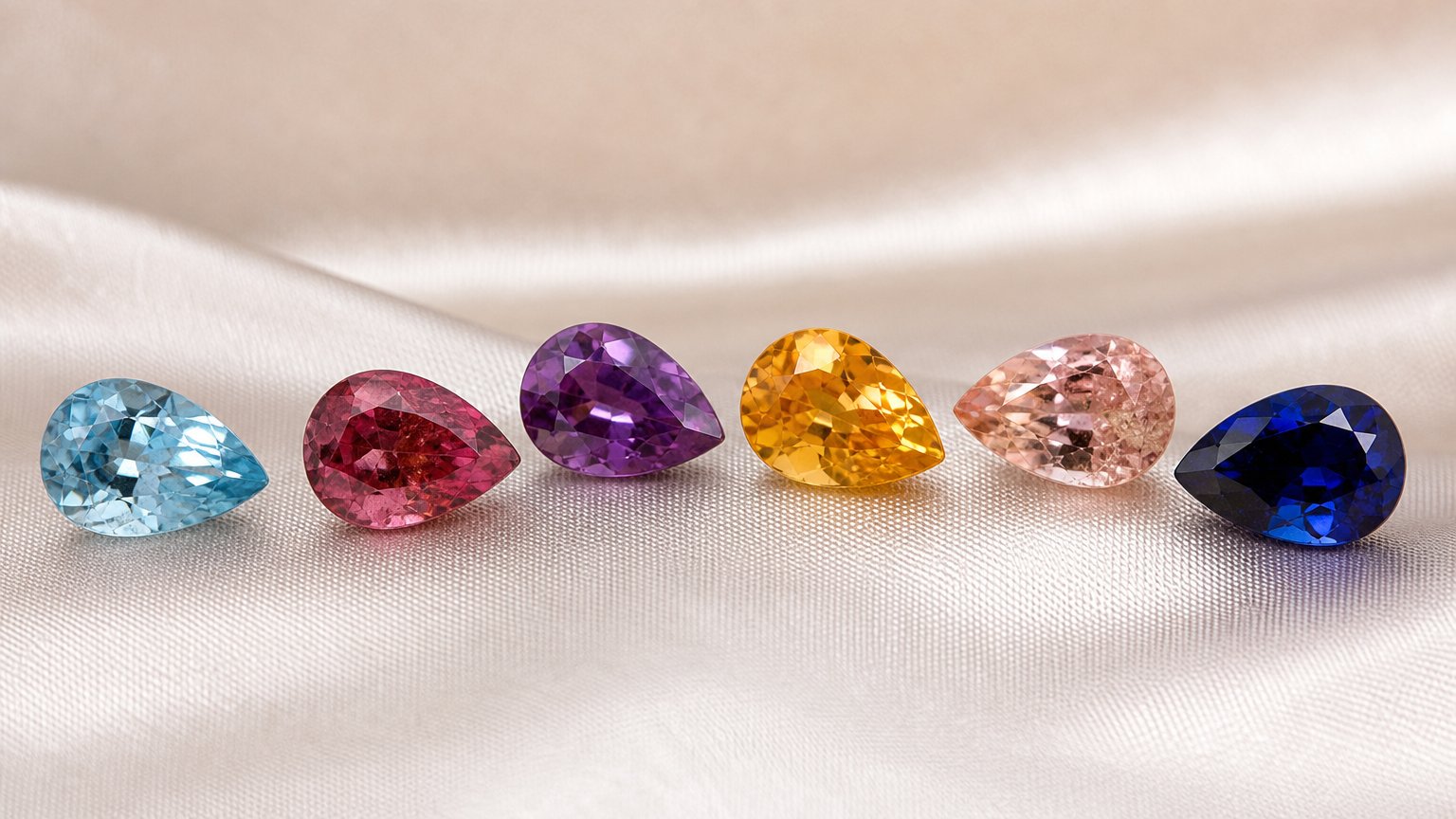
Pear-shaped gemstones are especially useful for earrings because the shape already suggests direction. The rounded end gives visual fullness, while the tapered point creates a natural line that works well with hanging, vertical and suspended designs. For jewelers and designers choosing loose gemstones, this shape can make a pair of earrings look longer, more balanced or more decorative without requiring a complicated setting.
The main challenge is not deciding whether pear-shaped gemstones can work in earrings. They often do. The more important questions are whether the pair matches well enough, whether the proportions suit the earring style, whether the stones are comfortable in weight, and whether the setting protects the shape properly.
Why the Pear Shape Works Well in Earrings
A pear shape combines a rounded bottom or side with a pointed end. This gives the stone a clear visual direction, unlike a round or cushion shape. In earrings, that direction can be used to lengthen the face, guide the eye downward in a drop design, or create mirrored left-and-right arrangements.
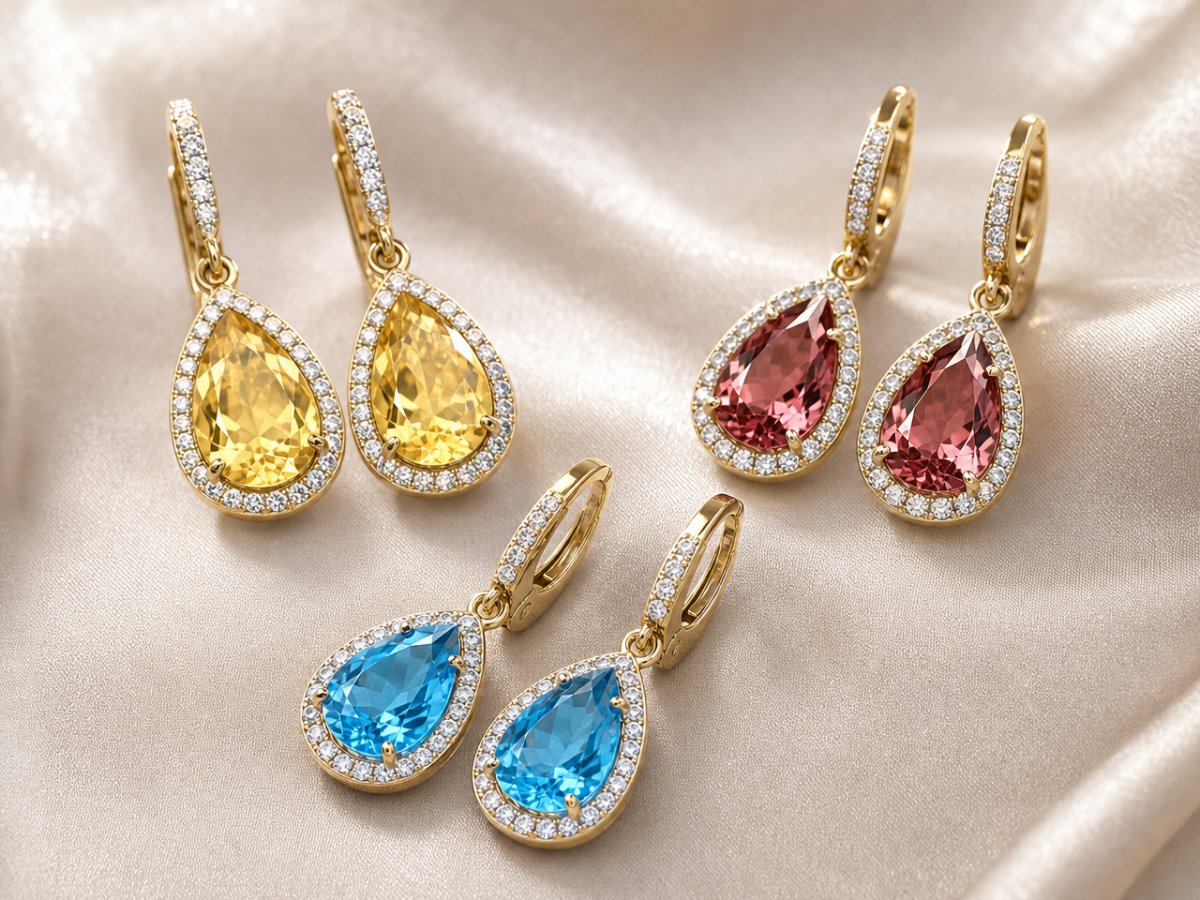
The shape is particularly effective where the gemstone hangs below the ear or below a smaller accent stone. A pear-shaped gemstone drop suspended beneath a round, oval or square accent stone creates a natural transition from the ear to the lower gemstone. The pointed end can also be used to connect the gemstone visually to a chain, jump ring, halo or upper setting element.
For stud earrings, pears can provide more shape and movement than standard round studs while still keeping the design compact. For larger earrings, pear shapes allow designers to build vertical lines, floral clusters, fan shapes and statement compositions with a clear center of attention.
Earring Styles That Suit Pear-Shaped Gemstones
Pear-shaped stones are versatile, but different earring styles call for different proportions, weights and setting approaches.
| Earring Style | Preferred Pear Characteristics | Key Consideration |
|---|---|---|
| Stud earrings | Compact to balanced pears with good symmetry | Keep weight comfortable and use a secure setting, especially at the point. |
| Drop earrings | Medium to elongated pears | Match face-up dimensions and orientation so both drops hang evenly. |
| Dangle earrings | Elongated pears with lively face-up appearance | Consider movement, total weight and protection from knocks. |
| Halo earrings | Symmetrical, often calibrated pears | Setting fit is critical because the halo follows the outline closely. |
| Cluster earrings | Small to medium pears, either matched or intentionally varied | Check color harmony and how the points interact within the layout. |
| Statement earrings | Larger, broader or strongly colored pears | Balance visual impact with comfort and secure suspension. |
| Pear drops beneath accent stones | Well-matched pairs with a clean top-to-bottom line | The connection point, orientation and matching dimensions affect the finished symmetry. |
Orientation: Point Up, Point Down, Angled or Mirrored
The traditional orientation for many pear-shaped gemstone drops is point up with the rounded end down. This works naturally because the point can connect to the upper setting while the rounded end gives weight and fullness at the bottom of the earring.
Point-down settings create a different effect. They emphasize the taper and can make a stud or drop design feel sharper and more directional. This orientation may need careful protection for the exposed point, depending on the setting and how far the stone projects from the ear.
Pear-shaped gemstones can also be set at an angle, mirrored left and right, or arranged in opposing orientations. Mirrored pears are useful for earrings that are designed as a true left-and-right pair rather than two identical pieces. Opposing orientations can add movement in cluster or statement earrings, while angled pears can soften a formal design and make it look more organic.
Choosing a Matched Pair of Loose Pear-Shaped Gemstones
Matched pairs are one of the most important considerations when buying loose pear-shaped gemstones for earrings. Two stones do not need exactly the same carat weight to work as a pair. What the wearer sees is the face-up appearance, not the number on the scale.
Start with millimeter dimensions. Length and width should be close enough that the stones look balanced when set side by side or worn on opposite ears. Depth matters for setting and weight, but small depth differences are often less visible than differences in outline, length or color.
Next, compare the length-to-width ratio. One broad pear and one slender pear may have similar carat weights but look poorly matched. The curve of the rounded end, the position of the shoulders and the sharpness of the point should also be visually compatible.
Color matching is equally important. For conventional matching earrings, compare hue, tone and saturation. Hue is the basic color impression, tone describes lightness or darkness, and saturation describes color strength. A pair of blue sapphires, green tourmalines or pink morganites can look mismatched if one stone is noticeably darker, lighter, grayer or more vivid than the other.
Cut style and brightness should also be compared. A brilliant faceted pear and a step-cut or mixed-cut pear may not return light in the same way. Transparency and clarity should be considered where relevant, especially in lighter gemstones where inclusions or cloudiness may be more visible. In deliberately asymmetric earrings, slight variation may be part of the design, but for classic pairs, close visual consistency is usually the goal.
Pear-Shape Proportions for Earrings
There is no single ideal pear proportion for every earring design. Pears range from broad, rounded shapes to long, slender forms. The best choice depends on the design intent and how the gemstone will be worn.
Broader pears give more face-up presence. They can be effective for studs, halos, clusters and statement earrings where the gemstone is intended to look full and visible from the front. A broader outline can also show color strongly because more of the gem faces the viewer.
Elongated pears emphasize verticality. They are especially useful in drop and dangle earrings, where the shape can lengthen the design and enhance movement. However, very slender pears require careful matching because small differences in outline or point alignment can become more noticeable.
Size, Weight and Comfort
For earrings, comfort is a practical design requirement. Studs and close-fitting earrings should not pull forward excessively. Drop and dangle earrings can carry more visual length, but total weight still matters, especially for designs worn for long periods.
Carat weight is not the same as visible size. Gemstones have different densities, so two pear-shaped stones with similar millimeter dimensions can have different carat weights depending on the gemstone type. This is another reason to compare actual measurements and photographs rather than choosing only by carat weight.
When selecting stones for commercially manufactured settings, calibrated pear-shaped gemstones or closely calibrated pairs can simplify the job. Calibrated sizes are cut to common millimeter dimensions used by many settings. Custom settings allow more flexibility, but the jeweler still needs accurate length, width and depth measurements.
Setting Considerations: Prong, Bezel and Halo
Pear-shaped gemstones need settings that hold both the rounded end and the pointed end securely. The point is the most vulnerable part of the outline because it is narrow and exposed. A protective prong, V-prong, bezel edge or halo can help reduce the risk of chipping at the tip in designs where the point might be knocked.
Prong settings show more of the gemstone outline and allow more light to reach the stone. They are popular for faceted pears, but the prongs must be placed carefully so the stone is stable and the point is not left unprotected.
Bezel settings surround the gemstone with metal. They can give excellent edge protection and create a clean outline, but they also change the visual border of the pear and may make the stone appear slightly larger or more defined. Bezels are particularly useful for cabochons, softer-looking designs and earrings intended for frequent wear.
Halo settings frame the pear with smaller stones or metal detail. They add visual size and can protect the outline, but they require accurate symmetry and fit. A mismatched pair of pear centers can become more obvious when each stone is surrounded by a precisely shaped halo.
Natural Gemstones Commonly Used in Pear Shapes
Many natural gemstones are cut in pear shapes, including sapphire, ruby, spinel, tourmaline, aquamarine, topaz, amethyst, citrine, garnet, peridot, tanzanite, zircon, morganite and kunzite. The right choice depends on color, durability, size, budget, setting style and how often the earrings will be worn.
Sapphire and ruby are strong choices where durability is a priority. Spinel is also suitable for many earring designs and is valued for attractive color and good wearability. Garnet, amethyst, citrine, aquamarine, morganite, peridot and tourmaline can all be practical in earrings, provided the setting is appropriate and the stones are handled with normal care.
Some gems deserve extra consideration. Topaz has cleavage, so protective setting and careful handling are important. Tanzanite and kunzite are better suited to earrings than rings in many cases because earrings usually receive less abrasion and impact, but they still should be protected from knocks. Zircon can show lively brilliance, but facet edges may need more care than tougher stones. These cautions do not rule out the gems; they simply affect design and wear recommendations.
Faceted Pears vs Pear-Shaped Cabochons
Faceted pear-shaped gemstones are chosen when brilliance, sparkle and crisp color return are important. They work well in prong, halo and many drop settings, especially when the design relies on light reflection and movement.
Pear-shaped cabochons have a smooth domed surface rather than facets. They can be especially attractive for gemstones valued for body color, translucency, glow or optical phenomena. Cabochons often suit bezel settings, cluster earrings and designs with a softer, more sculptural appearance.
When matching cabochon pairs, compare outline, dome height, color distribution and surface appearance. For faceted pairs, compare brilliance, cutting style, windowing or extinction if visible, and how evenly the two stones return light.
Practical Buying Advice for Loose Pear-Shaped Gemstones
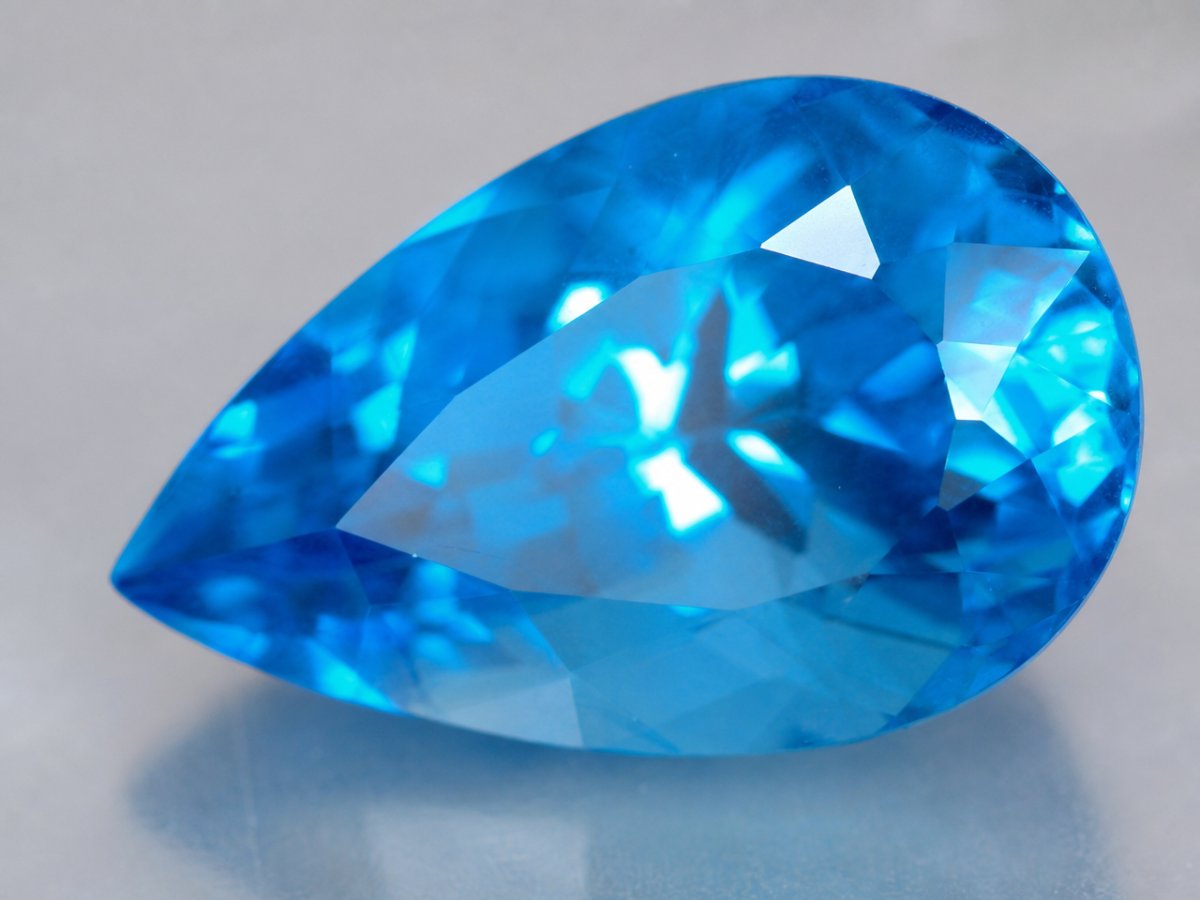
When selecting loose pear-shaped natural gemstones for earrings, compare the stones as a pair before focusing on individual beauty. A single attractive stone may not be the best choice if it cannot be matched in size, outline and color.
Review actual measurements, photographs and gemstone details. On GemSelect, buyers can compare loose gemstones by dimensions, shape, color and individual characteristics, which is especially useful when building matched pairs for earrings. If using ready-made settings, check whether the stones are calibrated or close enough in millimeter size for the setting. If commissioning custom settings, provide the jeweler with exact measurements for each stone.
Do not rely on carat weight alone. A slightly heavier stone may face up smaller if it is deeper, while a lighter stone may look larger if it is shallower. The best earring pair is usually the pair that looks balanced when viewed from the front and can be set securely in the intended design.
Conclusion
Pear-shaped gemstones work well in earrings because their outline naturally supports vertical, suspended and directional designs. The most successful pairs are chosen by appearance as much as by specification: dimensions, proportion, color, outline, brilliance and setting fit all matter. By selecting loose pear-shaped gemstones with the final earring design in mind, jewelers and buyers can create earrings that are balanced, wearable and visually coherent.
