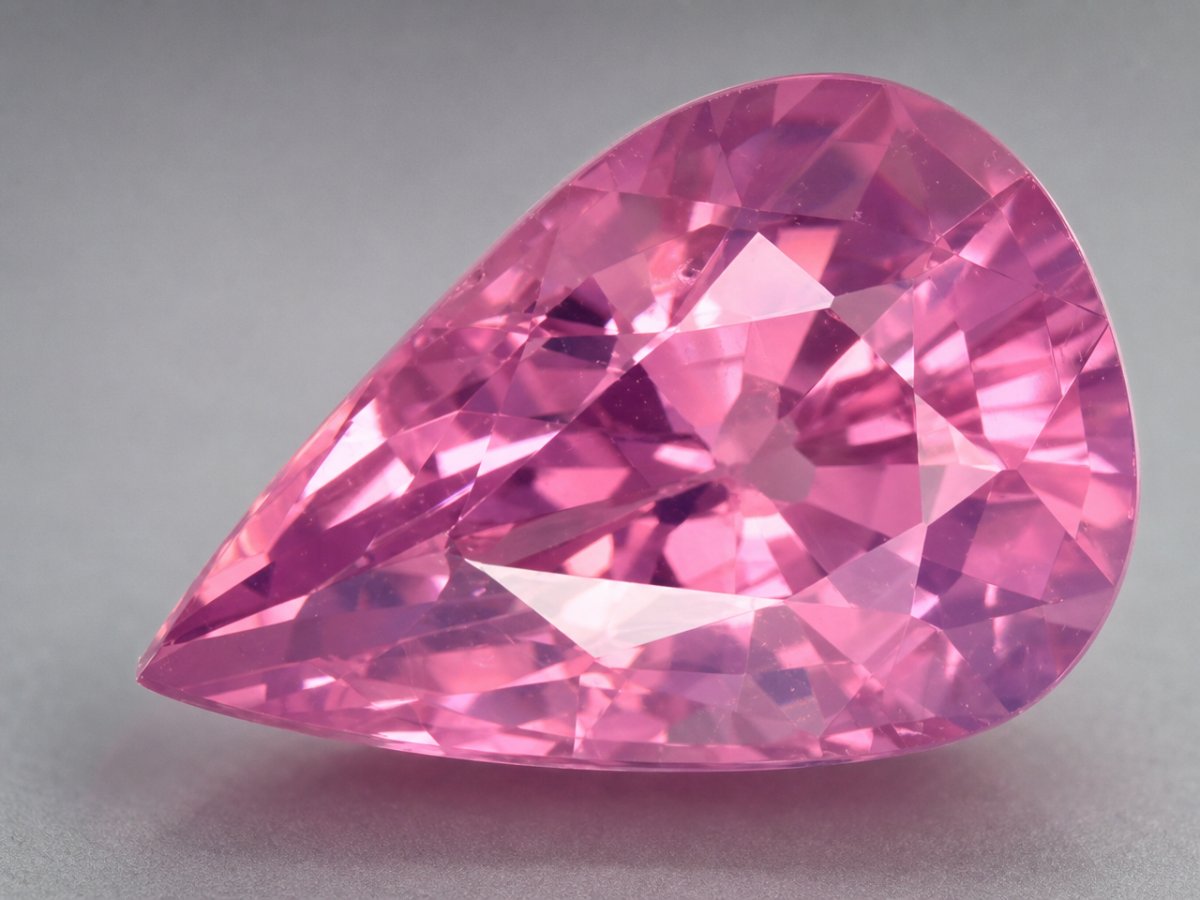


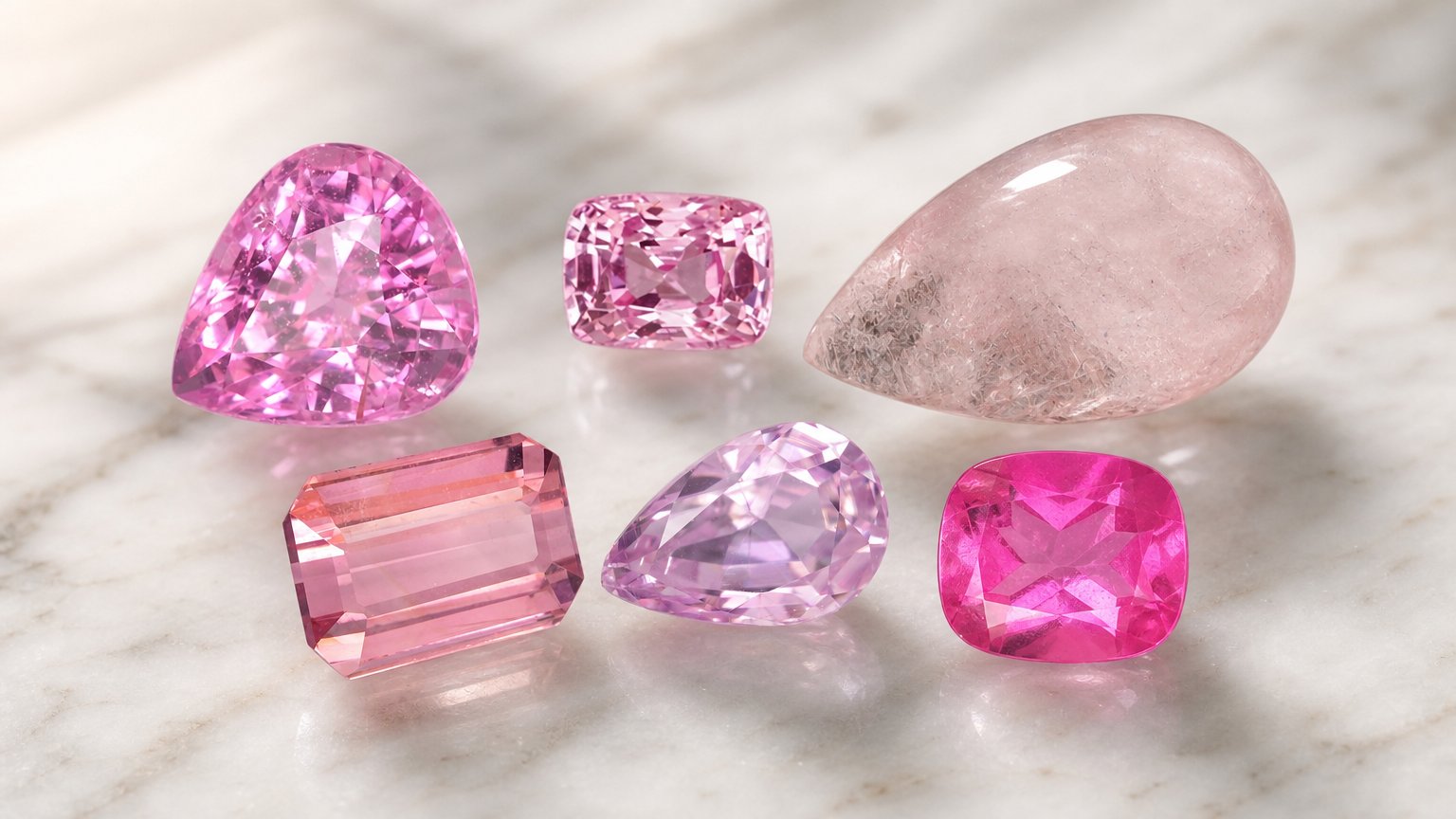
Pink gemstones can create engagement rings that look romantic, modern, vintage, delicate or vividly colorful depending on the gem, cut, metal and setting. The most practical choice is not always the pinkest stone or the largest carat weight. For a ring worn often, buyers should compare color, hardness, toughness, brilliance, treatment disclosure, millimeter size and the protection offered by the ring design.
This guide focuses on natural loose pink gemstones that are realistically considered for engagement rings, including pink sapphire, pink diamond, pink spinel, morganite, pink tourmaline, rubellite tourmaline, pink topaz, pink zircon, pink garnet, rhodolite garnet and kunzite. GemSelect lists individual loose gemstones with photos, dimensions and disclosure details, which is especially important because pink is one of the most varied gemstone colors.
What Counts as a Pink Gemstone?
Pink is not a single color. In gemstones it can range from pale blush pink, baby pink and pastel pink to rose pink, peach-pink, salmon pink, vivid pink, hot pink, raspberry pink, purplish pink and reddish pink. Some stones sit near the boundary between pink and peach, pink and purple, or pink and red.
Three color factors strongly affect appearance: hue, tone and saturation. Hue is the basic color direction, such as peach-pink or purplish pink. Tone describes how light or dark the gem appears. Saturation describes color strength, from soft and delicate to vivid and intense. A pale morganite may look beautifully blush in rose gold, while a vivid pink sapphire or spinel may look stronger in white metal with colorless accents.
Because pink gemstones often shift visually with lighting, metal color and photography, individual stone photos matter. Do not choose by gemstone name alone. Compare the exact loose gemstone by color image, cut, clarity, millimeter dimensions, treatment disclosure and price.
Durability: Hardness Is Important, But Not the Whole Story
The Mohs scale measures resistance to scratching. This is important for engagement rings because rings are exposed to more abrasion than earrings or pendants. Diamond at 10, sapphire at 9 and spinel at 8 are strong choices from a scratch-resistance perspective.
However, hardness is not the only durability factor. Toughness, cleavage, brittleness, inclusions, cut proportions and setting design also matter. Topaz has good hardness but perfect cleavage, so it can split if struck in the wrong direction. Kunzite has cleavage and needs careful wear. Zircon can be bright but may be more vulnerable to abrasion on facet edges than harder gems. A protective bezel, low-profile setting or secure halo can make a meaningful difference for many colored gemstones.
Pink Gemstone Comparison for Engagement Rings
| Gemstone | Typical pink color range | Mohs hardness | Everyday-wear suitability | Relative affordability | Brilliance / sparkle | Typical size availability | Treatment considerations | Recommended setting considerations |
|---|---|---|---|---|---|---|---|---|
| Pink sapphire | Baby pink, rose pink, vivid pink, hot pink, purplish pink, reddish pink | 9 | Excellent for frequent wear when well set | Varies widely; often a practical colored-gem alternative to pink diamond | Bright with good cutting; less fiery than diamond but very lively | Available in many ring-friendly shapes and sizes | Heat treatment is common; check disclosure for each stone | Suitable for solitaire, halo, three-stone and many daily-wear designs |
| Pink diamond | Pale pink to intense pink, often with purplish, brownish or orangey modifiers | 10 | Exceptional durability | Premium and rare | Very high brilliance and fire | Natural pink diamonds are usually considered rare, especially in larger sizes | Natural, treated and lab-grown categories must be clearly distinguished | Works in almost any ring setting; often enhanced by white diamond accents |
| Pink spinel | Pale pink, vivid pink, hot pink, raspberry and reddish pink | 8 | Very good with sensible wear and secure setting | Varies; fine vivid stones can be valuable, but often appealing as a colored-gem choice | Attractive brilliance and crisp sparkle | Available in useful ring sizes, though top vivid colors may be less common | Often available untreated; still check individual disclosure | Excellent for solitaires, halos and vintage-inspired designs |
| Morganite | Blush pink, peach-pink, salmon pink and soft pastel pink | 7.5 to 8 | Moderate to good with careful wear; not as carefree as sapphire | Often attractive for larger-looking center stones | Soft brilliance; pastel color can look delicate rather than high-contrast | Commonly chosen in larger face-up sizes | Heat treatment may be used to improve pink color; check disclosure | Best in protective prongs, halos or bezels; remove during rough activity |
| Pink tourmaline | Pastel pink, rose pink, hot pink, purplish pink and raspberry pink | 7 to 7.5 | Better for careful wear or protective settings | Broad range depending on color, clarity and size | Good brilliance; can show strong color in elongated cuts | Available in many shapes, including ovals, cushions and emerald cuts | Heating or irradiation may occur; check individual disclosure | Choose secure settings; consider bezel or halo for active wearers |
| Rubellite tourmaline | Raspberry, vivid pink, reddish pink to red-pink | 7 to 7.5 | Similar care needs to tourmaline; color can be dramatic | Often higher than lighter pink tourmaline when color is fine | Good sparkle with rich color presence | Useful ring sizes are available, but fine color and clarity vary | Treatment disclosure should be checked stone by stone | Beautiful in halos, three-stone rings and vintage-inspired settings with protection |
| Pink topaz | Light pink to stronger pink; sometimes peachy or orangey pink | 8 | Needs care because topaz has cleavage despite good hardness | Varies widely by type, color and treatment | Bright and clean-looking when well cut | Can be found in ring-friendly sizes | Some pink topaz is treated or coated; disclosure is essential | Protect from knocks; avoid exposed high-prong designs for daily wear |
| Pink zircon | Pastel pink, peach-pink, rose pink or orangey pink depending on the stone | About 6.5 to 7.5 | Better for occasional or careful wear than rough daily wear | Can offer strong sparkle for the budget, depending on quality | High brilliance and lively dispersion | Ring sizes are available but compare dimensions and condition carefully | Zircon may be treated; check disclosure | Use protective settings; avoid heavy wear that can abrade facet edges |
| Pink garnet / rhodolite garnet | Rose, purplish pink, raspberry, pinkish red and violet-pink | About 6.5 to 7.5 | Suitable for careful wear; not as scratch-resistant as sapphire or spinel | Often good value in attractive colors | Good brilliance, especially in well-cut stones | Useful sizes are common for ring designs | Garnet is commonly sold untreated, but disclosure should still be checked | Good for vintage, cluster and three-stone rings with sensible protection |
| Kunzite | Pale pink, lilac-pink, violet-pink and soft rose pink | About 6.5 to 7 | Requires significant care; best for occasional or very mindful wear | Can provide large, delicate-looking gems | Attractive brilliance with soft pleochroic color | Often seen in larger cuts, but ring use needs caution | May be sensitive to prolonged strong light; check care guidance | Choose protective, low-profile designs; avoid harsh wear and long sun exposure |
Pink Sapphire: One of the Strongest Colored-Gem Choices
Pink sapphire is one of the most practical pink gemstones for an engagement ring. Corundum, the mineral family of sapphire, has Mohs hardness 9, giving it excellent scratch resistance for a colored gemstone. Sapphire also has strong general durability when properly cut and set, which is why it is widely used in rings intended for regular wear.
Color is a major advantage. Pink sapphire can appear pale and delicate, bright baby pink, rose pink, hot pink, purplish pink or reddish pink. Some stones approach ruby visually; the boundary between pink sapphire and ruby can depend on color interpretation and trade practice. For engagement-ring buyers, the important point is to choose the individual color you love rather than relying only on the variety name.
Pink sapphires are available in many common jewelry shapes, including oval, cushion, round, pear, emerald cut and radiant-style cuts. This makes them versatile for solitaires, halos, three-stone rings and vintage-inspired designs. Fine vivid stones can command higher prices, while softer colors may offer a different balance of beauty and value.
Treatment disclosure is important. Heat treatment is common for sapphire and is generally accepted in the gemstone trade when disclosed. Untreated pink sapphires also exist, but buyers should not assume treatment status from color alone. Always check the disclosure for the exact loose gemstone.
Pink Diamond: Rare, Durable and Premium
Pink diamond is the most durable natural pink gemstone option, with Mohs hardness 10 and excellent suitability for daily wear. It also has the brilliance and fire associated with diamond. Natural pink diamonds, however, are rare and typically belong to a premium category, especially when color is strong and size is significant.
For buyers who want a natural pink center stone but prefer a wider range of sizes, colors and budgets, pink sapphire, pink spinel, morganite and tourmaline are often the more practical comparison group. If considering a pink diamond, be clear about whether the stone is natural color, treated color or lab-grown, as these are different buying categories.
Pink Spinel: Bright, Durable and Deserving of Attention
Pink spinel is not merely a sapphire substitute. It is a beautiful gemstone in its own right, known for lively brilliance and attractive pink to red-pink colors. With Mohs hardness 8, spinel offers good scratch resistance for an engagement ring, especially when the wearer uses sensible care.
Color choices range from pale pink through vivid hot pink, raspberry pink and reddish pink. Spinel is also often available untreated, which appeals to buyers who prefer gems with minimal enhancement. As always, treatment status should be confirmed for the individual stone rather than assumed.
Pink spinel works well in clean solitaire designs, halos and vintage-inspired rings. Its crisp sparkle can look especially striking with colorless diamond or white sapphire accents.
Morganite: Soft Blush, Peach-Pink and Larger Visual Size
Morganite is popular for engagement rings because of its soft blush, peach-pink and salmon-pink colors. It pairs beautifully with rose gold for a warm, romantic appearance and can offer relatively large face-up size compared with many premium pink gems.
Its trade-off is durability. Morganite, a variety of beryl, has Mohs hardness 7.5 to 8, which is respectable but below sapphire. It is better suited to wearers who will remove the ring for cleaning, gym activity, gardening, heavy work and situations where the stone may be knocked. A halo, bezel or low-profile setting can help protect the gem.
Because morganite is often pale, surrounding details matter. A white diamond halo can make the pink color appear more distinct by contrast, while rose gold can blend with the gem and make the entire ring look warmer.
Pink Tourmaline and Rubellite
Pink tourmaline offers one of the broadest pink palettes, from delicate pastel pink to hot pink, purplish pink, raspberry and strongly reddish-pink material. It is useful for buyers who want more color personality than a very pale blush stone but may not want the cost or look of sapphire or diamond.
Rubellite is the name used for strongly pinkish red to red tourmaline. In engagement rings, rubellite creates a richer and often more dramatic appearance than lighter pink tourmaline. Both pink tourmaline and rubellite have Mohs hardness around 7 to 7.5, so they benefit from secure, protective settings and thoughtful daily care.
Other Pink Gemstones to Consider
Pink topaz can be bright and attractive, and topaz has Mohs hardness 8. However, topaz has cleavage, so ring designs should protect it from hard knocks. Pink topaz may also be treated or coated, making disclosure especially important.
Pink zircon can show impressive brilliance and sparkle, but it is less ideal for rough daily wear. It is better for careful wearers who appreciate its lively appearance and will protect it from abrasion and impact.
Pink garnet and rhodolite garnet offer rose, raspberry and purplish-pink colors, often with pleasing brilliance. Garnet can be a good choice for vintage-inspired and cluster rings, but it is less scratch-resistant than sapphire, diamond or spinel.
Kunzite is beautiful, often appearing pale pink to lilac-pink, but it requires more consideration for an engagement ring. Kunzite has cleavage and can be sensitive to prolonged strong light. It is best for occasional wear or for a careful wearer who chooses a protective setting and understands its care needs.
Which Pink Gemstone Is Best for an Engagement Ring?
There is no universal winner. The best pink gemstone depends on the wearer, design and budget priorities.
- Maximum durability: Pink diamond is the hardest option, while pink sapphire is the strongest colored-gemstone choice for many buyers.
- Most practical colored gemstone for daily wear: Pink sapphire is usually the leading option because of hardness, durability, color range and ring-setting versatility.
- Vivid pink color: Pink sapphire, pink spinel, pink tourmaline and rubellite are strong candidates.
- Soft pastel or blush pink: Morganite, pale pink sapphire, pale spinel and kunzite can provide delicate color, with morganite being a popular jewelry choice and kunzite requiring extra care.
- High brilliance: Pink diamond and pink zircon are very sparkly; pink spinel is also lively and bright.
- Larger gemstone for the budget: Morganite is often selected for a larger visual presence, while some tourmaline, garnet and topaz options can also work depending on the individual stone.
- Typically untreated option: Pink spinel and many garnets are often available untreated, but disclosure should still be checked.
- Peach-pink appearance: Morganite and some pink topaz, pink zircon and peachy pink sapphires are worth comparing.
- Unusual or less common choice: Pink spinel, rubellite, pink zircon and rhodolite garnet can give a ring a distinctive colored-gem character.
Pink Gemstones That Require More Care
If the ring will be worn every day through work, travel, chores and active hobbies, prioritize durability. Pink sapphire and diamond are the safest choices in this group. Pink spinel is also a strong candidate with sensible care.
Morganite, tourmaline, rubellite, garnet, zircon and topaz can all be used in rings, but they need more realistic expectations. Choose secure settings, avoid unnecessary impact and remove the ring for rough activity. Kunzite requires the most caution because of cleavage and potential sensitivity to prolonged strong light.
Choosing the Right Setting
Solitaire rings place all attention on the center stone. They work especially well with durable gems such as pink sapphire, pink diamond and spinel. For softer stones, use secure prongs and avoid very high exposed settings.
Halo settings add protection around the outline and can make a pale pink center stone look more colorful by contrast. A white diamond or colorless gemstone halo is especially useful around morganite or pale sapphire.
Bezel settings surround the stone edge with metal and are practical for active wearers. They are worth considering for morganite, tourmaline, topaz, zircon and kunzite, though the design should still allow enough light for the stone to look lively.
Three-stone rings pair a pink center gem with diamonds, white sapphires or complementary colored side stones. This style works well for sapphire, spinel, tourmaline and rubellite.
Vintage-inspired and cluster rings can make excellent use of smaller pink gemstones. They are also practical when a buyer wants color impact without relying on one large center stone.
Metal Color Changes the Look of Pink
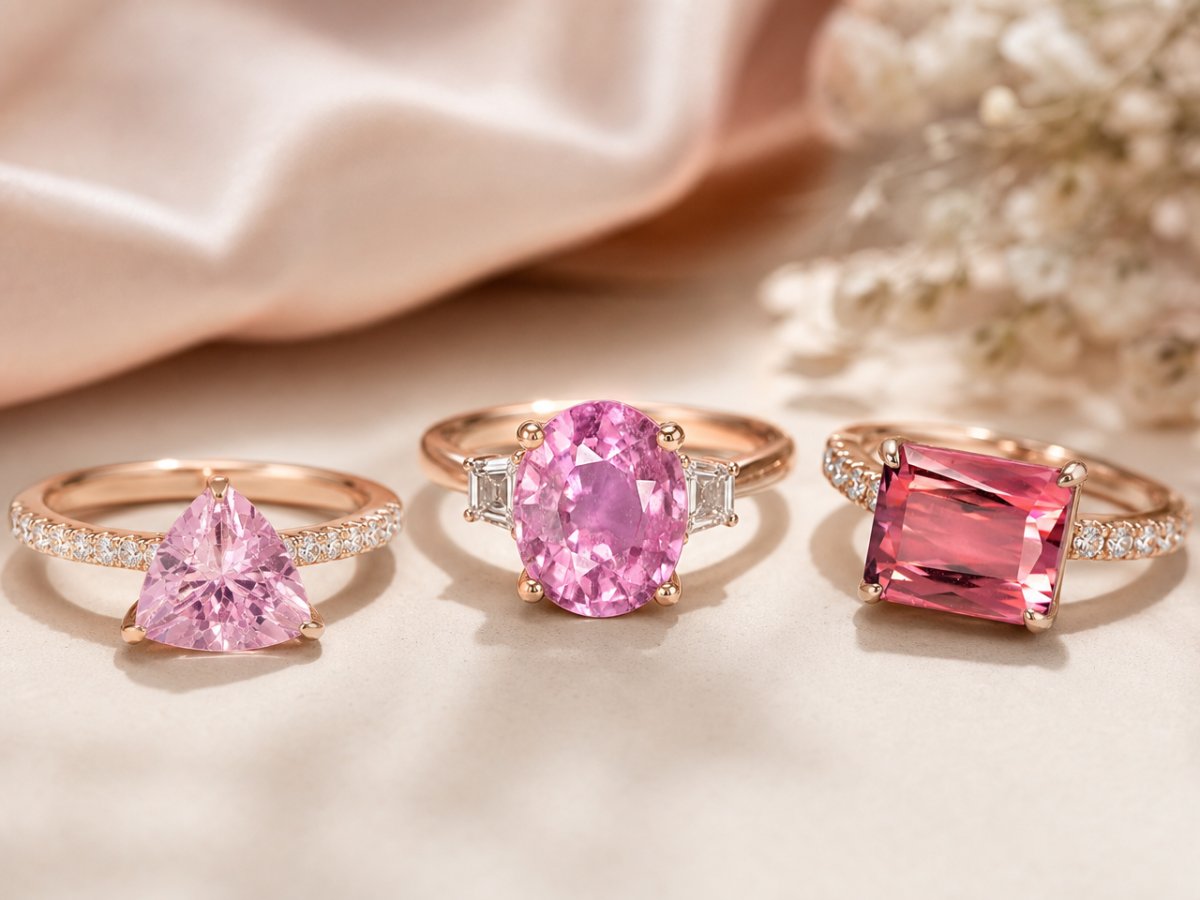
Metal color can noticeably alter the way a pink gemstone appears. Rose gold gives a warm, blended and romantic look. It can enhance the overall blush effect, especially with morganite, peach-pink sapphire and softer pink stones, but it may reduce contrast between metal and gem.
Yellow gold emphasizes warmer peach, salmon and apricot-pink tones. It can make peach-pink morganite or warm pink topaz look richer and more golden.
White gold and platinum create stronger contrast and often make pink stones appear cooler, cleaner and more distinct. They are excellent choices for vivid pink sapphire, pink spinel, rubellite and pale pink stones that need contrast to show their color clearly.
Pairing Pink Center Stones with Colorless Accents
Colorless diamonds, white sapphires and other colorless accent gems can frame a pink center stone and sharpen color contrast. This is especially useful for pale blush gemstones, which can otherwise blend into skin tone or rose gold.
A white halo can make a pale pink gemstone appear more obviously pink. Colorless side stones in a three-stone ring can also make the center color look more intentional and saturated. The same gemstone may look subtle in rose gold but much brighter when surrounded by white accents.
Size, Carat Weight and Face-Up Presence
Do not compare carat weight directly across sapphire, spinel, morganite, tourmaline, zircon, topaz and garnet. Gemstones have different specific gravities, and cut proportions affect how large they look from the top. A one-carat sapphire will not necessarily have the same millimeter size as a one-carat morganite or zircon.
When selecting a loose gemstone for a ring, check the actual millimeter dimensions: length, width and depth. The length and width tell you how large the stone will appear face-up. Depth affects how the gem will sit in the setting and how easy it is to mount securely.
Clarity and Cut: What Matters in a Ring
Clarity expectations vary by gemstone species. Some gems, such as many spinels and garnets, are often appreciated when eye-clean. Tourmaline and rubellite may show inclusions, especially in richer colors. Morganite can look attractive even when the priority is soft color and size rather than technical perfection.
For an engagement ring, an attractive eye-clean appearance is often more useful than pursuing a flawless description. Look at the stone photo, note any visible inclusions and consider whether they affect beauty or durability. Cut is also important: a well-cut pink gemstone will show better brightness, more even color and stronger visual presence.
Treatments and Disclosure
Treatments are part of the colored gemstone market, but they should be disclosed clearly. Pink sapphire is commonly heat treated. Morganite may be heated to improve its pink color. Pink topaz may be treated or coated depending on the stone. Tourmaline, zircon and other gems may also have treatment considerations.
The safest buying habit is to check the disclosure for the individual loose gemstone rather than assuming all stones of a variety are treated or untreated. Treatment status can affect value, care and buyer preference.
Final Buying Advice
For a pink engagement ring intended for daily wear, start by comparing pink sapphire, pink diamond and pink spinel. If the desired look is soft, large and romantic, compare morganite with protective setting options. If vivid raspberry or reddish pink is the goal, include pink tourmaline and rubellite. For unusual sparkle or vintage character, consider pink zircon, pink topaz or rhodolite garnet with appropriate care expectations.
The best purchase is the individual gemstone that fits the design and lifestyle: the right color in real photos, the right millimeter size, attractive clarity, good cut, clear treatment disclosure and a setting that protects the gem for the way it will be worn.