More than 65,000 Satisfied Customers in over 120 Countries - Serving the Gemstone Business for 10 Years
30-Day Return Policy Worldwide Shipping for $6.99 Actual Product Photos
Gem Certification Natural Gemstones Only First Class Customer Service
Search
 
:
: Green Amethyst
Améthyste verte
Green Amethyst
Prasiolite Gem
Prasiolite Gem

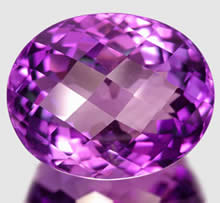
From time to time we get email asking us whether we sell something called green amethyst. Since amethyst, by definition, is the violet to purple shade of quartz, there is really no such thing as green amethyst. The term "green amethyst" makes as much sense as "red emerald" or "yellow ruby." Some gemstone varieties are simply defined by their distinctive color.

Having said that, clearly the customer is in search of something that someone told him is called green amethyst. What is it? Where does it come from? Does it have anything to do with amethyst?

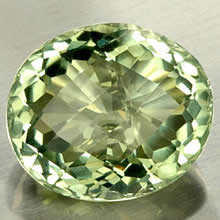
What the customer is looking for is something known by gemologists as prasiolite. The name comes from the Greek for "leek-green." Prasiolite is a golden green quartz, somewhat similar in color to peridot or gold-green beryl.

Synthetic Green Quartz

However, green quartz does not occur naturally. It is produced by heating amethyst or yellowish quartz. However, not all amethyst or yellow quartz can be heated to produce prasiolite. According to gemological sources, only quartz from the Montezuma deposit in Minas Gerais, Brazil can be heated to produce prasiolite. Amethyst or yellowish quartz is heated to about 500 degrees centigrade to produce the leek-green color. Unfortunately, the color is known to fade when exposed to strong sunlight.

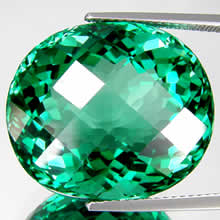
Some so-called green amethyst in the market is actually synthetic quartz produced by the hydrothermal method. It is usually found in a vivid mint green or blue-green rather than the paler golden-green of prasiolite. The unnatural color is usually a sure sign that it is synthetic.

Real Natural Amethyst

There are some other green quartzes that occur naturally. These are members of the chalcedony quartz family. They include chrysoprase and aventurine. Aventurine is mainly dark green, sometimes with a glittery metallic appearance caused by included green mica. Chrysoprase is colored by trace amounts of nickel. Its color varies from apple-green to deep green. Both are completely natural gemstones.

Finally, we haven't yet answered the question why prasiolite is being sold in the market as "green amethyst." The answer, sad to say, is simple greed. Since amethyst is the most valuable gem in the quartz family, associating this green heated quartz with the nobler amethyst is just an attempt to elevate the humble prasiolite. There are certainly many finer green gems in the market, with much better color stability.

First Published: December-19-2008

© 2005-2013 GemSelect.com all rights reserved.
Reproduction (text or graphics) without the express written consent of GemSelect.com (SETT Company Ltd.) is strictly prohibited.

ID: 2714321 pc
8 ct VVS Briolette with Hole Amethyst 17mm
8.49ct Amethyst
17.23mm x 9.58mm
US $46.70
Click to see All Item Details
Add Item to Cart
Item is in Stock
ID: 3072341 pc
40 ct IF Pear Checkerboard Amethyst 28mm x 19mm
40ct Amethyst
27.80mm x 19.18mm x 14.79mm
US $220.80
Click to see All Item Details
Add Item to Cart
Item is in Stock
ID: 3196601 pc
3 ct VVS Round Facet Amethyst 9 mm
3.05ct Amethyst
9.08mm x 7.15mm
US $22.47
Click to see All Item Details
Add Item to Cart
Item is in Stock
ID: 3523381 pc
10 carat Violet Marquise Facet Amethyst 20mm x 10.5mm
9.72ct Amethyst
19.98mm x 10.27mm x 8.58mm
US $68.04
Click to see All Item Details
Add Item to Cart
Item is in Stock
ID: 3335451 pc
10 ct VS Oval Facet Amethyst 15.5x12mm
9.66ct Amethyst
15.26mm x 11.86mm x 9.51mm
US $57.96
Click to see All Item Details
Add Item to Cart
Item is in Stock
Email to a Friend
Subscribe to our Newsletter