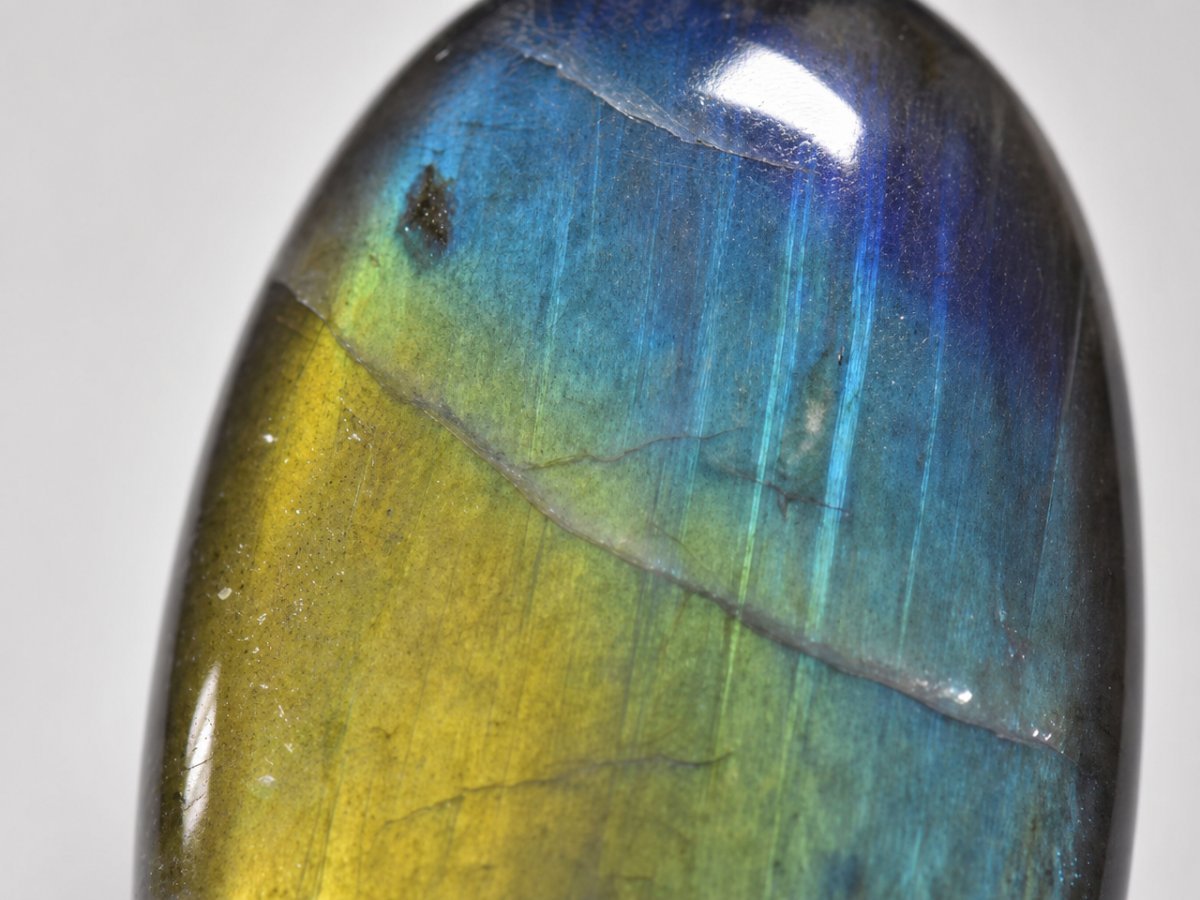


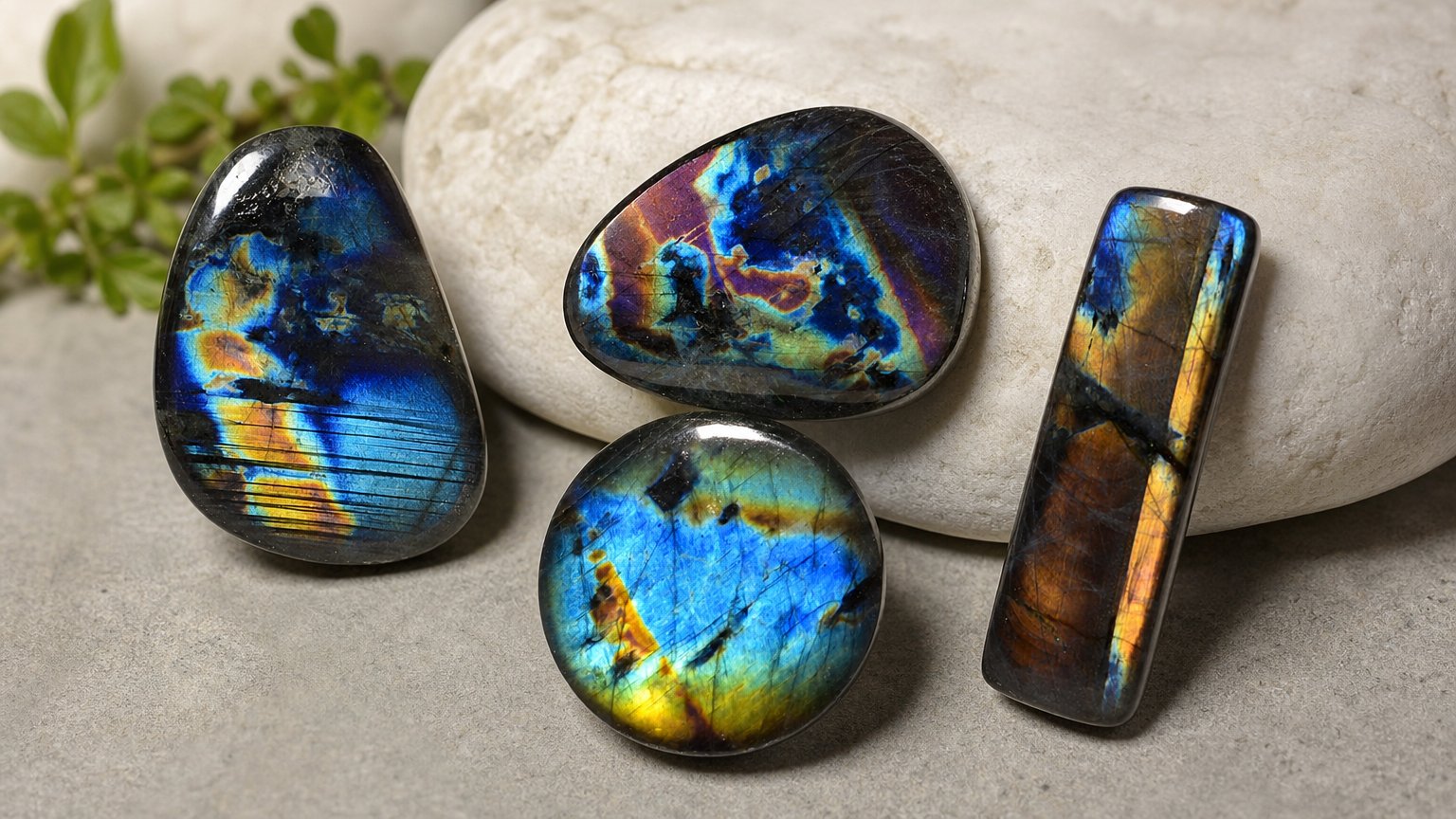
Spectrolite is bought for its distinctive multicolor appearance, often seen with darker brown, gray or black body tones. For buyers, the most important decision is not a formal grade but the overall visual impact: how attractive the colors look face-up, how well the stone is cut to show them, and whether the size and shape suit the intended jewelry design.
This guide explains the practical points to consider before buying Spectrolite, including color, cut, origin, durability, treatments and jewelry use.
What Is Spectrolite?
Spectrolite is a variety of labradorite, which belongs to the feldspar mineral group. Its chemical formula is (Ca,Na)(Al,Si)₄O₈, and it crystallizes in the triclinic crystal system.
For shoppers, the key point is that Spectrolite is valued primarily as a visual gemstone. Its appeal comes from its multicolor appearance rather than high transparency or traditional faceted brilliance. This makes careful viewing and selection especially important.
Color and Appearance: The Main Buying Factor
Spectrolite is known for multicolor appearance, commonly combined with brown, gray or black base tones. When comparing stones, look at the face-up view first. A good buying choice should show attractive color from the angle at which the gemstone will be worn or displayed.
Because darker body colors can make the multicolor effect appear more dramatic, do not judge Spectrolite only by whether the base tone is dark or light. Instead, consider the balance between body color and visible color effect. A stone that looks lively from the front is usually more desirable for jewelry than one that only shows strong color from a narrow angle.
What to Check When Viewing Spectrolite
- Color coverage: Look for appealing color across the visible face, especially in the center of the stone.
- Viewing angle: Tilt the stone gently to see how consistently the color appears.
- Contrast: Brown, gray or black body tones can provide a strong background for multicolor flashes.
- Surface quality: Check that the polish is smooth and free from distracting scratches or chips.
Cut and Shape
Spectrolite is most commonly cut as a cabochon. This cut has a smooth, domed surface and is well suited to gemstones chosen for color display rather than sparkle. A well-cut cabochon should have a pleasing outline, even dome and good polish.
Slice cuts are also seen and can be useful when the natural pattern or color distribution is the focus. Faceted Spectrolite exists, but it is less typical. Buyers choosing faceted stones should still prioritize color appearance over brilliance, since Spectrolite is not usually purchased for diamond-like sparkle.
Common shapes include oval, cushion, pear and round. Ovals are especially practical because they suit many pendant, necklace and ring designs. Baguette, trillion and other fancy shapes can be attractive choices for custom jewelry, provided the face-up color is strong in that specific shape.
Origin: Finnish Spectrolite
Finland is the key origin associated with Spectrolite. For buyers who collect gemstones by locality or who want a stone specifically represented as Spectrolite, origin information can be important.
If Finnish origin is central to your purchase, buy from a seller that clearly identifies the gemstone and provides reliable product information. GemSelect lists gemstone details clearly so buyers can compare stones by appearance, size, shape and other relevant characteristics.
Gemological Properties
The following properties help identify Spectrolite as a feldspar gem and are useful for understanding its durability and handling:
| Gem variety | Variety of labradorite |
| Mineral group | Feldspar |
| Mohs hardness | 6-6.5 |
| Refractive index | 1.559-1.573 |
| Specific gravity | 2.68-2.72 |
| Crystal system | Triclinic |
| Chemical formula | (Ca,Na)(Al,Si)₄O₈ |
Durability and Jewelry Suitability
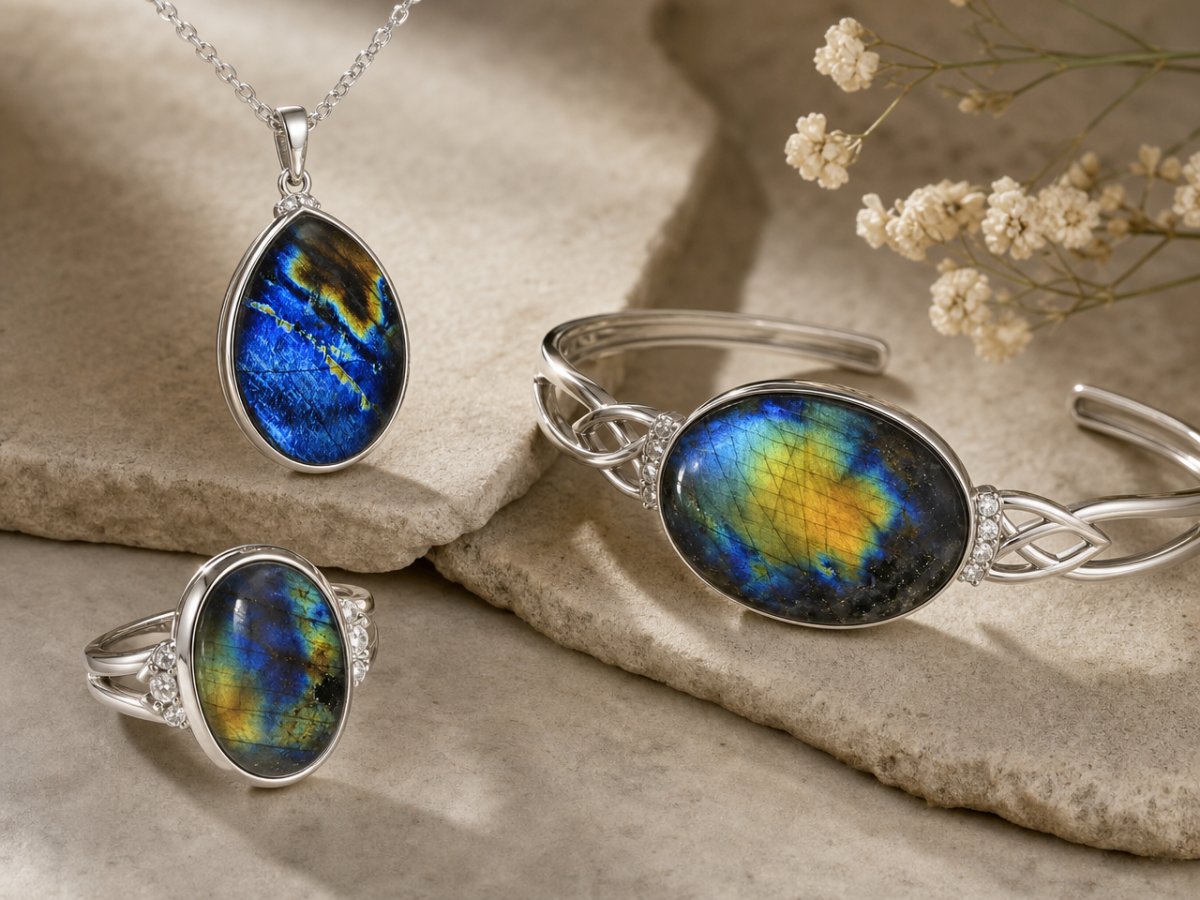
With a Mohs hardness of 6-6.5, Spectrolite is suitable for many types of jewelry, but it should be worn with reasonable care. It is best suited to necklaces, pendants, brooches and earrings, where it is less likely to receive hard knocks.
Spectrolite can also be used in collector rings, especially when the setting protects the edges and the wearer understands that it is not as hard as sapphire, ruby or diamond. For bracelets, protective settings and careful wear are especially important because bracelets are more exposed to impact.
Care Tips for Spectrolite Jewelry
- Store separately from harder gemstones to reduce scratching.
- Avoid hard knocks, especially on exposed cabochon edges.
- Clean gently with mild soap, water and a soft cloth.
- Remove rings or bracelets before heavy work or activities that may cause impact.
Treatments
Spectrolite is commonly sold as untreated. For buyers, this is straightforward: the stone's appearance should be appreciated as natural rather than as the result of routine enhancement.
As with any gemstone purchase, check the product description for treatment disclosure. If treatment status is important to you, choose a seller that states this information clearly.
How to Choose the Right Spectrolite
When buying Spectrolite, start with appearance. The best stone for you is one that shows attractive multicolor character in the size, shape and orientation you need.
For Pendants and Necklaces
Choose a stone with strong face-up color and an outline that works well vertically or centrally in the design. Oval, pear and cushion cabochons are practical choices for pendants because they provide a generous surface for color display.
For Earrings
Matching is more important than size alone. Look for pairs that have similar body color, shape, size and visible color effect. Exact matches can be difficult with patterned gemstones, so aim for a balanced pair rather than perfect duplication.
For Collector Rings
Prioritize a protective setting and a stone that displays good color when viewed from normal hand positions. Cabochons are a practical choice, but avoid designs that leave sharp edges or high domes too exposed.
For Brooches and Statement Pieces
Larger cabochons or slice cuts can work well because brooches allow more design space and are less exposed to daily wear than rings or bracelets.
Buying Checklist
- Does the stone show attractive multicolor appearance from the front?
- Is the base tone pleasing and does it support the color effect?
- Is the cabochon well shaped, evenly polished and free from distracting damage?
- Is the size appropriate for the intended jewelry use?
- Is the origin or treatment information clearly stated if important to your purchase?
- Will the setting protect the stone if it is used in a ring or bracelet?
Summary
Spectrolite is a Finnish variety of labradorite feldspar valued for its multicolor appearance. The most important buying factors are face-up color, cut quality, shape, and suitability for the jewelry design. Cabochons are the most common and practical cut, while necklaces, pendants, brooches and earrings are especially suitable uses. Rings and bracelets can be attractive but should be designed and worn with more care.