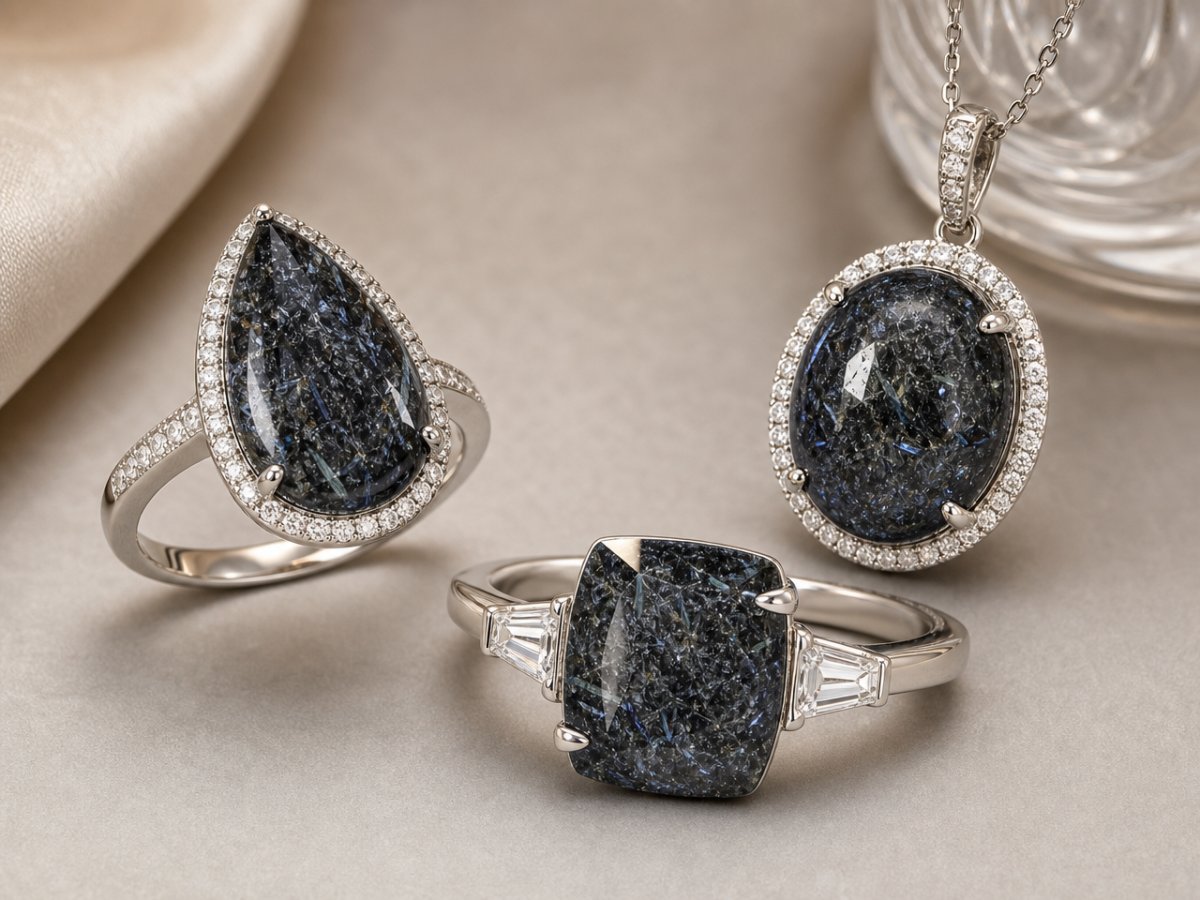


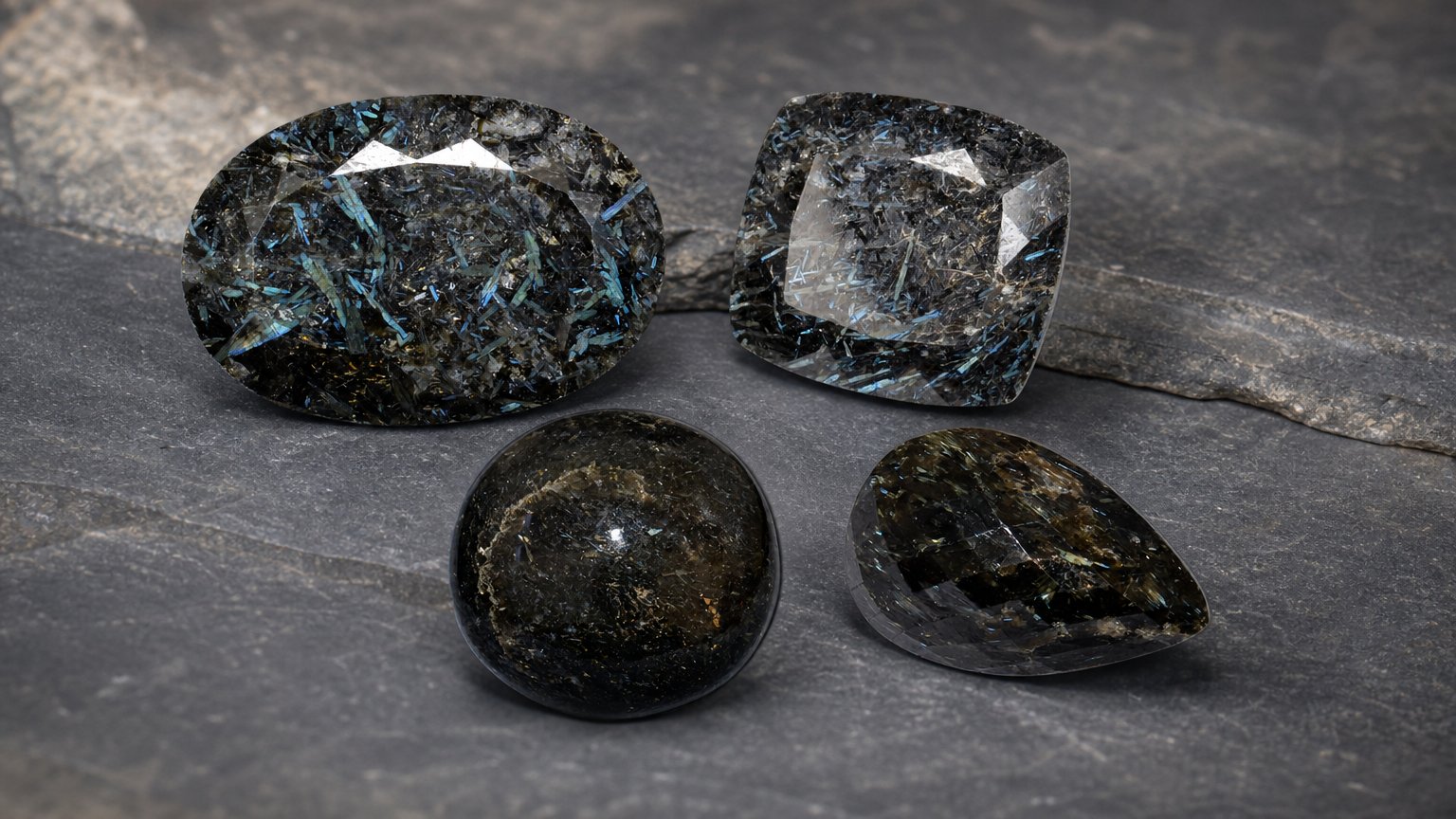
Nuummite is a distinctive black gemstone chosen by buyers who want a dark, characterful stone for pendants, earrings, necklaces and statement jewelry. Because it is not as familiar as many traditional jewelry gems, the best purchase decisions come from understanding its appearance, durability, cutting styles and treatment status.
This guide focuses on the practical details that matter when choosing Nuummite: how it looks, which cuts and shapes are commonly available, how durable it is for different jewelry types, and what to check before buying.
What Is Nuummite?
Nuummite is associated with the mineral species anthophyllite and gedrite. Gemologically, it belongs to the orthorhombic crystal system and has the chemical formula (Mg₂)(Mg₅)Si₈O₂₂(OH)₂. For buyers, these technical details are most useful because they help distinguish Nuummite from more common black gemstones and support accurate identification.
Its measured refractive index is 1.60-1.69, and its specific gravity is 2.85-3.20. These values are mainly used by gemologists and sellers for identification rather than by everyday buyers for visual selection.
Color and Appearance
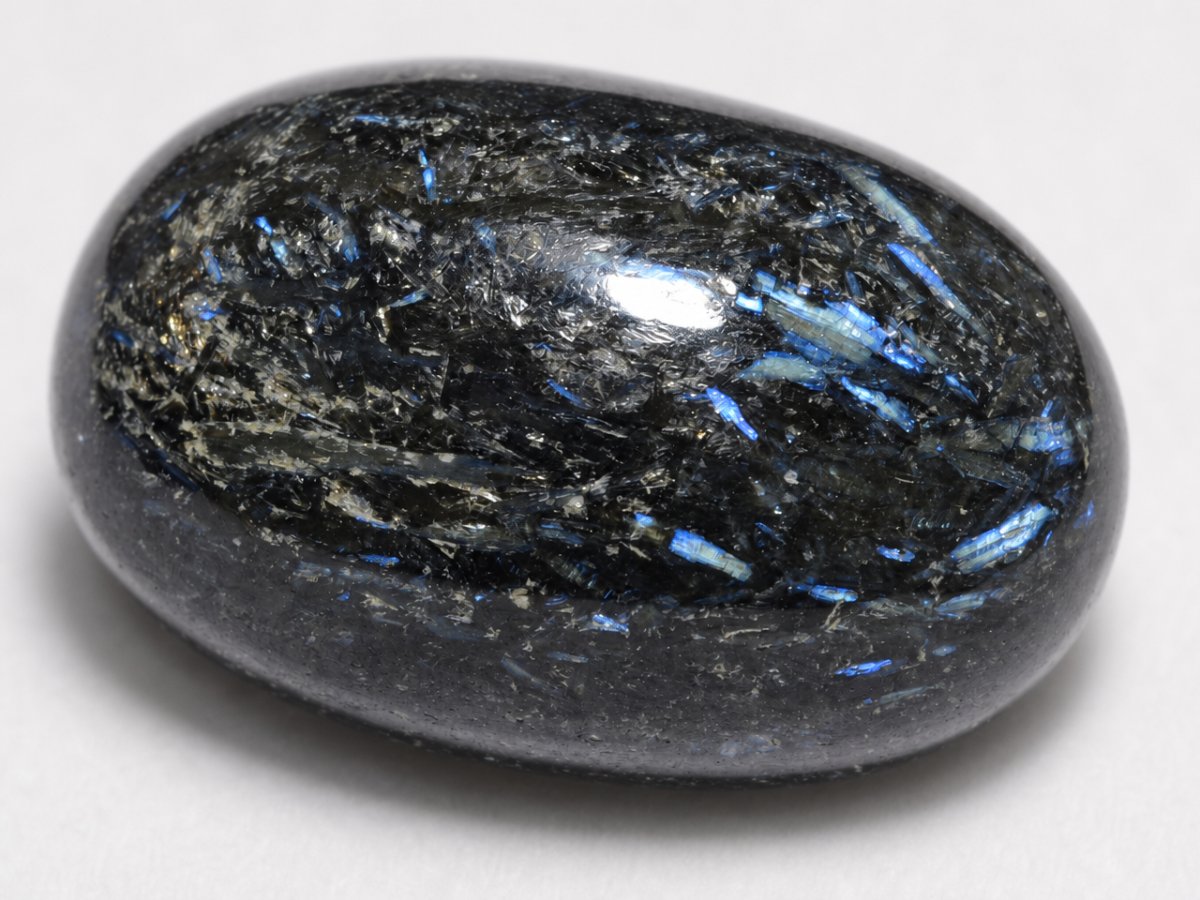
Nuummite is known as a black gemstone. When buying, look first at the overall appearance of the stone: the richness of the black body color, the quality of the polish and whether the face-up appearance suits your design.
Since black gemstones can show surface quality clearly under reflected light, inspect the stone for scratches, abrasions, chips or uneven polish. A clean, well-polished surface is especially important in pendants and rings, where the gem is viewed at close range.
Common Cuts and Shapes
Nuummite is available in several cutting styles. Faceted stones are common, while cabochons, checkerboard cuts and step cuts are also seen. Each style gives a different look and should be chosen according to the jewelry design.
Faceted and checkerboard cuts can add a more structured, reflective appearance. Step cuts offer a cleaner geometric style, while cabochons provide a smooth, rounded surface that suits simple settings and organic designs.
Oval shapes are especially common for Nuummite. Cushion, octagon and pear shapes are also practical choices, with round, trillion and freeform shapes offering additional design flexibility. Freeform stones can be useful for one-of-a-kind pendants or custom jewelry where calibrated dimensions are less important.
Durability and Everyday Wear
Nuummite has a Mohs hardness of 5.5-6. This makes it suitable for many jewelry uses, but it is not as hard as sapphire, ruby or quartz. Buyers should consider how the finished piece will be worn before choosing a setting.
Pendants, necklaces and earrings are excellent choices because they are less exposed to knocks and abrasion than rings. Nuummite can be used in fashion rings, but a protective setting is recommended, especially if the ring will be worn often. Bezel settings or designs that shield the edges can help reduce the risk of damage.
For care, avoid rough wear, hard impacts and storage beside harder gemstones that may scratch the surface. Clean Nuummite gently with mild soap, warm water and a soft cloth. Avoid harsh chemicals and aggressive cleaning methods.
Treatments and Buying Confidence
Nuummite is commonly offered untreated. This is useful for buyers who prefer gemstones whose appearance has not been enhanced by treatment. When purchasing, check the product description and any available seller disclosure to confirm treatment status.
At GemSelect, treatment information is an important part of gemstone buying because it helps buyers compare stones honestly and choose according to their preferences.
Origins
Greenland is the most important origin associated with Nuummite. Canada is also known as a source, and India is listed among lesser-known origins. Origin can be interesting to collectors, but most jewelry buyers should focus first on the stone's appearance, cut, dimensions, durability needs and seller disclosure.
How to Choose the Right Nuummite
For pendants and necklaces
Choose the size and shape based on the style of the design. Ovals, pears, cushions and freeforms work especially well for centerpieces. Since pendants are viewed face-up, prioritize an attractive surface, good polish and pleasing proportions.
For earrings
Matching is more important than size alone. Look for pairs with similar color, shape, dimensions and cut style so the earrings appear balanced when worn.
For rings
Choose Nuummite rings as fashion jewelry rather than high-impact everyday wear. A protective setting is important because the gemstone's hardness of 5.5-6 means it can be scratched or damaged by harder materials.
For collectors
Collectors may value accurate identification, untreated status and documented origin. A well-cut stone with an appealing black appearance and clear seller information is generally a stronger choice than a poorly finished stone selected on origin alone.
Final Buying Tips
When comparing Nuummite gemstones, do not judge by carat weight alone. A smaller stone with a better face-up appearance, cleaner polish and a cut suited to your jewelry design may be the better purchase. Check the dimensions, not just the weight, especially for pendants, earrings and ring settings.
Buy from a seller that clearly states the gemstone name, treatment status, dimensions, weight and origin when available. For a less common gemstone such as Nuummite, clear disclosure and accurate descriptions are essential for confident buying.
Summary
Nuummite is best chosen for its deep black appearance, suitable cut and intended jewelry use. It is commonly untreated and most strongly associated with Greenland, with Canada and India also known as sources. With a Mohs hardness of 5.5-6, it is especially well suited to pendants, necklaces and earrings, while rings should be worn with more care and protective settings.