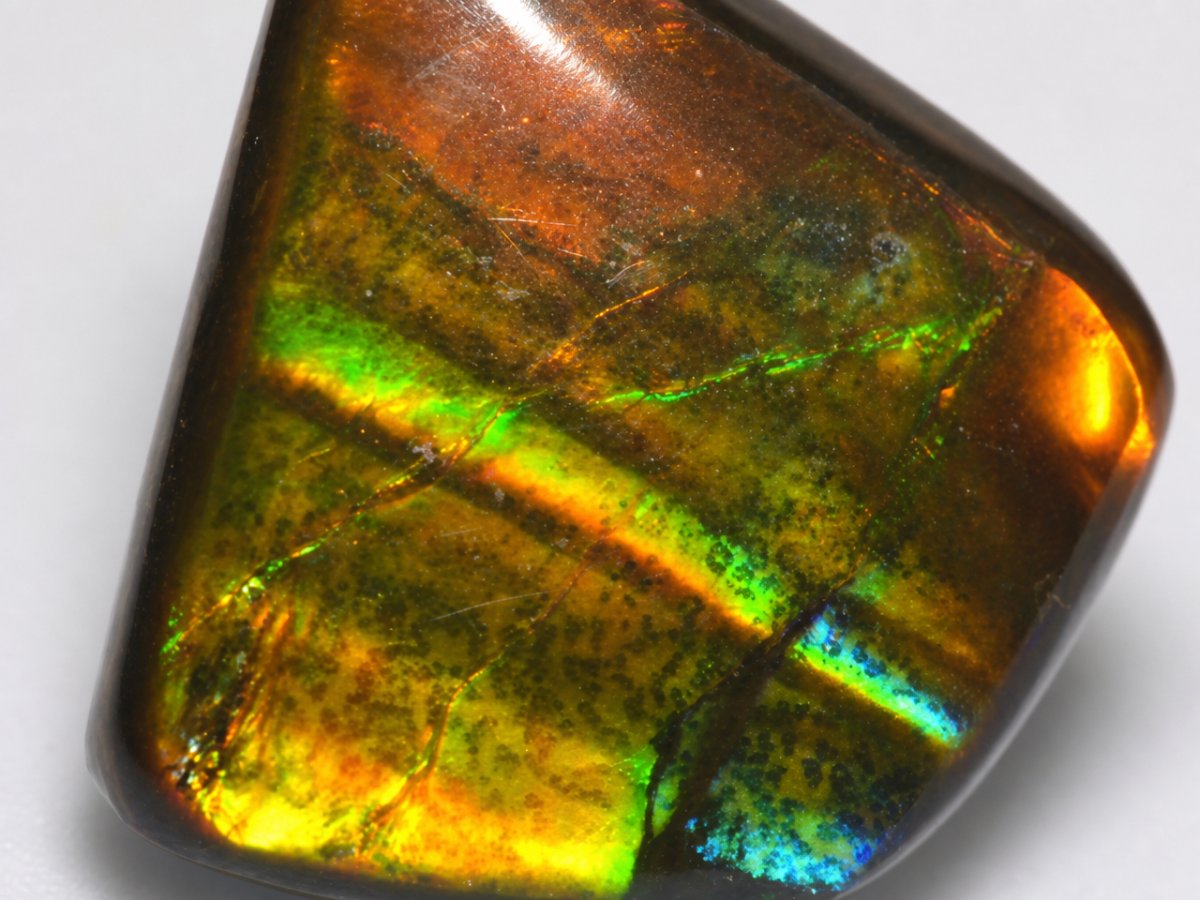


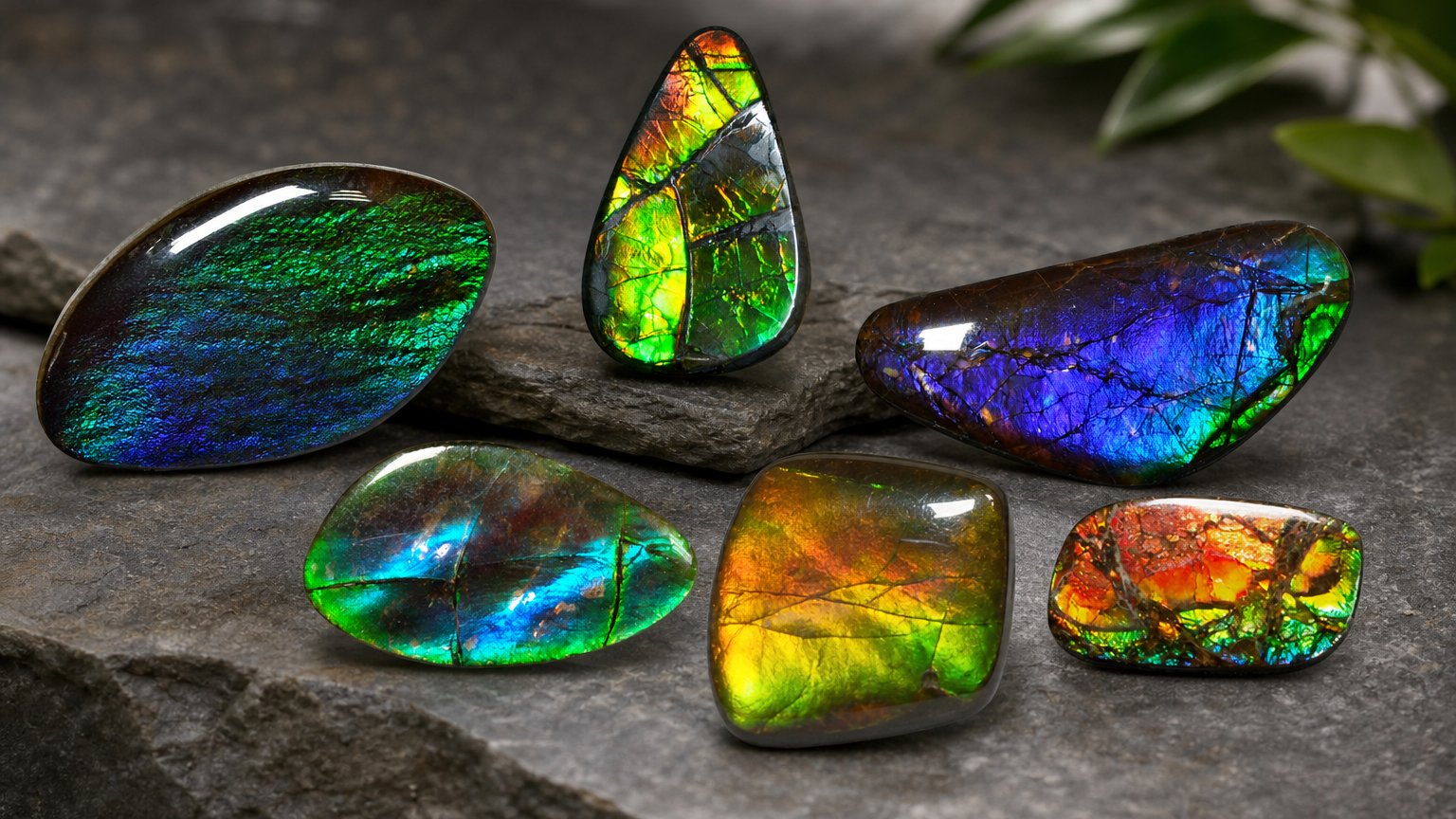
Ammolite is chosen for one main reason: its striking multicolor appearance. For buyers, the appeal is usually visual and personal, so a good purchase begins with understanding what you are seeing and how the gem will be worn. Unlike transparent faceted gemstones, ammolite is most often appreciated as a cabochon, where the surface, color display, shape and condition of the gem are more important than brilliance or traditional clarity.
This buying guide explains the practical points to consider before purchasing ammolite, including color, cut, size, treatments, durability, origin and suitable jewelry use. Whether you are selecting a single stone for a pendant, matching stones for earrings, or a cabochon for a custom ring, the goal is to choose a gem that fits the design and can be cared for appropriately.
What Is Ammolite?
Ammolite is a gemstone associated with the aragonite mineral. Its chemical formula is CaCO₃, and it belongs to the orthorhombic crystal system. For jewelry buyers, those technical details are useful because they help explain two important things: ammolite has a distinctive appearance, and it is not a hard everyday-wear stone.
The gemological profile of ammolite includes a Mohs hardness of 3.5 to 4.5, a refractive index of 1.520 to 1.680 and a specific gravity of 2.60 to 2.85. These values are not usually used by consumers to choose one individual gem over another, but they are helpful for identification, care and setting decisions.
In the marketplace, ammolite is typically selected by its face-up beauty. Buyers should look closely at the surface, the strength and arrangement of color, the quality of the cabochon cutting, and whether any treatment or assembly has been disclosed.
Color and Appearance: The Main Buying Factor
Ammolite is known for its multicolor appearance. This is the feature most buyers notice first, and it is usually the most important visual consideration. Some stones show several colors in one gem, while others may have a more limited but still attractive color display. Because taste varies, there is no single look that is right for every buyer.
When comparing ammolite, view each gem face-up under normal lighting and from more than one angle. The most useful question is not simply “How many colors does it show?” but “Does the color display look attractive in the way I intend to use it?” A pendant stone, for example, may be viewed from a greater distance, so bold color contrast can be effective. A ring stone is usually seen close-up, so surface details and pattern may matter more.
Color Distribution and Pattern
Because ammolite is appreciated for multicolor visual effects, color distribution is important. Look for a face-up pattern that feels balanced, lively and suitable for the design. Some buyers prefer a broad spread of color across the entire stone, while others like distinct zones or directional patterns.
Freeform shapes are especially common and can make excellent use of natural-looking color layouts. In a custom design, the shape and color pattern should work together rather than fight each other. For example, a pear or trillion shape may emphasize a directional pattern, while a cushion or oval may create a more classic outline.
Surface Appearance
Traditional clarity grading is less relevant for ammolite than it is for transparent faceted gemstones. Instead, buyers should inspect the surface and face-up appearance. Look for chips, obvious breaks, dull areas, uneven polish or distracting surface features that affect the beauty of the stone. A cabochon should have a pleasing dome or surface profile and a polish that supports the color display.
For online buying, use clear product photos and dimensions. If buying from GemSelect or another reputable seller, check the listing details and ask questions when the surface condition, treatment or size is important to your project.
Cut and Shape
Ammolite is most commonly cut as a cabochon. A cabochon has a smooth, rounded surface rather than flat facets. This cutting style is well suited to gems where color, pattern or surface effects are the main attraction. It also allows the stone to be set in many jewelry styles, especially pendants and necklaces.
Freeform shapes are particularly common for ammolite. A freeform cut follows an irregular or organic outline rather than a standard calibrated shape. This can be useful because it allows the cutter to preserve and highlight the best color areas of the gem. Freeform cabochons are popular for one-of-a-kind pendants and custom jewelry.
More familiar shapes such as cushion, pear, trillion and oval may also be available. These can be easier to incorporate into traditional jewelry layouts, but the best choice depends on the individual stone and the intended design.
What to Check in the Cut
When evaluating an ammolite cabochon, consider the following practical points:
- Face-up appeal: The color and pattern should be attractive when viewed from the top.
- Outline: The shape should suit the jewelry design and look intentional.
- Proportions: The cabochon should not appear awkwardly thin or uneven for its intended setting.
- Polish: The surface should be smooth and finished well enough to show the multicolor appearance clearly.
- Setting compatibility: The girdle and outline should allow the stone to be secured safely by a jeweler.
Size and Dimensions
With cabochon gems such as ammolite, dimensions are often more useful than carat weight alone. Two cabochons of the same weight can face up differently depending on their shape, dome height and thickness. Always check the length, width and depth when buying for a specific setting.
For pendants and necklaces, larger stones can make a strong visual statement, especially when the multicolor pattern is bold. For earrings, matching size and overall appearance may be more important than finding two stones with identical details. For rings, size should be balanced with durability and setting protection.
If you are working with a jeweler or jewelry designer, share the exact measurements of the ammolite before choosing a setting. Freeform stones can be beautiful, but they often require custom or carefully adjusted settings.
Origin: Canada and the United States
Important origins for ammolite include Canada, with the United States also associated with the gem. Origin can be interesting to collectors and buyers who prefer to know where their gemstones come from, but it should be considered alongside appearance, treatment disclosure, cutting and suitability for the intended jewelry.
For most buyers, origin is not something that can be judged reliably by eye. If origin matters to you, purchase from a seller that provides clear information and ask for any available documentation. A transparent description is more useful than assumptions based only on color or appearance.
Gemological Properties and What They Mean for Buyers
Ammolite’s gemological properties are useful because they explain how it should be handled and worn. The Mohs hardness of 3.5 to 4.5 means it is considerably softer than many common jewelry gemstones. Hardness measures resistance to scratching, not resistance to breaking, but for practical wear it tells buyers that ammolite needs thoughtful protection.
The refractive index of 1.520 to 1.680 relates to how light behaves in the material. Ammolite is not usually purchased for faceted sparkle; its appeal is its multicolor surface appearance. The specific gravity of 2.60 to 2.85 describes density and can be relevant for gemological identification, but it is not normally a primary buying factor for consumers.
In short, the technical data supports what buyers should already observe: ammolite is visually distinctive, best selected by face-up appearance, and should be set and worn with care.
Durability and Everyday Wear
Durability is one of the most important buying considerations for ammolite. With a Mohs hardness of 3.5 to 4.5, ammolite is better suited to jewelry that is protected from hard knocks, abrasion and frequent contact with rough surfaces.
Necklaces and pendants are especially practical choices because they usually experience less impact than rings or bracelets. Earrings can also be suitable because they are generally protected during wear. Rings are possible, but they require more careful planning. A ring setting should help protect the stone, and the wearer should understand that ammolite is not ideal for rough daily use.
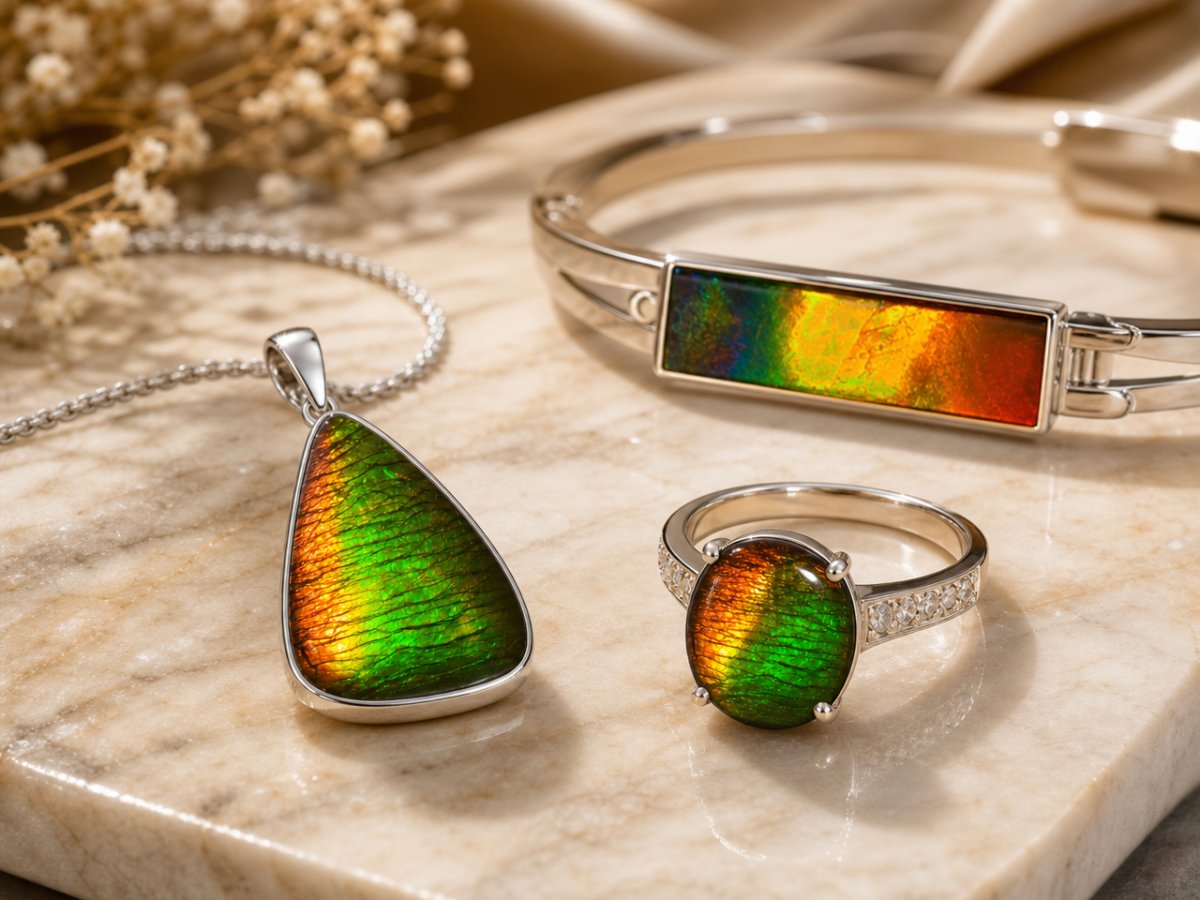
Bracelets deserve extra caution. Wrist jewelry is exposed to bumps against desks, counters, door handles and other surfaces. If ammolite is used in a bracelet, the design should be protective and the piece should be worn carefully.
Care Tips for Ammolite Jewelry
Because ammolite is relatively soft, store it separately from harder gemstones and metals that could scratch it. Avoid tossing it into a jewelry box with rings, chains or harder gems. Clean it gently with a soft cloth, and avoid harsh scrubbing. If the stone has an assembled treatment, extra care is especially important because assembled gems can be sensitive to damage if handled carelessly.
Remove ammolite jewelry before activities that may expose it to impact, abrasion or chemicals. This includes heavy housework, sports and situations where the stone may rub against hard surfaces. A few simple habits can help preserve the appearance of the gem.
Treatments: Assembled and Untreated Ammolite
Treatment disclosure is essential when buying ammolite. A common treatment associated with ammolite is assembled treatment. In general gemological terms, an assembled gemstone is made with more than one component, often to support, protect or present the gem material. The exact construction can vary, so buyers should read the product description carefully and ask the seller if the details are not clear.
Untreated ammolite is also known, though assembled material is an important consideration in the market. Neither category should be judged without context. What matters most for a buyer is accurate disclosure, good appearance, suitable durability for the intended use, and care instructions appropriate to the gem.
Questions to Ask About Treatment
Before purchasing, consider asking:
- Is the ammolite assembled or untreated?
- If assembled, how should it be cared for?
- Is the listed size for the entire assembled gem?
- Is the stone suitable for the jewelry type I have in mind?
- Are the photos representative of the stone’s actual face-up color and pattern?
Clear answers help prevent misunderstandings and make it easier to choose the right gem for your design.
Best Jewelry Uses for Ammolite
Ammolite is especially well suited to necklaces and pendants. These settings show off the multicolor face-up appearance while keeping the stone away from many of the impacts that rings and bracelets experience. A single freeform cabochon can make an attractive focal point, while more regular shapes can suit classic pendant designs.
Rings can be beautiful, but they should be chosen with durability in mind. Protective settings, careful wear and occasional-use expectations are sensible. Ammolite rings are best for buyers who are willing to treat the jewelry thoughtfully rather than wear it during demanding daily activities.
Earrings are another suitable option, especially when the stones are chosen for complementary color and size. Exact matching may be challenging with multicolor cabochons, so focus on visual harmony rather than identical patterning. Bracelets are possible but should be approached carefully because of the greater exposure to knocks and abrasion.
Practical Ammolite Buying Checklist
Use the following checklist when comparing ammolite gemstones:
- Color: Look for an attractive multicolor display that suits your taste and design.
- Pattern: Choose a layout that looks balanced or interesting face-up.
- Cut: Cabochons are common; check polish, outline and proportions.
- Shape: Freeform shapes are popular, while cushion, pear, trillion and oval shapes may suit more traditional designs.
- Surface condition: Inspect for chips, dull areas or distracting surface features.
- Dimensions: Confirm length, width and depth, especially for custom settings.
- Treatment disclosure: Know whether the stone is assembled or untreated.
- Jewelry use: Prefer pendants and necklaces for easier wear; use extra caution for rings and bracelets.
- Origin information: Canada is an important origin; ask for origin details if they matter to you.
- Seller transparency: Buy from a source that provides clear photos, measurements and treatment information.
Buying Ammolite Online
When buying ammolite online, photographs are especially important because each stone’s appearance can vary. Review all available images and pay attention to the face-up view, not just close-up beauty shots. If possible, compare the stone’s dimensions to a ruler or a piece of jewelry you already own so the scale is clear.
For freeform cabochons, do not assume they will fit standard settings. Share measurements with your jeweler before purchasing if the stone is intended for a specific design. If you are buying from GemSelect, review the product details carefully and use the available information to match the stone with your intended use.
Summary
Ammolite is a distinctive multicolor gemstone best chosen by its appearance, cut quality and suitability for the intended jewelry. Cabochons are the most common cut, with freeform shapes often used to highlight the gem’s natural-looking color patterns. Canada is an important origin, and buyers should pay attention to treatment disclosure, especially because assembled treatment is commonly associated with ammolite.
The key to a confident purchase is balancing beauty with practicality. Choose the color and pattern you enjoy, confirm the dimensions and treatment, and match the stone to jewelry that protects it appropriately. For many buyers, a pendant or necklace is the most practical way to enjoy ammolite’s multicolor character.