


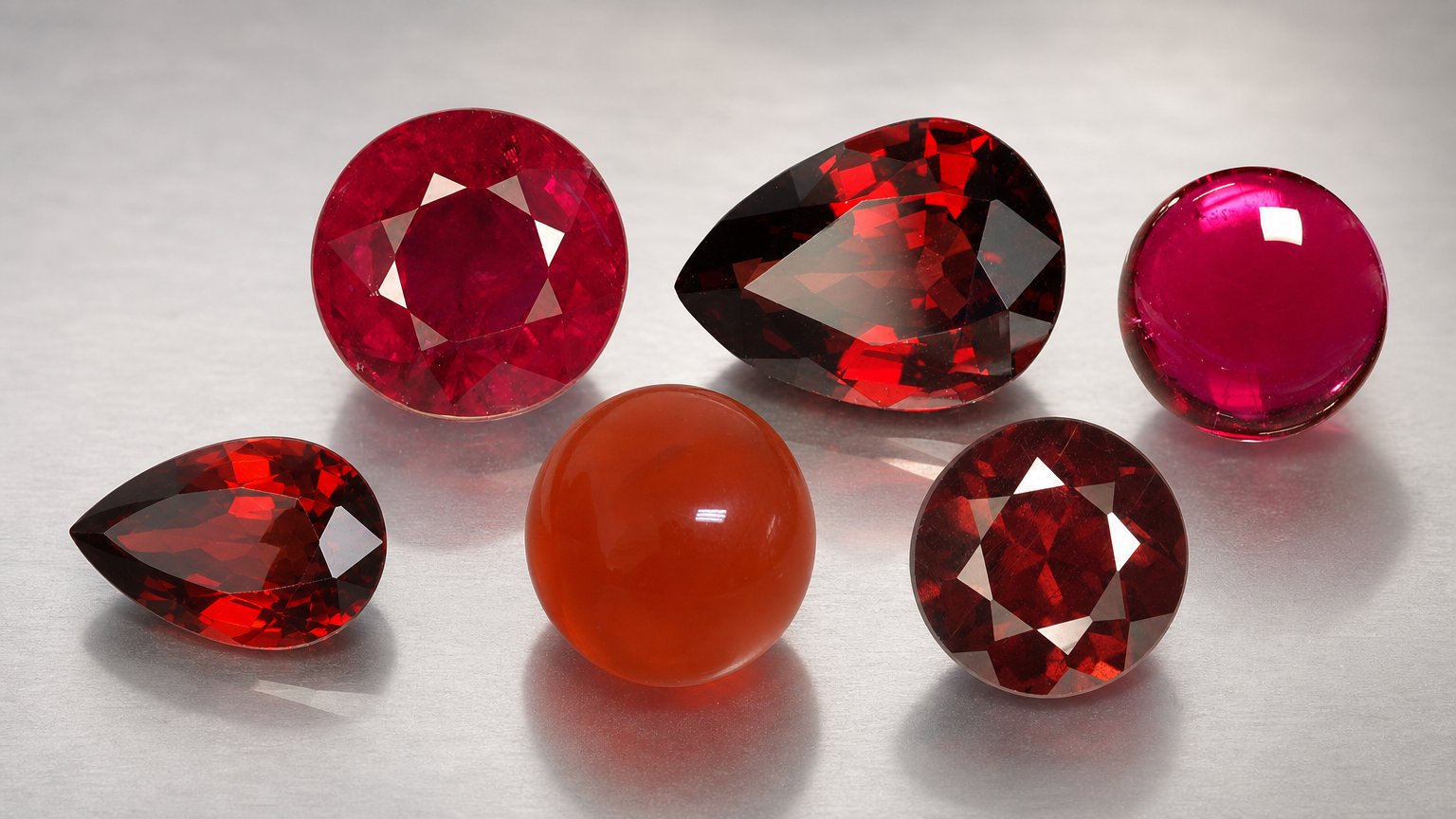
Red gemstone earrings can be classic, dramatic, romantic or earthy depending on the stone you choose. Natural red gemstones range from vivid pure red and crimson to pinkish-red, purplish-red, orange-red and dark burgundy. That variety is useful, because the best red gemstone for earrings is not always the most famous one.
Earrings usually receive less impact and abrasion than rings, so buyers can consider both highly durable red gemstones and some materials that need a little more care. Ruby and red Spinel are excellent choices for frequent wear, but Garnet, Rubellite Tourmaline, red Zircon, Carnelian and red Agate can also be very successful when the color, size, cut and setting suit the design.
For real earring projects, especially when buying loose red gemstones, focus on face-up color, millimeter dimensions, cut style and how well the two stones match visually. Carat weight matters, but it should not be the only deciding factor.
Popular Natural Red Gemstones for Earrings
Ruby
Ruby is the classic premium red gemstone and one of the strongest choices for frequently worn earrings. As red corundum, Ruby has excellent hardness at 9 on the Mohs scale, making it highly resistant to scratching in normal jewelry use. Fine Ruby can show vivid red to slightly purplish-red color, but quality and price vary enormously depending on color, clarity, size, origin, treatment and overall appearance.
Ruby earrings can be elegant in studs, refined in drops and luxurious in halo or accent designs. Heat treatment is common for Ruby, and additional treatments can also exist. Buyers should check the treatment disclosure for the individual gemstone rather than assuming all Ruby is the same.
Red Spinel
Red Spinel is an important natural red gemstone in its own right. It can display bright red, pinkish-red or deeper red shades and has excellent durability for earrings, with a Mohs hardness of 8. Historically, red Spinel was sometimes confused with Ruby, but it should not be treated merely as an imitation or substitute. Spinel has its own brilliance, crystal character and appeal.
Red Spinel is especially attractive for buyers who want a durable, bright red gemstone with lively sparkle. Fine red Spinel can also be rare and valuable, so prices can vary widely.
Pyrope, Almandine and Rhodolite Garnet
Garnet is a gemstone group, not a single uniform red stone. Garnets occur in many colors beyond red, and several red varieties are especially useful for earrings.
Pyrope Garnet is typically deep red to purplish-red and is a strong option for classic red gemstone earrings. Almandine Garnet commonly appears deeper red, wine-red or brownish-red and is widely used for affordable red earrings. Rhodolite Garnet is usually lighter and more purplish or raspberry-red than many traditional red garnets, often with attractive transparency and brilliance.
Commercial names such as red Garnet or Mozambique Garnet are often used for vivid to deep red garnets in the jewelry trade. These can be excellent earring stones, but buyers should still look at the individual stone's hue, tone, saturation and cut rather than relying only on the name.
Rubellite Tourmaline
Rubellite is the pinkish-red to rich red variety of Tourmaline. It offers a different character from Ruby or Garnet, often with lively pink, raspberry, purplish-red or rich red color. It is especially useful for buyers who want larger or elongated red gemstones for earrings, such as ovals, pears, cushions or emerald cuts.
Tourmaline has good hardness for earrings, generally 7 to 7.5 on the Mohs scale, but it benefits from careful handling and protective setting choices, particularly in larger stones or more exposed dangle designs.
Red Zircon
Red Zircon is less commonly encountered than some other zircon colors, but it can show attractive reddish, orange-red or brownish-red shades. Natural Zircon is known for excellent brilliance and dispersion, which can make faceted stones lively in drop earrings or smaller feature stones.
Zircon should be handled with more care than Ruby or Spinel. It can make beautiful earrings, but it is best protected from knocks and rough handling.
Carnelian and Red Agate
Carnelian is a translucent orange-red to reddish-brown variety of Chalcedony. It is especially useful for cabochons, larger earrings, bead drops and artisan designs where broad areas of warm red-orange color are desired rather than high faceted sparkle.
Red Agate and other red Chalcedony materials can also suit larger inexpensive earring designs. Some Agate and Chalcedony materials may be dyed or otherwise treated, so treatment disclosure is important. Do not assume treatment status from the variety name alone; check the information supplied for the individual gemstone.
Red Coral
Red Coral is an organic gem material rather than a crystalline gemstone. It may appear in earrings as cabochons, beads or carved pieces, but it requires different care from mineral gemstones and sourcing considerations can be important. Buyers interested in Coral should pay close attention to disclosure, care instructions and origin information.
Which Shade of Red Is Right for Your Earrings?
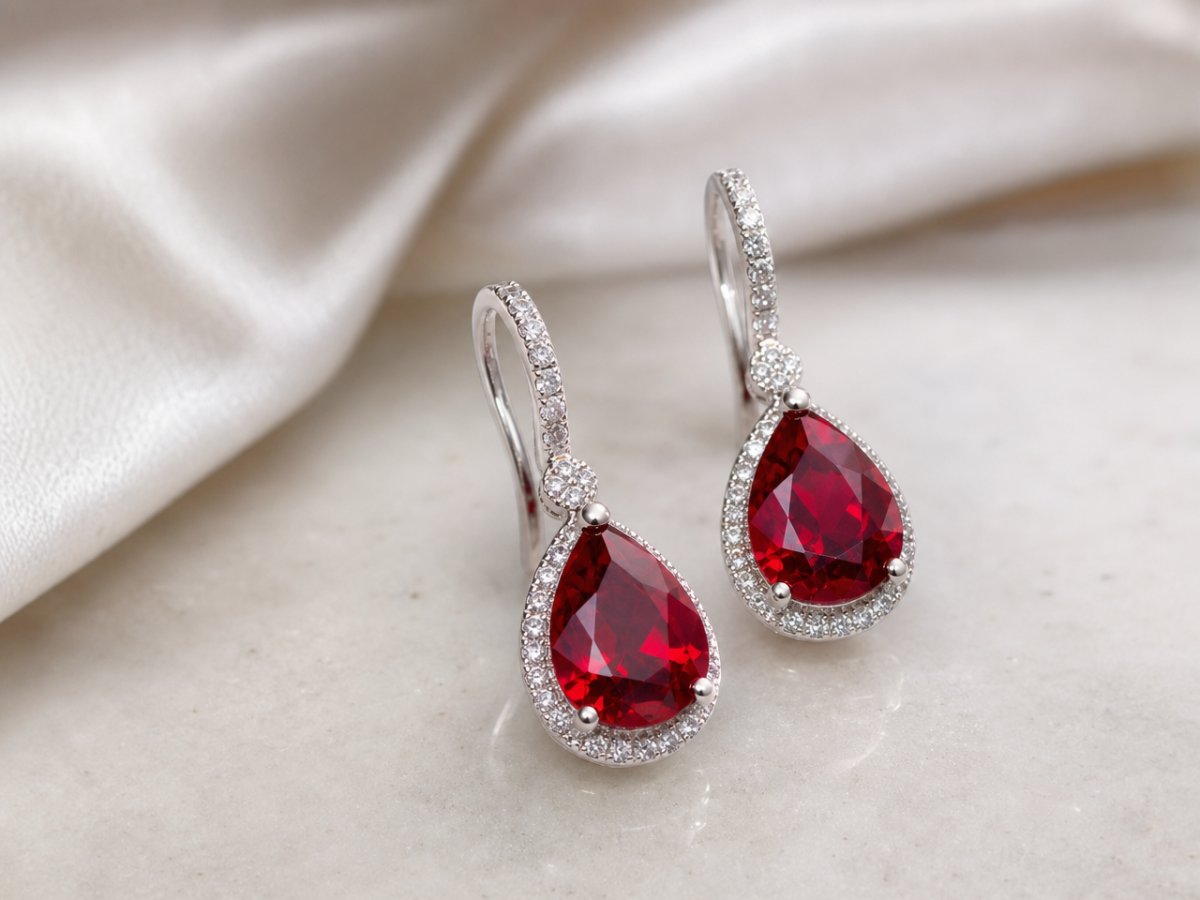
Red gemstone color categories overlap, and individual stones vary considerably in hue, tone and saturation. Still, the following groupings can help you choose the visual direction of your earrings.
- Bright or vivid red: Fine Ruby and red Spinel are the leading choices when you want a strong, classic red appearance.
- Pinkish or raspberry red: Rubellite, Rhodolite Garnet and some Ruby and Spinel offer softer, livelier red shades with pink influence.
- Purplish red: Rhodolite, Pyrope Garnet and some Spinel can provide elegant purplish-red color.
- Deep or wine red: Almandine, Pyrope and darker Garnet are useful for traditional dark red gemstone earrings.
- Orange-red: Carnelian and some red Zircon can bring warmth and brightness, especially in yellow gold or artisan settings.
- Brownish or earthy red: Carnelian, selected Garnet and red Agate can create a more natural, antique or earthy look.
When comparing red gemstones for earrings, view the stones face-up. A gemstone that looks red from the side may appear much darker when set, especially if it has a deep tone or a cut that creates extinction.
Ruby, Spinel, Garnet and Rubellite: Different Red Gemstones, Not Just Alternatives
It is tempting to compare every red gemstone to Ruby, but Ruby, red Spinel, Garnet and Rubellite Tourmaline are distinct natural gemstones with different strengths.
Ruby offers the most traditional prestige and excellent durability. Fine-quality Ruby generally commands the highest prices among commonly shopped red gemstones, especially when color, clarity and size are exceptional. Ruby may also contain inclusions, and treatment disclosure is particularly important.
Red Spinel can offer vivid red to pinkish-red color with excellent brilliance and strong durability. Fine red Spinel can be rare and valuable, but it provides a different optical character from Ruby rather than simply copying it.
Garnet often provides rich red color in accessible sizes and prices. Garnet can be deep red, purplish-red, raspberry-red, wine-red or brownish-red depending on variety and individual stone. It is often a practical way to create matched red gemstone earrings with strong color and good visual presence.
Rubellite Tourmaline is ideal when the goal is pinkish-red, raspberry-red or purplish-red color with a distinctive personality. It can be attractive in elongated shapes and larger earring designs, though fine material can also be costly.
Practical Comparison of Red Gemstones for Earrings
| Gemstone | Typical Red Appearance | Mohs Hardness | Earring Durability | Relative Price | Best Uses |
|---|---|---|---|---|---|
| Ruby | Vivid red to purplish-red; quality varies widely | 9 | Excellent for frequent wear | Moderate to very high; fine Ruby can be very expensive | Classic studs, fine drop earrings, luxury settings |
| Red Spinel | Bright red, pinkish-red or deeper red | 8 | Excellent for earrings | Moderate to high; fine red stones vary greatly | Bright studs, elegant drops, durable fine jewelry |
| Pyrope Garnet | Deep red to purplish-red | Approx. 6.5-7.5 | Generally practical for earrings | Usually accessible to moderate | Classic red gemstone earrings, matched pairs, studs and drops |
| Almandine Garnet | Deep red, wine-red or brownish-red | Approx. 6.5-7.5 | Generally practical for earrings | Often affordable | Affordable red earrings, darker designs, vintage-inspired styles |
| Rhodolite Garnet | Raspberry-red to purplish-red | Approx. 6.5-7.5 | Generally practical for earrings | Accessible to moderate; fine stones cost more | Brilliant pinkish-red or purplish-red studs and drops |
| Rubellite Tourmaline | Pinkish-red, raspberry-red, purplish-red to rich red | 7-7.5 | Good, with careful handling | Moderate to high; fine Rubellite varies greatly | Elongated drops, color-forward earrings, larger designs |
| Red Zircon | Reddish, orange-red or brownish-red with strong brilliance | Approx. 6.5-7.5 | Suitable with extra care | Variable; less common in red shades | Sparkling drops, accent stones, distinctive warm red designs |
| Carnelian | Translucent orange-red to reddish-brown | Approx. 6.5-7 | Good for earrings with normal care | Generally affordable | Cabochons, beads, larger artisan earrings |
| Red Agate / Chalcedony | Translucent to opaque red, orange-red or earthy red | Approx. 6.5-7 | Good for earrings with normal care | Generally affordable | Large cabochons, casual earrings, contemporary designs |
Relative price descriptions are only a broad guide. Individual quality can cause enormous price variation, particularly with Ruby, Spinel and fine Rubellite.
Best Red Gemstones by Earring Style
Stud Earrings
For red gemstone stud earrings, strong face-up color is especially important because the stones are often relatively small. Ruby and red Spinel are excellent durable choices for everyday or frequent-wear studs. Garnet can provide rich red color at accessible prices, and smaller matched Rubellite pairs work well when a pinkish-red or raspberry tone is preferred.
Round, cushion and oval shapes are common for studs. If the stone is very dark, inspect it face-up in normal lighting to make sure it does not appear nearly black once set.
Drop Earrings
Drop earrings give the stone more movement and visual length. Garnet, Rubellite, Ruby, Spinel and Zircon can all work well, depending on budget and design. Oval and pear shapes are especially useful because they elongate the line of the earring and show color clearly.
For drops, consider both the individual stone weight and the total earring weight. Large gems can look impressive, but comfort and setting security still matter.
Dangle and Statement Earrings
Dangle and statement earrings often need larger dimensions, so Garnet, Carnelian, Agate and larger Tourmaline can be practical choices. These gemstones can create visual impact without necessarily reaching the price level of large fine Ruby.
Translucent cabochons, beads and carved shapes can be especially effective in statement earrings because they show broad areas of color. Faceted stones create more sparkle, while cabochons create smoother, more graphic color.
Shapes and Cuts for Red Gemstone Earrings
Round and cushion cuts can emphasize brilliance and concentrated red color, making them strong choices for studs and classic earrings. Oval and pear cuts are particularly useful for drop and dangle designs because they add length and movement. Emerald and octagon cuts can create a cleaner, more architectural look, especially in Rubellite, Spinel or Garnet. Marquise shapes can look elegant in vertical drops or as part of a cluster design.
Cabochons deserve special attention with red gemstones. Carnelian, red Agate and some Ruby material are often cut as cabochons. A cabochon will not sparkle like a faceted stone, but it can show smooth, saturated color and work beautifully in larger or more contemporary earring designs.
Very dark red gemstones can appear almost black in poor lighting if the stone is too deep, too large, or cut in a way that creates excessive extinction. This is especially important with deep Garnet. Always evaluate the face-up appearance, not just the gemstone variety or carat weight.
Matching Red Gemstone Pairs
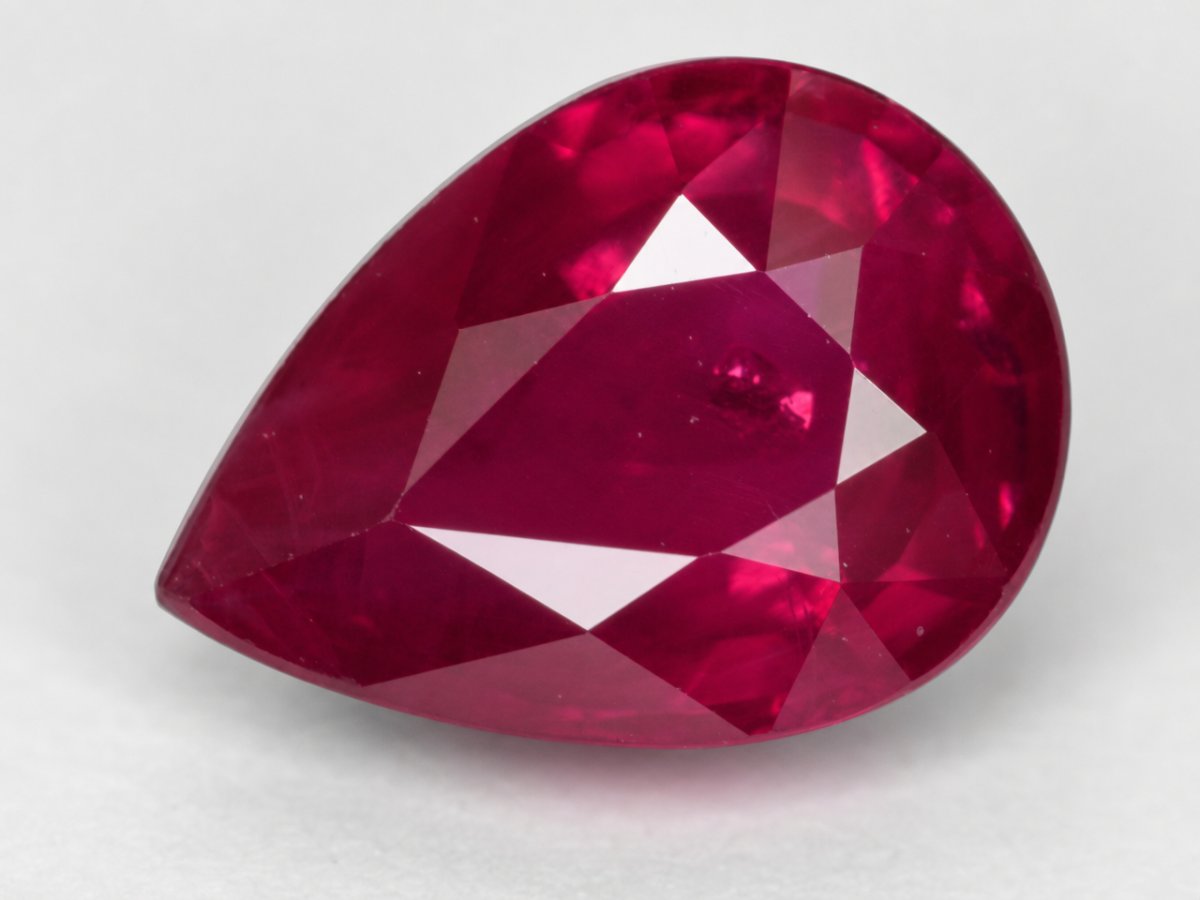
Matching pairs are one of the most important practical issues when buying loose red gemstones for earrings. The two stones do not need to have identical carat weights, but they should look like they belong together when viewed from the front.
Prioritize matching in this order: dimensions, shape, hue, tone, saturation, cut style, transparency and overall face-up appearance. Millimeter size is often more important than carat weight because earring settings are built around dimensions. Calibrated matched pairs are especially convenient for jewelers using standard earring settings.
Deep red stones require extra attention. Two Garnets may have similar weights and measurements but look noticeably different if one is substantially darker than the other. For earrings, the eye notices mismatched color quickly, especially in studs placed on opposite ears.
When shopping GemSelect or any loose gemstone supplier, compare the listed dimensions, photos and treatment information for each stone or pair. For a custom jewelry project, ask your jeweler which millimeter size and shape will fit the intended setting before buying.
Size, Carat Weight and Red Color
Red gemstones can appear darker as size increases because light travels through more material. This is particularly relevant for Garnet. A red Garnet that looks rich and lively in a smaller stone may become overly dark in a larger or deeper cut stone.
The opposite can also be true with lighter-toned materials: a larger stone may display color more fully and create a stronger visual effect. Rubellite, Rhodolite and Carnelian can all benefit from the right balance of size and tone.
For earrings, choose by face-up color and millimeter dimensions rather than carat weight alone. Two gemstones of the same carat weight can look different in size if they are cut to different depths, and two stones of the same variety can show very different red color depending on tone and saturation.
Transparent vs. Translucent Red Gemstones
Transparent faceted red gemstones such as Ruby, Spinel, Garnet, Rubellite and Zircon are usually chosen for brilliance, sparkle and traditional fine-jewelry styling. They work well in studs, halo earrings, drop earrings and classic precious-metal settings.
Translucent or opaque red materials such as Carnelian and Agate create a different effect. They generally emphasize solid areas of color rather than sparkle. This makes them useful for larger earrings, cabochons, beads, contemporary designs and artisan jewelry where shape and color are more important than scintillation.
Durability and Everyday Wear
Ruby and Spinel are especially strong choices for frequent-wear red gemstone earrings. Garnet is also generally practical for earrings, while Tourmaline and Zircon benefit from somewhat more careful handling. Carnelian and Agate can make excellent earrings with normal care because earrings are less exposed to abrasion than rings.
Do not judge durability by Mohs hardness alone. Hardness measures resistance to scratching, but toughness, cleavage, inclusions, treatments and setting design also affect how a gemstone performs in jewelry. Earrings with exposed points, thin girdles or long dangling elements should be handled more carefully regardless of gemstone type.
Treatments and Disclosure
Treatment disclosure is particularly important with red gemstones. Ruby is commonly heat treated, and other Ruby treatments may also exist. These treatments can affect value, care and buyer expectations, so they should be disclosed appropriately.
Carnelian, Agate and Chalcedony materials may also be treated in some cases, including dyeing for certain Agates. This does not mean every example is treated. The safest approach is to check the treatment disclosure for the individual gemstone rather than assuming treatment status from the gemstone name.
Clear naming also matters. Ruby is not red Spinel, Rubellite is not Ruby, and Garnet includes multiple varieties rather than one single red material. Accurate gemstone names help buyers compare durability, appearance, price and care correctly.
Final Buying Guidance
If you want the classic premium red gemstone with excellent durability, Ruby is the natural starting point. If you want vivid red brilliance and strong durability with its own identity, consider red Spinel. If you want larger red stones or affordable matched pairs, look closely at Pyrope, Almandine, Rhodolite and other red Garnets. For pinkish-red or raspberry color in elegant elongated shapes, Rubellite Tourmaline is a strong option. For warm orange-red cabochons or artisan earrings, Carnelian and red Agate can be very effective.
The best red gemstone for earrings is the one that gives you the right combination of color, durability, size, brilliance, price and matching. Evaluate the individual stones, not just the gemstone name, and choose the pair that looks best face-up in the size and setting you plan to wear.
