

The best gemstones for everyday earrings are attractive, comfortable and durable enough for regular wear without requiring constant worry. Earrings are different from rings: they usually receive much less impact, abrasion and contact with hard surfaces. That means many natural gemstones that may be risky in a daily-wear ring can be very practical in earrings.
Still, durability matters. A suitable gemstone for daily earrings should resist scratching reasonably well, tolerate normal handling, clean easily and be secure in its setting. Mohs hardness is useful, but it should never be the only factor. Toughness, cleavage, sensitivity to heat or chemicals, gemstone weight, setting style and the type of earring all affect how well a stone performs.
What Makes a Gemstone Suitable for Everyday Earrings?
Hardness describes resistance to scratching. Higher hardness helps a gemstone keep a polished look, especially in exposed settings. However, a hard gemstone can still chip or split if it has cleavage or receives a sharp blow.
Toughness describes resistance to breaking, chipping or cracking. This is especially important for drop and dangle earrings because the stones may move, swing or occasionally strike another object.
Cleavage is a natural direction of weakness in some minerals. Topaz, for example, has perfect cleavage, so it should be protected from hard impacts even though it has good hardness.
Sensitivity also matters. Some gemstones can be affected by heat, chemicals, cosmetics, perfumes, hair products or prolonged water exposure. Earrings are often close to hair products and skincare, so sensible care is important.
Weight and comfort are practical considerations. Large gemstones can pull on the ear even when the material itself is durable. Because gemstone density varies, two stones with similar dimensions can have noticeably different weights.
Strong Everyday Gemstone Choices for Earrings
Sapphire and Ruby
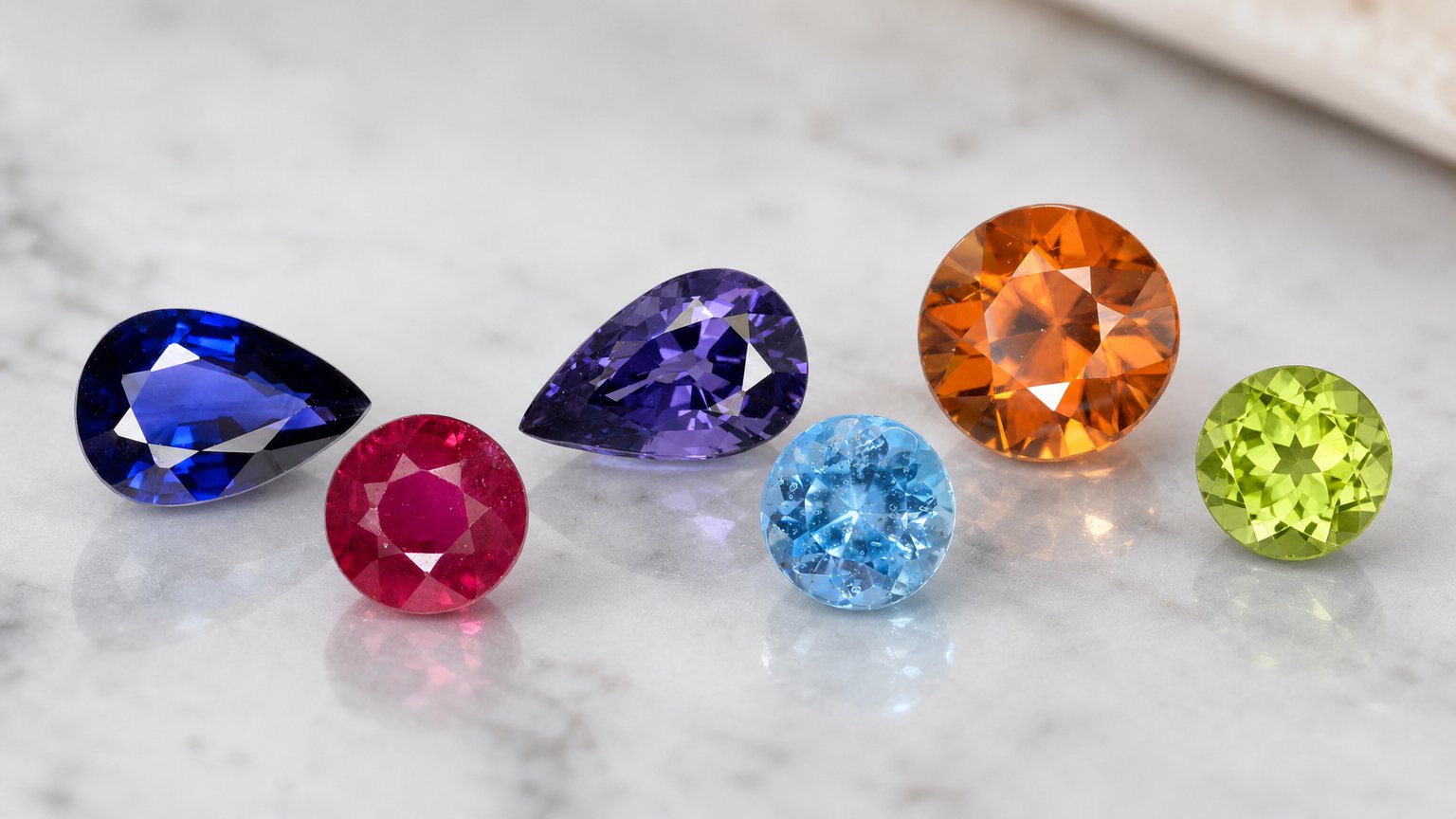
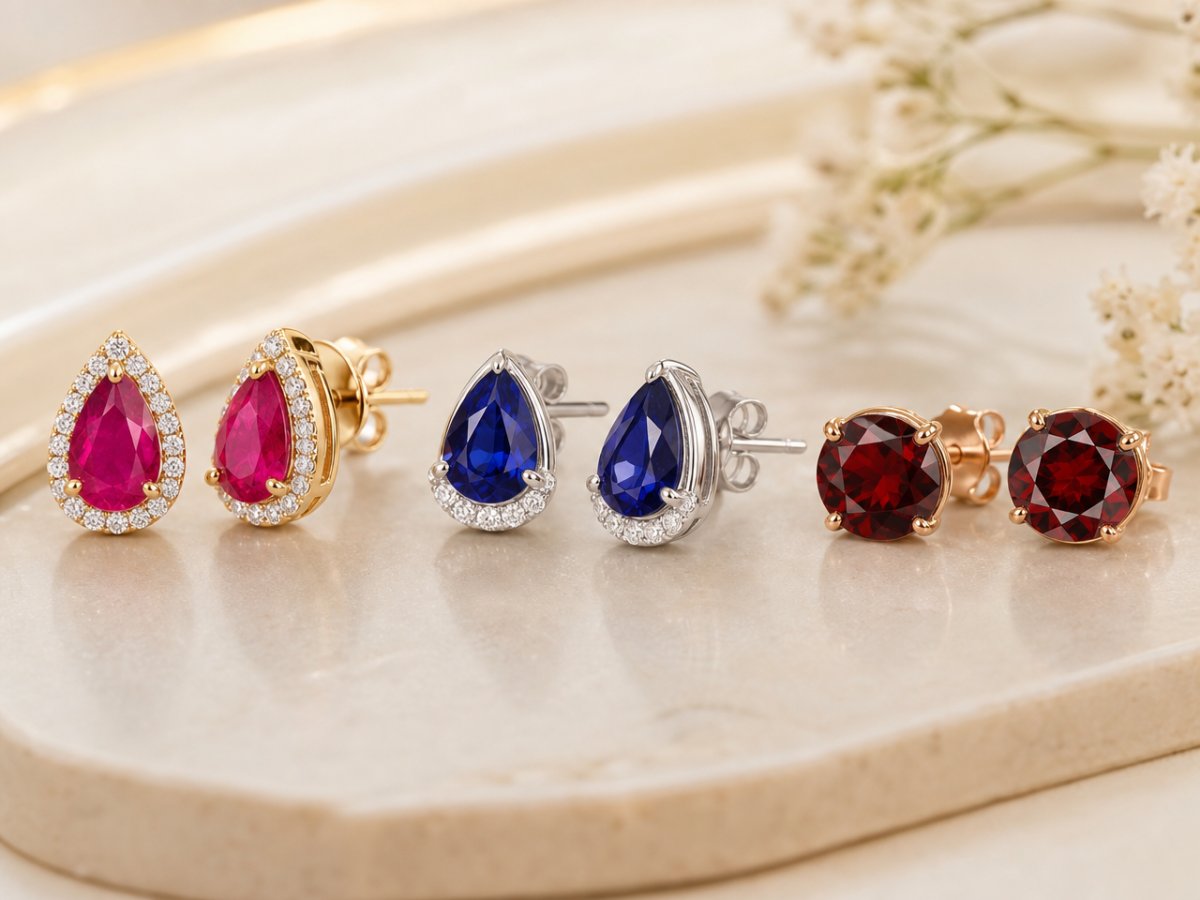
Sapphire and ruby, both varieties of corundum, are among the strongest choices for frequent-wear gemstone earrings. With excellent hardness and good overall durability, they work well in studs, hoops, drops and many custom earring designs. Sapphire also offers a broad color range beyond blue, while ruby provides classic red to purplish-red options.
Spinel
Spinel is a very practical choice for everyday gemstone earrings. It has good hardness, appealing brilliance and many attractive colors, including red, pink, purple, blue, gray and black. For buyers who want durable natural loose gemstones for earrings but are considering alternatives to sapphire or ruby, spinel is one of the best options.
Topaz
Topaz has good hardness and is available in many colors, including blue, colorless, yellow, orange, pink and brown tones. It can be excellent for earrings, but its perfect cleavage means it should not be treated as impact-proof. Topaz is best protected from hard knocks, especially in larger drops or designs with exposed corners.
Aquamarine and Other Beryl Varieties
Aquamarine, morganite, heliodor and emerald all belong to the beryl family. Aquamarine and many other beryls are good choices for everyday earrings with reasonable care. They offer appealing color, good wearability and a balance of durability and elegance. Emerald requires more consideration because inclusions are common, but earrings are still one of the more protected ways to wear emerald.
Tourmaline
Tourmaline is valued for its broad color range, from pink and green to blue, yellow, brown and multicolor stones. It is generally practical for earrings, especially studs and protected drops. It is not as resistant to knocks as sapphire or spinel, so setting style and care become more important for large stones or designs that move freely.
Garnet
Garnet is generally durable enough for earrings and is available in numerous varieties and colors. Red garnets are well known, but garnet can also appear in orange, green, purple, pink and other tones depending on variety. Garnet is well suited to studs, small drops and matched gemstone earring pairs.
Quartz: Amethyst, Citrine and Smoky Quartz
Quartz varieties such as amethyst, citrine and smoky quartz are practical and often affordable options for everyday earrings. With moderate-to-good hardness and wide availability in many sizes and shapes, quartz is especially useful for larger earring designs where cost, color and comfort all matter.
Zircon
Zircon is admired for strong brilliance and lively fire, making it a beautiful choice for gemstone earrings. It is suitable for earrings because they usually receive less abrasion than rings. However, zircon facet edges can abrade or chip with rough handling, so it benefits from careful storage and secure settings.
Peridot
Peridot is softer than many of the stones above, but it can work well in everyday earrings with sensible care. Its bright yellow-green to green color is distinctive, and earrings are a more forgiving use than rings. Avoid rough handling, harsh cleaning and designs where the stones knock against each other.
Tanzanite
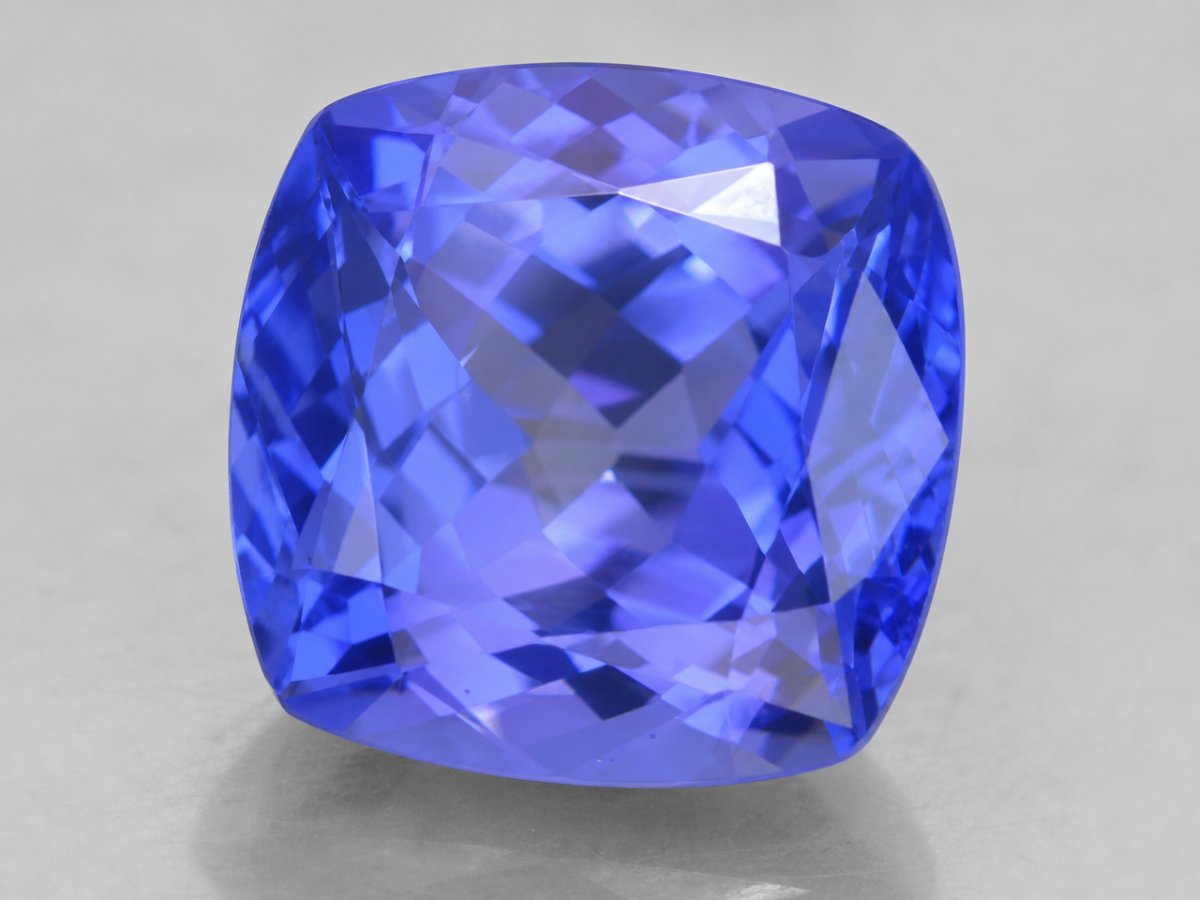
Tanzanite is relatively delicate compared with sapphire, spinel or ruby, but earrings are one of the better jewelry applications for it. Because earrings are less likely to hit hard surfaces than rings, tanzanite can be worn regularly when set and cared for appropriately. Studs, protected drops and designs that limit impact are especially sensible.
Everyday Earring Gemstone Comparison
| Gemstone | Mohs Hardness | Durability for Earrings | Care Level | Best Everyday Earring Uses |
|---|---|---|---|---|
| Sapphire | 9 | Excellent | Easy | Daily studs, drops, hoops, matched pairs and color designs |
| Ruby | 9 | Excellent | Easy | Classic red studs, halo earrings and frequent-wear fine jewelry |
| Spinel | 8 | Excellent | Easy | Durable colored studs, small drops and modern earring pairs |
| Topaz | 8 | Very Good | Moderate because of cleavage | Studs, protected drops and designs where hard impact is unlikely |
| Aquamarine and other beryl | 7.5-8 | Very Good | Moderate | Elegant studs, ovals, cushions and soft-color earring pairs |
| Tourmaline | 7-7.5 | Good to Very Good | Moderate | Colorful studs and protected drop earrings |
| Garnet | 6.5-7.5 | Good to Very Good | Moderate | Matched studs, small drops and rich-color designs |
| Quartz varieties | 7 | Good | Moderate | Amethyst, citrine and smoky quartz studs or larger lightweight looks |
| Zircon | 6-7.5 | Good | Moderate | Brilliant studs and dressy everyday earrings with careful storage |
| Peridot | 6.5-7 | Good | Moderate to careful | Protected studs and bright green earrings worn with sensible care |
| Tanzanite | 6-7 | Good in earrings | Careful | Studs and protected drops where the stone avoids knocks |
| Opal, moonstone, labradorite, turquoise and similar stones | Varies, often lower | More Care Needed | Careful | Protected studs, cabochons and occasional-to-regular earrings with gentle handling |
Gemstones That Need More Care
Some gemstones are softer, more porous, more brittle or more sensitive than the durable choices above. Opal, moonstone, labradorite, turquoise and similar materials can still make beautiful everyday gemstone earrings, but they need gentler treatment.
This does not mean they should be avoided. Earrings are comparatively protected jewelry, so a gemstone that would be questionable for an everyday ring may work very well near the ear. Cabochon cuts, bezel settings and designs that keep the stone close to the earlobe can make these gems more practical. The key is to avoid rough storage, chemical exposure, high heat, sudden impact and cleaning methods that are too aggressive.
How Earring Style Changes Gemstone Requirements
Stud earrings are generally the safest everyday option. The gemstone sits close to the ear, moves very little and is less likely to strike objects. This makes studs suitable for a wide range of durable and moderately durable gemstones.
Drop earrings place the gemstone below the earlobe, so movement increases. For durable stones such as sapphire, ruby and spinel, this is usually not a major concern when the setting is well made. For topaz, tanzanite, zircon, peridot or softer stones, protective settings and mindful wear become more important.
Dangle earrings move the most. Stones may swing, contact clothing, touch hair accessories or occasionally strike each other. Toughness, setting security and overall design balance matter more for dangles than for simple studs.
Size, Weight and Comfort
For earrings worn frequently, comfort is as important as gemstone durability. A large pair of gemstones may look beautiful but feel heavy after several hours. This is especially important for large studs, long drops and earrings with multiple stones.
Carat weight does not tell the whole story. Gemstone density varies, so two stones with the same millimeter size can have different carat weights. When selecting loose gemstones for earrings, millimeter dimensions are often more useful than carat weight because they determine how the finished earrings will look on the ear.
Buying Gemstone Pairs: Match Appearance First
Earrings are seen as a pair, so matching is essential. For gemstone earring pairs, the most important factors are usually color, size, shape, cut, tone and overall visual appearance. Identical carat weights are less important if the stones face up evenly and look balanced when worn.
Matched pairs and calibrated gemstones are useful for jewelry projects because they simplify setting selection and help jewelers create symmetrical earrings. When browsing natural loose gemstones at GemSelect, look closely at the measurements and photos, not just the carat weight.
Best Shapes for Everyday Gemstone Earrings
Round, oval and cushion cuts are among the easiest shapes for everyday gemstone earrings. They have balanced outlines, work well in studs and drops, and are widely compatible with prong, bezel and halo settings.
Pear shapes can be excellent for drops and elegant studs, but the pointed tip should be protected. Marquise and trillion cuts can also be striking, though their points and corners are more vulnerable. A setting that covers or supports the tips can improve everyday durability.
Cabochons are practical for gemstones such as opal, moonstone, labradorite and turquoise because their smooth domed surfaces avoid sharp facet edges. They also pair well with bezels and other protective settings.
Setting Choices for Everyday Gemstone Earrings
The setting can make a major difference in how well gemstone earrings handle regular wear. A durable gemstone in a poorly made setting is still at risk, while a more delicate gemstone can perform better when the design protects vulnerable areas.
Prong settings show more of the gemstone and work very well for durable stones such as sapphire, ruby and spinel when properly constructed. Prongs should hold the stone securely and should be checked periodically.
Bezel settings surround the gemstone edge with metal. They can be especially useful for softer stones, cabochons, pointed shapes and earrings that may be worn often.
Halo and protective settings can add visual size while helping shield the center stone from direct contact. They are useful for many designs, but they are not automatically required for any single gemstone. The best setting depends on the stone's shape, size, inclusions, cleavage and intended earring style.
Everyday Care for Gemstone Earrings
- Remove gemstone earrings before swimming, showering, strenuous activity or applying hair products, perfume or cosmetics when the gemstone may be sensitive.
- Put earrings on after cosmetics and hair products have dried to reduce buildup and chemical exposure.
- Check prongs, bezels and earring backs periodically, especially on earrings worn several times a week.
- Store pairs separately or in a lined jewelry box so the gemstones do not scratch or chip each other.
- Clean with methods appropriate to the individual gemstone. Warm water, mild soap and a soft cloth are suitable for many stones, but not all.
- Do not assume ultrasonic or steam cleaning is safe. These methods are not universally suitable and can damage some gemstones or treated stones.
So, Which Gemstones Are Best for Daily Earrings?
For the best balance of durability, beauty, comfort and easy care, sapphire, ruby and spinel are the strongest all-around choices. Topaz, aquamarine and other beryls, tourmaline, garnet, quartz, zircon, peridot and tanzanite can also be excellent for everyday earrings when the design and care level match the gemstone.
If you want simple daily studs, you have the widest range of options. If you want larger drops or dangles, give more attention to toughness, weight, setting protection and how the stones will move. For custom earrings, matched natural gemstone pairs, calibrated sizes and practical shapes will usually make the design process easier and the finished earrings more comfortable to wear.