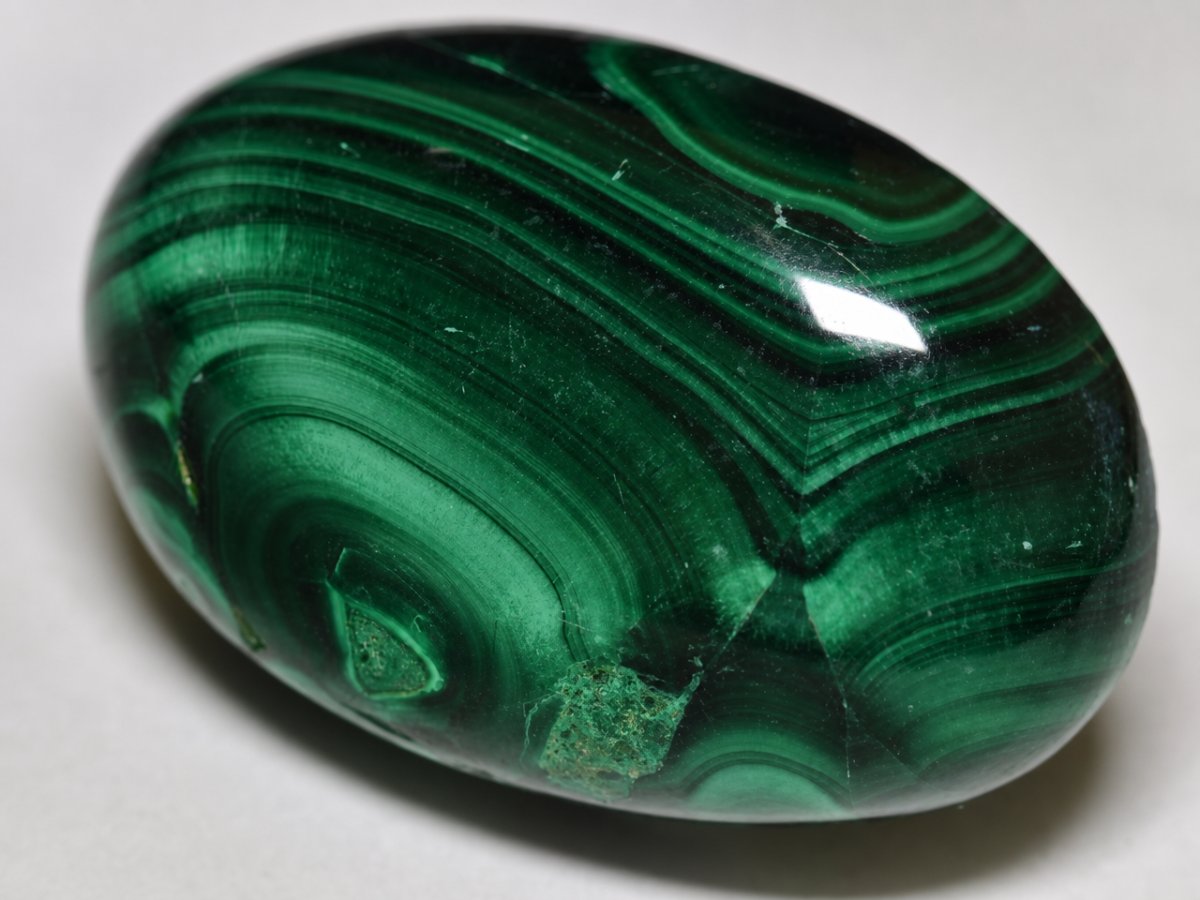


Malachite is one of the most recognizable green gemstones, admired for a color that immediately connects it with nature, vitality and decorative beauty. In gemstone culture, malachite is often appreciated as much for its visual presence as for its traditional associations. Its meaning is closely tied to its strong green identity and to its mineral nature as a copper carbonate hydroxide.
This guide focuses on malachite's meaning, cultural symbolism and historical identity. Where symbolism is discussed, it should be understood as tradition, folklore or modern gemstone interpretation rather than scientific fact.
What Malachite Represents
Malachite's most important symbolic feature is its green color. Across many cultures, green is commonly associated with growth, renewal, fertility, balance and the natural world. For this reason, malachite is often interpreted in modern gemstone symbolism as a stone of change, fresh starts and emotional steadiness.
These meanings come from long-standing color associations rather than measurable gemological effects. Buyers and collectors may choose malachite because its appearance feels lively, earthy or grounding, but such interpretations are personal and cultural rather than medical or scientific.
A Green Gemstone with a Copper Identity
Malachite is a copper carbonate hydroxide with the chemical formula Cu₂CO₃(OH)₂. This copper connection is central to its identity. Copper minerals are well known for producing vivid green and blue-green colors, and malachite's green appearance is one of the reasons it has become so strongly associated with richness, nature and ornament.
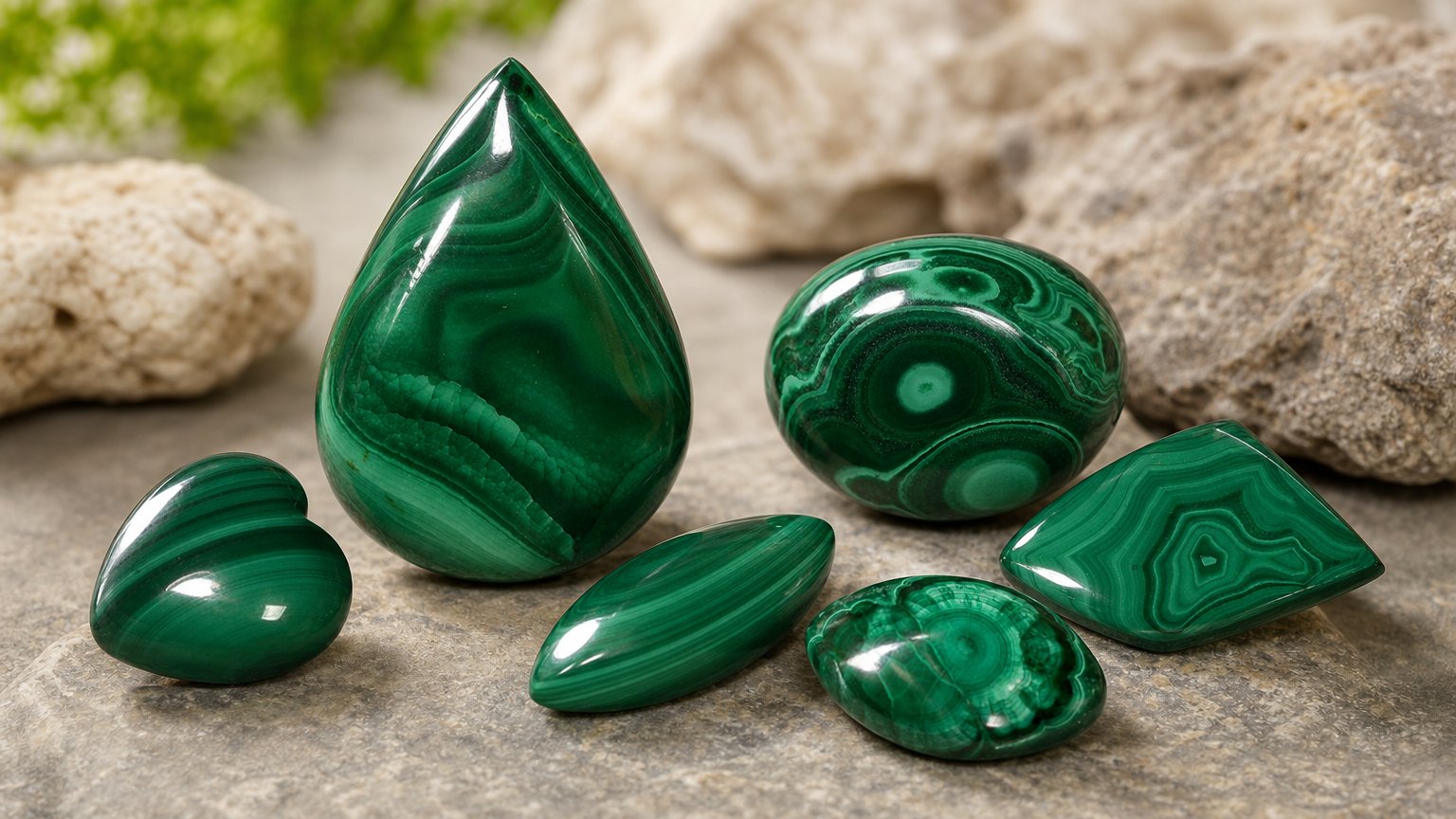
Unlike transparent faceted gemstones, malachite is usually appreciated as an opaque decorative gem. It is commonly fashioned as cabochons, sugarloaf cabochons, carvings and slices, forms that emphasize color and surface appearance rather than sparkle. This has helped shape malachite's modern image as an expressive, artistic gemstone.
Malachite in History and Cultural Appreciation
The verified historical story of malachite is best understood through its long-standing role as a distinctive green mineral and ornamental gemstone. Its appeal comes from a combination of color, workability and visual impact. Because it is opaque and richly colored, malachite has been valued in decorative objects and personal adornment, especially where bold green color is desired.
In modern gemstone culture, malachite is often viewed as a statement stone. Its symbolism is less about rarity or brilliance and more about presence, individuality and a connection to the natural world. This makes it especially meaningful for collectors, jewelry designers and gemstone enthusiasts who appreciate gems with strong visual character.
Important Sources and Geographic Identity
Malachite is found in several parts of the world, and its geographic identity contributes to how it is understood by collectors. The Congo is an especially important source, while Namibia is also significant. Other known sources include Australia, Russia and the United States.
For a meaning and history guide, origin is relevant because gemstones often carry a sense of place. Malachite's association with copper-bearing regions helps explain why it is linked so closely with the mineral world and with earth-centered symbolism. However, symbolic meaning should not be confused with origin-based quality claims; source alone does not define a stone's personal or cultural meaning.
Traditional and Modern Symbolism
Malachite is traditionally associated with transformation, renewal and protection in some modern gemstone and crystal traditions. These ideas are usually inspired by its green color and strong visual identity. In personal symbolism, it may be chosen to mark a life change, a creative period or a desire for a closer connection to nature.
It is important to distinguish these beliefs from documented scientific properties. Malachite can be meaningful as a personal emblem, gift or collector's stone, but it should not be presented as having proven healing or medical effects.
Malachite as a Personal and Artistic Gemstone
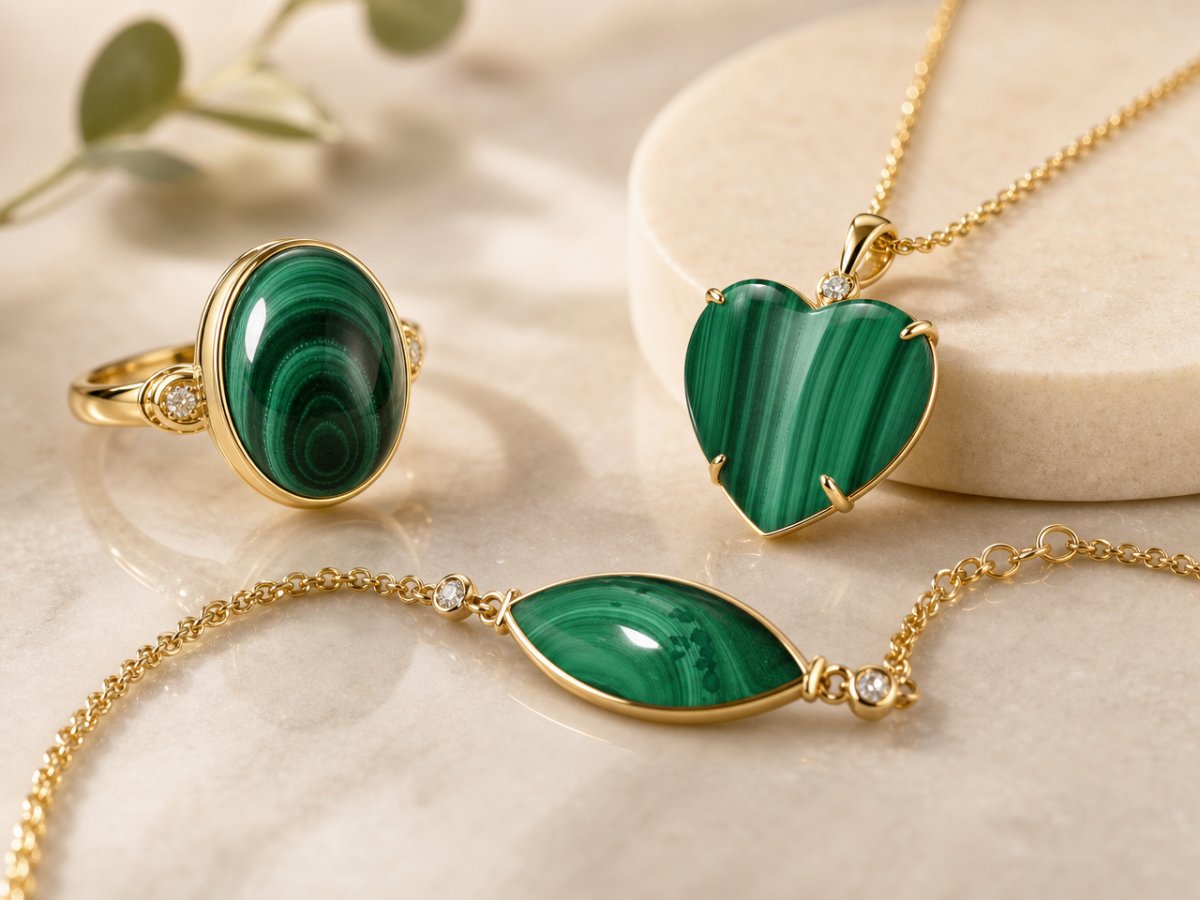
Today, malachite is often seen in necklaces, pendants, brooches, earrings, artisan jewelry and occasionally rings. Its use in jewelry gives wearers a way to express the gemstone's symbolic qualities visually. Pendants and necklaces are especially fitting for a stone whose appeal comes from color and presence.
Designers often choose malachite when they want a gemstone that feels natural, bold and distinctive. For many buyers, the meaning of malachite is not tied to a single ancient story, but to the emotional effect of its green color and the sense of individuality it brings to a piece.
How Malachite Is Viewed Today
In contemporary gemstone culture, malachite occupies a special place between mineral specimen, ornamental gem and symbolic stone. It appeals to collectors because of its recognizable identity, to designers because of its strong color, and to gemstone enthusiasts because of its traditional associations with renewal and change.
GemSelect customers often look for malachite when they want a gemstone with immediate visual impact and a meaning connected to nature, growth and personal expression. Its appeal is straightforward: malachite is green, distinctive and rich in character.
Summary
Malachite's meaning is rooted in its vivid green color, copper mineral identity and long appreciation as an ornamental gemstone. While specific symbolic interpretations vary, it is commonly associated in modern tradition with renewal, transformation, protection and a connection to nature. Its history and cultural significance are best understood as a blend of mineral identity, decorative use and personal symbolism.