


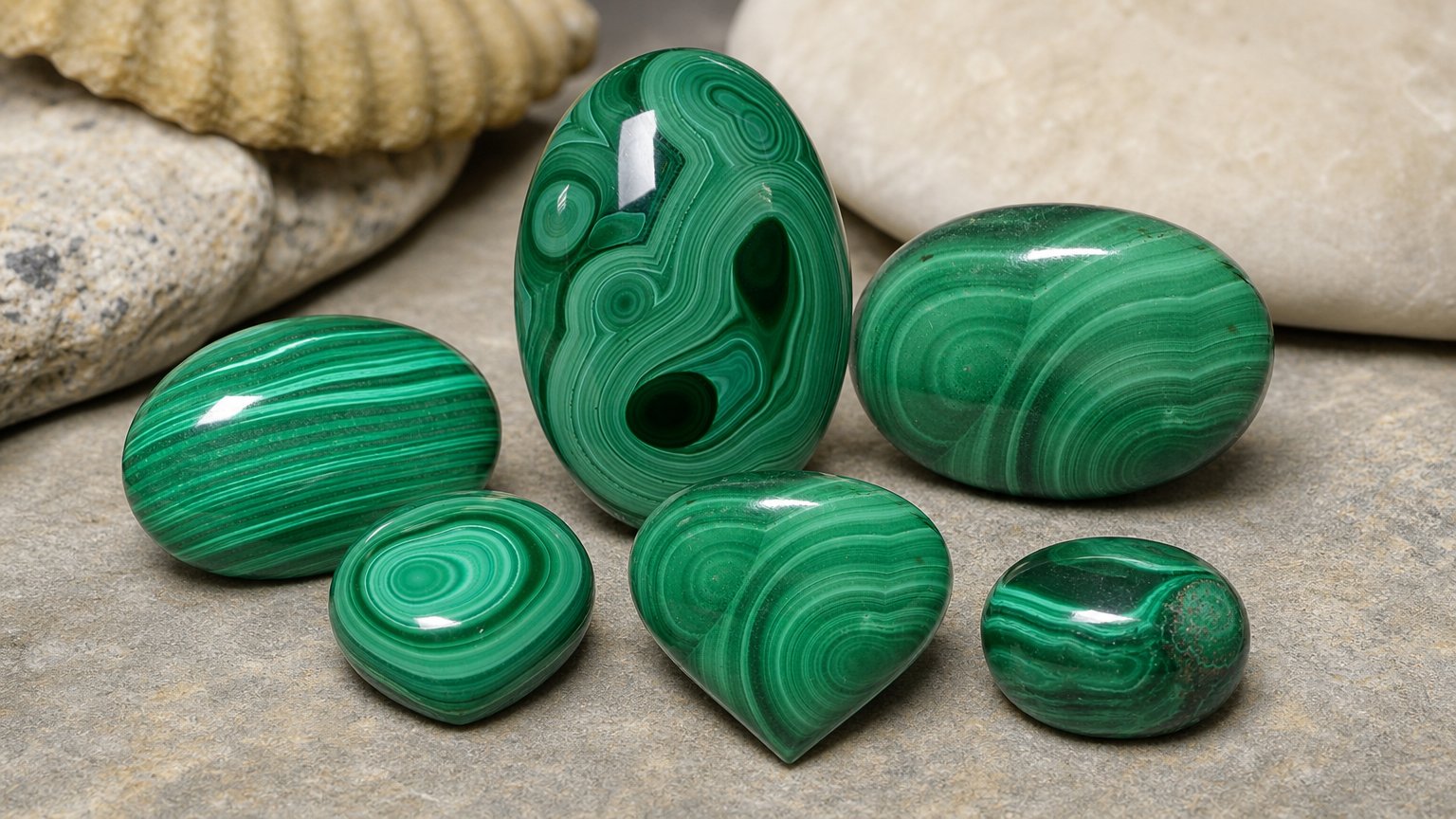
Malachite is a distinctive green gemstone chosen for jewelry, carvings and collector pieces. For buyers, the most important decisions are visual appeal, cut quality, treatment disclosure and whether the stone suits the intended jewelry design. Its softness also makes durability and care especially important.
This guide explains what to look for when buying malachite, from color and shape to stabilization and jewelry use, so you can choose a stone with confidence.
What Is Malachite?
Malachite is a copper carbonate hydroxide mineral with the chemical formula Cu₂CO₃(OH)₂. Its copper content is responsible for its green appearance. Gemologically, malachite has a monoclinic crystal system, a refractive index of 1.655-1.909 and a specific gravity of 3.60-4.05.
For practical buying purposes, the most important property is hardness. Malachite measures only 3.5-4 on the Mohs scale, which means it is much softer than many popular jewelry gemstones. This does not prevent it from being used in jewelry, but it does affect the best settings, wear frequency and care routine.
Color and Appearance: What Buyers Should Look For
Malachite is known for its green color. When comparing stones, focus on the overall look rather than expecting a standardized grading scale. Choose the green appearance that best suits your design: deeper, richer-looking greens can make a bold pendant, while more even-looking stones may be easier to match in earrings or multi-stone jewelry.
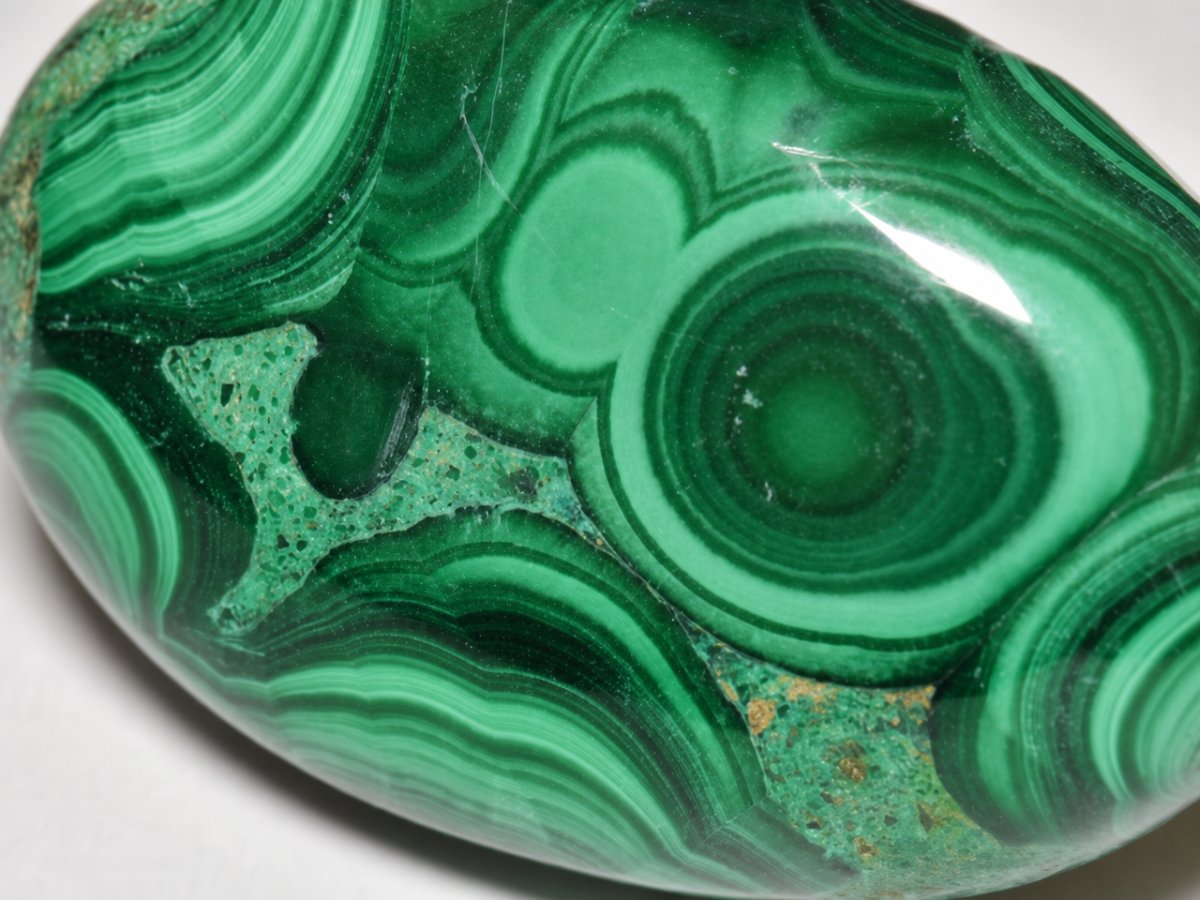
Inspect the polish and surface carefully. Because malachite is often cut with a smooth surface, any scratches, dull areas or uneven finishing can be more noticeable. Good polishing is especially important for cabochons, sugarloaf cabochons and beads or ball shapes, where the surface is the main visual feature.
Common Cuts and Shapes
Malachite is most commonly seen as a cabochon. Cabochons give the stone a smooth, domed surface and are a practical choice for pendants, brooches, earrings and artisan jewelry. Sugarloaf cabochons are also common; they have a higher, rounded profile that can create a more sculptural look.
Carvings are another attractive option for buyers who want a decorative or one-of-a-kind piece. Slice cuts may also be available and can work well in designs that emphasize the natural surface area of the gem.
Popular shapes include oval and baguette, with cushion, round, pear and ball shapes also used. For jewelry designers, the best shape is often determined by the setting style. Ovals are versatile for pendants and earrings, while baguettes can suit geometric or contemporary designs.
Origins of Malachite
Important sources of malachite include Congo and Namibia, with additional material associated with Australia, Russia and the United States. Origin can be interesting to collectors, but for most jewelry buyers, appearance, cut, size, treatment status and condition are more important than country of origin alone.
If origin matters to you, buy from a seller that provides clear product information. When browsing malachite at GemSelect, compare individual stones by their listed details and photos rather than relying only on origin names.
Treatments: Untreated and Stabilized Malachite
Malachite may be sold untreated or stabilized. Untreated stones have not undergone stabilization, while stabilized stones have been treated to improve their suitability for handling or jewelry use. Stabilization is especially relevant for softer gemstones because it can help support the material during cutting, setting or wear.
For buyers, treatment disclosure is important. Stabilized malachite is not necessarily a poor choice, but you should know what you are buying. If you prefer untreated gems for collecting reasons, check the treatment information before purchase. If you are buying for jewelry, stabilized material may still be suitable when properly disclosed and cared for.
Durability and Care
Malachite's Mohs hardness of 3.5-4 means it can scratch more easily than harder gemstones. It is best suited to jewelry that is protected from heavy knocks and abrasion. Pendants, necklaces, earrings and brooches are generally more practical choices than everyday rings.
Rings can be made with malachite, but they require thoughtful setting and careful wear. A protective bezel or low-profile design is preferable to an exposed setting. Malachite rings are best reserved for occasional use rather than daily wear.
Clean malachite gently with a soft cloth. Avoid abrasive cleaners, harsh chemicals, steam cleaning and ultrasonic cleaning. Store it separately from harder gemstones to prevent scratches.
Best Jewelry Uses
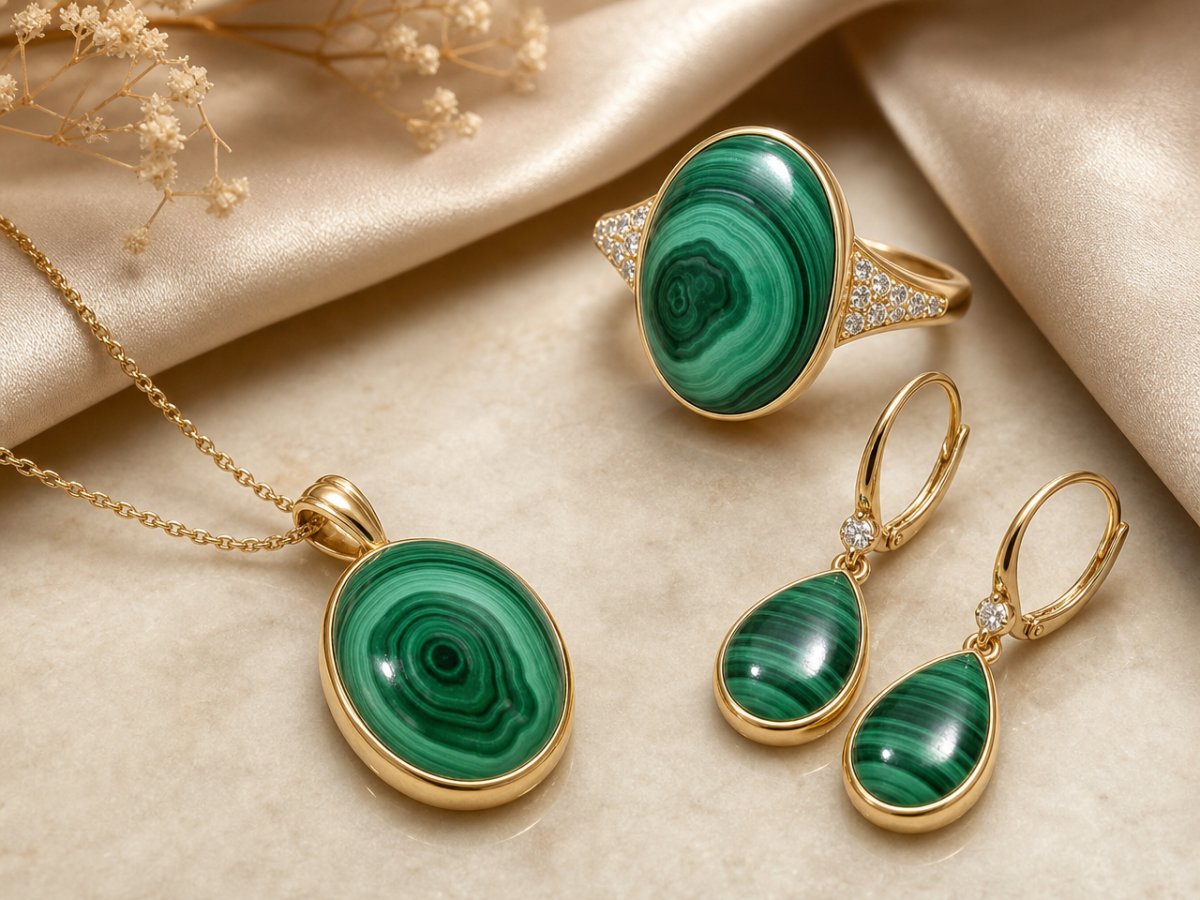
Malachite is especially well suited to necklaces and pendants, where its green color can be displayed without the constant impact risk of a ring. It also works well in artisan jewelry, brooches and earrings. These uses allow designers to take advantage of malachite's visual character while keeping the gem in relatively protected positions.
For earrings, consider weight and matching appearance if you are buying pairs. For pendants and brooches, larger cabochons or carved pieces can create a stronger focal point. For rings, prioritize durability of the setting over appearance alone.
Malachite Buying Checklist
- Color: Choose a green appearance you find attractive and suitable for the design.
- Surface quality: Look for a smooth polish with no obvious scratches, chips or dull areas.
- Cut: Cabochons and sugarloaf cabochons are classic choices; carvings and slices suit more artistic designs.
- Shape: Oval and baguette are common, while cushion, round, pear and ball shapes can fit specific design needs.
- Treatment: Confirm whether the stone is untreated or stabilized.
- Jewelry use: Favor pendants, necklaces, earrings and brooches for regular wear; use extra caution with rings.
- Care needs: Buy malachite only if you are comfortable treating it as a softer gemstone.
Conclusion
Malachite is a rewarding gemstone for buyers who appreciate green gems and distinctive design possibilities. The best purchase is not simply the largest stone, but the one with appealing color, a well-finished cut, clear treatment disclosure and a realistic match to the intended jewelry use. If you keep its softness in mind, malachite can be an excellent choice for pendants, necklaces, earrings, brooches and artisan pieces.
