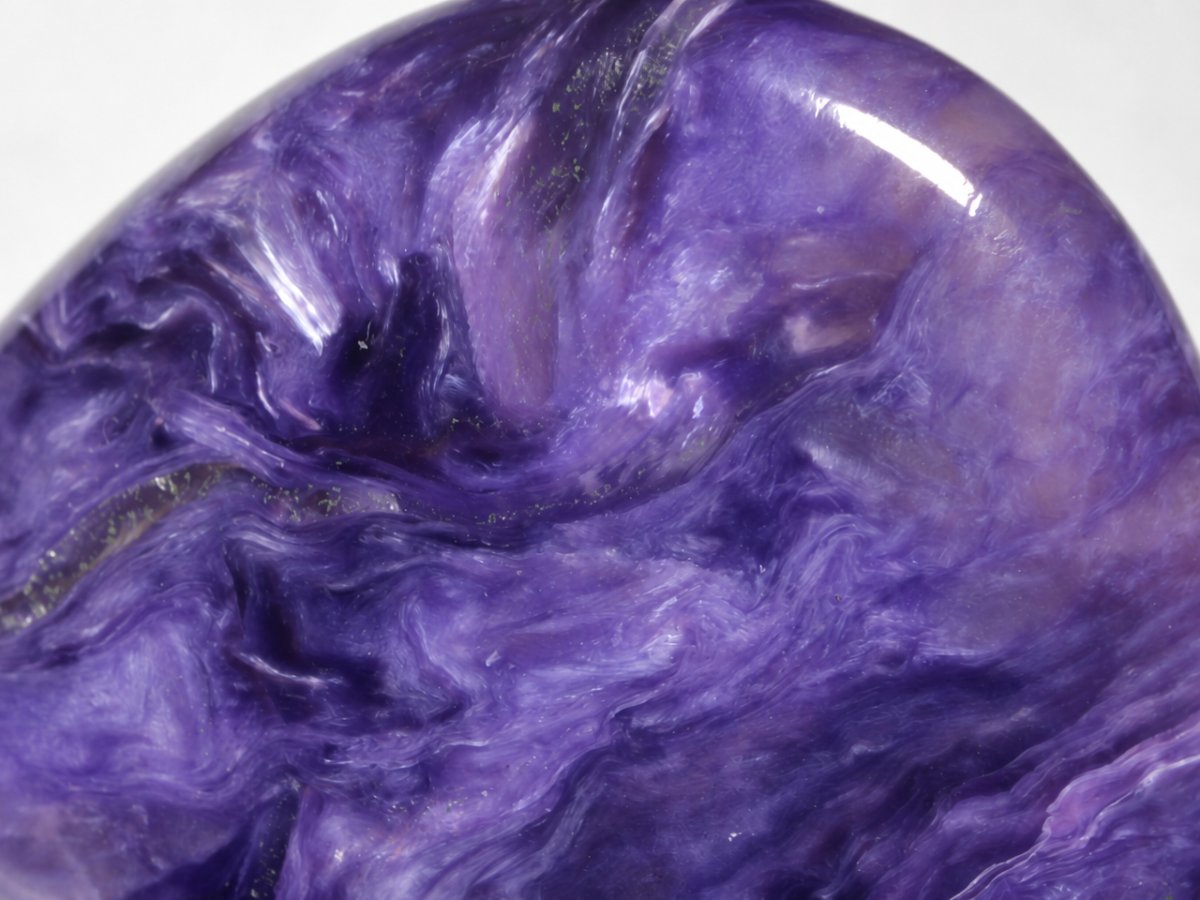


Charoite is a distinctive violet-to-purple gemstone associated with Russia and admired for its strong visual personality. In a meaning and history context, its appeal comes less from ancient tradition and more from modern appreciation: a rare-looking purple gem with a recognizable identity, often chosen by collectors, designers and gemstone enthusiasts who want something expressive and uncommon.
This guide focuses on charoite's symbolism, cultural position and modern meaning. Where tradition or folklore is not clearly supported, it is treated carefully rather than presented as documented history.
What Charoite Represents Today
Charoite's modern meaning is closely tied to its color and origin. Its violet and purple appearance gives it an expressive character, and purple gemstones have long been visually associated in many cultures with richness, dignity, imagination and introspection. For charoite specifically, these meanings should be understood as modern symbolic interpretations rather than ancient, gemstone-specific traditions.
Many buyers see charoite as a stone of individuality. Its color can be bold, artistic and difficult to confuse with more common gems. That makes it especially appealing to people who prefer gemstones with a strong identity rather than a classic or conventional look.
Because charoite is commonly appreciated in untreated form, it can also carry a symbolic association with natural character and authenticity. This is not a mystical claim; it is a practical reason many gemstone lovers value it as a material whose beauty is generally enjoyed as nature produced it.
Russian Origin and Cultural Identity
Russia is the important origin associated with charoite, and that origin is central to how the gemstone is understood. Unlike gemstones with broad ancient trade histories across many civilizations, charoite's cultural identity is more focused and modern. Its Russian association gives it a sense of place and contributes to its appeal among collectors who value gemstones with a distinctive geographic identity.
For gemstone enthusiasts, origin can shape meaning even when a stone does not have a long ceremonial history. In charoite's case, the Russian connection helps define its story: it is not simply another purple gem, but a gemstone recognized for a particular source identity and a visual style that feels closely tied to that identity.
The Symbolism of Violet and Purple in Charoite
Color is the strongest symbolic feature of charoite. Violet and purple can feel contemplative, creative and refined, depending on the setting and the viewer's cultural background. In jewelry and personal collections, charoite often communicates originality and artistic taste because its color is striking without relying on the traditional prestige of gems such as sapphire, ruby or emerald.
It is important to separate color symbolism from documented historical meaning. Charoite's purple appearance may invite associations with creativity, reflection or elegance, but those associations are best described as modern interpretations. They are not proof of an ancient belief system or a guaranteed personal effect.
Historical Perspective: A Modern Gemstone Story
Some gemstones carry stories from ancient Egypt, Greece, Rome, India or medieval Europe. Charoite is better approached as a modern gemstone with a focused origin story rather than as a gem with a long recorded history of royal, religious or ceremonial use.
This does not make charoite less meaningful. Instead, it gives the gemstone a different kind of importance. It appeals to contemporary collectors and designers who value distinctive materials, natural color and a gemstone identity that is not overused in mainstream jewelry traditions.
At GemSelect, charoite is best understood as a gemstone for people who appreciate character and individuality. Its meaning today is shaped by its purple-violet beauty, its Russian origin and its place in modern artisan and collector culture.
Charoite in Modern Jewelry and Design Culture
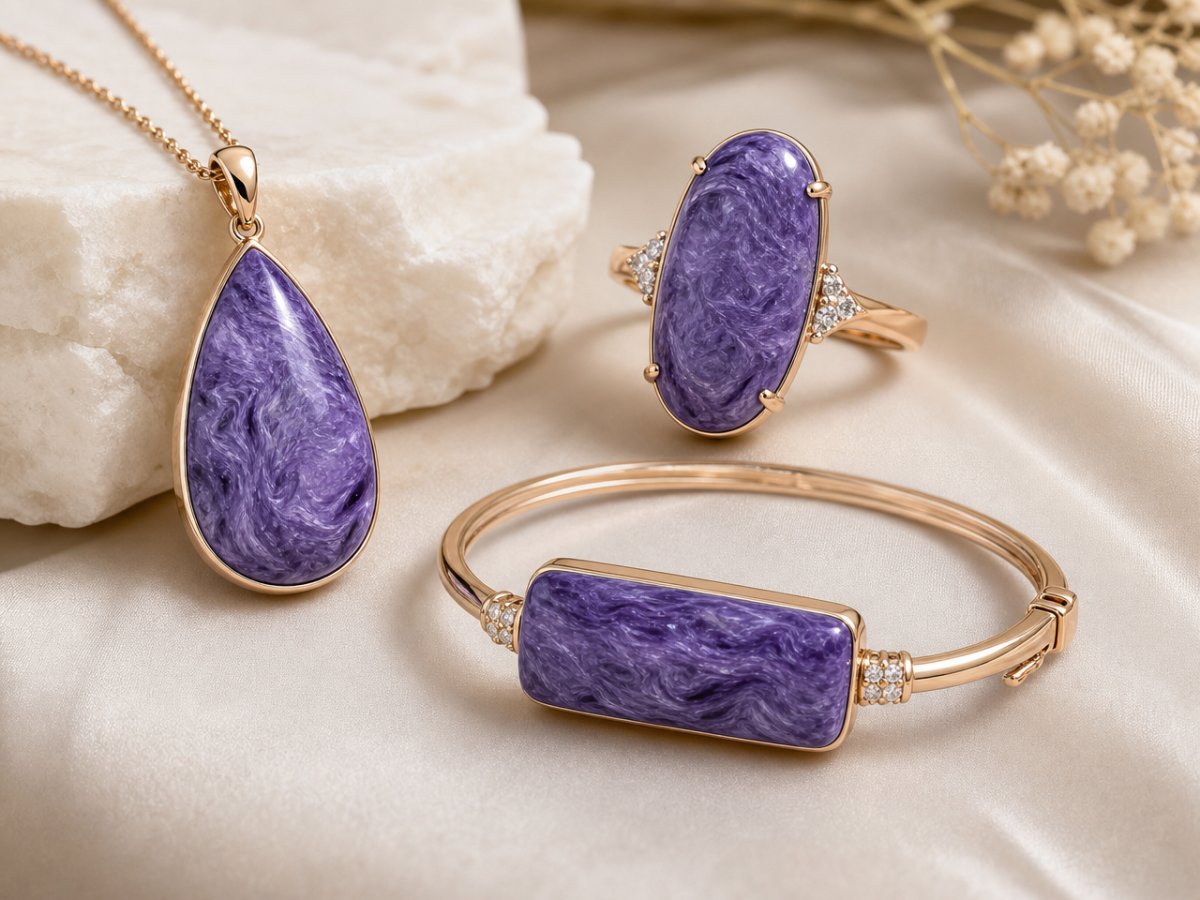
Charoite is often seen in pieces where the gem itself is meant to be noticed, including pendants, necklaces, rings, earrings and artisan jewelry. In a meaning-focused sense, this matters because the stone's role is usually expressive rather than purely formal. Designers often choose gemstones like charoite when the goal is personality, movement and color impact.
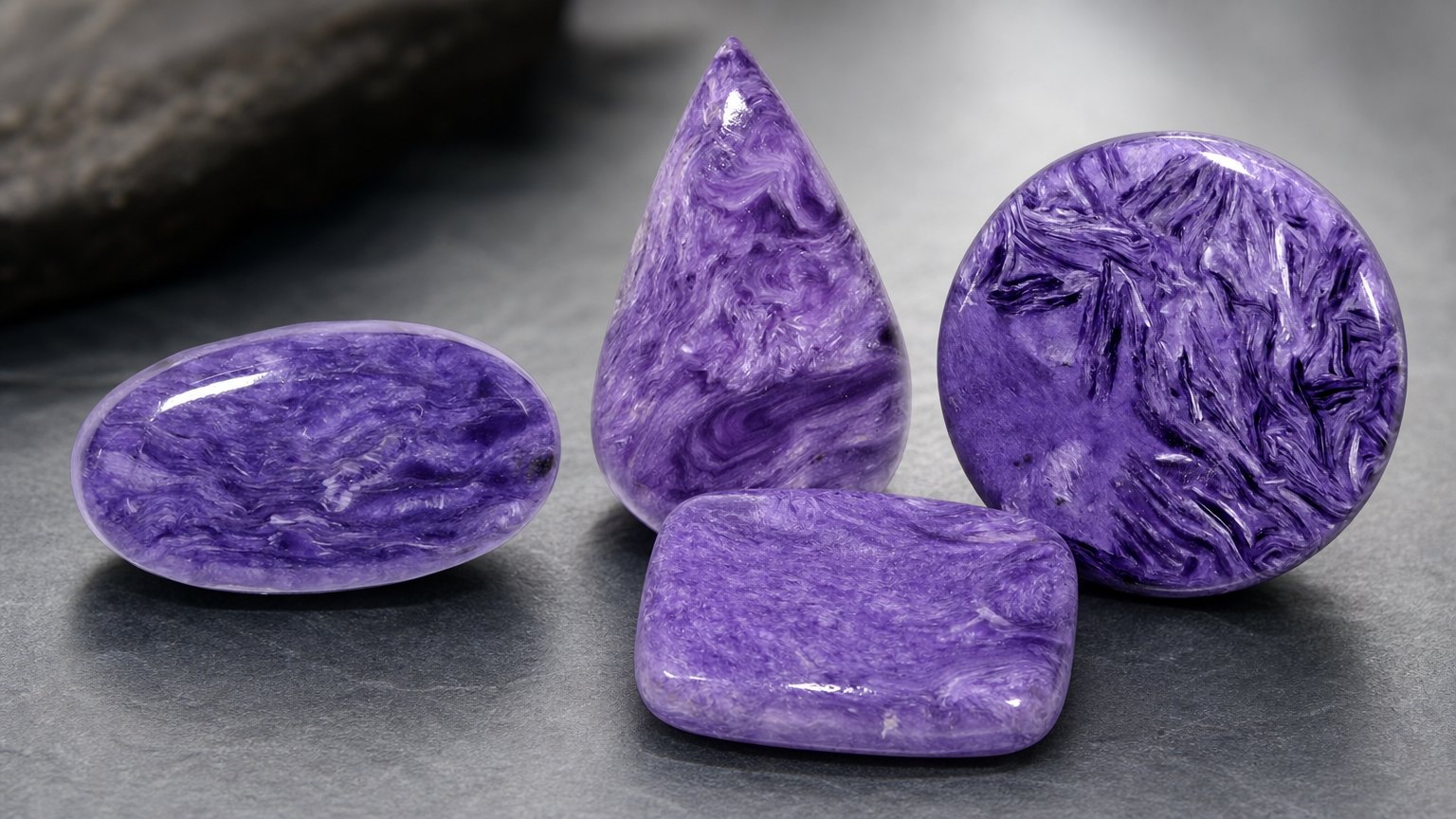
Cabochon cutting is especially associated with charoite, and this smooth, polished style can emphasize the gem's color and surface pattern. Carved and freeform styles may also suit its artistic personality. These design choices reinforce charoite's modern symbolic role as a gemstone of creativity and individuality.
Folklore, Belief and Responsible Interpretation
Modern crystal and gemstone communities may attach personal or spiritual meanings to charoite, as they do with many gemstones. Such meanings belong to the realm of personal belief, meditation practice or symbolic use, not medical science or documented historical fact.
For readers interested in symbolism, charoite can be appreciated as a purple gemstone that suggests imagination, self-expression and uniqueness. For readers interested in history, the most reliable emphasis is its Russian origin and its modern rise as a distinctive collector and jewelry gemstone.
Conclusion
Charoite's meaning is rooted in modern appreciation rather than ancient tradition. Its violet and purple color gives it strong symbolic appeal, while its Russian origin provides a clear and memorable identity. Today, charoite is valued as a gemstone of individuality, artistic expression and natural character, especially by those who want a gem with a look and story outside the mainstream.