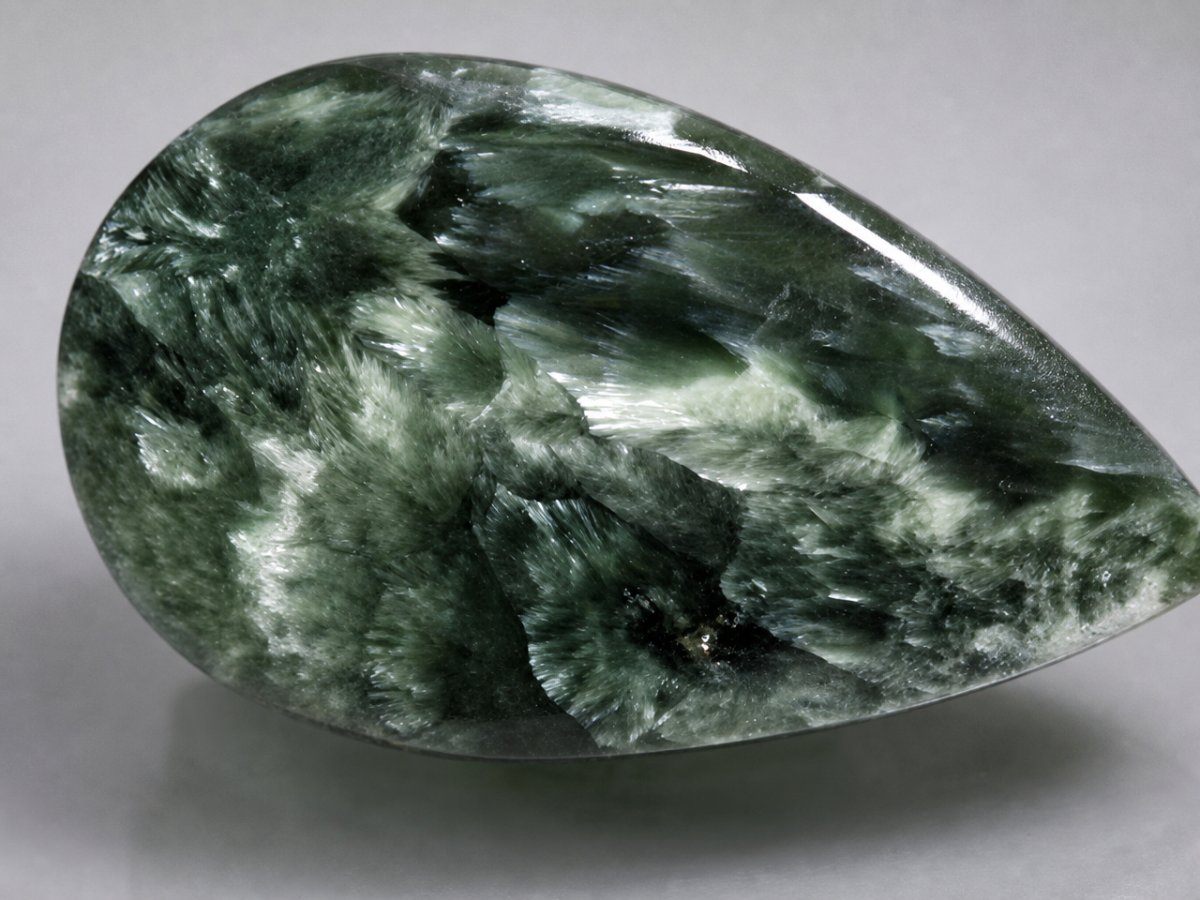


Seraphinite is a green gemstone variety associated with the mineral clinochlore and is best known in the gem world for its Russian origin and distinctive ornamental appeal. Unlike ancient gems with long written histories, seraphinite is mainly appreciated today as a collector and jewelry stone whose meaning is shaped by its color, name, natural appearance and modern gemstone culture.
For buyers, designers and collectors, seraphinite carries a quiet, nature-connected symbolism. Its green color naturally invites associations with growth, renewal and calm, while its use in polished cabochons, pendants and necklaces gives it a personal, contemplative character. These meanings should be understood as cultural and symbolic associations rather than scientific claims.
What Is Seraphinite?
Seraphinite is associated with clinochlore, a mineral species with the chemical formula (Mg,Fe,Al)₆(Si,Al)₄O₁₀(OH)₈. In gemstone use, it is typically valued for its green color and polished surface rather than for faceted brilliance. It is commonly cut as a cabochon, a smooth domed form that suits opaque to translucent ornamental gems.
Because seraphinite is relatively soft, with a Mohs hardness of 2 to 2.5, it has historically and practically been better suited to protected jewelry, display pieces and collector items than to heavy-wear jewelry. This practical reality also influences its symbolism: seraphinite is often treated as a thoughtful, personal stone rather than a rugged everyday gem.
Seraphinite Meaning and Symbolism
The most reliable way to understand seraphinite symbolism is to begin with what is known about the stone itself. Its dominant green color connects it with the broad symbolic language of green gemstones: nature, renewal, balance and restoration. These associations are common in many modern gemstone traditions, but they should be read as symbolic meanings rather than proven effects.
Seraphinite is also often viewed as a reflective or inward-looking gemstone. Its popularity in pendants and necklaces helps reinforce this personal symbolism, since such pieces are worn close to the body and often chosen for emotional or aesthetic reasons. In modern crystal and gemstone communities, seraphinite may be discussed in spiritual language, but those interpretations belong to belief and tradition, not gemological fact.
For many collectors, the stone's meaning is also tied to authenticity and natural beauty. Seraphinite is commonly found untreated, and that untreated character appeals to people who value gemstones that retain their natural identity without enhancement.
Name and Modern Identity
The name seraphinite gives the gemstone much of its modern character. While the verified gemological facts identify it as a green clinochlore-associated gemstone from Russia, the name itself has helped shape the way people respond to it. Many gemstone names influence perception, and seraphinite is no exception: it sounds refined, rare and symbolic.
It is important, however, not to confuse a modern gemstone name with evidence of ancient ceremonial use. Based on the available verified information, seraphinite should be understood primarily as a modern gemstone and collector material rather than a gem with a documented role in ancient religion, royal regalia or classical trade.
Historical Background
Seraphinite's documented identity is closely connected with Russia, which is its important known origin. This origin is central to the stone's place in the gemstone market and helps distinguish it from green stones with longer global histories, such as emerald, jade or peridot.
Because seraphinite does not have the same widely recorded ancient history as those classical gems, its significance is more contemporary. Its history is best understood through mineral collecting, lapidary cutting and modern gemstone appreciation. It belongs to a category of ornamental gems that gained attention because of distinctive color, texture and locality rather than through ancient trade routes or royal patronage.
Cultural Significance Today
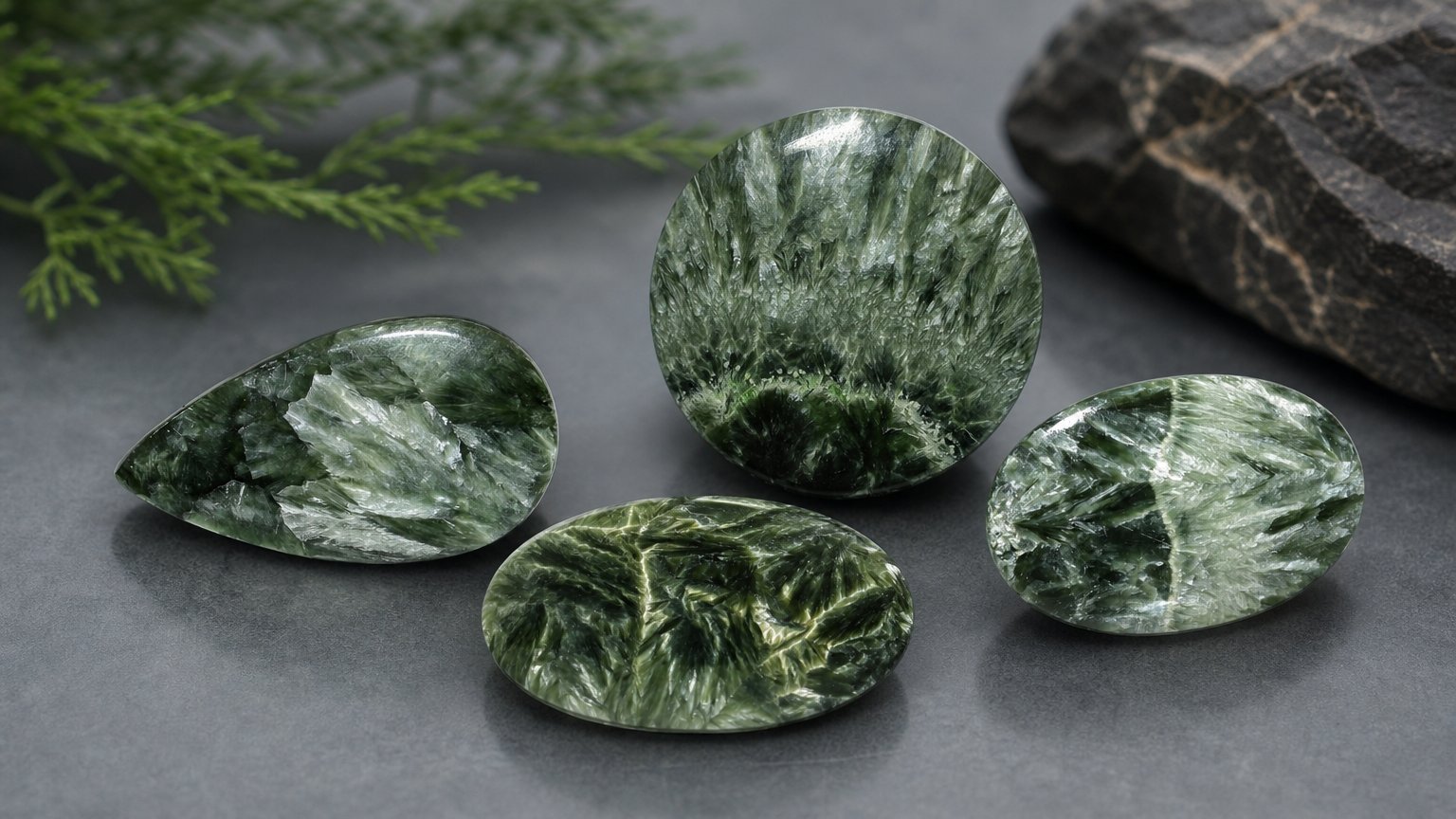
In modern gemstone culture, seraphinite is appreciated by collectors, jewelry designers and enthusiasts who enjoy unusual green stones. It is commonly fashioned into cabochons and sometimes into carved or sugarloaf cabochon forms. These shapes emphasize the gemstone's surface character and color, making them suitable for pieces where the stone itself is the focal point.
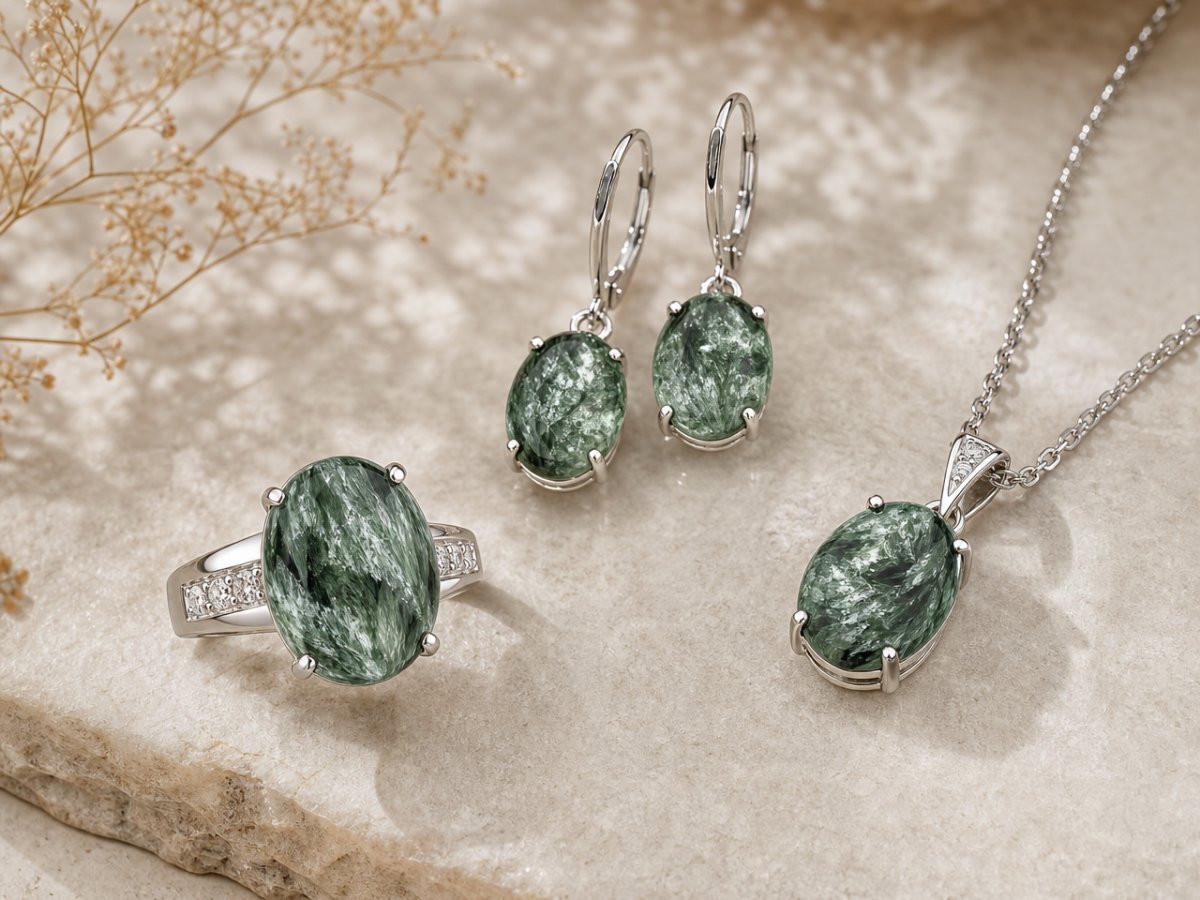
Seraphinite is especially associated with pendants and necklaces, where its green tone can be displayed prominently. It may also appear in brooches, earrings and collector rings, although more protected settings are generally favored because of its softness. In a meaning and history context, this matters because the way a gemstone is worn often affects how people interpret it: seraphinite is typically chosen as a distinctive personal gemstone rather than a conventional status jewel.
Birthstone, Zodiac and Anniversary Associations
Seraphinite is not one of the traditional mainstream birthstones. It also does not have a widely established anniversary role in the way that gems such as diamond, sapphire or emerald do. When seraphinite is connected with zodiac signs or personal milestones, those links are usually modern, personal or symbolic rather than part of a long historical system.
This makes seraphinite a flexible choice for people who prefer meaning based on color, origin and individual connection rather than fixed calendar traditions.
How Seraphinite Is Viewed by Collectors and Enthusiasts
Collectors often appreciate seraphinite because it is recognizable, green and closely associated with Russia. Its identity as clinochlore also gives it mineralogical interest, especially for those who enjoy gemstones that sit between the worlds of jewelry and mineral collecting.
At GemSelect, seraphinite is best understood as a distinctive natural gemstone with modern symbolic appeal. Its value to many admirers lies not in ancient legend, but in its natural green beauty, Russian origin and the quiet meanings people attach to it today.
Conclusion
Seraphinite's meaning is rooted in a combination of verified gemstone identity and modern symbolism. It is a green clinochlore-associated gemstone with an important Russian origin, commonly appreciated in untreated form and often cut as cabochons for personal jewelry and collector pieces.
Rather than relying on unsupported ancient myths, seraphinite's story is strongest when viewed honestly: a modern gemstone with a calm green presence, a distinctive origin and symbolic associations with nature, renewal and personal reflection.