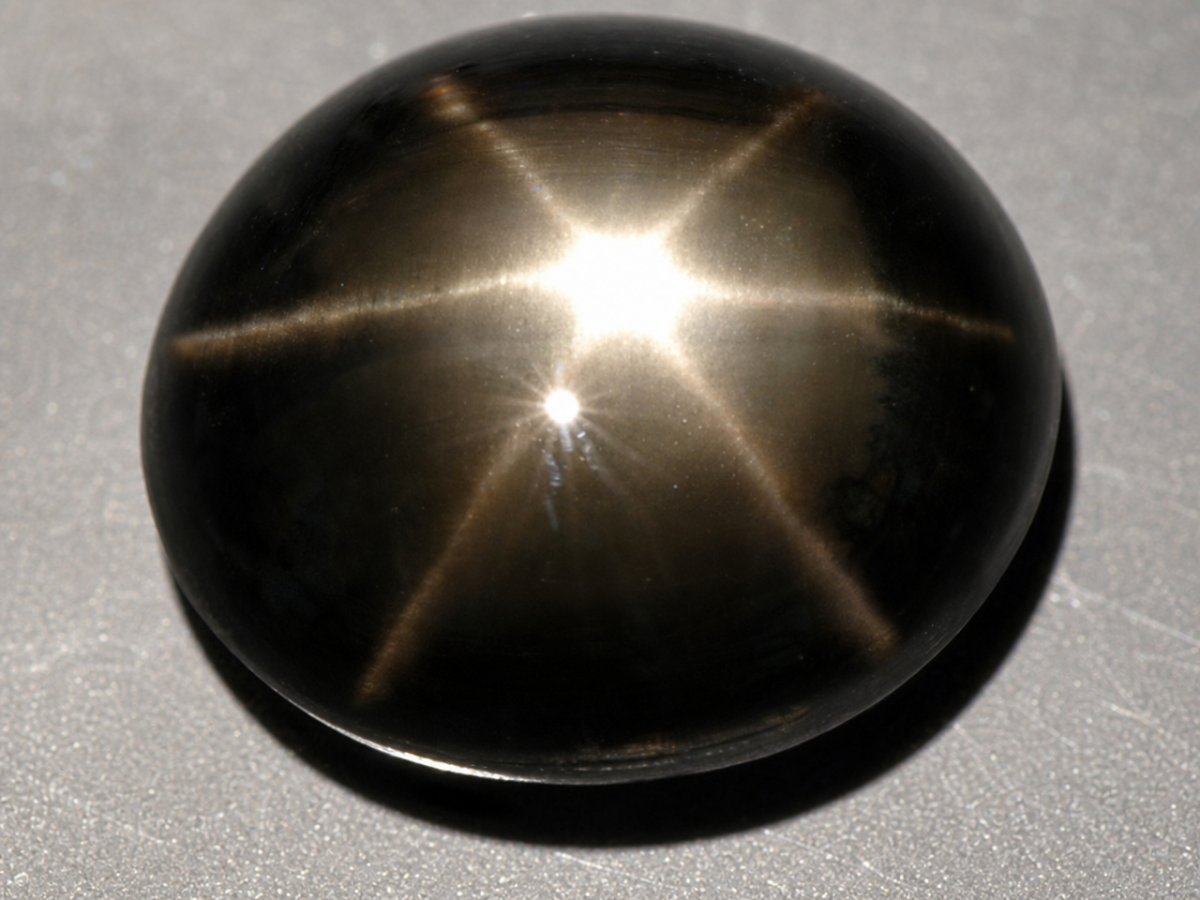


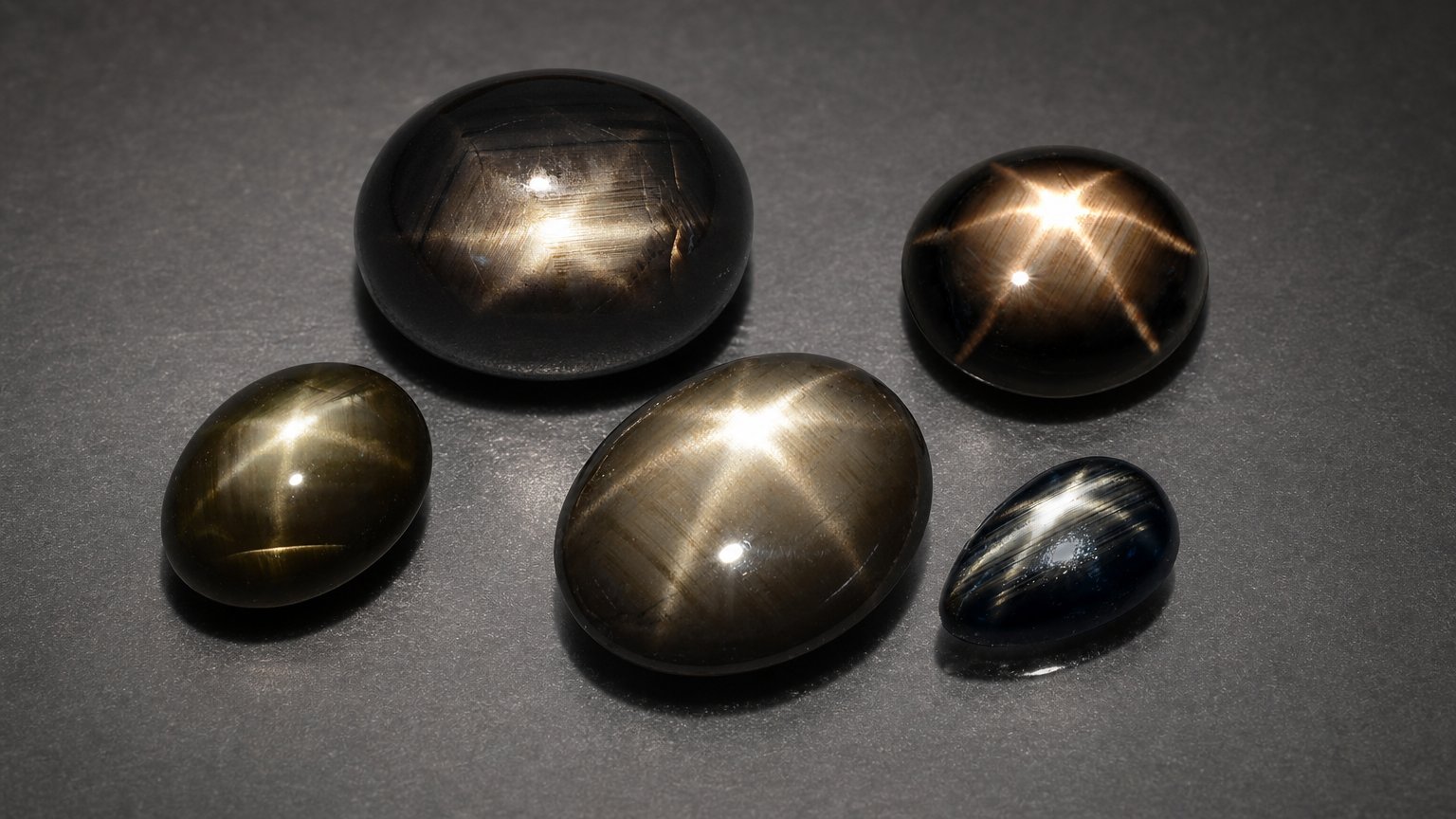
Black star sapphire is a distinctive variety of sapphire prized for its dark body color and star-like optical effect. For buyers, the most important choices are not the same as with transparent faceted sapphire. Instead of judging brilliance, focus on the quality of the star, the shape and polish of the cabochon, the depth of black color, treatment disclosure and suitability for the jewelry design.
As a member of the corundum mineral species, black star sapphire combines strong visual character with excellent hardness. This makes it a practical gemstone for rings, pendants, earrings and other jewelry, provided the stone is well cut and securely set.
What Is Black Star Sapphire?
Black star sapphire is a black variety of sapphire, which belongs to the corundum mineral species. Its chemical formula is Al₂O₃, and it crystallizes in the trigonal crystal system. Unlike faceted transparent sapphires, black star sapphire is normally cut as a cabochon: a smooth, domed cut with no facets.
The cabochon style is essential because it allows the star effect, known in gemology as asterism, to be seen across the curved surface. When assessing a black star sapphire, look at it under a direct light source and gently rotate the stone. The star should be easy to locate and should move across the dome as the stone is turned.
Color and Appearance: What to Look For
The defining body color is black. A good buying decision depends on how attractive the black color looks together with the star. Some stones appear very dark and bold, while others may show subtle tonal variation. The best choice is often personal: jewelry designers may prefer a deep, dramatic black for modern settings, while collectors may focus more on the sharpness and placement of the star.
The Star Effect
For black star sapphire, the star is one of the main appearance factors. When comparing stones, consider:
- Visibility: The star should be visible under direct light without excessive searching.
- Centering: A well-positioned star near the top center of the cabochon is generally more pleasing, especially for rings and pendants.
- Sharpness: A crisp, clearly defined star usually looks stronger than a blurry or uneven one.
- Movement: The star should shift smoothly as the stone is moved under the light.
Because the star depends on lighting, view product photos carefully and, when possible, consider how the gemstone will look in the lighting conditions where the jewelry will be worn.
Cut, Shape and Size Considerations
Black star sapphire is most commonly cut as a cabochon. The cabochon should have a smooth polish, an even dome and a balanced outline. A dome that is too shallow may weaken the appearance of the star, while a very high dome may change the profile of the finished jewelry. The right choice depends on both appearance and setting style.
Oval cabochons are especially common and practical because they suit rings, pendants and statement designs. Pear and round shapes are also popular, while cushion and octagon shapes can give the stone a more distinctive design character. When buying matching stones for earrings or cufflinks, pay close attention to shape, size, dome height and star position so the pair looks harmonious.
Treatments and Disclosure
Black star sapphires may be untreated, and untreated stones are an important option for buyers who prefer minimal enhancement. Heat treatment and fracture filling are also known treatments for this gemstone. Since treatments can affect buyer preference, care requirements and confidence, clear disclosure is important.
When reviewing a listing, check whether the stone is described as untreated, heat treated or fracture-filled. If treatment status is especially important to you, choose a seller that provides clear gemstone information. GemSelect lists treatment details where applicable so buyers can compare stones more confidently.
Origins: How Much Should Origin Matter?
Thailand is an important source associated with black star sapphire. Other known origins include Australia, Cambodia, Sri Lanka, Tanzania and Kenya. For most jewelry buyers, origin is secondary to the visible quality of the gemstone: the body color, star effect, cut, size and treatment disclosure usually matter more in the final purchase decision.
Collectors may have a personal preference for a particular origin, but origin alone should not be treated as a substitute for examining the gemstone itself. A well-cut stone with an attractive star and suitable treatment disclosure is usually the more practical priority.
Durability and Jewelry Suitability
Black star sapphire has a Mohs hardness of 9, which makes it one of the harder gemstones used in jewelry. This is a major advantage for rings, including statement rings, because rings are exposed to more contact than pendants or earrings.
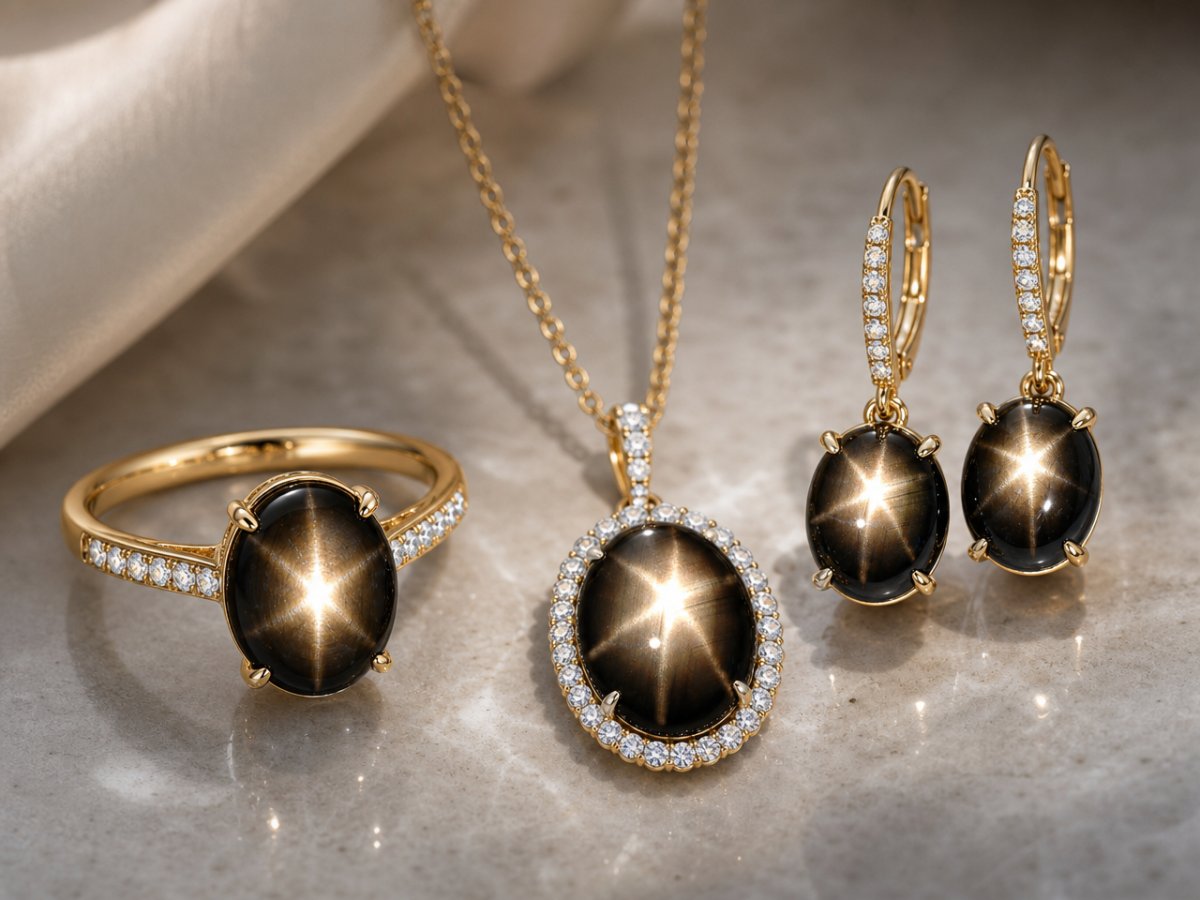
Its durability also makes it suitable for pendants, necklaces, earrings and cufflinks. However, hardness does not mean a gemstone is indestructible. A cabochon can still be scratched by harder materials or damaged by a strong impact, especially if the dome is struck directly. For daily-wear rings, a protective setting is a sensible choice.
Gemological Properties
For buyers who like to understand the technical profile, black star sapphire has a refractive index of 1.762-1.770 and a specific gravity of 4.00. These properties are consistent with its identity as corundum. While most buyers will not use these measurements directly, they are useful in gemological identification and help distinguish sapphire from look-alike materials.
How to Choose the Right Black Star Sapphire
Start with the intended jewelry use. For a ring, prioritize a strong centered star, a durable setting style and a cabochon shape that sits comfortably on the hand. For a pendant or necklace, you may be able to choose a larger stone or more dramatic outline because the piece is less exposed to knocks. For earrings or cufflinks, matching is more important than choosing the single most dramatic stone.
Next, compare the visual factors together rather than separately. A very dark stone may look impressive, but if the star is weak it may not deliver the classic black star sapphire appearance. A strong star on an uneven or poorly polished dome may also be less satisfying. The best choice is a balanced gemstone with attractive black color, a visible star, clean cabochon cutting and clear treatment information.
Finally, consider personal style. Black star sapphire works well in bold, minimal and masculine designs, but it can also provide contrast in more refined jewelry. Its September birthstone association through sapphire adds another reason buyers may choose it for meaningful jewelry.
Care Tips for Black Star Sapphire Jewelry
Because black star sapphire is a hard corundum gemstone, it is generally suitable for regular jewelry wear. Clean it with mild soap, warm water and a soft cloth or brush. Avoid harsh handling, sharp blows and storage against harder gemstones. If a stone is fracture-filled, extra care is advisable, so treatment disclosure should guide your cleaning and maintenance choices.
Summary
The best black star sapphire is the one that fits your purpose: a well-shaped cabochon with appealing black color, a visible and well-positioned star, suitable size, and transparent treatment information. Durability is a strong advantage, especially for rings and pendants, but thoughtful setting and care still matter. By focusing on the star effect, cabochon quality and disclosure, buyers can choose black star sapphire with confidence.