


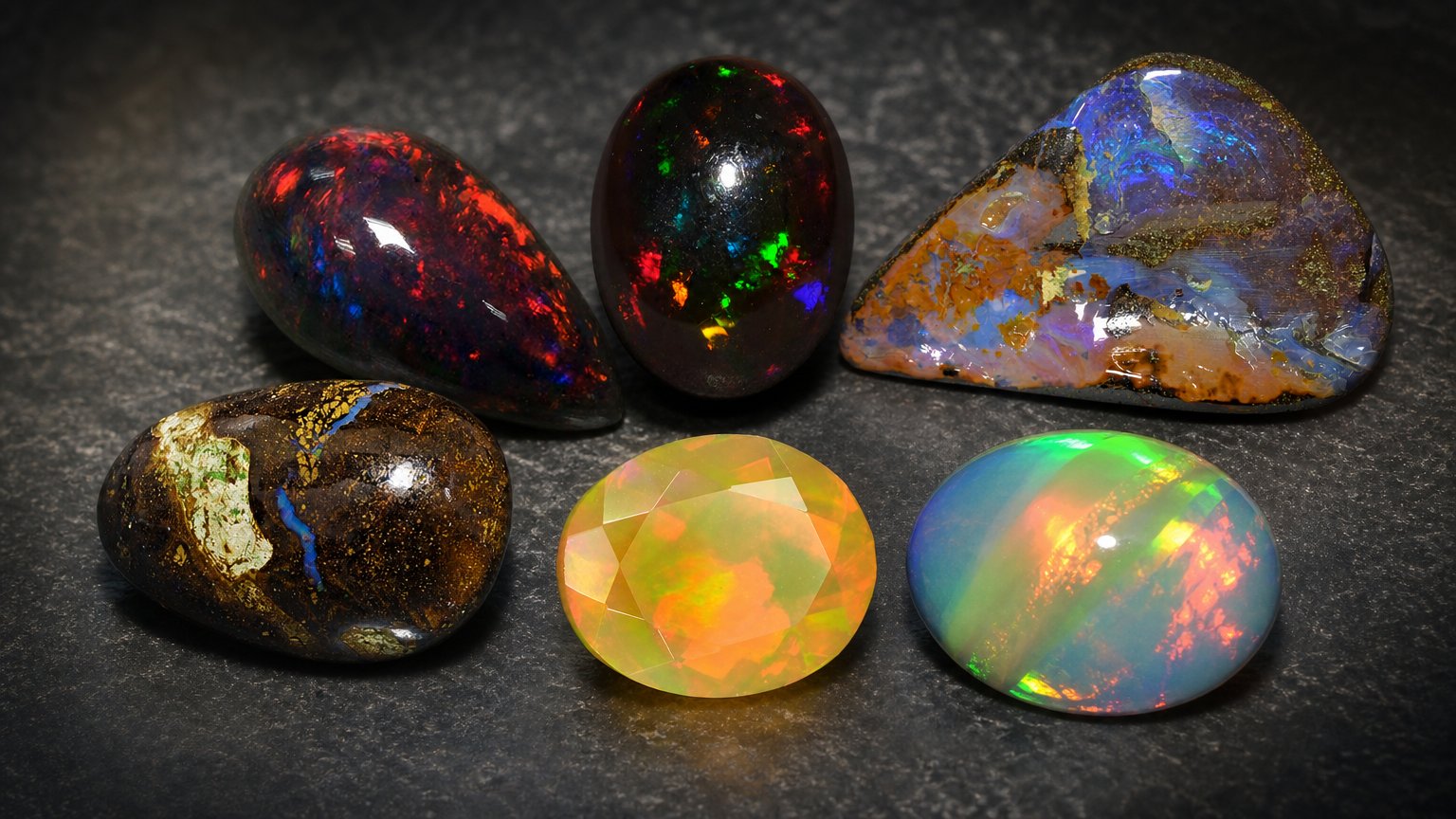
Australian opal is a distinctive variety of opal from Australia, admired by buyers for its colorful appearance and individuality. No two stones look exactly alike, so choosing the right Australian opal is less about finding a standard grade and more about judging the specific stone in front of you: its color, pattern, shape, surface condition, size and suitability for the jewelry you have in mind.
This buying guide focuses on practical decisions that help you compare Australian opals with confidence, whether you are selecting a single cabochon for a ring, a matched pair for earrings or a freeform stone for a pendant.
What Is Australian Opal?
Australian opal is opal sourced from Australia. Gemologically, opal is an amorphous hydrated silica with the chemical formula SiO₂·nH₂O. Unlike crystalline gemstones, opal has an amorphous structure, which means it does not form in a regular crystal system.
For buyers, the most important point is that Australian opal is chosen primarily for appearance. Its multicolor character, body color and cut all influence the look of the finished jewel.
Color and Appearance: What to Look For
Color is usually the first feature buyers notice. Australian opal may show a multicolor appearance and can include black, white, orange, green, blue and red tones. Some stones have a darker overall look, while others appear light, warm or bright depending on their body color and visible color areas.
When comparing stones, view each opal from several angles. Look for color that remains attractive as the stone moves, especially if it will be worn in jewelry. A stone that looks appealing only from one narrow direction may be less satisfying in a ring or pendant than one with a more balanced face-up appearance.
Practical color buying tips
- Prioritize the look you love. Australian opal is highly individual, so personal preference matters.
- Check the face-up view. This is how the gem will usually be seen once set.
- Compare body color. Black, white and orange appearances create very different design effects.
- Consider jewelry style. Bold multicolor stones often suit statement designs, while softer colors can work well in classic settings.
Cut, Shape and Size
Australian opal is most commonly cut as a cabochon. A cabochon has a smooth, polished, domed top rather than flat facets. This style is popular because it displays opal's surface color and overall pattern clearly and gives the stone a soft, wearable outline.
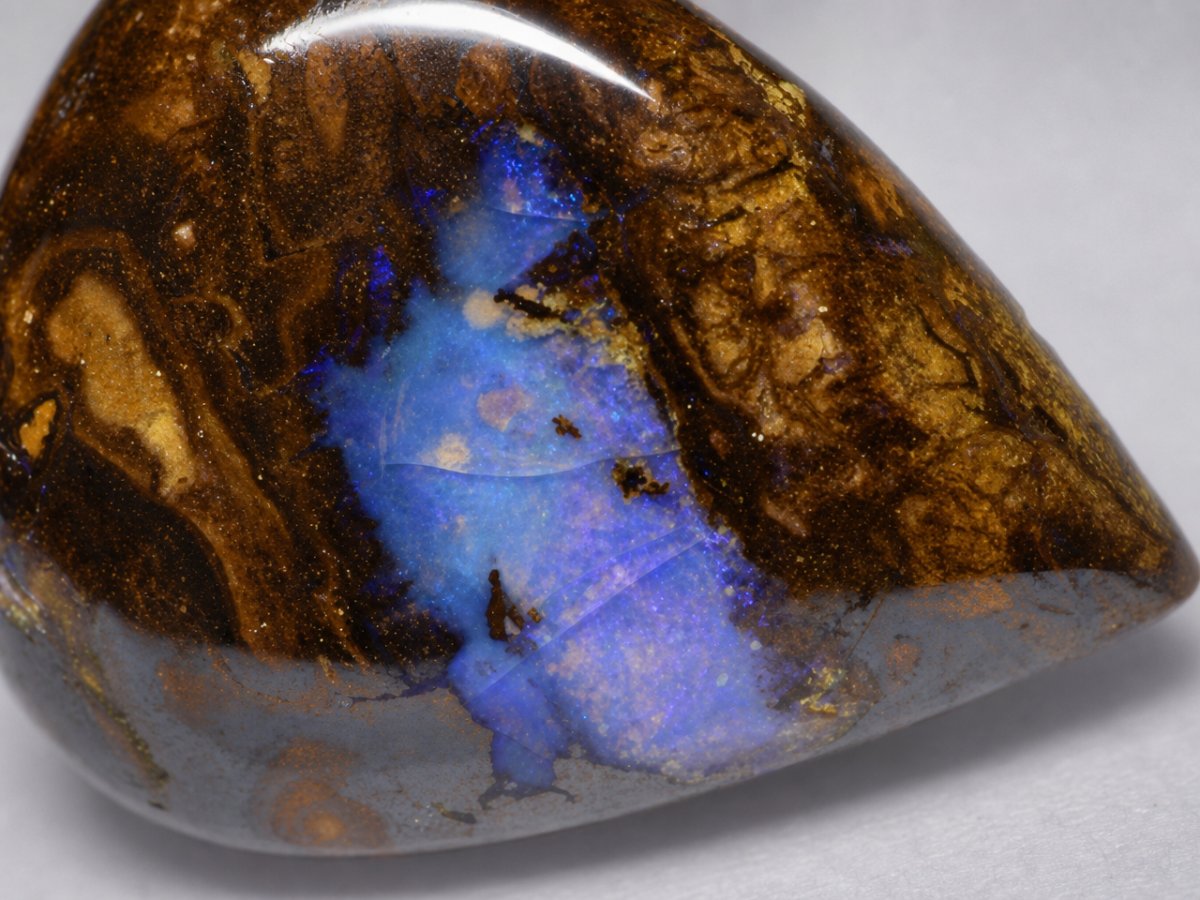
Faceted and step-cut Australian opals are also seen, though cabochons are the main choice for most buyers. Shape is often guided by the original rough material, which is why freeform opals are common alongside calibrated shapes.
Oval shapes are especially common and are easy to use in rings, pendants and earrings. Cushion, round, trillion and freeform shapes are also popular options. Baguette, octagon, square and heart shapes may be selected when they suit a particular design.
Choosing the right shape
- Oval cabochons are versatile and work well in many traditional jewelry settings.
- Freeform shapes are ideal for one-of-a-kind pendants, brooches and designer pieces.
- Round or cushion shapes can be easier to match in pairs or sets.
- Trillion or geometric shapes offer a more contemporary appearance.
Clarity and Surface Condition
For Australian opal, clarity is best judged by overall visual appeal and condition rather than by the same standards used for transparent faceted gems. Before buying, inspect the stone for obvious cracks, chips, dull areas or surface damage. Small natural features may be acceptable if they do not distract from the face-up appearance or affect durability, but visible damage should be considered carefully.
If the opal is intended for a ring or bracelet, surface condition becomes especially important because these jewelry types are more exposed to knocks and abrasion.
Durability and Everyday Wear
Australian opal has a Mohs hardness of 5.5 to 6.5. This makes it softer than many everyday jewelry stones, so it should be worn and stored with some care. It can be used successfully in jewelry, but the setting style and wear habits matter.
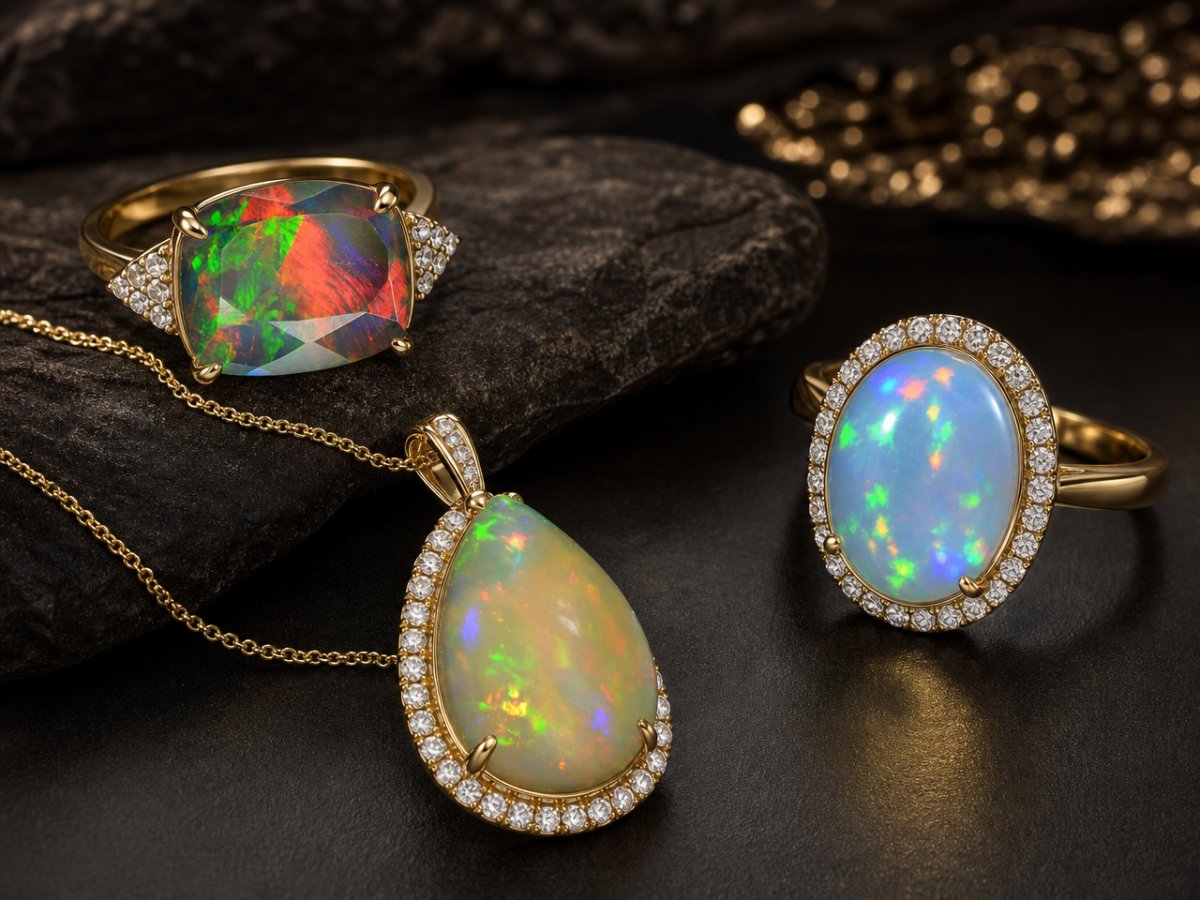
Rings and wedding rings place opal in a more vulnerable position because hands are active and the stone can be bumped. Earrings, necklaces and pendants are generally more protected choices. Bracelets also require care because they are frequently exposed to contact with hard surfaces.
Care-conscious buying tips
- Choose protective settings for rings, especially if the piece will be worn often.
- Avoid designs that leave sharp corners or high domes overly exposed.
- Store opal separately from harder gemstones to reduce scratching.
- Clean gently and avoid harsh treatment, heat or sudden temperature changes.
Treatments and Disclosure
The verified treatment status for Australian opal in this guide is untreated. For buyers, treatment disclosure is still important. Always review the seller's description and ask for clarification if treatment information is not clear.
When shopping with GemSelect, compare the listed treatment information, dimensions, photos and description for each individual stone. Because opals vary so much in appearance, stone-specific details are more useful than broad category descriptions.
Gemological Properties
The following properties help identify Australian opal as a gem material and also explain some of its buying and care considerations.
| Property | Australian Opal | Why it matters to buyers |
|---|---|---|
| Gem family | Opal | Helps confirm the gem type and expected handling considerations. |
| Origin | Australia | Identifies the source associated with this opal category. |
| Mohs hardness | 5.5-6.5 | Indicates moderate softness; protective settings and careful wear are recommended. |
| Refractive index | 1.370-1.470 | Useful for gemological identification. |
| Specific gravity | 1.98-2.25 | Another identification property used by gemologists. |
| Crystal system | Amorphous | Explains why opal differs structurally from crystalline gemstones. |
Best Jewelry Uses for Australian Opal
Australian opal is suitable for many jewelry styles when matched with the right setting. Earrings and rings are common choices, with earrings offering a more protected way to enjoy the gem. Necklaces and pendants are excellent options for showing larger or freeform stones because they receive less impact than rings or bracelets.
Brooches can showcase unusual shapes, while bracelets and wedding rings should be designed with extra protection and realistic wear expectations. If you want an opal for daily wear, discuss setting choices with your jeweler and consider how often the piece will be worn.
How to Choose an Australian Opal
Start with appearance, then confirm practical suitability. A beautiful opal that is too exposed for its intended setting may not be the best purchase, while a well-cut stone with a pleasing face-up view can make an excellent jewelry gem.
- Decide on the jewelry type. Earrings and pendants allow more flexibility; rings and bracelets need greater protection.
- Choose your preferred color impression. Compare multicolor, black, white, orange and other visible color effects.
- Inspect the cut and shape. Cabochons are the classic choice, while freeform stones suit custom designs.
- Check dimensions, not just carat weight. Opal's visual size and setting fit depend on measurements.
- Review condition carefully. Avoid stones with distracting cracks, chips or surface damage.
- Confirm treatment disclosure. Look for clear information stating whether the stone is untreated.
Summary
The best Australian opal for you is the one that combines appealing color, a pleasing shape, good surface condition and the right durability for your intended jewelry. Give priority to the face-up appearance, confirm that the cut suits your design, and choose settings that respect opal's Mohs hardness of 5.5 to 6.5. With clear treatment disclosure and careful selection, Australian opal can be a distinctive and rewarding gemstone choice.
