

White opal is an opal variety valued for its white body color and soft, distinctive appearance. For buyers, the most important decisions are practical ones: choose a pleasing face-up look, confirm whether the stone is untreated or treated, select a cut and shape that suit the jewelry design, and understand opal's moderate durability before setting it in a ring or other piece.
This guide focuses on the factors that help you compare white opal gemstones with confidence, whether you are buying a single cabochon, a matched pair for earrings, or a center stone for a custom ring.
What Is White Opal?
White opal is a variety of opal with a white base color. Like other opal, it is composed of hydrated silica with the chemical formula SiO₂·nH₂O. It is amorphous, meaning it does not have the ordered crystal structure found in many crystalline gemstones.
For buyers, the key point is that white opal should be judged primarily by its visible appearance, condition, cut quality and treatment disclosure rather than by a rigid grading label. Since opal can vary noticeably from stone to stone, detailed photos, accurate dimensions and clear product information are especially useful.
Color and Appearance: What to Look For
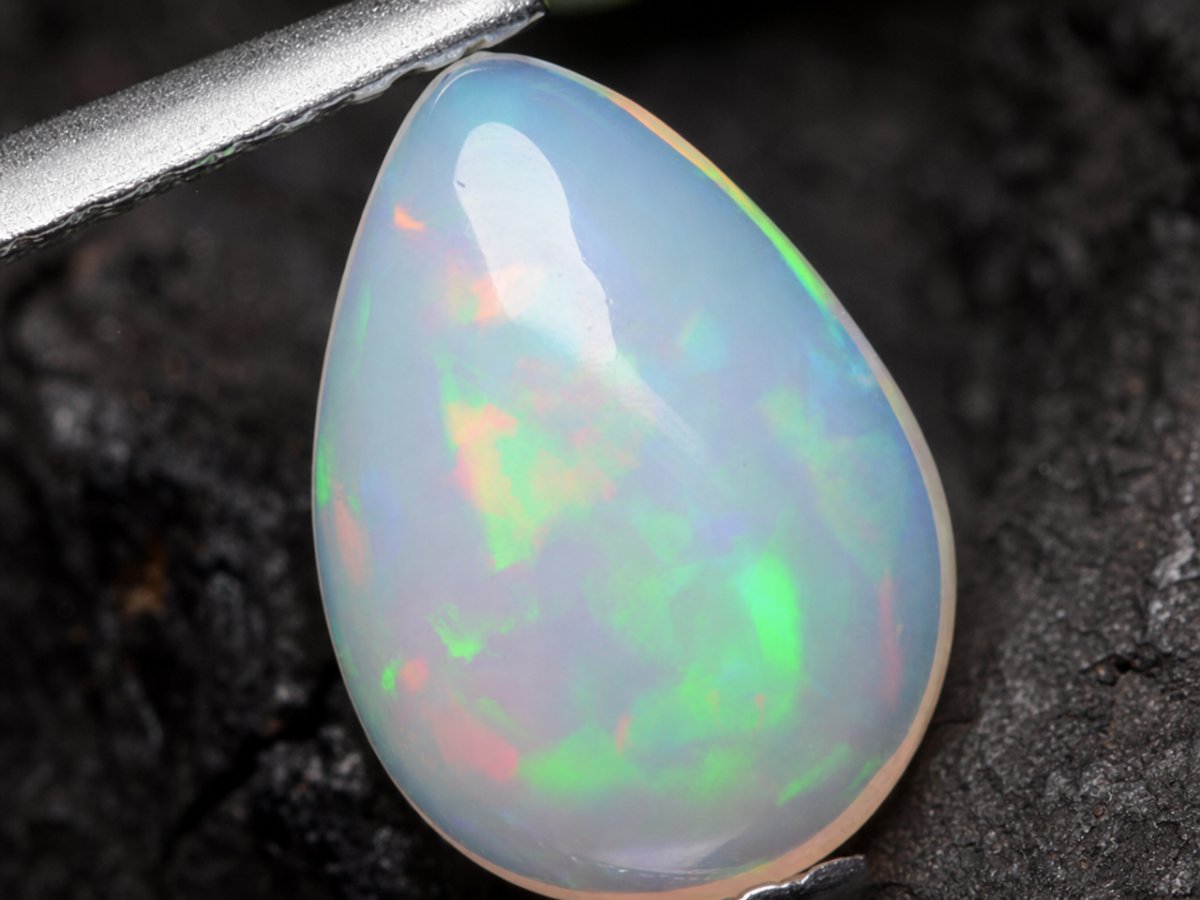
The defining feature of white opal is its white body color. When comparing stones, look at how the gem appears face-up in normal lighting. A buyer should consider whether the white color looks even and attractive, whether the surface is clean to the eye, and whether the overall appearance suits the intended jewelry style.
Because white is a light base color, small differences in tone, polish and surface condition can influence how bright or refined the gemstone appears. View photos carefully and, when possible, compare stones of similar size and shape side by side.
Practical appearance checklist
- Body color: Choose a white appearance that looks pleasing and consistent for your design.
- Face-up appeal: Judge the stone from the top, as it will be seen in jewelry.
- Surface condition: Avoid stones with obvious chips, cracks or distracting surface marks unless they are acceptable for the intended use.
- Match for pairs or sets: For earrings or multi-stone jewelry, look for similar size, shape and overall appearance.
Cut and Shape Choices
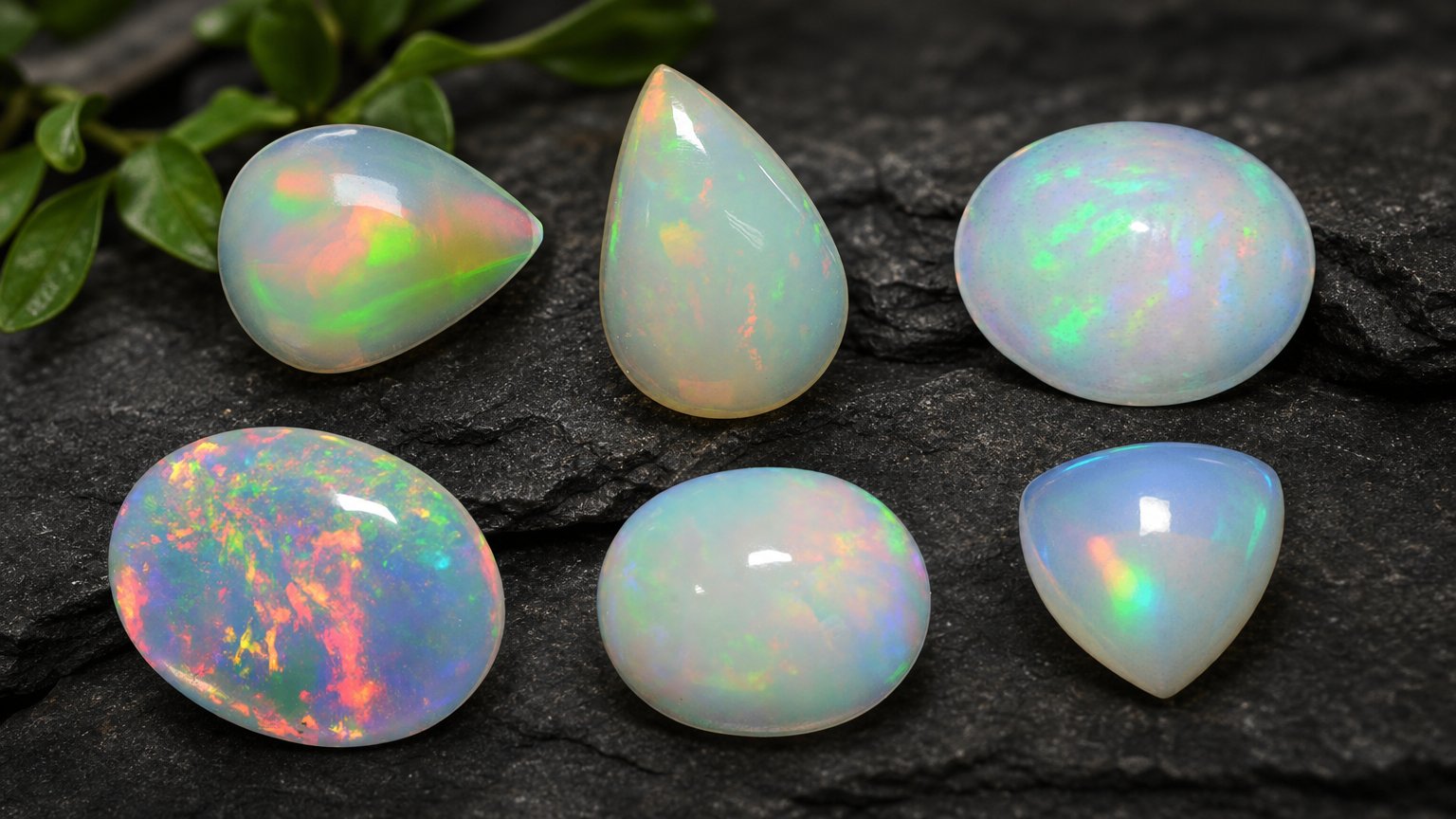
White opal is most commonly cut as a cabochon. A cabochon has a smooth, domed top rather than flat facets, and this style is well suited to opal's appearance. When buying a cabochon, check that the dome looks balanced, the outline is pleasing, and the polish is even.
Faceted white opal is also available, though it is less typical. Faceting can give a different style, but the buyer should still prioritize a clean outline, good polish and an attractive face-up look.
Common shapes include freeform and oval, both of which are especially popular for opal. Cushion and pear shapes are also useful for jewelry designs, while round, baguette and octagon shapes may be chosen when they fit a specific setting or layout.
Buying tip for size
Do not compare white opals by carat weight alone. Shape, depth and cutting style can make two stones of the same weight look different in size. Always check the millimeter measurements, especially for rings, calibrated settings, earrings and pendants.
Origins: Australia, Ethiopia and Mexico
White opal is associated with several origins, with Australia being especially important. Ethiopia is also a notable source, while Mexico is another known origin. Origin can be interesting to collectors and may be relevant when a buyer wants a particular source, but the individual gemstone's appearance, cut, condition and treatment disclosure remain the most practical buying factors.
If origin matters to you, choose a seller that provides clear origin information when available. If origin is not documented, focus on the visible quality and suitability of the stone for your jewelry project.
Gemological Properties Buyers Should Know
White opal has a Mohs hardness of 5.5 to 6.5. This makes it softer than many everyday jewelry gemstones, so it benefits from thoughtful setting choices and careful wear. Its refractive index is 1.370 to 1.470, and its specific gravity is 1.98 to 2.25.
| Gemstone variety | White opal, a variety of opal |
| Chemical formula | SiO₂·nH₂O |
| Crystal system | Amorphous |
| Mohs hardness | 5.5-6.5 |
| Refractive index | 1.370-1.470 |
| Specific gravity | 1.98-2.25 |
These properties are useful because they explain why white opal should be worn and stored with more care than harder gemstones. They also help gemologists identify and separate opal from other materials.
Durability and Jewelry Use
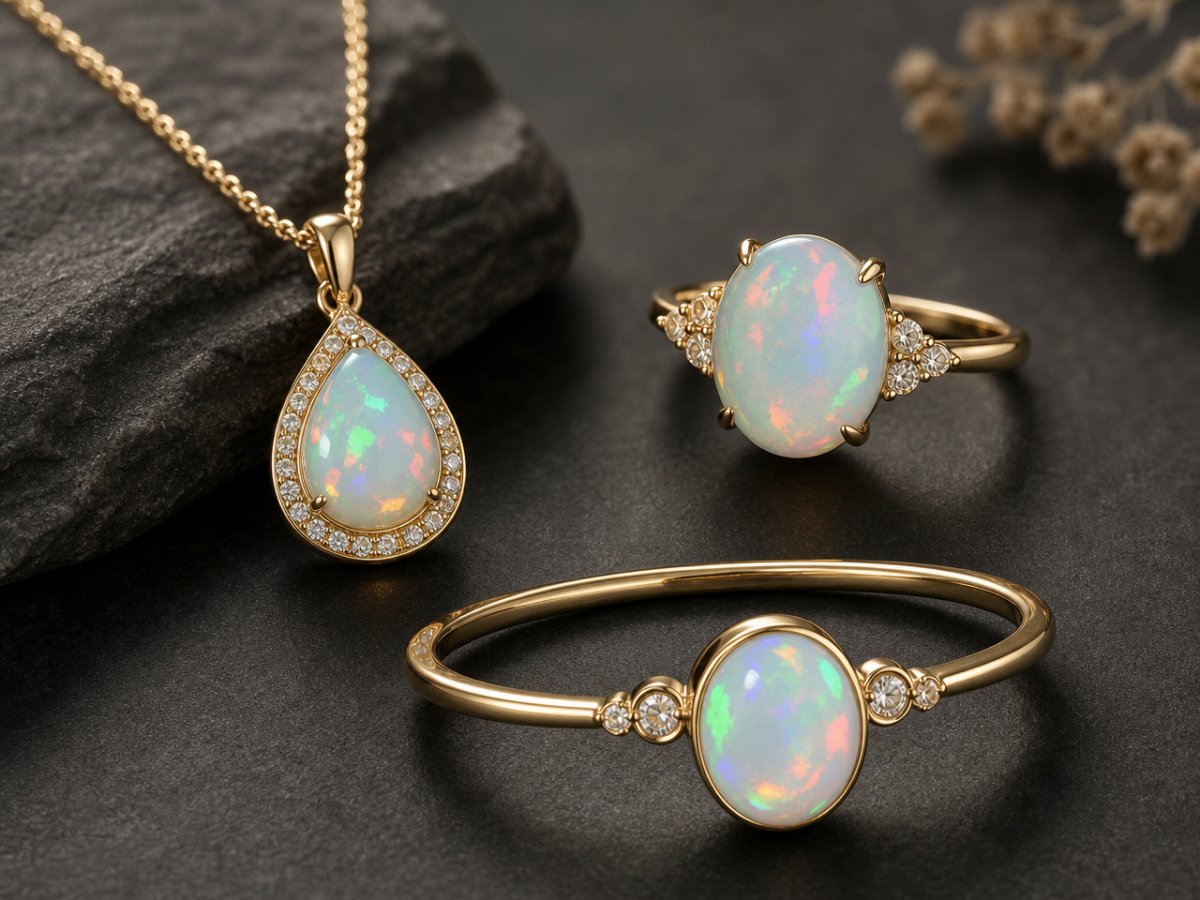
White opal can be used in several types of jewelry, including rings, earrings, pendants, brooches, fashion rings and necklaces. Rings are a popular choice, but they expose the gemstone to more contact and accidental knocks than earrings or pendants.
For rings, a protective setting is a sensible choice, especially for regular wear. Bezel settings or designs that shield the edge of the stone can help reduce the risk of damage. For earrings and pendants, white opal is generally less exposed to abrasion and impact, making these styles especially practical for buyers who want easier wear.
Care guidance
- Store white opal separately from harder gemstones to avoid scratches.
- Remove opal jewelry before heavy work, sports or activities that may cause impact.
- Clean gently with a soft cloth and avoid harsh cleaning methods.
- Use extra caution with rings, as they receive the most wear.
Treatments and Disclosure
White opal is commonly sold untreated, but smoked treatment is also associated with opal and should be disclosed when present. For buyers, treatment disclosure matters because it affects confidence, appearance expectations and comparison between stones.
When purchasing white opal, check the product description for treatment information. At GemSelect, treatment status is presented as part of the gemstone details where available, helping buyers compare options more clearly.
How to Choose the Right White Opal
The best white opal for you depends on the jewelry design, your wear habits and the appearance you prefer. A jeweler designing a ring may prioritize a durable setting and a well-proportioned cabochon, while a collector may focus more on origin, shape or unusual freeform cutting.
For rings
Choose a stone with a sound surface, a practical shape and a setting that protects the edges. Oval and cushion cabochons often work well, while freeform stones can create more individual designs if the setting is custom made.
For earrings
Matching is important. Look for pairs with similar size, outline, body color and overall face-up appearance. Earrings usually experience less impact than rings, making them a practical use for white opal.
For pendants and necklaces
Pendants and necklaces allow more flexibility with size and shape. Freeform, oval and pear shapes can all be attractive choices, depending on the design. Since these pieces are less exposed than rings, they are often a comfortable option for showcasing opal.
For brooches and fashion jewelry
Brooches and fashion rings can make good use of distinctive shapes. For fashion rings, remember that opal's hardness still calls for careful wear and a protective setting.
Final Buying Checklist
- Confirm that the gemstone is white opal and review the seller's description carefully.
- Choose the white body color and face-up appearance you find most attractive.
- Prefer cabochons for the classic white opal look, unless a faceted style suits your design.
- Check dimensions in millimeters, not just carat weight.
- Look for visible condition issues such as chips, cracks or poor polish.
- Review treatment disclosure, especially whether the stone is untreated or smoked treated.
- Select the setting based on use: more protection for rings, more flexibility for pendants and earrings.
- Consider origin if it matters to you, with Australia and Ethiopia being notable sources.
Summary
White opal is a distinctive opal variety with a white body color and broad jewelry appeal. The smartest purchase is not simply the largest stone, but the one with the best combination of appearance, cut, condition, treatment disclosure and suitability for the intended jewelry. By checking these factors before buying, you can choose a white opal that is both beautiful and appropriate for how it will be worn.