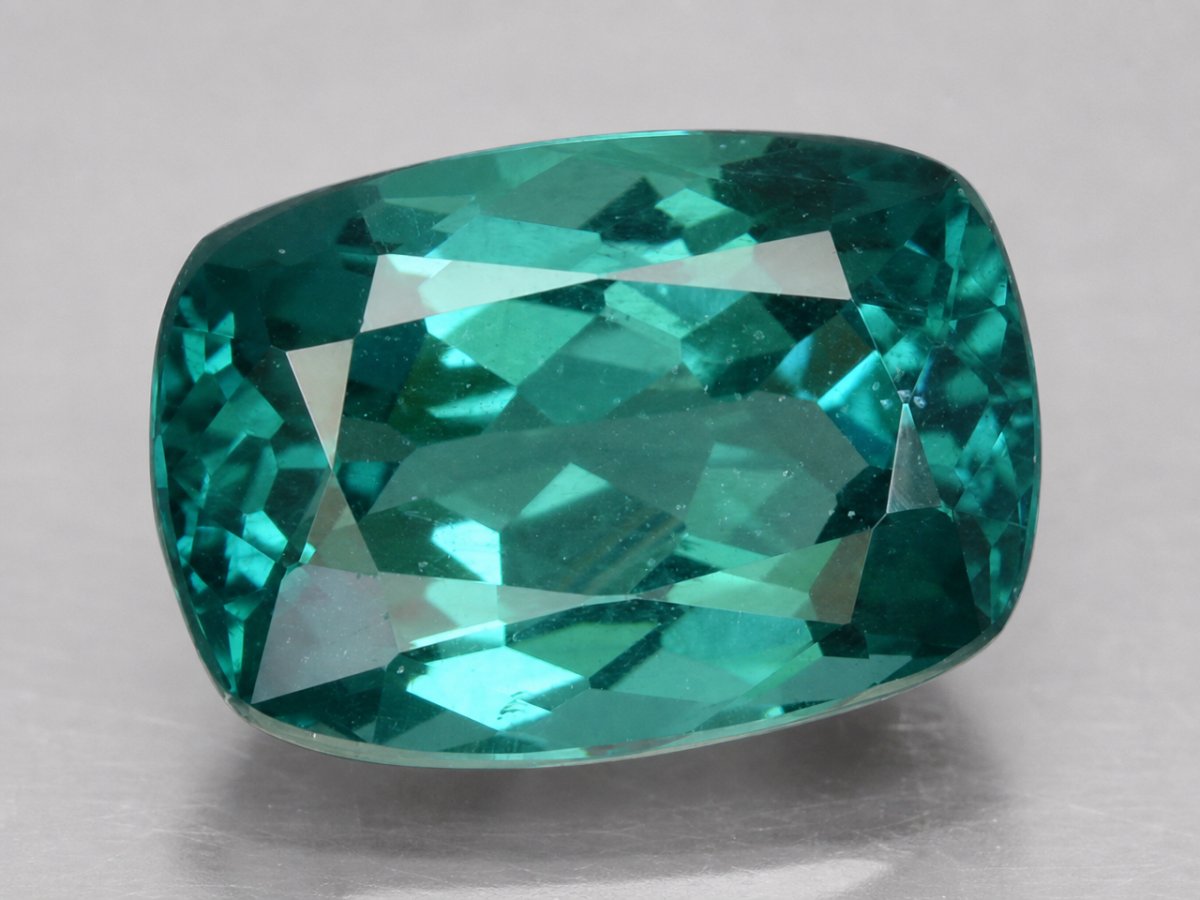


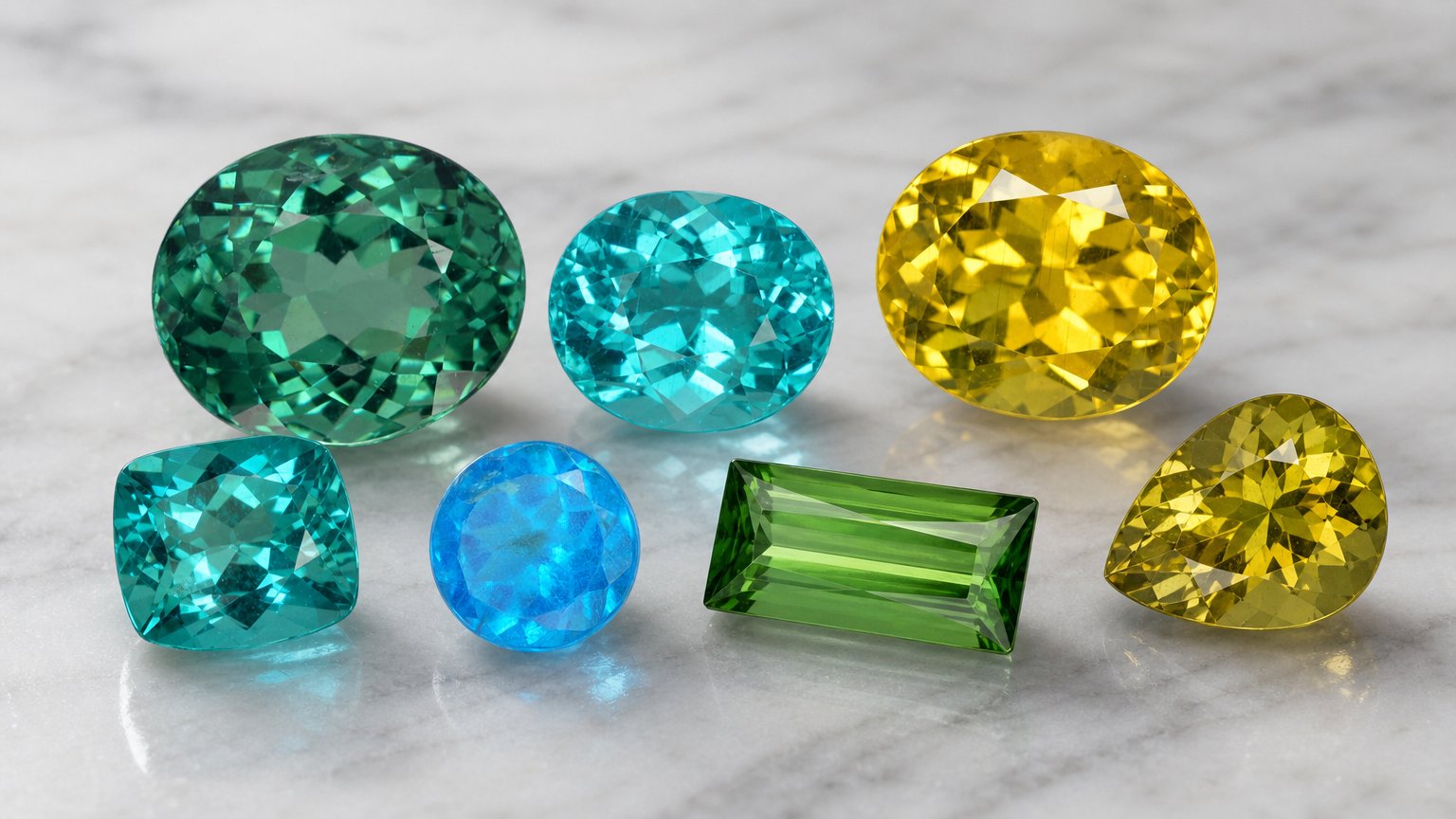
Apatite is a colorful phosphate gemstone known especially for blue and teal gems, with yellow, green, brown, pink, purple and violet varieties also found. In meaning and symbolism, apatite is best understood as a modern gemstone of color, individuality and personal expression rather than as a gem with one dominant ancient legend or ceremonial tradition.
For collectors, designers and gemstone enthusiasts, apatite's appeal comes from its lively appearance and wide color range. Its cultural meaning today is often shaped by the mood of the individual stone: vivid blue and teal apatite can feel fresh and open, while yellow and green apatite may suggest warmth, brightness or a natural look. These interpretations are personal and symbolic, not scientific claims.
What Is Apatite?
Apatite is a phosphate mineral with the chemical formula Ca₅(PO₄)₃(F,Cl,OH). Gem-quality apatite is valued for attractive color and transparency, and it can be cut into faceted gems, step cuts and cabochons. While these technical details belong more fully to gemological and buying guides, they help explain why apatite has become appreciated in modern gemstone culture: it offers expressive color in forms suitable for collectors and jewelry designers.
The gemstone is most strongly associated with blue, with teal and yellow also important. Other known colors include brown, green, pink, purple and violet. This range gives apatite a flexible symbolic identity, allowing different stones to carry different emotional impressions.
Apatite Meaning and Symbolism
Apatite does not have a single universally established meaning comparable to gemstones with long-standing royal, religious or birthstone traditions. Instead, its meaning is often contemporary and personal. Many people choose apatite because it feels distinctive, colorful and less conventional than more familiar gems.
Blue and teal apatite are often the varieties most closely associated with the gemstone in the market today. Their cool colors can be interpreted as peaceful, refreshing or ocean-like, depending on the viewer. Yellow apatite may be read as bright and energetic, while green apatite can suggest a connection with nature. These are color-based associations and should be understood as symbolic impressions rather than fixed historical meanings.
In modern crystal and spiritual communities, apatite may be given additional personal meanings. Such beliefs vary widely and should be treated as tradition, folklore or personal interpretation, not as medically proven or scientifically verified effects.
Apatite's Historical and Cultural Context
Apatite has a quieter cultural history than many classic gemstones. The verified information for this guide does not support specific ancient ceremonial uses, royal ownership stories or religious traditions connected with apatite, so it is more accurate to present it as a gemstone whose importance is strongest in modern collecting and design.
This does not make apatite less interesting. Its significance comes from the way it broadens the palette of colored gemstones. Rather than being tied to a single historical symbol, apatite is appreciated today for visual character, especially in vivid blue and teal stones. For many enthusiasts, that modern identity is part of its charm: apatite feels fresh, expressive and individual.
Color, Origin and Modern Identity
Gemstone meaning is often shaped by appearance, and apatite's color is central to how people experience it. Blue apatite is the best-known color association, with teal and yellow also prominent. Brown, green, pink, purple and violet stones add further variety for collectors who enjoy gems outside the mainstream.
Important apatite sources include Madagascar, Brazil and Mexico, with material also known from Myanmar, Sri Lanka and Pakistan. Madagascar is especially significant in the verified origin information for apatite. While origin should not be confused with symbolism by itself, place of origin can contribute to the story a collector attaches to a gemstone.
Apatite in Contemporary Gemstone Culture
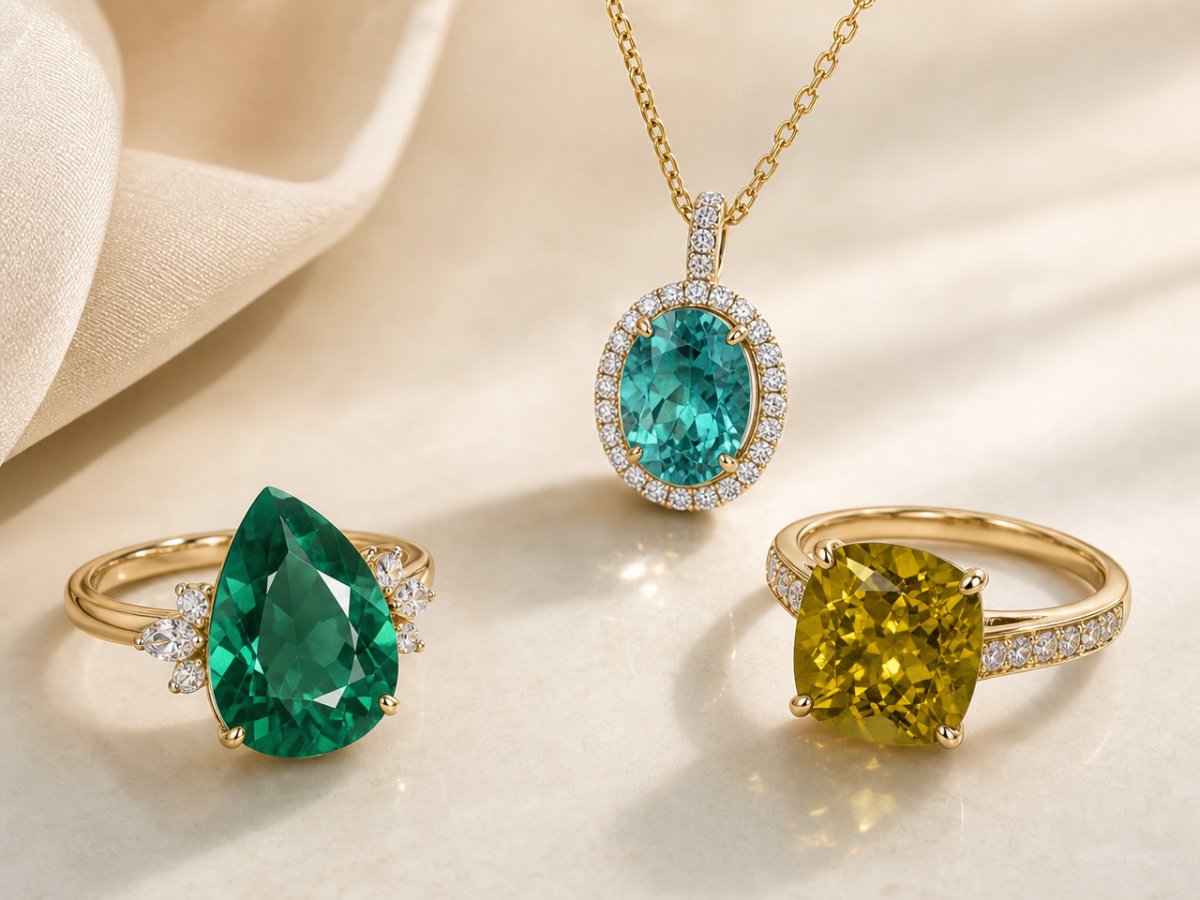
Today, apatite is often chosen by people who enjoy strong color and a distinctive gem identity. It appears in necklaces, pendants and earrings, and may also be seen in rings and bracelets. In a meaning-focused context, these uses matter because they show how apatite is worn: often close to the face or heart in pendants and earrings, where its color becomes part of personal style.
Designers may use apatite when they want a gemstone that feels vivid without relying on the most traditional choices. Collectors may appreciate the range of colors and the fact that apatite can look quite different from one stone to another. In this sense, apatite's modern symbolism is closely connected with individuality, color appreciation and a willingness to choose something less expected.
Birthstone, Zodiac and Anniversary Associations
Apatite is not presented here as a traditional birthstone, zodiac stone or anniversary gemstone because the verified information for this guide does not provide supported associations of that kind. Buyers who choose apatite for a meaningful gift usually do so because of its color, personal appeal or the individual story attached to the stone.
Documented Meaning vs. Personal Belief
When discussing apatite meaning, it is useful to separate supported gemstone facts from personal symbolism. Supported facts include apatite's identity as a phosphate gemstone, its known colors and its important sources. Personal or modern symbolic meanings may be inspired by color, appearance or individual experience, but they should not be presented as historical proof or scientific fact.
This distinction makes apatite a rewarding gem to understand. It is not a stone that needs an elaborate legend to be meaningful. Its meaning is often created through choice: the color someone is drawn to, the origin of the gem, the design it becomes part of and the personal reason it is worn or collected.
Conclusion
Apatite's meaning is modern, colorful and personal. Blue and teal apatite are especially associated with the gemstone's contemporary identity, while yellow, green and other colors give it a broad expressive range. Its history is less defined by ancient legend than by its present-day role as a distinctive colored gemstone for collectors, designers and people who value individuality.
For those exploring GemSelect's apatite gemstones, the best way to understand the stone's significance is to look closely at color and character. Apatite invites personal interpretation, making it a meaningful choice for anyone who wants a gemstone with vivid presence and a story of their own.