


White quartz is a white variety of the quartz family, valued by buyers who want a clean, neutral gemstone that works easily in many jewelry styles. Its practical appeal comes from its simple color, good everyday hardness and wide range of available cuts and shapes.
For most buyers, the best white quartz is the stone that looks attractive in the intended setting, has a pleasing cut, is accurately described and suits the jewelry design. This guide explains the details that matter most before you buy.
What Is White Quartz?
White quartz is quartz with the chemical formula SiO₂. It has a trigonal crystal system, a refractive index of 1.544-1.553 and a specific gravity of 2.65. For buyers, the most important practical property is its Mohs hardness of 7, which makes it suitable for many jewelry applications when set and cared for properly.
Because white quartz belongs to the quartz family, it is often chosen for designs that need a durable, versatile and understated gem. Its white color also makes it easy to coordinate with different metals and other colored gemstones.
Color and Appearance: What to Look For
The defining color of white quartz is white. When shopping, compare stones by overall face-up appearance rather than by color name alone. Look at whether the white is even across the gem, whether the stone appears bright in the photos and whether any internal features distract from the design you have in mind.
In a white gemstone, cut quality has a strong influence on appearance. A well-cut stone should look balanced, symmetrical and lively for its cutting style. If you are matching stones for earrings, side stones or a necklace layout, pay attention to consistency in size, shape and tone.
Cut and Shape Options
White quartz is commonly available as faceted gemstones, which are a good choice when you want reflected light and a more classic gem appearance. Portuguese cuts and step cuts are also seen; Portuguese cuts can add extra visual complexity, while step cuts create a more geometric, architectural look.
Cabochons are another practical option, especially when a smooth, polished surface suits the design better than sparkle. Carvings, concave cuts and decorative forms may also be available for more distinctive jewelry or collector pieces.
Popular shapes include oval and round, both of which are easy to use in rings, earrings and pendants. Cushion, octagon and pear shapes are also common choices. More specialized shapes, such as marquise, trillion, carved cameo and carved flower forms, can be useful when the gemstone itself is intended to be a design feature.
Durability and Jewelry Suitability
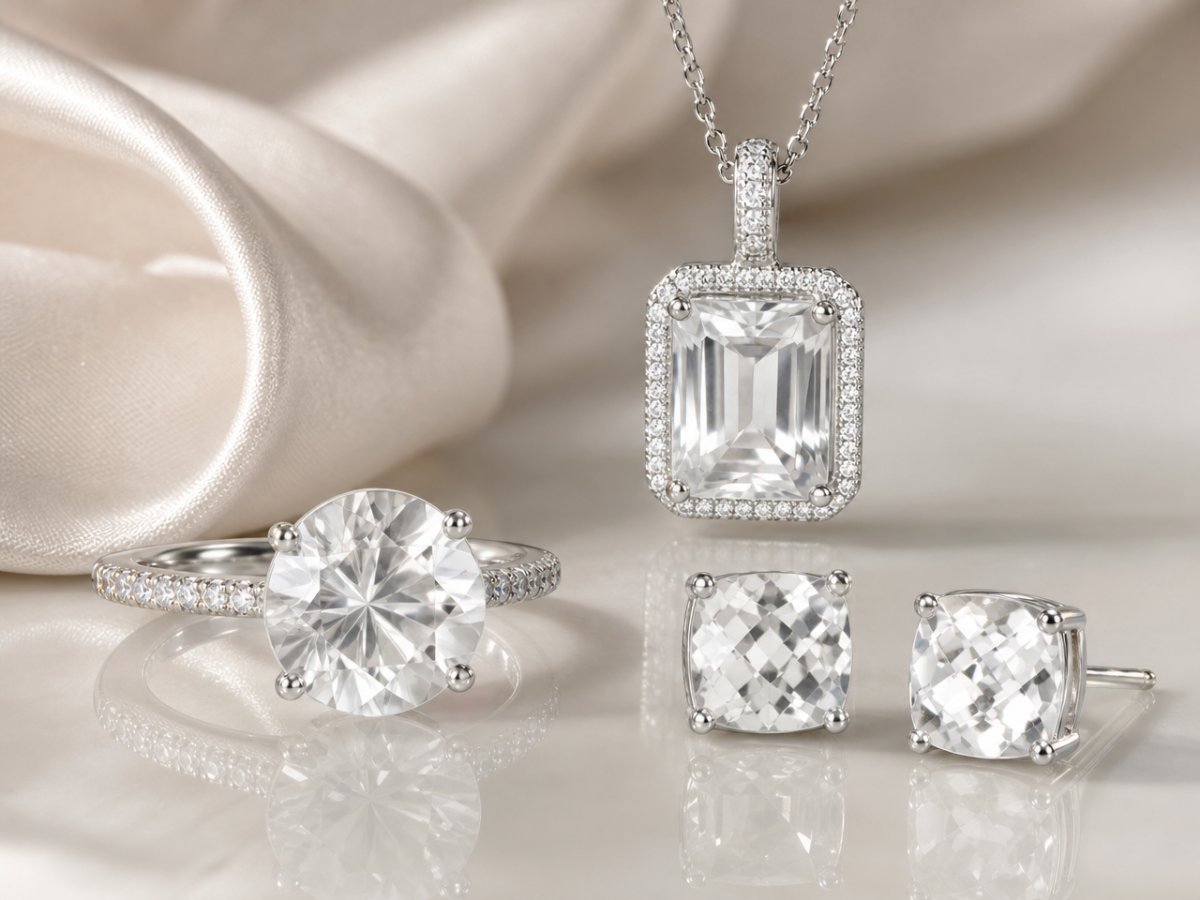
With a Mohs hardness of 7, white quartz is durable enough for many jewelry types, including earrings, pendants, rings, necklaces and bracelets. Hardness measures resistance to scratching, not resistance to all damage, so the setting and intended wear still matter.
Earrings and pendants are especially low-risk choices because they receive less impact during normal wear. Rings can also be a good use for white quartz, particularly when the setting protects the stone from hard knocks. Bracelets receive more contact with surfaces, so secure settings and sensible wear are important.
Treatments and Buying Confidence
White quartz is commonly offered as untreated. For buyers, this is reassuring because the stone's appearance is not typically dependent on a disclosed enhancement in the way some other gems may be.
Even so, always read the seller's treatment information before purchase. At GemSelect, treatment status and key gem details are listed with individual stones so buyers can compare options more confidently.
Origin: Does It Matter?
White quartz is associated with several sources, with Brazil being an important origin. India and Madagascar are also known sources, and material may also come from Australia, Namibia and the United States.
For most white quartz purchases, origin is less important than appearance, cut, size and reliable disclosure. Unless you are buying for a collection where locality matters, choose the individual stone that best fits your design and budget rather than assuming one origin is automatically better than another.
How to Choose White Quartz
1. Start with the jewelry design
For earrings, matched pairs in round or oval shapes are practical and easy to set. For pendants, larger single stones, pears, ovals or decorative cuts can create a clean focal point. For rings, consider shapes and settings that offer good protection for the edges.
2. Compare the face-up look
White quartz should be judged by how it appears from the top, as it will be seen in jewelry. Check the photos for pleasing brightness, attractive proportions and any features that may be visible once set.
3. Choose the cut style intentionally
Select faceted stones if you want a brighter, gemstone-like look. Choose cabochons for a softer, smooth appearance. Step cuts suit modern and geometric designs, while Portuguese cuts can add a more detailed faceting pattern.
4. Check measurements, not just carat weight
For jewelry, millimeter size is often more useful than carat weight because it tells you whether the gem will fit a setting or match other stones. This is especially important for calibrated settings, pairs and multi-stone designs.
5. Confirm treatment and description
Look for clear listing information, including gemstone identity, size, shape, cut and treatment status. If you need stones for a matched jewelry project, compare all details carefully before ordering.
Care Tips for White Quartz
White quartz can be cleaned with mild soap, warm water and a soft brush or cloth. Store it separately from softer gemstones to avoid scratching them, and avoid wearing quartz jewelry during rough work, sports or activities where the gem may receive sharp impacts.
Summary
White quartz is a practical, versatile gemstone for buyers who want a white gem from the quartz family with good hardness and broad jewelry usefulness. Focus on the stone's face-up appearance, cut, shape, size and treatment disclosure. For most buyers, these details matter more than origin and will lead to a more confident purchase.

