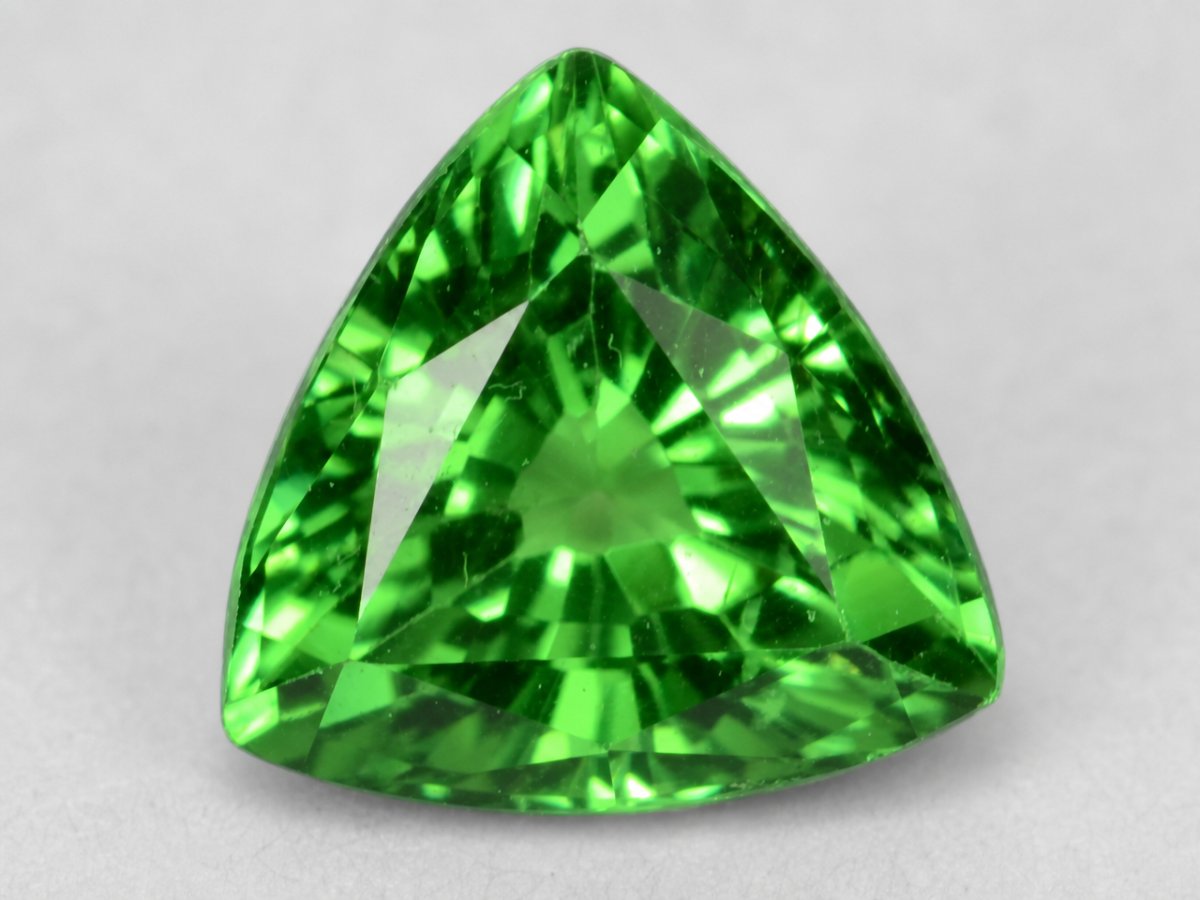


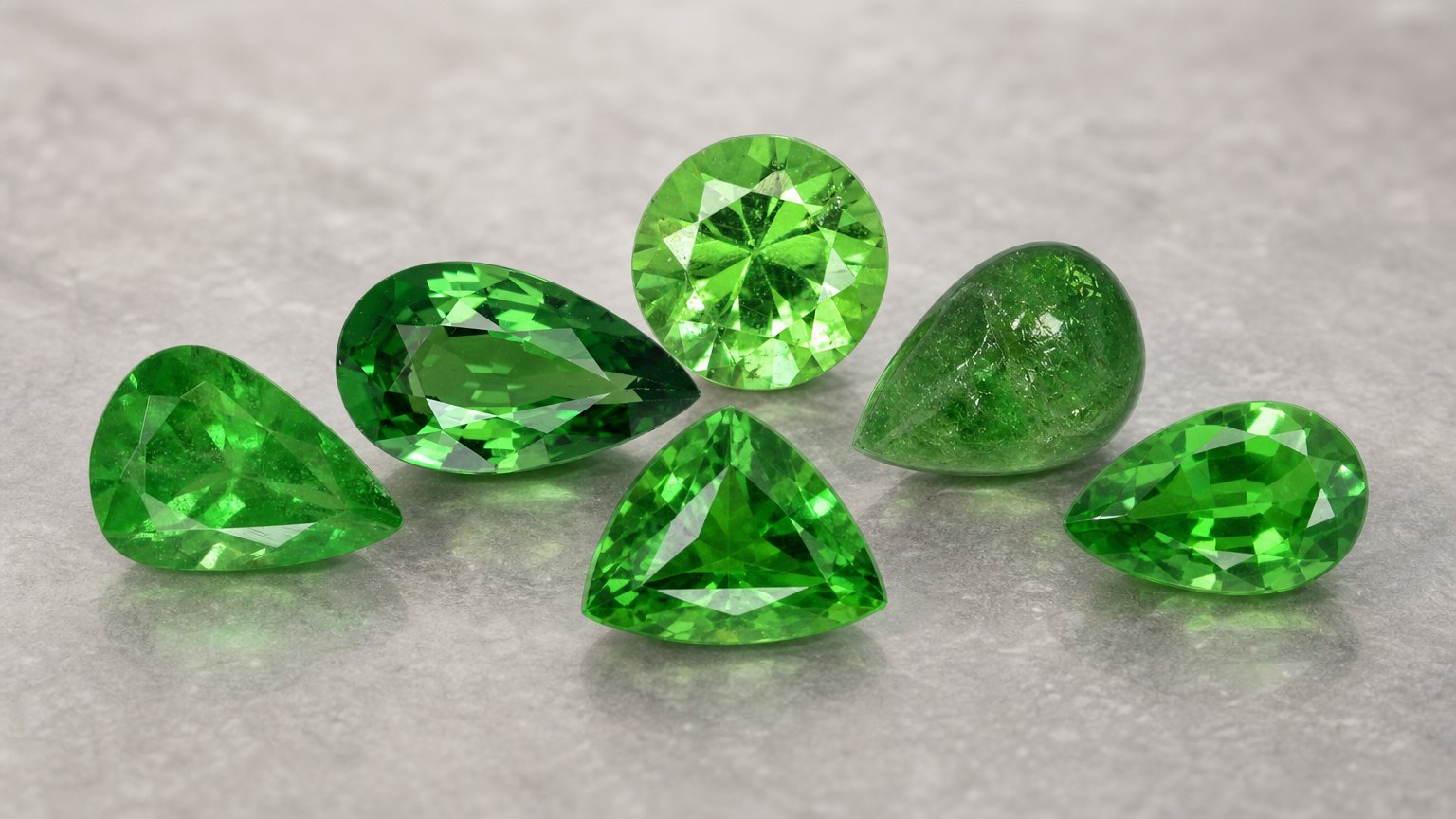
Tsavorite Garnet is a green variety of garnet in the grossular mineral species. For buyers, its appeal is straightforward: it offers a vivid green gemstone option from the garnet family and is commonly available as an untreated gem. Whether you are choosing a single stone for a ring, matching pairs for earrings, or a calibrated gem for a pendant, the most important buying factors are color, clarity, cut quality, size, origin information and suitability for the intended jewelry design.
This guide explains how to evaluate Tsavorite Garnet in practical terms. It does not create a rigid grading system, because colored gemstones are best judged by a balanced view of their appearance and use. Instead, it focuses on the questions buyers actually face: Is the green attractive? Is the stone clean enough for the design? Is the cut lively and well proportioned? Is the origin or treatment disclosure clear? And is the gem appropriate for the jewelry piece you have in mind?
What is Tsavorite Garnet?
Tsavorite Garnet is a variety of garnet associated with the grossular mineral species. Garnet is a broad gemstone family, and Tsavorite Garnet is specifically recognized for its green color. This makes it distinct from the red garnets many buyers first associate with the word garnet.
Because Tsavorite Garnet belongs to the garnet family, it is also connected with the January birthstone tradition. Buyers looking for a January birthstone that is not red may find Tsavorite Garnet especially interesting, provided they want a green gemstone and the design suits their budget, style and durability needs.
For purchasing purposes, the most useful way to understand Tsavorite Garnet is as a green faceted gemstone that is often selected for rings, earrings, necklaces and pendants. It is also used in fashion rings, where color impact and design style are often central to the decision.
Color and appearance: what to look for
Color is the defining feature of Tsavorite Garnet. The known color for this gemstone is green, and buyers should pay close attention to the overall impression of that green in different lighting conditions. In colored gemstones, color is usually discussed through three basic ideas: hue, tone and saturation.
Hue
Hue refers to the basic color family. In Tsavorite Garnet, that basic color is green. When comparing stones, look at whether the green appears balanced and pleasing to your eye. Some buyers prefer a brighter, fresher green appearance, while others prefer a deeper or richer green look. Personal preference is important because colored gemstone beauty is not determined by a single universal standard.
Tone
Tone describes how light or dark the stone appears. A stone that is too dark may lose some visible detail, especially in smaller sizes or low light. A stone that is very light may appear less intense. When shopping online, review all available photos and videos where possible, and consider how the stone will look once mounted. A closed or heavy setting can make many gemstones appear darker, while open designs may allow more light into the stone.
Saturation
Saturation describes the strength or purity of the color. In practice, buyers often describe this as how vivid or intense the green looks. A well-chosen Tsavorite Garnet should have a green color that looks attractive face-up, not only from one angle. When comparing several stones, place the visual emphasis on the face-up appearance because that is how the gem will usually be seen in jewelry.
Clarity considerations
Clarity is another important factor, especially for faceted Tsavorite Garnet. Inclusions are internal features that formed naturally within a gemstone. Not all inclusions are a problem. For most jewelry buyers, the practical question is whether inclusions are visible to the unaided eye and whether they affect the appearance or durability of the stone.
When reviewing a Tsavorite Garnet, first look at the gem without magnification. If the green color is attractive and the stone looks clean in normal viewing, that may be more relevant than tiny details visible only under strong magnification. Jewelers and collectors may still want to study magnified photos, particularly for important stones, matched sets or precision jewelry projects.
Pay special attention to inclusions that reach the surface, obvious fractures, or features that interrupt the face-up beauty of the gem. If a stone is intended for a ring, especially a ring worn often, clarity and structural soundness deserve extra attention because rings receive more impact than earrings or pendants.
Cut styles and shapes
Tsavorite Garnet is most commonly seen as a faceted gemstone. Faceting uses flat polished surfaces to return light and display color. This is often the preferred style for transparent colored gemstones because it can enhance brightness and make the green appear lively.
Diamond-cut styles are also associated with Tsavorite Garnet. These cuts can be appealing when the buyer wants a more brilliant, sparkling appearance. As with any colored gemstone, however, the best cut is not only about sparkle; it must also support the color. A stone that is cut too shallow or too deep may not show its green as effectively as a well-proportioned stone.
Cabochons, which have a smooth domed surface rather than facets, are less common for Tsavorite Garnet but may be found in certain designs. Cabochons can create a softer, more understated appearance, but most buyers searching for Tsavorite Garnet will encounter faceted stones first.
Popular shapes
Oval and round shapes are especially common choices for Tsavorite Garnet. They are versatile, familiar to jewelers and suitable for many jewelry settings. Ovals can make efficient use of gemstone material and often provide an elegant look in rings and pendants. Round stones are easy to match with classic jewelry designs and are useful for earrings, accent stones and symmetrical layouts.
Cushion, pear and trillion shapes are also important options. Cushion shapes offer a softened square or rectangular outline and can feel both classic and contemporary. Pear shapes work well in pendants, earrings and directional ring designs. Trillion shapes are distinctive and can be useful for modern designs or side-stone layouts. Octagon shapes may also be available and can suit more geometric jewelry styles.
When choosing shape, consider both appearance and setting availability. If you are replacing a stone or buying for a specific mounting, measurements are often more important than carat weight alone. Two stones of the same carat weight can have different dimensions depending on depth and cutting style.
Size and matching
Size affects appearance, jewelry design and practicality. Larger stones naturally create more visual impact, but size should be balanced with color, cut and clarity. A smaller Tsavorite Garnet with attractive green color and a lively cut may be more satisfying than a larger stone that appears too dark, windowed or visibly included.
For earrings, matching is especially important. Matched pairs should be close in size, shape, color and overall brightness. Exact sameness is difficult with natural gemstones, but the pair should look harmonious when worn together. For necklaces and pendants, a single well-centered stone may be more important than perfect calibration, unless it must fit a pre-made setting.
For rings, consider the width of the band, the setting style and the wearer's lifestyle. A large face-up stone may look dramatic, but it may also sit higher on the finger depending on the design. If the ring will be worn frequently, a secure setting should be part of the buying decision.
Origins: Kenya, Tanzania and other sources
Tsavorite Garnet is associated with several origins, most notably Kenya. Tanzania is also an important origin, while Madagascar and Pakistan may also be encountered. Origin can be interesting for collectors and for buyers who prefer gems from a particular source, but it should be considered alongside the stone's actual appearance and disclosure information.
For most jewelry buyers, the visual qualities of the individual gem matter more than the country name alone. A well-cut green Tsavorite Garnet with attractive face-up color can be a strong choice regardless of origin, provided the seller gives clear and honest information. If origin is important to you, ask whether it is stated on the listing, invoice or any available gem report.
When shopping at GemSelect or with any reputable seller, review the origin information presented for the specific stone rather than assuming all Tsavorite Garnets share the same source. Natural gemstones are individual materials, and each stone should be evaluated on its own merits.
Treatments and disclosure
Tsavorite Garnet is commonly offered as untreated. This is an important point for buyers because treatment disclosure can affect how a gemstone is understood, compared and cared for. In simple terms, untreated means the gemstone has not been altered by a treatment process to change its appearance.
Even when a gemstone type is commonly untreated, buyers should still check the specific listing details. Clear treatment disclosure is part of responsible gemstone buying. If a stone is sold as untreated, keep the invoice or documentation with your records, especially for higher-value purchases or custom jewelry projects.
For jewelers and designers, treatment information is also useful before setting, cleaning or repair work. While normal jewelry care is still required, knowing that a stone is untreated removes some of the special concerns associated with certain treated gemstones.
Durability and everyday wear
Durability is not a single property. It includes resistance to scratching, resistance to breaking or chipping, and stability under normal wearing conditions. Tsavorite Garnet is used in rings, earrings, necklaces, pendants and fashion rings, so it can be suitable for a range of jewelry styles when chosen and set appropriately.
Rings require the most care because they are exposed to knocks, abrasion and contact with hard surfaces. If you choose Tsavorite Garnet for a ring, consider a protective setting style, secure prongs or a design that does not leave vulnerable corners exposed. This is especially relevant for pear, trillion and other shapes with points or corners.
Earrings and pendants are generally less exposed to impact than rings, making them excellent choices for showcasing green color. Necklaces and pendants allow the stone to be viewed easily while reducing the wear risks that come with hand jewelry. Fashion rings can be very attractive, but if they are worn often, buyers should be realistic about care and maintenance.
Jewelry uses and design guidance
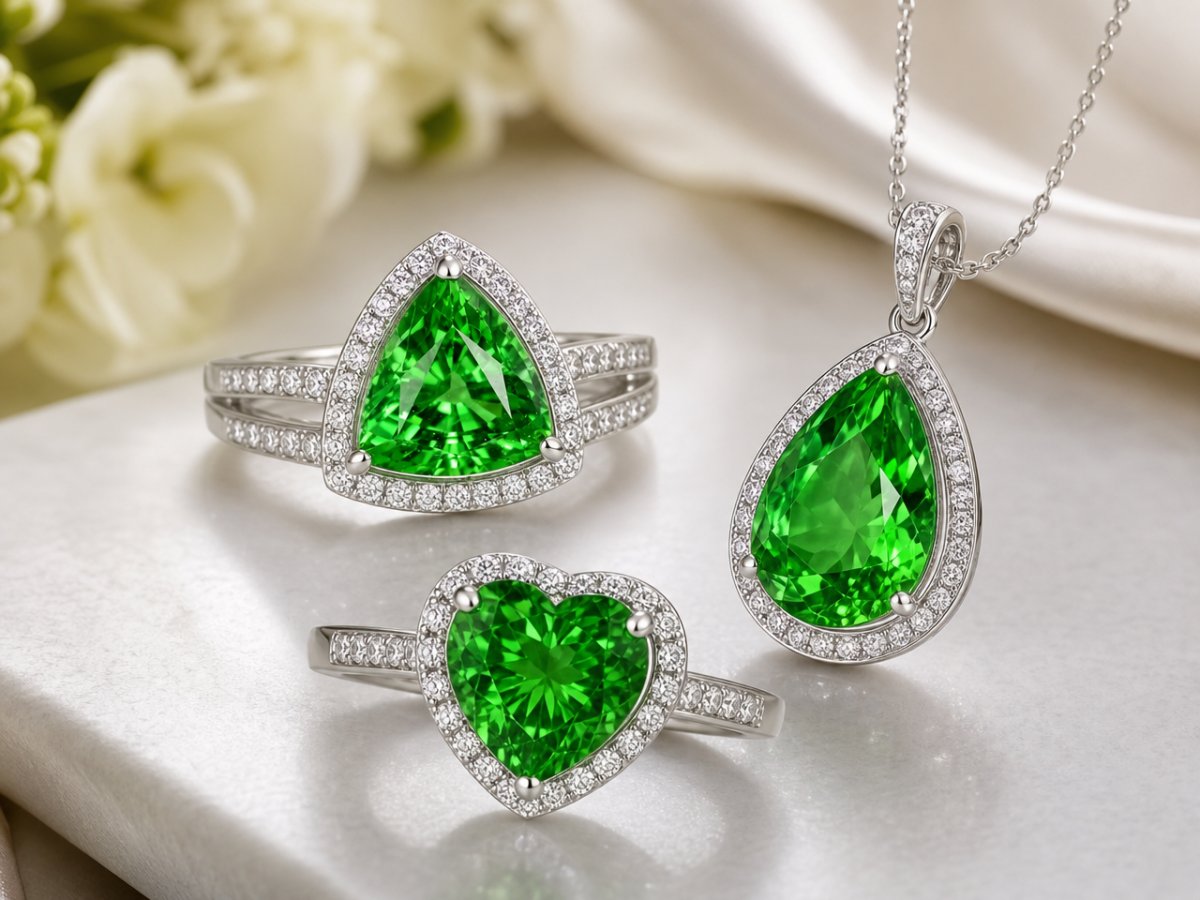
Tsavorite Garnet is well suited to earrings and rings, two of its most important jewelry uses. Earrings can take advantage of smaller matched stones, rounds or ovals, and they allow the green color to be seen near the face. Studs, drops and halo-style designs can all work depending on the stone shape and size.
Rings are a popular choice for buyers who want the gemstone to be highly visible. For a ring, inspect the stone carefully for face-up color, symmetry and any inclusions near edges or corners. If the design will be worn frequently, work with a jeweler who can recommend a secure setting.
Necklaces and pendants are also natural uses for Tsavorite Garnet. Oval, pear, cushion and trillion shapes can all be attractive in pendant designs. Pendants are often a practical choice for buyers who want a larger visual presence with less exposure to impact than a ring.
Fashion rings offer more freedom in style, scale and stone combinations. If you are buying Tsavorite Garnet for a fashion ring, think about how often it will be worn and whether the setting protects the gem. A beautiful design should also be wearable and maintainable.
Practical buying checklist
1. Start with the green color
Choose a green that appeals to you in the stone's face-up view. Compare tone and saturation rather than relying only on the written description. If possible, review multiple images, videos or lighting views.
2. Check clarity with the intended use in mind
For earrings and pendants, minor inclusions may be less noticeable when worn. For rings, inspect more carefully because the stone will be closer to the eye and more exposed to wear.
3. Evaluate the cut, not just the shape
An oval, round or cushion outline is only part of the story. Look for balanced proportions, even color distribution and good face-up brightness. Avoid choosing a stone based only on carat weight if the cut does not support the appearance.
4. Match dimensions to the setting
If you already have a setting, compare millimeter measurements carefully. Carat weight does not guarantee fit. This is especially important for replacement stones and calibrated jewelry designs.
5. Review treatment disclosure
Tsavorite Garnet is commonly sold as untreated, but always confirm the specific stone's disclosure. Keep purchase documentation for future reference.
6. Consider origin as supporting information
Kenya is strongly associated with Tsavorite Garnet, with Tanzania also important. Madagascar and Pakistan may also appear. Origin can be meaningful, but beauty, cutting and disclosure should remain central to the buying decision.
7. Buy for the jewelry you will actually wear
A stone for a pendant can be chosen differently from a stone for a daily ring. Match the gem to the design, the setting and the wearer's habits.
Summary
Buying Tsavorite Garnet is mainly about selecting the right green gemstone for your purpose. Focus first on attractive green color, then consider clarity, cut quality, shape, size, origin information and treatment disclosure. Faceted stones are the most common, with oval and round shapes especially popular, while cushion, pear, trillion and octagon shapes offer additional design possibilities.
Tsavorite Garnet is commonly untreated and is used in earrings, rings, necklaces, pendants and fashion rings. If you are buying from GemSelect, compare individual stones carefully and use the listing details to confirm measurements, origin information and treatment status. A confident purchase comes from balancing beauty with practical suitability for the jewelry you plan to create or wear.