

Topaz is one of the best-known colored gemstones, admired for its bright appearance, wide color range and strong place in modern birthstone tradition. For many people, topaz meaning begins with its connection to November, but the gemstone also carries personal symbolism through color: blue topaz can feel calm and clear, colorless topaz can suggest simplicity, and yellow to orange topaz can evoke warmth and light.
This guide focuses on the meaning, history and cultural significance of topaz rather than on grading or buying advice. It also separates established facts from tradition and modern interpretation. That distinction matters because gemstone names have been used in different ways over time, and older references to a gem called topaz may not always describe the same mineral that gemologists identify as topaz today.
What Is Topaz in the Modern Gemstone World?
In modern gemology, topaz is a specific mineral species with the chemical formula Al₂SiO₄(F,OH)₂. It crystallizes in the orthorhombic system and is known as a relatively hard gemstone, with a Mohs hardness of 8. These details are not the main focus of a meaning guide, but they help explain why topaz has remained important in the gemstone trade: it is not simply a poetic name for a colored stone, but a defined gem material with recognizable properties.
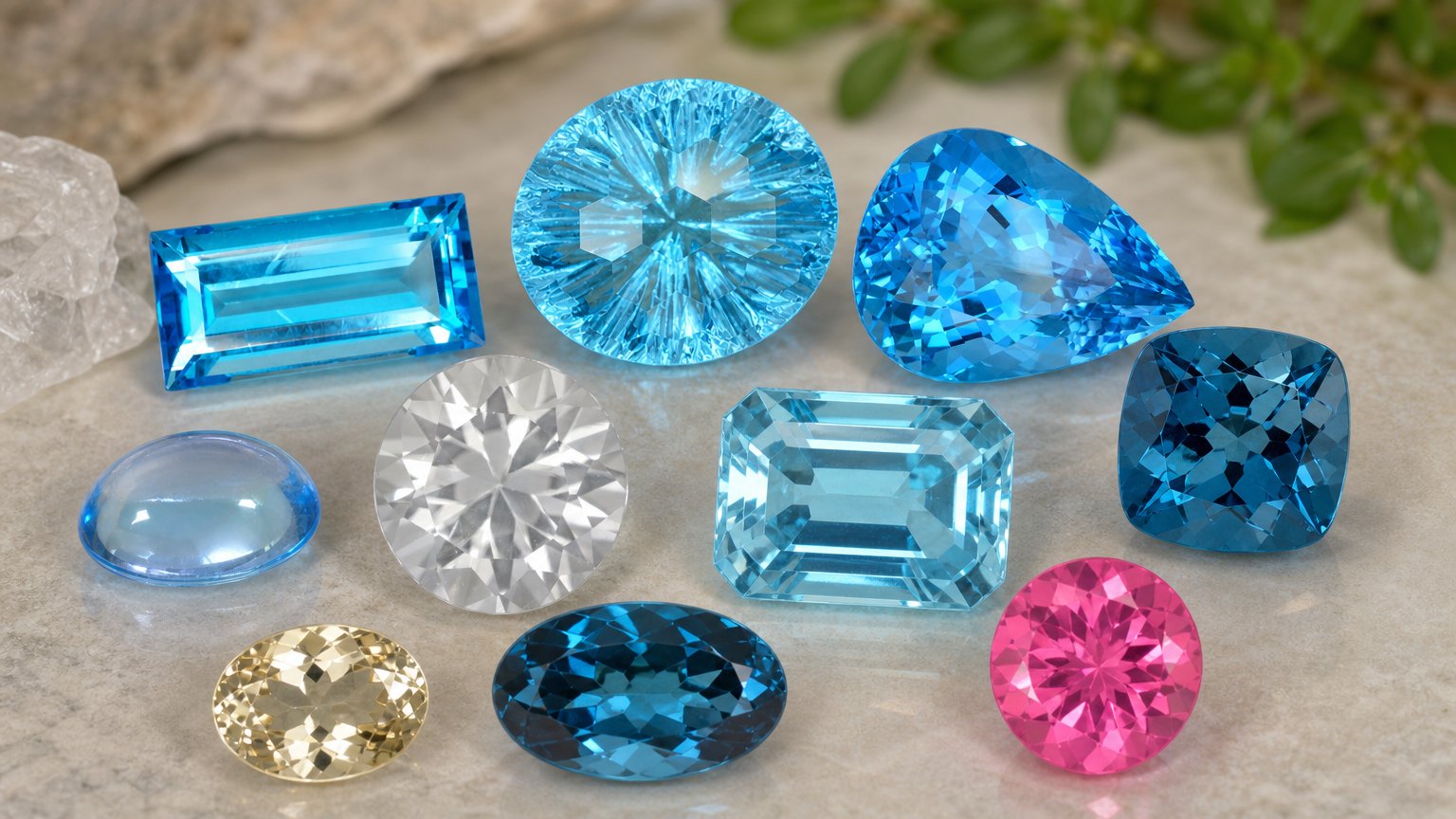
Topaz occurs in many colors, including blue, colorless, yellow, brown, pink, red, green, orange and purple. Blue and colorless topaz are especially prominent in today’s market, while yellow, pink and red varieties are also well recognized. This broad palette is one reason topaz has developed flexible symbolism. Unlike gemstones that are strongly tied to a single color identity, topaz can carry different meanings depending on the color chosen and the occasion for which it is worn or given.
Topaz Meaning and Symbolism
The meaning of topaz today is shaped by three main influences: its birthstone association, its color, and the personal or cultural context in which it is given. In modern jewelry culture, topaz is often regarded as a gemstone of brightness, celebration and individuality. These meanings should be understood as symbolic traditions and personal interpretations rather than scientific claims.
Topaz as a Symbol of Light and Clarity
Because topaz can be transparent and brilliant, it is naturally associated by many wearers with clarity and openness. Colorless topaz, in particular, is often appreciated for a clean and understated look. In symbolic terms, people may choose it to represent simplicity, honesty or a fresh beginning. These are modern interpretive associations, not documented physical effects.
Warm-Colored Topaz and Celebration
Yellow, orange and brown topaz varieties are often connected visually with warmth, autumn and golden light. This makes them especially fitting for November birthstone jewelry, since November falls in a season often associated with warm earth tones in many parts of the world. For gifts, these colors can feel generous and celebratory without needing any additional legend or claim attached to them.
Blue Topaz and Calm Modern Style
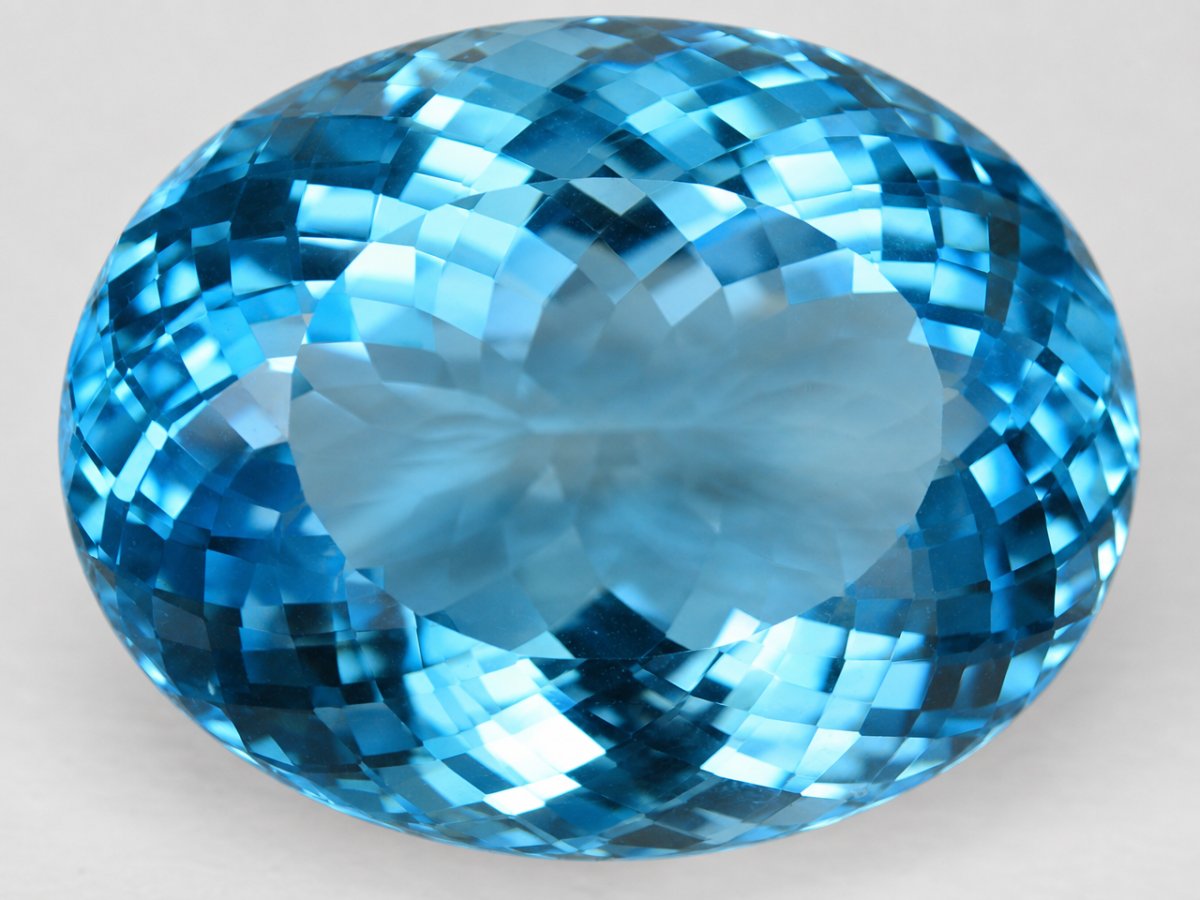
Blue is one of the most familiar colors for topaz in contemporary jewelry. Many wearers associate blue gemstones with calm, balance and clear communication because of the color itself. In the case of topaz, blue has also become part of the gemstone’s modern identity, especially in rings, pendants and earrings. It is important to note that much blue topaz in the market owes its color to accepted treatment processes, especially irradiation often followed by heat treatment. That fact belongs mainly to gem identification and disclosure, but it also helps explain why blue topaz is so widespread in modern culture.
Topaz as the Birthstone for November
Topaz is strongly associated with November as a birthstone. This is one of its most important cultural meanings today. Birthstones give gemstones a personal role: they connect a stone to a birth month, birthday gift, anniversary of life events or family jewelry tradition.
For November-born wearers, topaz can symbolize identity and belonging simply because it marks the month. The meaning does not depend on folklore being literally true. A November birthstone ring, pendant or pair of earrings can become meaningful because it is linked to a person, a memory or a milestone.
The wide color range of topaz gives November birthstone jewelry unusual flexibility. Someone who prefers cool colors may choose blue topaz, while another person may prefer the traditional warmth of yellow or orange tones. Colorless topaz offers a more neutral option, and pink or red topaz can feel more personal and distinctive. This ability to match the stone to the wearer’s style is part of topaz’s continuing popularity as a birthstone.
Historical Understanding: Why Old References to Topaz Need Care
When discussing topaz history, it is useful to remember that gemstone naming has changed over time. Modern gemology identifies gemstones using mineral species, structure, optical properties and other measurable characteristics. Earlier writers and traders often used names based on appearance, locality, trade habit or tradition. As a result, a historical text using the word topaz may not always refer with certainty to the mineral now identified as topaz.
This does not make the history of topaz less interesting; it simply means that careful wording is needed. In a modern educational context, it is better to say that topaz has long been an important gemstone name, while recognizing that some older references may reflect historical naming practices rather than confirmed gemological identity.
Today, gemologists can distinguish topaz from look-alike stones using its properties, including refractive index, specific gravity, crystal system and other diagnostic features. For a meaning and history guide, the key point is that topaz now has a clear identity. This modern clarity allows collectors, jewelers and enthusiasts to appreciate the gemstone without confusing symbolic tradition with mineral certainty.
Origins and Their Cultural Importance
Topaz is found in several parts of the world, and these sources contribute to its modern story. Brazil is especially important among topaz origins and is widely associated with the gemstone in the contemporary trade. Other notable origins include Afghanistan, Madagascar, Nigeria and Pakistan, with additional sources such as Mexico, Myanmar, Sri Lanka and Russia also associated with topaz.
Origin can influence the way a gemstone is described in the trade, but in a meaning guide it is best viewed as part of topaz’s global identity. Topaz is not tied to a single culture or region in modern use. Instead, its significance has become international, shaped by mining localities, gem cutting centers, jewelry design and birthstone customs.
For collectors, origin may add interest to a particular stone. For gift-givers, however, the symbolic meaning usually comes more from color, occasion and personal connection than from source country alone.
Color, Meaning and Personal Interpretation
Topaz is unusual because its meaning can shift naturally with color. The gemstone’s broad color range allows it to serve many symbolic roles without forcing a single interpretation.
Blue Topaz
Blue topaz is often chosen for its clean, cool appearance. In modern symbolism, blue gemstones are commonly linked with calmness, reflection and clear expression. These are cultural and personal associations rather than proven effects, but they explain why blue topaz feels appropriate for thoughtful gifts and everyday personal jewelry.
Colorless Topaz
Colorless topaz has a bright, transparent look that can suggest purity, simplicity and clarity. It may appeal to people who prefer subtle symbolism or who want a gemstone that does not strongly declare one color mood.
Yellow, Orange and Brown Topaz
Warm-toned topaz varieties can feel sunny, generous and grounded. Their appearance works naturally with November birthstone symbolism, especially when the wearer enjoys autumnal colors. In personal jewelry, these stones may represent warmth, gratitude or celebration.
Pink and Red Topaz
Pink and red topaz can be interpreted through the broader symbolism of these colors: affection, individuality and emotional warmth. Because they are visually distinctive within the topaz family, they are often appreciated by people who want a less common expression of the November birthstone.
Green and Purple Topaz
Green and purple topaz are less central to the gemstone’s common identity but still show the range that makes topaz symbolically adaptable. Green may be chosen for a natural or refreshing appearance, while purple may be chosen for richness and creativity. These meanings are best understood as personal color symbolism.
Folklore, Tradition and Modern Belief
Like many gemstones, topaz appears in folklore and modern symbolic traditions. Such traditions may describe topaz as a stone connected with positive qualities, protection, emotional balance or personal strength. These ideas can be meaningful to individuals, but they should not be treated as medical or scientific facts.
For GemSelect readers, the most practical approach is to enjoy folklore as part of gemstone culture while keeping it separate from gemological information. A topaz can be meaningful because it was given by a loved one, chosen as a birthstone, selected for its color, or connected with a personal intention. That kind of meaning is real in a cultural and emotional sense, even when it is not a scientific property of the mineral.
Topaz in Modern Culture
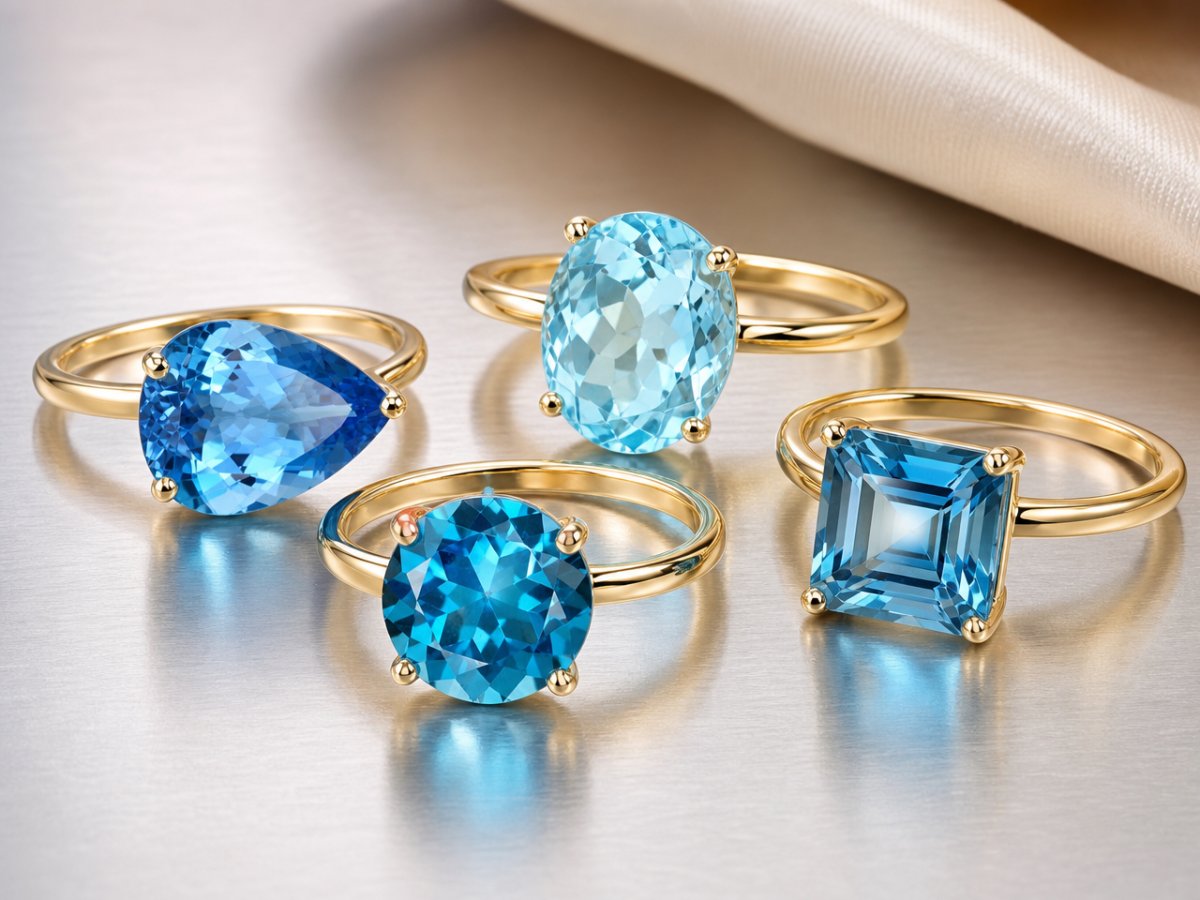
In modern jewelry culture, topaz is widely recognized, accessible in many styles and closely connected to birthstone gifting. Its common use in rings, pendants and earrings keeps it visible to a broad audience. Necklaces, bracelets, cocktail rings, cufflinks and stud earrings also help topaz move between personal, formal and fashion-oriented settings.
Modern cutting styles have also helped shape how topaz is perceived. Faceted topaz, emerald cuts, cabochons and popular shapes such as oval, round, pear and octagon forms all present the gem differently. A blue topaz in a crisp emerald cut may feel refined and architectural, while a warm-toned oval topaz may feel traditional and inviting. These design choices influence the wearer’s interpretation even when the underlying gemstone is the same.
Treatments are another part of topaz’s modern story. Irradiation, heat treatment and coatings are known in the topaz trade, while untreated topaz also exists. In a meaning guide, the key cultural point is that treatment has expanded the availability of certain appearances, especially blue topaz. Ethical and accurate disclosure remains important, but the symbolic value of a piece often comes from its role in a person’s life rather than from treatment status alone.
How Topaz Meaning Connects Past and Present
The meaning of topaz today is a blend of tradition, modern gemology and personal choice. Its November birthstone role gives it a shared cultural identity. Its color range allows individual interpretation. Its global sources connect it to an international gemstone market. Its modern mineral definition helps separate confirmed facts from older naming traditions and folklore.
That combination makes topaz especially versatile as a meaningful gemstone. It can be a birthday stone, a color-based personal symbol, a family gift or a collector’s gem. The most reliable way to understand topaz meaning is to recognize both sides of the story: what can be documented and what belongs to tradition, sentiment and personal symbolism.
Conclusion
Topaz is meaningful because it balances clear modern identity with rich personal interpretation. As the birthstone for November, it carries an established role in gift-giving and milestone jewelry. As a gemstone found in blue, colorless, yellow, brown, pink, red and other colors, it offers many symbolic possibilities. While older historical references to topaz should be read with care, the gemstone’s place in modern culture is unmistakable.
Whether chosen for a November birthday, a favorite color or a personal story, topaz remains a gemstone whose meaning is strongest when fact, tradition and individual significance are understood together.