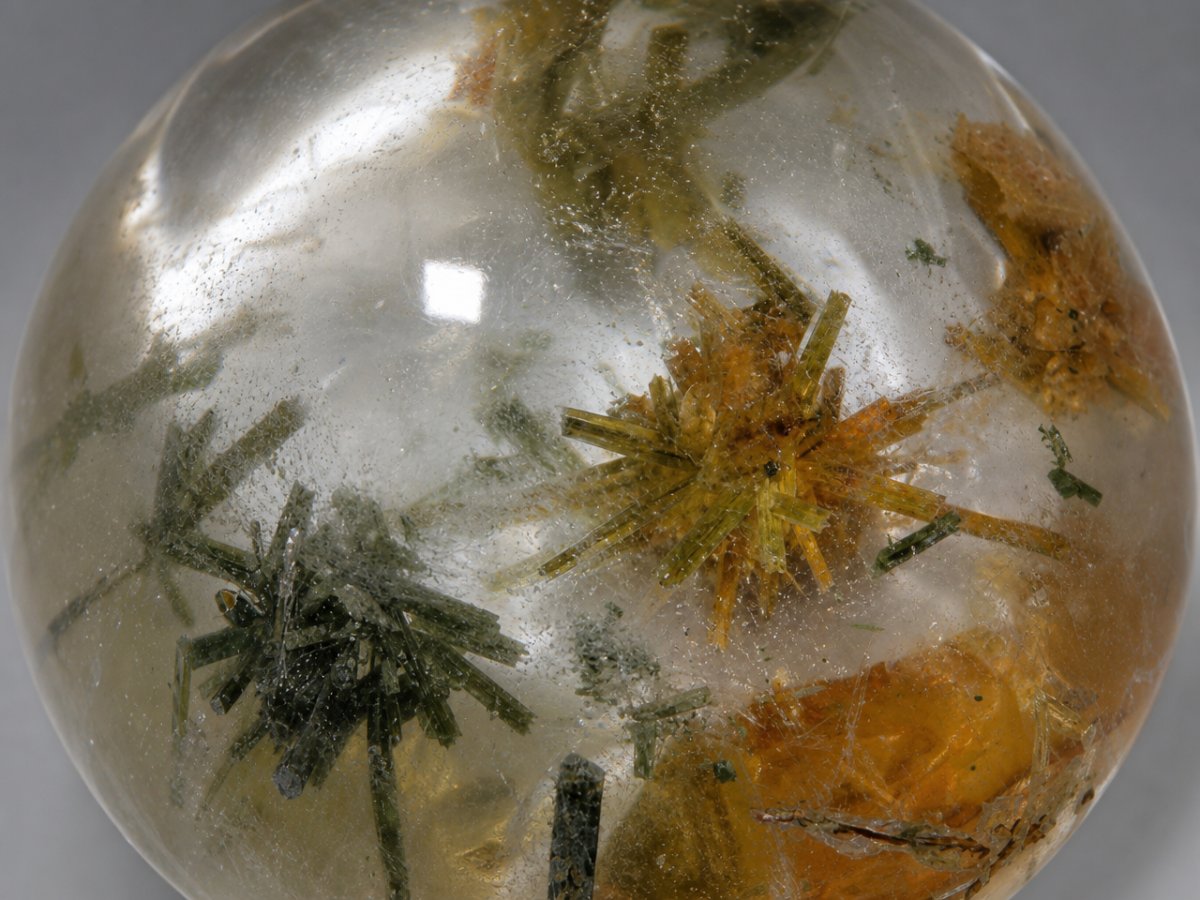


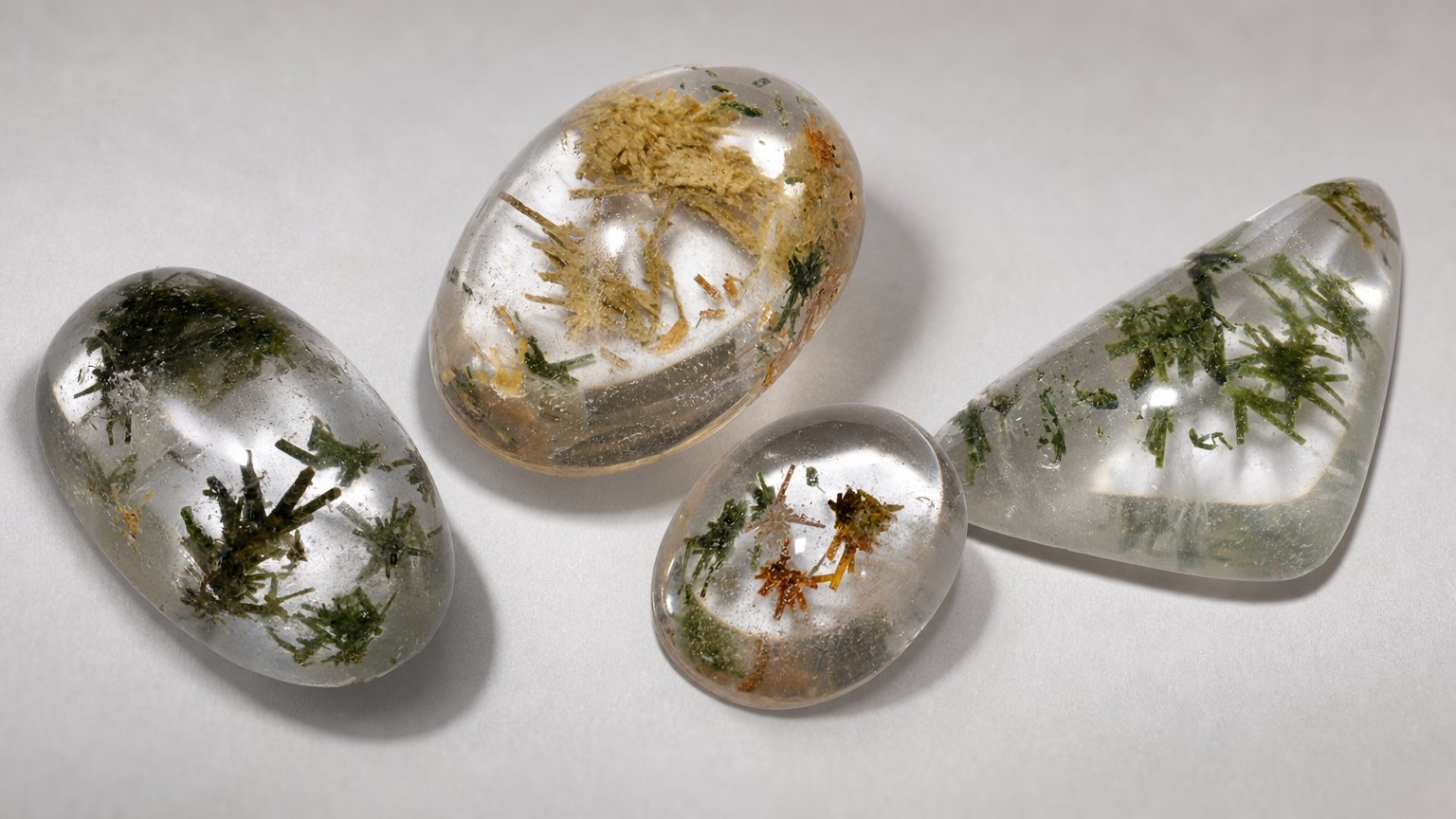
Quartz With Hedenbergite is a distinctive included quartz chosen for its natural internal character rather than for a perfectly clean appearance. For buyers, the most important question is not whether the stone has inclusions, but whether those inclusions create an attractive pattern, pleasing contrast and a shape that suits the intended jewelry design.
This guide explains what to look for when buying Quartz With Hedenbergite, including color, clarity, cut, durability, treatments, origins and jewelry suitability.
What Is Quartz With Hedenbergite?
Quartz With Hedenbergite is quartz that contains hedenbergite inclusions. Its chemical formula is SiO₂, the same basic formula as quartz, and it belongs to the trigonal crystal system. The appeal of this gemstone comes from the way the inclusions are naturally enclosed within the quartz, giving each stone an individual appearance.
Unlike transparent gems where inclusions are often viewed as flaws, the inclusions in Quartz With Hedenbergite are part of the gemstone's identity. A good purchase depends on choosing a stone with inclusion patterns you enjoy and a cut that presents them clearly.
Color and Appearance: What Buyers Should Look For
Quartz With Hedenbergite is known in colorless and multicolor appearances. Colorless quartz can provide a clear background that makes the inclusions more visible, while multicolor examples may have a more complex overall look. Because the visual appeal is pattern-driven, two stones of the same size and shape can look very different.
When comparing stones, look at the balance of transparency, inclusion placement and overall visual harmony. Some buyers prefer bold internal features that stand out immediately, while others prefer a more subtle, delicate appearance. There is no single best pattern; the right choice is the one that fits your design and personal taste.
Clarity Is Different for Included Quartz
For this gemstone, a completely clean look is not the goal. Instead, inspect whether the inclusions enhance the stone rather than making it appear cloudy, dull or visually crowded. If the stone is for a ring or pendant, check how the pattern looks from normal viewing distance as well as close up.
Cut, Shape and Presentation
Cabochons are the most common cut for Quartz With Hedenbergite. A cabochon's smooth, domed surface can display internal inclusions in a direct and natural way, making it a practical choice for buyers who want the stone's pattern to be the main attraction.
Faceted stones are also available, though less commonly. Faceting can add brightness and reflection, but it may also compete visually with the inclusions. If you are buying a faceted stone, view it under different lighting to make sure the reflections do not hide the internal features you want to see.
Oval shapes are especially common, with round and freeform shapes also well suited to this included material. Freeform cuts can be appealing for artisan jewelry because they allow the cutter to follow the natural character of the stone. Cushion, pear and trillion shapes may also be found and can work well when they suit the inclusion layout.
Size and Layout Considerations
Quartz With Hedenbergite can be especially interesting in sizes large enough to show the inclusion pattern clearly. When choosing size, consider the jewelry design first. A small stone may work well as an accent or minimalist ring, while a larger cabochon can be more effective in a pendant, necklace or brooch where the internal scene has room to be appreciated.
For matched jewelry, focus on visual compatibility rather than exact sameness. Because the inclusions are natural, perfectly identical stones are not the expectation. A pleasing match in shape, size and general appearance is usually more realistic and visually satisfying.
Durability and Everyday Wear
Quartz With Hedenbergite has a Mohs hardness of 7, which gives it good resistance to scratching from many common materials. This makes it suitable for a range of jewelry, including pendants, rings, necklaces, bracelets, brooches and artisan designs.
Hardness is only one part of durability. Rings and bracelets are more exposed to knocks than pendants, necklaces and brooches, so protective settings are sensible for jewelry that will be worn often. If the stone has a high cabochon dome or exposed edges, consider a bezel or another secure setting style to help protect it from impact.
Treatments and Buying Confidence
Quartz With Hedenbergite is commonly sold untreated. This is useful for buyers who prefer a natural included gemstone without enhancement. As with any gemstone purchase, treatment disclosure is important, and you should buy from a seller who clearly identifies the stone and provides accurate product details.
At GemSelect, buyers can compare individual gemstones by actual photos, measurements and listed gemological information, which is especially helpful for included stones where appearance varies from gem to gem.
Origins
Quartz With Hedenbergite is associated with origins including Brazil and Russia, with additional sources including the United States, Canada and Madagascar. Origin can be interesting for collectors, but for most jewelry buyers the stone's appearance, cut quality, durability and disclosure are more important than country of origin.
If origin matters to your purchase, check whether it is listed for the individual gemstone rather than assuming it from the gem type alone.
Gemological Properties
Key gemological properties for Quartz With Hedenbergite include a refractive index of 1.544-1.553, specific gravity of 2.65 and Mohs hardness of 7. These values are consistent with quartz and can help gemologists identify and describe the material.
For buyers, the most practical takeaway is that this is a quartz gemstone with enough hardness for many jewelry uses, while its main visual value comes from its natural hedenbergite inclusions.
Best Jewelry Uses
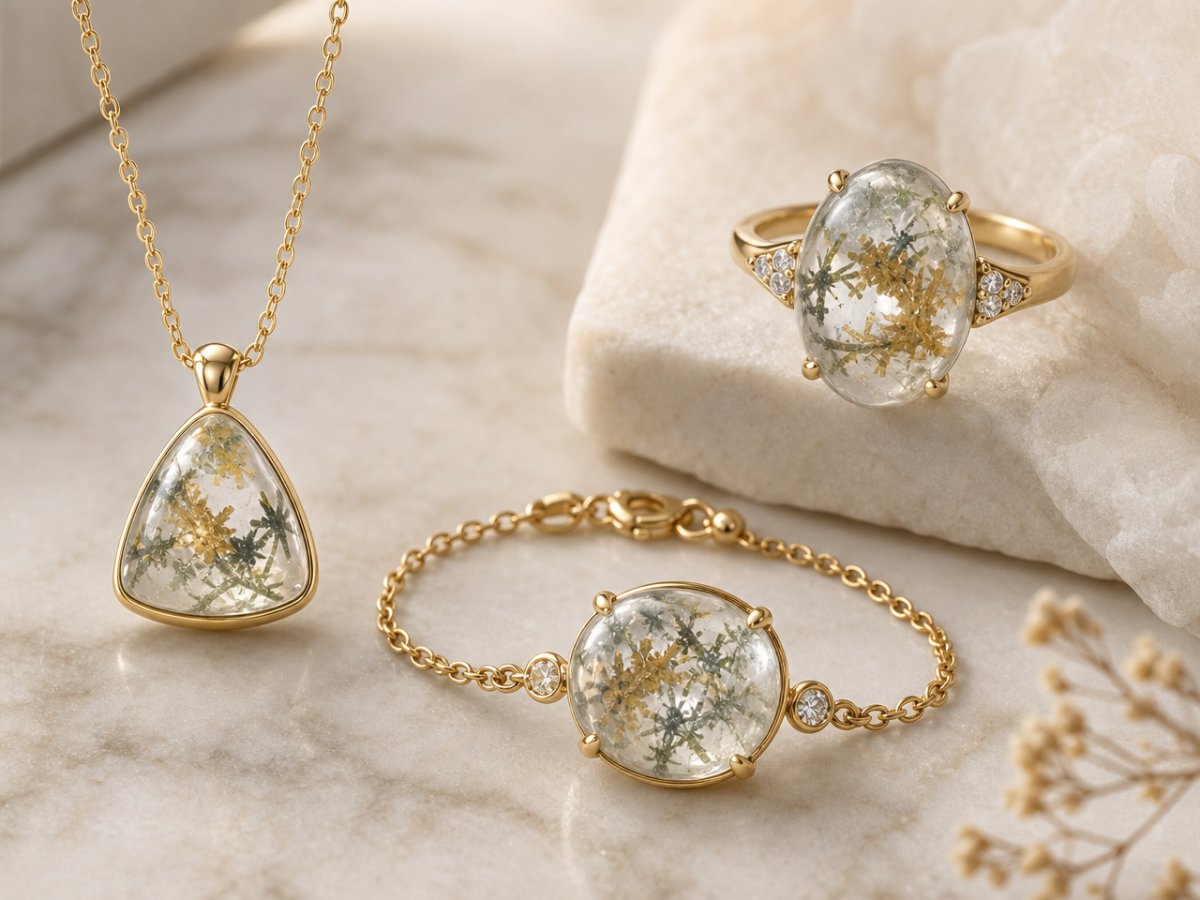
Pendants and rings are among the most popular uses for Quartz With Hedenbergite. Pendants are ideal when you want to showcase a larger or more detailed inclusion pattern, while rings offer a more personal and visible way to wear the gem.
Necklaces, bracelets, brooches and artisan jewelry are also suitable. Designers often favor included quartz because each gem can become the focal point of a one-of-a-kind piece. For bracelets and rings, choose settings that protect the stone from repeated impact.
Practical Buying Checklist
- Choose the pattern first: The inclusions are the feature, so select a stone with an internal look you find attractive.
- Check transparency and contrast: Make sure the quartz body allows the inclusions to be seen clearly.
- Match cut to purpose: Cabochons are excellent for displaying inclusions; faceted stones may add sparkle but should not obscure the pattern.
- Consider the setting: Rings and bracelets need more protection than pendants or brooches.
- Confirm treatment disclosure: Quartz With Hedenbergite is commonly untreated, and this should be clearly stated by the seller.
- Buy the individual stone, not the category: Natural inclusion patterns vary, so photos and exact measurements matter.
Summary
Quartz With Hedenbergite is best purchased with an eye for natural beauty and individuality. Look for a pleasing inclusion pattern, a cut that displays it well and a shape that suits your jewelry design. With a hardness of 7 and common untreated availability, it can be a practical and appealing choice for pendants, rings and distinctive artisan jewelry.