


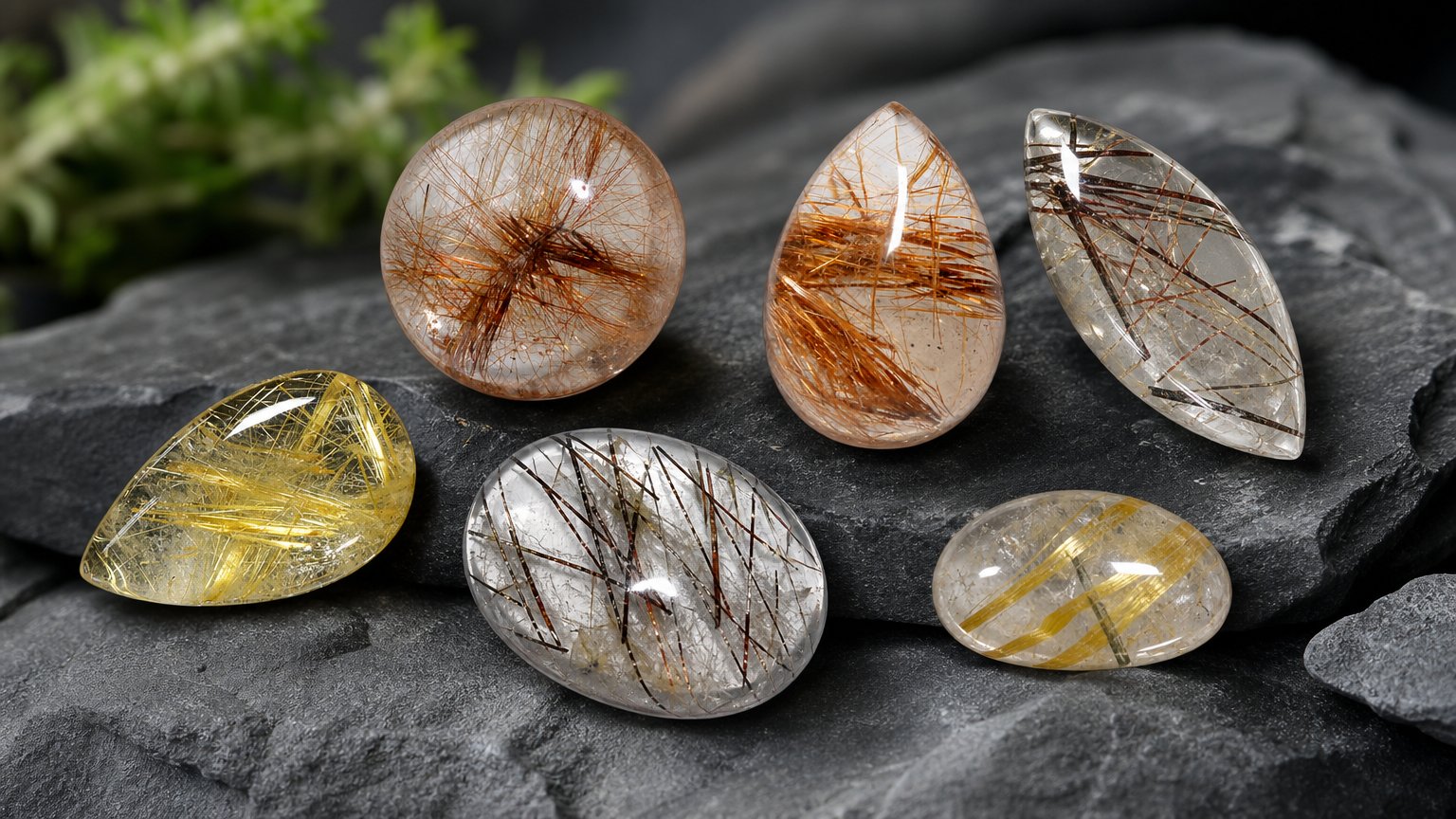
Rutile quartz is a distinctive quartz gemstone valued for the visual effect created by rutile inclusions within the quartz. For buyers, its appeal is different from many transparent gems: the inclusions are not simply flaws to avoid, but an important part of the stone’s character. The best choice is usually the stone whose color, inclusion pattern, cut and size work well for your intended jewelry design or collection.
This guide explains what to look for when buying rutile quartz, including color, clarity and inclusion visibility, cut style, shape, durability, treatments, origin and jewelry use. It is written for gemstone buyers, jewelers, designers and collectors who want practical guidance rather than inflated claims or confusing terminology.
What Is Rutile Quartz?
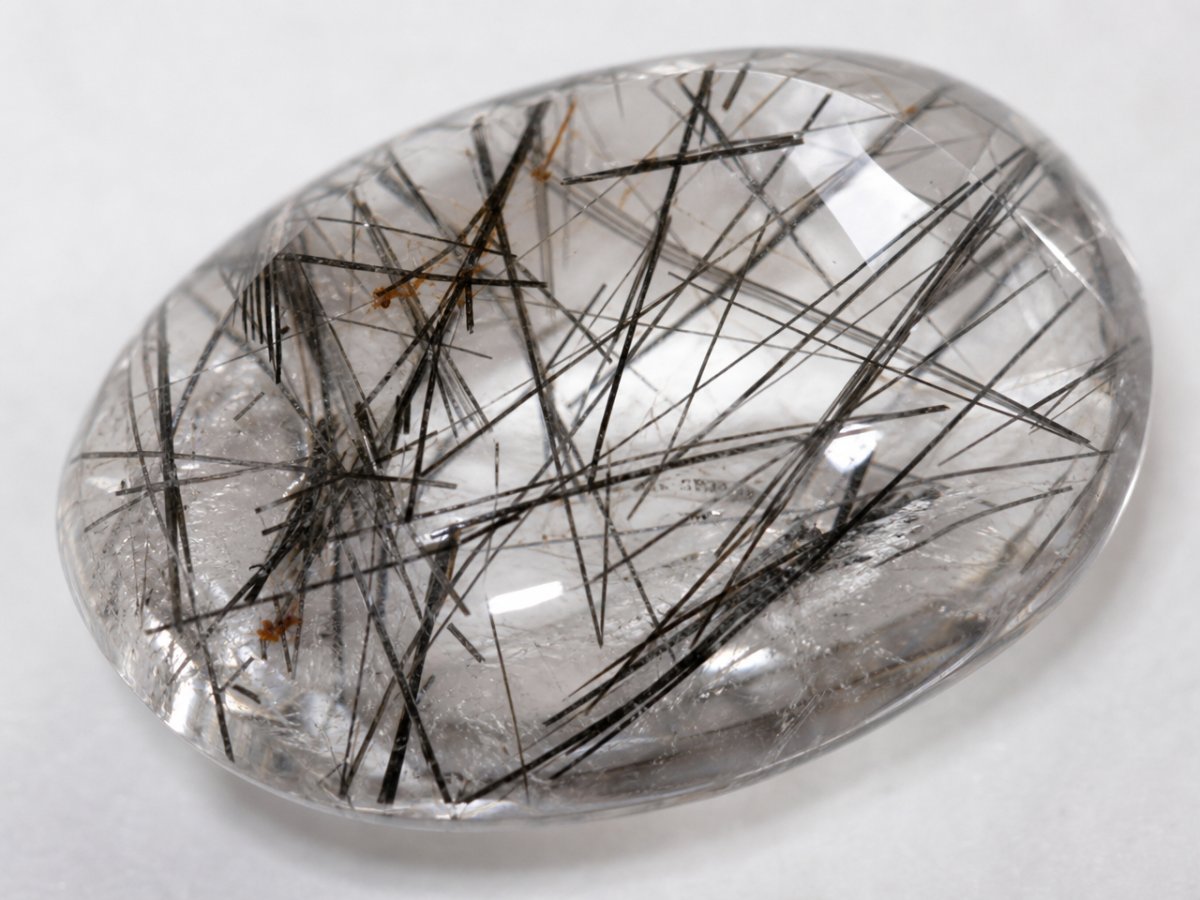
Rutile quartz is a variety of quartz that contains inclusions of rutile. Its chemical composition is SiO₂ for the quartz, with inclusions of TiO₂ rutile. Quartz has a trigonal crystal system and is one of the most familiar gem materials in jewelry, while rutile gives this variety its distinctive internal appearance.
Because rutile quartz is appreciated for visible inclusions, buyers should evaluate it differently from gemstones where high clarity is the main goal. In rutile quartz, the inclusion pattern, color contrast and overall presentation are central to the gem’s identity. A stone may be attractive because the inclusions are bold and dramatic, or because they are subtle and decorative. Neither approach is automatically better; the right choice depends on the design and the buyer’s taste.
Color and Appearance
Rutile quartz is known in a range of colors and visual effects. Brown and yellow are especially important colors for this gemstone, and buyers will also encounter orange and multicolor appearances. Black, red, white and green may also be seen. In practice, the color impression can come from the quartz body color, the rutile inclusions, or the interaction between both.
When comparing stones, look at the gemstone face-up under normal viewing conditions. Ask yourself whether the color is attractive, whether the inclusions are easy to see, and whether the overall pattern is balanced. Some buyers prefer a clean quartz background that makes the rutile stand out clearly. Others prefer richer color and a more complex internal look.
How to Judge Inclusions in Rutile Quartz
In many gemstones, visible inclusions may reduce desirability. Rutile quartz is different because inclusions define the variety. The buying question is not simply whether inclusions are present, but whether they create a pleasing effect.
Useful points to consider include:
- Visibility: Are the rutile inclusions visible enough to give the stone character?
- Distribution: Do the inclusions appear balanced, or are they concentrated in a way that distracts from the stone?
- Contrast: Do the inclusions stand out well against the quartz?
- Transparency: Does the quartz allow you to see the internal pattern clearly?
- Design fit: Does the stone’s pattern suit the intended jewelry piece?
There is no single universal pattern that every buyer should seek. A collector may want a striking and unusual inclusion display, while a jewelry designer may choose a stone because its color and pattern match a specific setting or metal.
Common Cuts and Shapes
Cabochons are an especially common and important cut for rutile quartz. A cabochon has a smooth, polished, domed top rather than facets. This style can be effective because it presents the internal inclusions clearly and gives the gem a tactile, organic look that suits artisan jewelry.
Rutile quartz may also be found in faceted cuts, step cuts and carving cuts. Faceting can add brilliance and geometric structure, while step cuts can give a more architectural look. Carving cuts and freeform designs can be useful when the cutter wants to follow the natural character of the material or emphasize an individual inclusion pattern. Portuguese cuts are also known, though they are less central for this gemstone than cabochons.
Common shapes include oval and round, both of which are versatile for rings, pendants and earrings. Cushion shapes are also suitable for many jewelry designs. Freeform, marquise and octagon shapes may appeal to buyers looking for a more distinctive or designer-oriented stone.
Choosing a Cut for Your Purpose
For a pendant or necklace centerpiece, a cabochon or larger oval shape can show the stone’s internal features well. For rings, consider whether the cut gives the gem enough presence while also fitting securely in the setting. For earrings, matching shape, size and general appearance can be more important than finding two stones with identical inclusion patterns, since rutile quartz is naturally individual in appearance.
When buying online, compare both the gemstone photos and the listed dimensions. Carat weight alone does not tell you how large a stone will look when set. The face-up measurements are especially important for designers planning bezels, prong settings or matched layouts.
Gemological Properties Buyers Should Know
Understanding a few basic gemological properties can help you judge whether rutile quartz is suitable for a specific jewelry use. Rutile quartz has the properties of quartz, with the added visual character of rutile inclusions.
| Property | Rutile Quartz Information |
|---|---|
| Gemstone family | Quartz |
| Chemical formula | SiO₂ quartz with TiO₂ rutile inclusions |
| Crystal system | Trigonal |
| Mohs hardness | 7 |
| Refractive index | 1.544–1.553 |
| Specific gravity | 2.65 |
The Mohs hardness of 7 means rutile quartz is reasonably durable for many types of jewelry, but hardness is only one part of wearability. Jewelry design, setting protection and the wearer’s habits also matter. The refractive index range of 1.544–1.553 is typical of quartz and helps gemologists identify and understand the material. Specific gravity of 2.65 indicates its relative density compared with water.
Durability and Everyday Wear
With a Mohs hardness of 7, rutile quartz is suitable for a variety of jewelry uses, including pendants, necklaces, earrings, bracelets and rings. It can be a practical choice when set and worn with reasonable care. However, rings and bracelets are more exposed to knocks, abrasion and contact with hard surfaces than pendants or earrings, so they deserve extra attention.
For a rutile quartz ring, choose a setting that protects the stone’s edges, especially if the design will be worn often. Bezel settings, low-profile designs and secure prongs can all help reduce the risk of accidental damage. Fashion rings and artisan rings are popular uses, but they should still be treated as gemstone jewelry rather than rough-wear accessories.
For pendants and necklaces, rutile quartz is often a comfortable choice because these pieces usually experience less impact. Earrings also work well, particularly when the stones are chosen for attractive color and a pleasing pair-like appearance.
Treatments and Disclosure
Rutile quartz is commonly associated with untreated material. For buyers, this is helpful because the gem’s appeal usually comes from its natural quartz body and rutile inclusions rather than from enhancement. Even so, treatment disclosure remains an important part of responsible gemstone buying.
When purchasing, check the seller’s treatment information and product description. A clear listing should tell you whether the stone is untreated. If treatment information is not obvious, ask before buying. GemSelect listings are designed to provide practical gemstone details so buyers can compare stones more confidently.
Origins of Rutile Quartz
Important origins for rutile quartz include Brazil and India, with Madagascar also notable. Pakistan is another known source. Origin can be of interest to collectors and designers, but it should not be the only factor in a buying decision unless origin is specifically important to your collecting goals.
For most jewelry buyers, the visual quality of the individual gemstone is more important than country of origin. Color, inclusion pattern, cut, size and condition are the features you will see and enjoy in the finished piece. If origin matters to you, confirm that the seller provides the information clearly and avoid assuming origin from appearance alone.
Jewelry Uses and Design Ideas
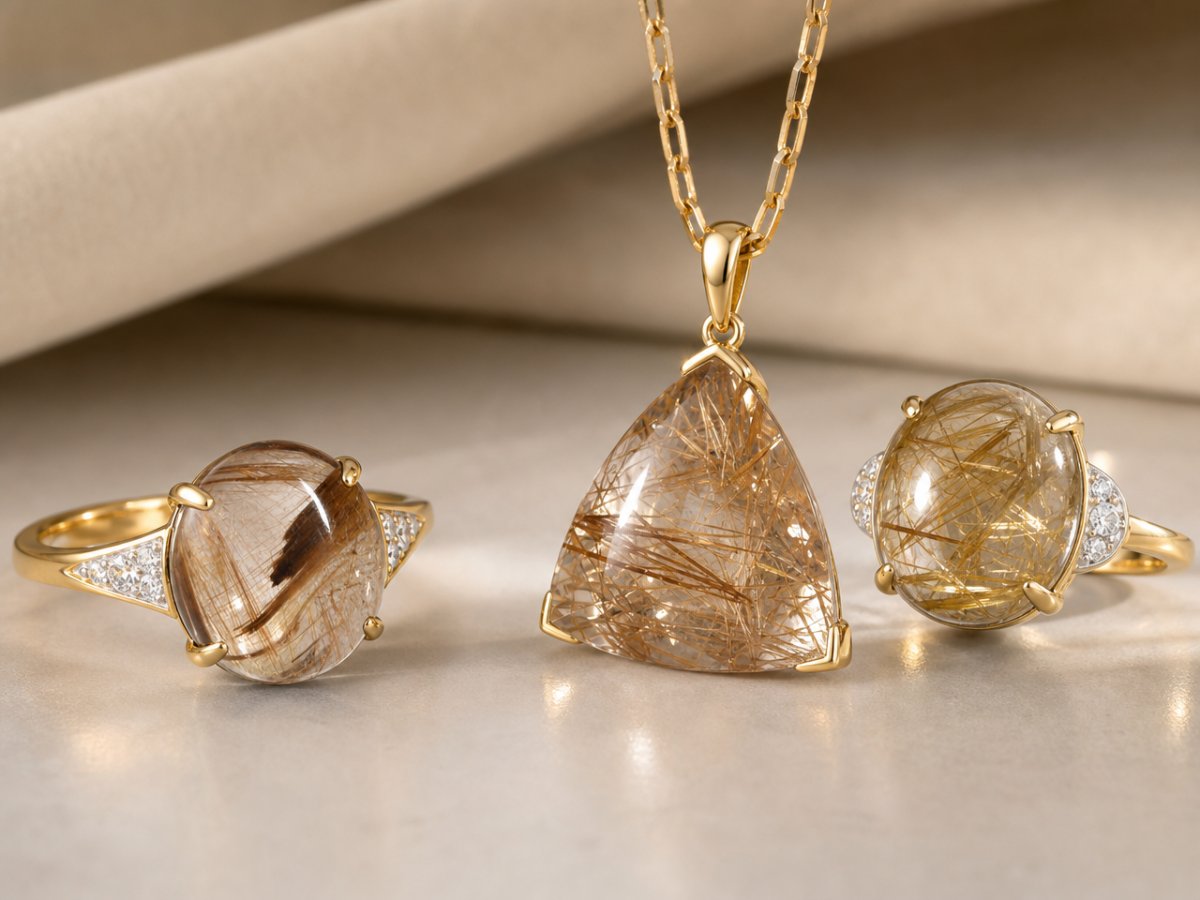
Rutile quartz is especially well suited to artisan jewelry because each stone has an individual internal pattern. Designers can use that uniqueness as a focal point rather than trying to hide it. Pendants and necklaces are natural choices because they give the gemstone enough space to display its inclusions and color.
Rings can also be attractive, particularly when the stone is chosen for a strong face-up pattern. For ring use, think about durability and setting protection. A smooth cabochon can work beautifully in a bezel, while a faceted or step-cut stone may suit a more structured design.
Bracelets and earrings are also possible uses. In bracelets, protect the stone from impact because wrist jewelry often encounters more contact during daily wear. In earrings, consider whether you want closely matched stones or a complementary pair with similar color and overall mood.
How to Buy Rutile Quartz: Practical Checklist
1. Decide What Visual Effect You Want
Before comparing stones, decide whether you prefer a bold inclusion display, a subtle pattern, warm brown or yellow tones, orange color, or a multicolor effect. Rutile quartz is a gemstone where personal preference is especially important.
2. Check the Face-Up Appearance
The top view is what you will see most often in jewelry. Look for an attractive balance of color, transparency and inclusion pattern. Avoid choosing by carat weight alone; a well-cut smaller stone may be more useful for a design than a larger stone with an awkward shape or less appealing pattern.
3. Match the Cut to the Jewelry Type
Cabochons are a strong choice when you want to emphasize the inclusions smoothly and clearly. Faceted and step-cut stones may suit more formal or geometric designs. Carved and freeform stones can be ideal for one-of-a-kind artisan work.
4. Review Dimensions, Not Just Weight
Carat weight measures mass, while millimeter dimensions tell you how the stone will fit into a setting. For calibrated jewelry mountings, dimensions are critical. For custom work, dimensions help the jeweler plan the setting and proportions.
5. Consider Durability for the Intended Wear
Rutile quartz has a Mohs hardness of 7, which makes it wearable in many jewelry styles. Still, pendants and earrings are generally less exposed than rings and bracelets. If the stone will be worn in a ring, choose a protective design and avoid unnecessary impact.
6. Confirm Treatment Status
Because rutile quartz is commonly untreated, buyers should still verify disclosure rather than assume. Treatment information is part of a complete gemstone description and helps you compare stones fairly.
7. Buy the Individual Stone, Not Just the Category
No two rutile quartz gems look exactly alike. The best purchase is the individual stone that meets your design needs, color preference, size requirements and budget. Compare photographs, measurements and descriptions carefully before deciding.
Care and Cleaning
Rutile quartz can be cleaned with mild soap, warm water and a soft cloth or soft brush. Rinse well and dry gently. Avoid harsh chemicals, sudden temperature changes and rough handling. Store the gemstone or jewelry separately from harder materials to reduce the chance of scratches.
If your rutile quartz is set in jewelry, consider the entire piece when cleaning. Metals, adhesives or other gemstones in the design may require different care. When in doubt, use gentle cleaning methods or ask a jeweler for advice.
Summary
Rutile quartz is a quartz gemstone with rutile inclusions that give each stone its own appearance. Buyers should focus on the visual quality of the individual gem: color, inclusion pattern, transparency, cut, dimensions and suitability for the intended jewelry use. Brown and yellow tones are especially important, while orange, multicolor and other appearances add variety. Cabochons are a particularly common and effective cut, though faceted, step-cut, carved and freeform stones can also be excellent choices.
With Mohs hardness of 7 and commonly untreated material, rutile quartz can be a practical and expressive gemstone for pendants, necklaces, artisan jewelry, earrings, bracelets and rings. Choose thoughtfully, confirm the details, and select the stone whose character best fits your design or collection.
