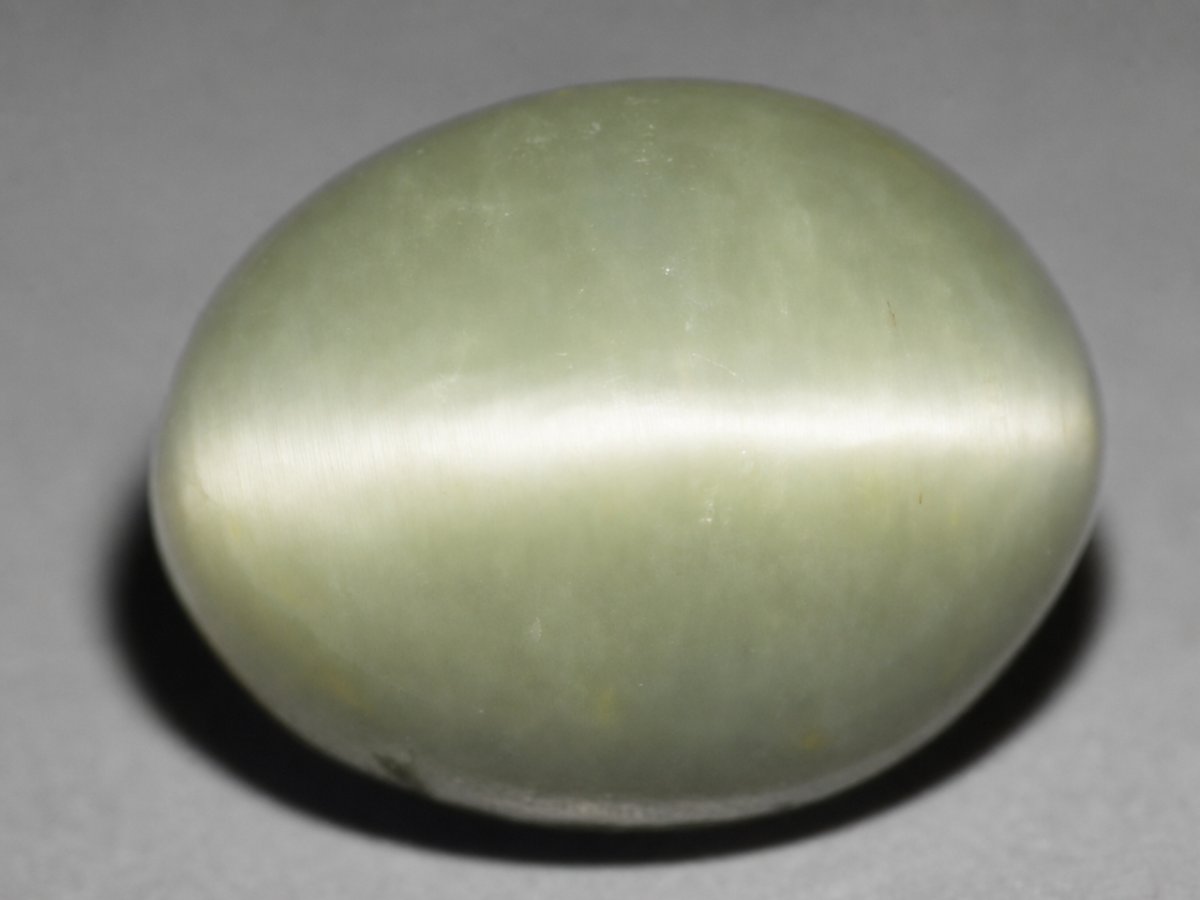


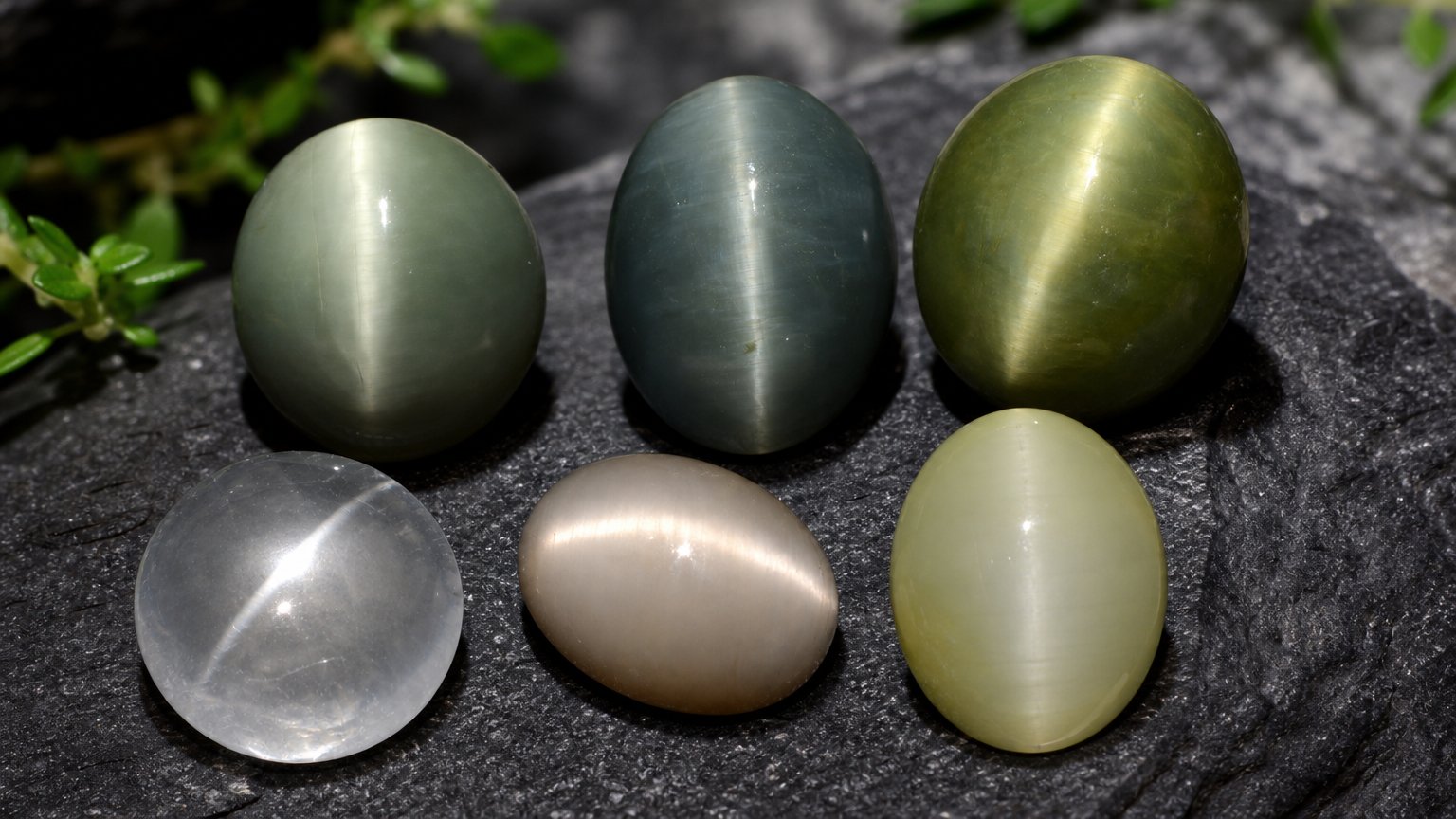
Quartz Cat's Eye is a chatoyant variety of quartz valued for the bright, narrow band of light that moves across the surface when the gemstone is turned. For buyers, the most important decision is not simply color or size, but the quality of the cat's eye effect itself: how sharp, centered and lively the line appears.
As a quartz gemstone, Quartz Cat's Eye offers practical durability with a Mohs hardness of 7, making it suitable for many types of jewelry, including rings and pendants. It is commonly available as untreated material, which is helpful for buyers who prefer natural gemstones without enhancement.
What Is Quartz Cat's Eye?
Quartz Cat's Eye is a variety of quartz with the chemical formula SiO₂. Its optical appeal comes from chatoyancy, the gemological term for the cat's eye effect. In chatoyant gems, light reflects from many aligned internal features, producing a luminous band across the stone. This effect is best displayed in a smooth, domed cabochon rather than a faceted cut.
The gem belongs to the quartz family and has a trigonal crystal system, a refractive index of 1.544-1.553 and a specific gravity of 2.65. These properties are useful for gem identification, while the appearance of the eye is the main factor most buyers will judge visually.
The Cat's Eye Effect: What to Look For
The defining feature of Quartz Cat's Eye is the eye. A well-cut stone should show a clear, continuous line that runs across the dome of the cabochon. The line should appear centered when viewed from above and should move smoothly as the gemstone or light source is rotated.
When comparing stones, look for these visual qualities:
- Sharpness: A crisp, narrow eye usually looks more attractive than a broad or blurry one.
- Position: The eye should be well centered and follow the long axis on oval and pear shapes.
- Continuity: A broken or uneven line may make the stone less visually pleasing.
- Contrast: The eye should stand out clearly against the body color.
- Movement: The line should glide across the surface as the gem is turned, confirming the liveliness of the effect.
Photographs can show the general appearance, but chatoyancy is best evaluated from multiple angles. When buying online, choose sellers who provide clear images and accurate descriptions of the stone's optical effect.
Color and Appearance
Quartz Cat's Eye is most commonly seen in gray and white tones, with brown, green and yellow also found. Black, gold and pink examples may occur but are less central to the typical buying decision. Color preference is personal, but the best choice is usually a stone where the body color supports strong contrast with the cat's eye line.
Lighter stones can have a soft, subtle appearance, while darker or more saturated body colors may make the eye look more dramatic. Buyers should balance color with the quality of the eye; a beautiful body color is less important if the cat's eye effect is weak or poorly placed.
Cut and Shape
Quartz Cat's Eye is most commonly cut as a cabochon. This cut has a smooth, polished dome and a flat or slightly curved base, allowing the cat's eye band to appear across the surface. Faceting is generally not the preferred style for gems where chatoyancy is the main attraction.
Oval and round cabochons are especially common choices. Oval stones often display the eye elegantly along the length of the gem, making them suitable for rings and pendants. Round stones provide a balanced, classic look. Cushion shapes are also seen, while freeform and pear shapes can work well for more individual jewelry designs.
When assessing the cut, check that the dome is high enough and symmetrical enough to show the eye clearly. A stone that is too flat may not display the effect well, while an uneven dome can make the eye appear off-center.
Clarity and Surface Quality
In Quartz Cat's Eye, internal features are part of what creates the optical effect, so buyers should not judge it by the same clarity expectations used for transparent faceted gems. The key is whether the gemstone looks attractive face-up and whether the cat's eye effect is clean and visible.
Surface condition matters. Look for a smooth polish, an even dome and no distracting chips or scratches, especially on the top of the cabochon where the eye is viewed. Minor internal texture may be acceptable if it contributes to the effect and does not make the gem look cloudy or dull.
Size and Matching
Quartz Cat's Eye cabochons can be chosen in many practical sizes for jewelry. Larger stones often make the moving eye easier to appreciate, especially in pendants, brooches and statement rings. Smaller stones can be attractive in earrings or accent designs, but the eye should still be visible without magnification.
For earrings or matched jewelry, consistency is important. Look for similar body color, shape, dome height, size and cat's eye strength. Perfect matching is difficult with natural chatoyant stones, so a well-coordinated pair is usually more realistic than an identical one.
Origins
Quartz Cat's Eye is associated with several sources, with India and Sri Lanka among the important origins. Brazil and Madagascar are also known sources, while Myanmar and Tanzania may be encountered as well.
For most buyers, origin is usually secondary to appearance, treatment disclosure and cut quality. A fine-looking stone with a sharp, centered eye is generally more desirable for jewelry than a stone chosen only for its geographic source.
Treatments and Disclosure
Quartz Cat's Eye is commonly available untreated. This is a positive point for buyers who want a gemstone whose appearance has not been enhanced by treatment.
When purchasing, check the treatment information provided by the seller. GemSelect lists treatment details where applicable, helping buyers compare stones with greater confidence. If treatment status is important to you for collection, design or resale reasons, keep a copy of the seller's disclosure with your purchase records.
Durability and Care
With a Mohs hardness of 7, Quartz Cat's Eye has good wearability for many jewelry styles. It can be used in rings, pendants, earrings, necklaces, brooches and bracelets. Rings and bracelets receive more knocks and abrasion than pendants or earrings, so protective settings are a sensible choice for everyday wear.
Clean Quartz Cat's Eye with mild soap, warm water and a soft cloth or soft brush. Avoid harsh chemicals and protect the gemstone from hard impacts. Store it separately from softer gems to prevent scratching, and avoid storing it loosely with harder materials that could damage its polish.
Best Jewelry Uses
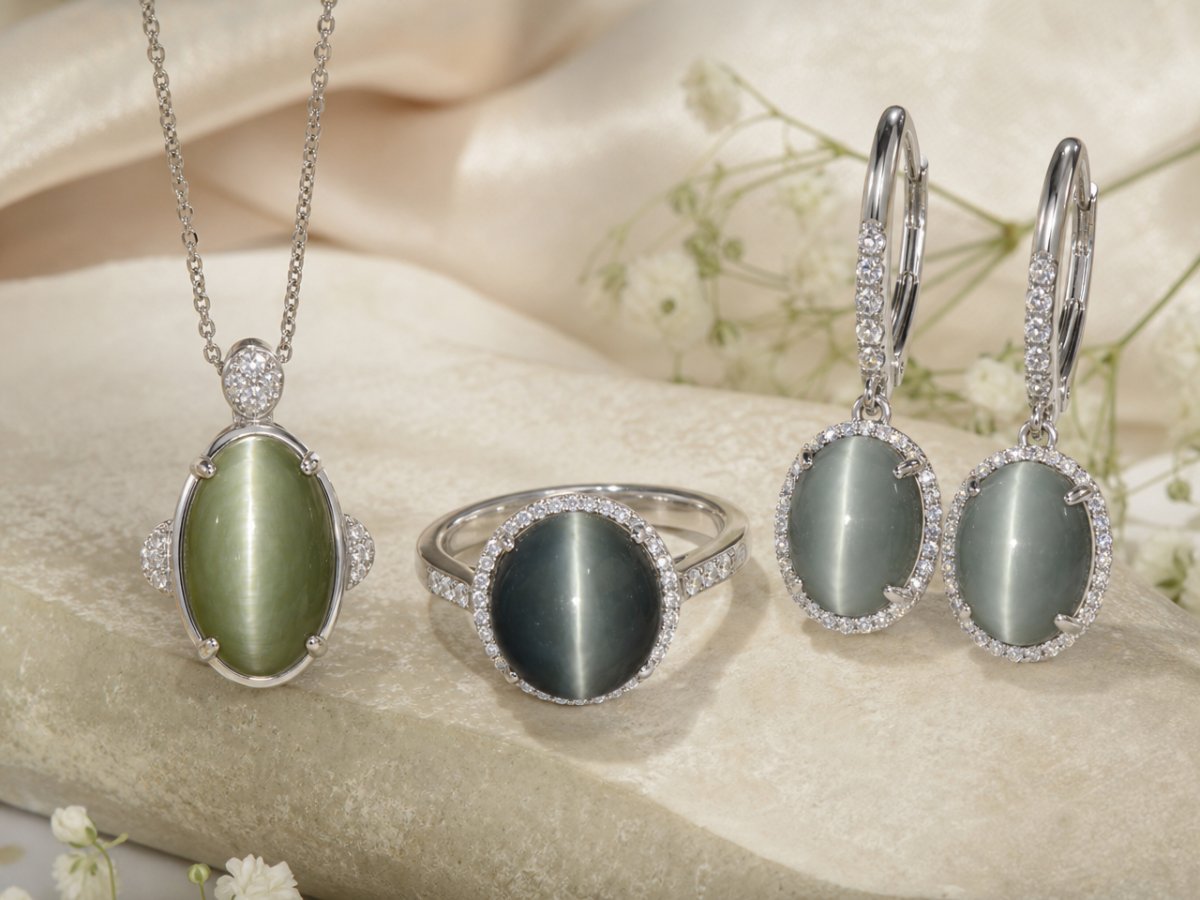
Pendants and rings are especially popular choices because they give the cat's eye effect room to be seen. A pendant allows the stone to move naturally with the wearer, while a ring lets the owner easily tilt the gem and watch the eye shift across the dome.
Earrings can be very attractive, particularly when the stones are well matched. Bracelets, brooches and necklaces are also possible, but the design should protect the cabochon and position it so that the eye remains visible.
Practical Buying Checklist
Before choosing a Quartz Cat's Eye, focus on the features that most affect beauty and usability:
- Choose a stone with a sharp, centered and continuous cat's eye line.
- Check that the eye moves smoothly when the gemstone is turned.
- Select a body color that gives good contrast with the eye.
- Prefer a well-polished cabochon with an even, symmetrical dome.
- Match shape and size to the jewelry design, especially for rings and pendants.
- Confirm treatment disclosure; Quartz Cat's Eye is commonly untreated.
- For rings and bracelets, consider protective settings to reduce impact risk.
Summary
The best Quartz Cat's Eye gemstones combine the reliable practicality of quartz with a distinct and attractive chatoyant line. Color matters, but the eye is the main feature to evaluate. Buyers should prioritize sharpness, centering, movement, cabochon quality and honest treatment disclosure. With thoughtful selection, Quartz Cat's Eye can be a durable and appealing choice for rings, pendants, earrings and other jewelry designs.