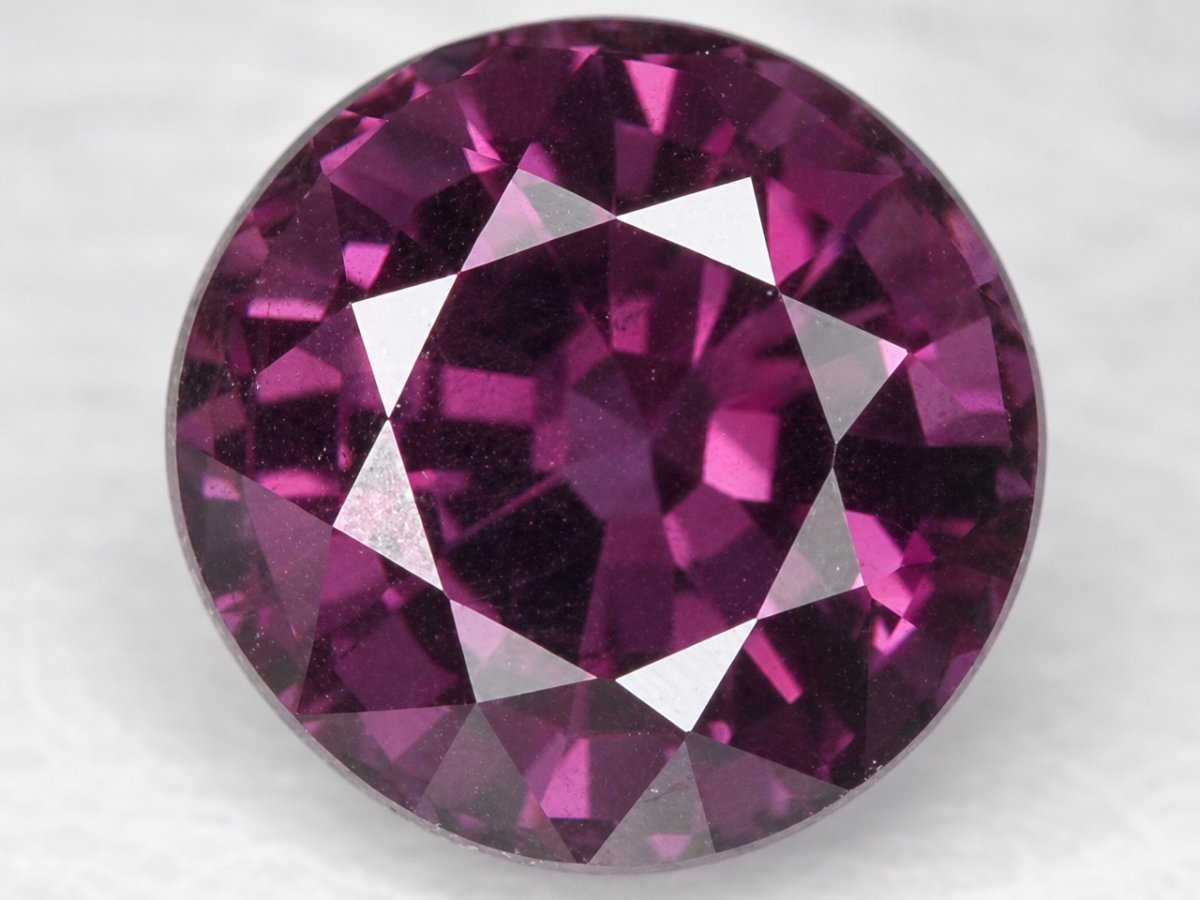


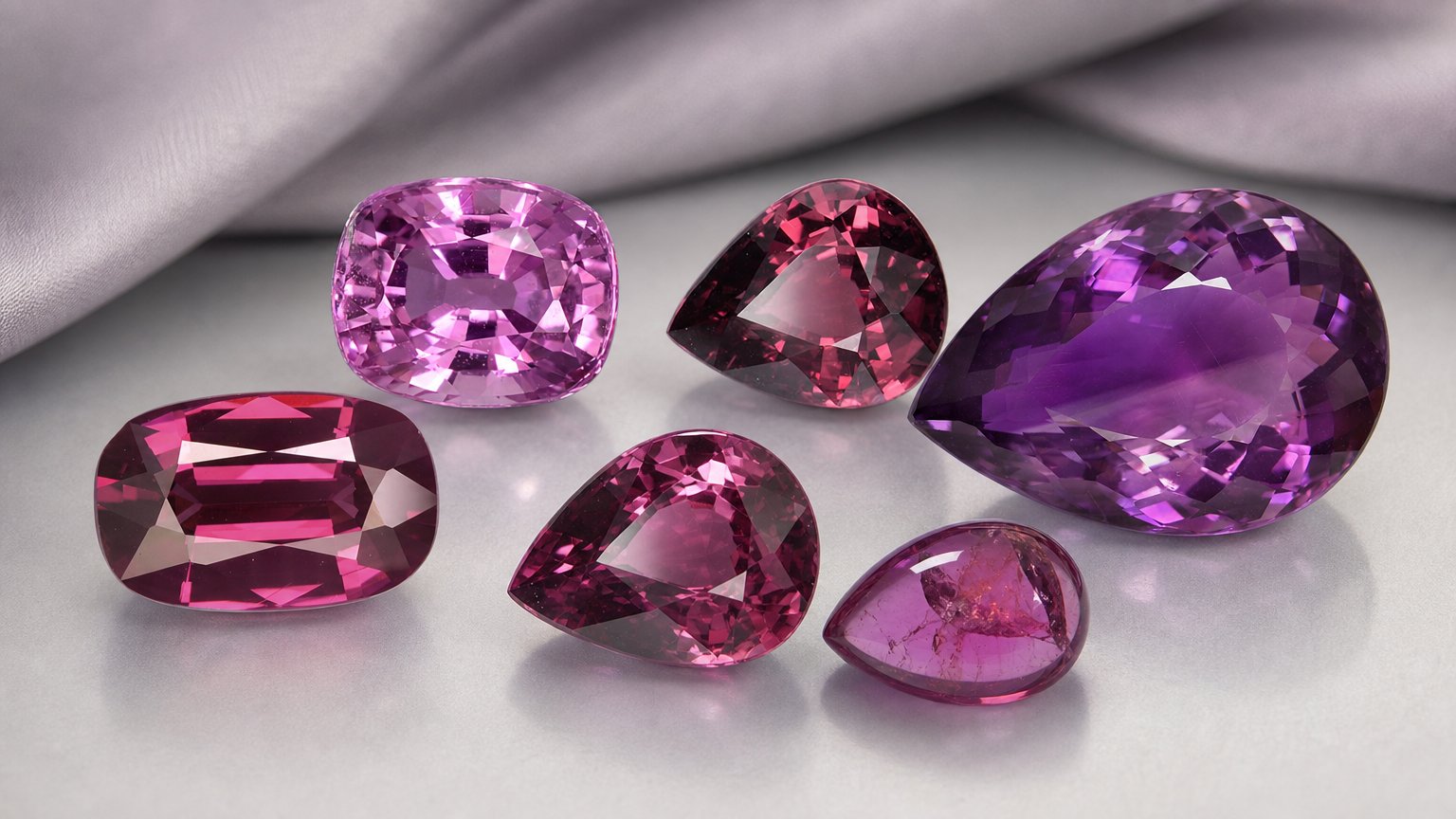
Purple gemstones can make distinctive engagement rings, from soft lavender and lilac to grape purple, violet, royal purple, bluish purple, pinkish purple, reddish purple and deep plum. The best choice depends on more than color alone. For a ring worn every day, durability, cut, setting design, treatment disclosure and the actual appearance of the individual loose gemstone all matter.
This guide focuses on natural purple and violet gemstones that are realistically considered for engagement rings, especially purple sapphire, purple spinel and amethyst, with practical notes on tourmaline, tanzanite, iolite, purple garnet and purple zircon.
Purple vs Violet Gemstones
Many buyers use purple and violet interchangeably. In practical jewelry buying, the difference usually comes down to whether the gemstone appears slightly warmer or cooler. Some purple gemstones lean toward red or pink, while others lean toward blue and may be described as violet or bluish violet.
Shade names such as lavender, mauve, grape, violet and royal purple are subjective. Photographs of the actual gemstone are especially useful because different sellers may use the same color word for noticeably different stones. When comparing loose gemstones, look at hue, tone, saturation, cut, clarity, millimeter dimensions, treatment disclosure and price rather than relying only on the color name.
Best Natural Purple Gemstones for Engagement Rings
Purple Sapphire: One of the Strongest Choices
Purple sapphire is one of the most practical purple gemstones for an engagement ring. Sapphire is corundum, the same mineral family as ruby, and ranks 9 on the Mohs hardness scale. This gives it excellent resistance to scratching, and sapphire is generally well suited to frequent wear when properly set.
Purple sapphire can range from pale lavender and lilac to medium purple, violet, bluish violet, pinkish purple, reddish purple and deep saturated purple. It also offers good brilliance, especially in well-cut stones with balanced tone. Very dark purple sapphires can look almost black in some lighting, while very pale stones may show a subtle lavender rather than a strong purple.
Sapphire is also a useful choice because it is available in many jewelry-friendly shapes and sizes. Treatment disclosure is important: heat treatment is common for sapphire in general, but not every sapphire is treated. Always check the disclosure for the individual gemstone before purchase.
Purple Spinel: Durable, Brilliant and Distinctive
Purple spinel deserves attention as an engagement-ring gemstone in its own right. It ranks 8 on the Mohs scale, has no cleavage, and can show excellent brilliance. Its colors may include lavender, violet, grape purple, pinkish purple and deeper purple tones.
Natural spinel is often available without treatment, which appeals to buyers who prefer untreated gems. However, treatment practices and disclosures should always be checked stone by stone. Compared with sapphire, purple spinel is slightly softer, but it remains a strong candidate for many engagement-ring designs.
Amethyst: The Classic Accessible Purple Gemstone
Amethyst is probably the best-known natural purple gemstone. It offers recognizable purple color, broad availability, large stone sizes, many cut options and relatively accessible prices. Buyers who want a bold purple center stone with strong visual presence often consider amethyst because attractive sizes and shapes are widely available.
For engagement rings, the main limitation is long-term wear. Amethyst is quartz with a Mohs hardness of 7. That is reasonably durable, but it is more susceptible to scratching and surface wear over many years than sapphire or spinel. Amethyst can work well for a ring when the wearer's lifestyle and setting design are considered carefully. Protective settings, lower profiles and avoiding heavy impact are sensible choices.
Purple and Violet Tourmaline
Purple and violet tourmaline is a less common but attractive choice. Colors may range from pinkish purple and plum through violet and bluish violet. Tourmaline has moderate-to-good suitability for rings, typically ranking about 7 to 7.5 on the Mohs scale, but it is not as hard as sapphire and needs reasonable care.
Tourmaline can be appealing for buyers who want something less expected than amethyst or sapphire. Setting protection is useful, especially for larger stones or rings intended for frequent wear. Treatments can vary, so review the disclosure for the individual gemstone.
Tanzanite: Beautiful but Care-Intensive
Tanzanite is famous for its blue-violet to violet appearance and strong pleochroism. It can be visually striking as a center stone, but it should be chosen with care for an engagement ring. Tanzanite is considerably more care-intensive than sapphire or spinel and should not be treated as an equally robust choice for unrestricted everyday wear.
Tanzanite commonly receives heat treatment to develop or improve its blue and violet color, though disclosure should always be checked for the specific stone. Because tanzanite is softer and more vulnerable to damage than the most durable engagement-ring gems, it is best suited to careful wear, protective settings and owners who understand the maintenance involved.
Iolite: Blue-Violet Character with Pleochroism
Iolite is an interesting blue-violet to violet gemstone that can be relatively affordable compared with many traditional engagement-ring gems. Its strong pleochroism means different viewing directions may show blue, violet, grayish or lighter colors. A well-oriented cut is especially important because it determines the face-up color.
Although iolite has respectable hardness, it is not as durable as sapphire for a ring worn every day. It is better for careful wear, protected settings and buyers who appreciate its shifting blue-violet character.
Purple Garnet and Purple Zircon
Garnet is better known for red, orange and green varieties, but some garnets can show attractive purple, grape, raspberry-purple or reddish-purple appearances. "Purple garnet" is not one single standardized garnet variety, so buyers should evaluate the specific garnet type, color, clarity, size and durability information supplied for the individual stone.
Purple zircon is less commonly encountered but can be relevant when naturally occurring violet or purple stones are available. Zircon can be very bright, but it may show abrasion more readily than harder gems and requires careful setting and wear. It should not be confused with cubic zirconia, which is a different material.
Less Suitable Comparison: Purple Fluorite
Purple fluorite can be beautiful, but it is generally a poor choice for a frequently worn engagement ring. Fluorite has a Mohs hardness of 4 and is far more susceptible to scratching and wear than sapphire, spinel, amethyst or tourmaline. It is better suited to pendants, earrings, collector stones or occasional-wear jewelry.
Purple Gemstone Comparison for Engagement Rings
Mohs hardness measures resistance to scratching, but it is not the whole story. Engagement-ring durability also involves toughness, cleavage, brittleness, abrasion resistance, setting protection and the wearer's habits. A hard gemstone can still chip if struck, while a slightly softer gemstone may wear well if protected and worn carefully.
| Gemstone | Typical purple/violet color | Mohs hardness | Everyday-wear suitability | Brilliance | Relative affordability | Typical size availability | Treatment considerations | Recommended setting considerations |
|---|---|---|---|---|---|---|---|---|
| Purple sapphire | Lavender, lilac, violet, bluish violet, pinkish purple, reddish purple, deep purple | 9 | Excellent for frequent wear | High when well cut | Usually higher than amethyst; varies by color, size and quality | Good jewelry-size availability | Heat treatment is common in sapphire; check individual disclosure | Works in solitaire, halo, bezel, three-stone and daily-wear designs |
| Purple spinel | Lavender, violet, grape, pinkish purple, deeper purple | 8 | Very good with normal care | High; often lively | Varies; fine stones can be valuable | Useful ring sizes available, selection varies | Often available untreated; check individual disclosure | Good for solitaires, halos, bezels and contemporary designs |
| Amethyst | Lavender to deep purple, grape and reddish purple | 7 | Reasonable, but may show wear over years of daily use | Moderate to good | Generally accessible | Excellent; large stones and many cuts are common | Treatment may occur; check disclosure | Best with protective prongs, bezel, halo or lower-profile designs |
| Purple/violet tourmaline | Pinkish purple, plum, violet, bluish violet | 7 to 7.5 | Moderate to good with care | Good when well cut | Varies widely by color and quality | Useful sizes available, but purple/violet options are less common | Treatments vary; check disclosure | Protect exposed edges; consider bezel or halo for daily wear |
| Tanzanite | Blue-violet to violet, often strongly pleochroic | About 6 to 7 | Care-intensive; not ideal for unrestricted daily wear | Good to high | Varies by color, size and quality | Available in useful jewelry sizes | Heat treatment is common; check disclosure | Choose protective, low-impact settings and careful wear |
| Iolite | Blue-violet, violet, grayish blue-violet depending on direction | 7 to 7.5 | Best for careful wear | Moderate to good | Often relatively affordable | Useful sizes available | Check disclosure | Protective setting recommended; orientation is important |
| Purple garnet | Grape, raspberry-purple, reddish purple | About 6.5 to 7.5 depending on garnet type | Varies; generally consider setting protection | Good in well-cut stones | Varies by variety and quality | Selection varies | Check individual disclosure | Best evaluated by the specific garnet and ring design |
| Purple zircon | Violet to purple when available | About 6 to 7.5 | Careful wear recommended | Can be very bright | Varies; purple options are not as standard | Selection varies | Treatment varies; check disclosure | Protect from abrasion and impact; avoid exposed edges |
Pleochroism in Purple and Violet Gemstones
Pleochroism means a gemstone can show different colors or different color intensities when viewed from different directions. It is not the same as color change, which refers to a shift in appearance under different lighting sources. Pleochroism is related to viewing direction and crystal orientation.
Tanzanite and iolite are especially useful examples. Tanzanite may show blue, violet and other directional colors, while iolite can appear blue-violet from one direction and grayish or lighter from another. This is why cutting orientation matters: the lapidary must choose the direction that gives the most attractive face-up color. Tourmaline can also show noticeable pleochroism in some stones.
Cut, Color and Face-Up Appearance
The cut of a purple gemstone affects brilliance, apparent color saturation, lightness, darkness and face-up appeal. A well-cut stone can make a medium purple look lively and balanced, while a deep stone with poor light return may look dark or closed.
Very dark purple gemstones can lose visible color and appear nearly black in low light. Very pale stones may look elegant and lavender, but they may not provide the strong purple statement some buyers expect. There is no universal best shade; the right tone depends on the desired style, metal color and the wearer's preference.
Gemstone Size and Visual Presence
Do not choose a loose purple gemstone by carat weight alone. Equal carat weights do not always produce equal-looking center stones because sapphire, spinel, quartz, tourmaline, tanzanite, iolite and garnet have different specific gravities and are cut to different proportions.
For an engagement ring, compare the millimeter dimensions as well as the carat weight. A 1-carat amethyst may not face up the same size as a 1-carat sapphire or spinel. GemSelect listings with actual photographs and measurements help buyers compare real face-up size, shape and visual presence before choosing a setting.
Choosing Settings for Purple Gemstone Engagement Rings
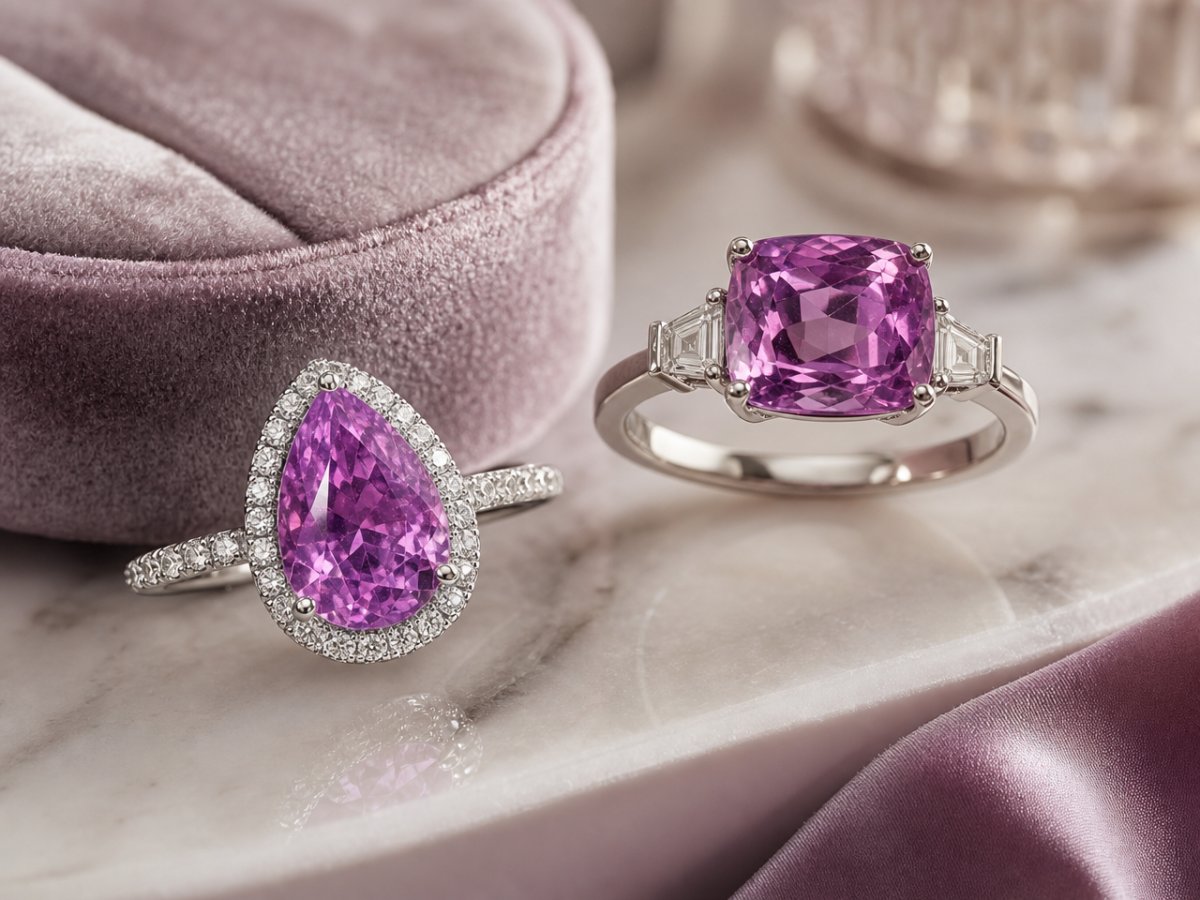
Solitaire rings work especially well for durable stones such as purple sapphire and spinel, where the center gemstone carries the design. For amethyst, tourmaline, tanzanite and iolite, a solitaire can still work, but low profiles and secure prongs become more important.
Halo settings add protection around the center stone and increase visual size. Colorless diamonds or other colorless gemstones in a halo create strong contrast and can make purple saturation appear stronger.
Bezel settings are practical for gemstones that need extra edge protection. A bezel can reduce exposure to knocks and abrasion, making it a useful option for amethyst, tourmaline, tanzanite, iolite, zircon and some garnets.
Three-stone rings allow creative color contrast, such as a purple center stone with colorless side stones, or a blue-violet center with complementary accents. Vintage-inspired designs suit lavender, mauve and deep plum stones, while cluster designs can combine smaller purple gems for color impact. Contemporary geometric designs often suit step cuts, cushions, ovals, hexagons and angular halos.
Metal Color: White Gold, Platinum, Yellow Gold or Rose Gold?
Metal color can noticeably influence how warm or cool a purple gemstone appears. White gold and platinum create a cooler look and strong contrast, often emphasizing violet, bluish purple and crisp lavender tones.
Yellow gold gives rich contrast against purple and can make the color feel warmer and more dramatic. Rose gold is especially attractive with lavender, pinkish-purple and reddish-purple gemstones because the metal's warmth echoes those color directions.
Colorless diamonds or other colorless accents can brighten the overall design and increase contrast around the purple center stone. This is particularly useful when the center gem is medium to deep in tone.
Purple Sapphire vs Amethyst
Purple sapphire and amethyst are both natural purple gemstones, but they serve different priorities. Purple sapphire is harder, more scratch-resistant and generally better suited to frequent everyday wear. It is also typically more brilliant than amethyst when well cut and is valued for durability as well as color.
Amethyst offers excellent availability, larger sizes, many cuts and accessible pricing. It is ideal for buyers who want a visibly purple gemstone with generous size for the budget. Its limitation is long-term wear: at Mohs 7, amethyst can accumulate scratches and abrasion more readily than sapphire. A protective setting and careful habits help, but sapphire remains the stronger choice for maximum everyday durability.
Amethyst should not be viewed only as a less expensive sapphire substitute. It has its own appeal: classic purple color, transparency, broad design flexibility and strong value for large center stones.
Purple Sapphire vs Purple Spinel
Purple sapphire and purple spinel are both strong engagement-ring candidates. Sapphire is harder at Mohs 9 and has an established reputation for daily wear. It also offers a wide range of purple and violet shades, from pale lavender to deep saturated purple.
Spinel is slightly softer at Mohs 8 but still durable, brilliant and free of cleavage. It often appeals to buyers seeking an elegant gemstone that may be available without treatment. Sapphire is commonly associated with heat treatment, while spinel is often untreated; however, individual disclosures matter more than general patterns.
Price and availability vary for both gemstones according to size, color, clarity, cut and origin-related factors when disclosed. Rather than assuming one is always better, compare the actual stones: photos, dimensions, saturation, brightness and treatment information.
Which Purple Gemstone Is Best for an Engagement Ring?
There is no single best purple gemstone for every engagement ring. Match the gemstone to the wearer's priorities:
- Maximum everyday durability: Purple sapphire is the leading practical choice; purple spinel is also strong.
- Vivid purple color: Consider purple sapphire, amethyst, spinel and select garnets depending on the exact shade desired.
- Lavender or lilac color: Purple sapphire, spinel and amethyst can all be attractive options.
- High brilliance: Purple spinel, sapphire and zircon can be very lively when well cut; zircon needs more care.
- Larger gemstone for the budget: Amethyst is usually the most practical option for a large purple center stone.
- Blue-violet appearance: Tanzanite and iolite are distinctive, but both require more care than sapphire.
- Typically untreated option: Purple spinel is worth considering, while still checking the individual disclosure.
- Unusual or less common choice: Purple/violet tourmaline, iolite, purple garnet or purple zircon can create a more individual ring.
Which Purple Gemstones Require More Care?
Purple sapphire is the safest recommendation for buyers who want a purple gemstone for frequent everyday wear. Purple spinel is also a durable and practical option. Amethyst, tourmaline, tanzanite and iolite require progressively more consideration of lifestyle, setting protection and care.
Amethyst is hard enough for many rings but can show wear over time. Tourmaline needs sensible protection from knocks. Tanzanite is best for careful wear because it is more vulnerable than sapphire or spinel. Iolite's pleochroism and durability limitations make careful stone selection and setting design important.
Protective settings can improve wearability. Bezels protect edges, halos can shield the center stone, and lower-profile designs reduce impact exposure. Whatever the gemstone, remove rings before heavy work, sports, gardening or activities where the stone may be hit or abraded.
Buying Checklist for a Loose Purple Gemstone
- Compare actual gemstone photographs, not only shade names.
- Check millimeter dimensions as well as carat weight.
- Evaluate hue, tone and saturation in relation to your preferred metal color.
- Look for a cut that gives good face-up color and brightness.
- Consider clarity, especially in lighter lavender stones where inclusions may be more visible.
- For tanzanite, iolite and some tourmalines, consider pleochroism and cutting orientation.
- Read the treatment disclosure for the individual loose gemstone.
- Choose a setting that matches the gemstone's durability and the wearer's lifestyle.
Conclusion
Purple sapphire is one of the strongest all-around choices for a purple engagement ring because it combines beauty, hardness and everyday practicality. Purple spinel is another excellent candidate with brilliance, durability and a distinctive identity. Amethyst remains the classic choice for buyers who want a recognizable purple gemstone, larger sizes and strong value, provided the setting and lifestyle are appropriate.
Tourmaline, tanzanite, iolite, purple garnet and purple zircon can all be appealing for the right design, but they require more individual evaluation. The most confident choice comes from comparing actual loose gemstones by color, size, cut, durability, treatment disclosure and how the stone will be set and worn.