


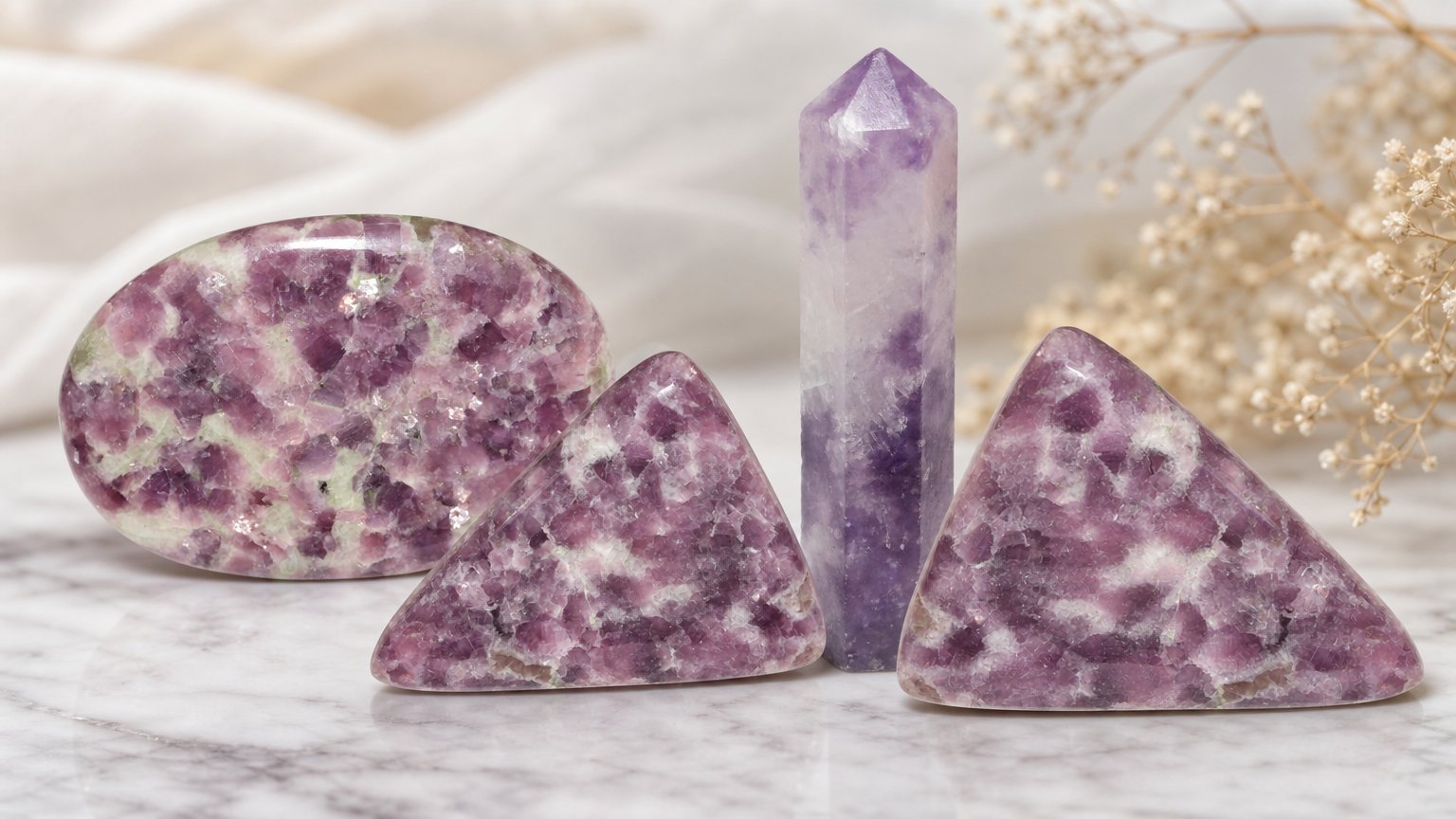
Lepidolite is a violet to purple mica gemstone appreciated for its soft, attractive color and decorative appeal. Buyers usually choose it for cabochons, pendants, necklaces, brooches and collector pieces rather than for hard-wearing everyday jewelry.
The most important buying points are straightforward: choose the color and pattern you like, check that the polish and shape suit your design, and remember that lepidolite is a soft gemstone with a Mohs hardness of 2.5 to 4. It can be beautiful in jewelry, but it needs protective settings and sensible care.
What Is Lepidolite?
Lepidolite is a member of the mica group. Its chemical formula is K(Li,Al)₃(Si,Al)₄O₁₀(F,OH)₂ and it crystallizes in the monoclinic crystal system. For buyers, the key practical point is its mica identity: lepidolite is more delicate than many familiar jewelry stones, so it is best chosen for pieces that will not receive heavy impact or abrasion.
Gem-quality lepidolite is most often fashioned as polished cabochons or decorative shapes that emphasize color and surface appearance rather than brilliance. It may also be cut into carvings or pencil-shaped polished pieces for collectors and designers.
Color and Appearance: What to Look For
Lepidolite is best known for violet color, with purple and pink tones also seen. Some stones show multicolor appearances, which can be appealing when the color zoning or pattern is attractive and balanced. Because lepidolite is generally bought for its visual character, personal preference plays a major role.
When comparing stones, look for:
- Pleasing color: Violet and purple tones are especially characteristic, while pinkish examples can offer a softer look.
- Attractive patterning: Multicolor stones can be desirable when the pattern works well with the shape and intended jewelry design.
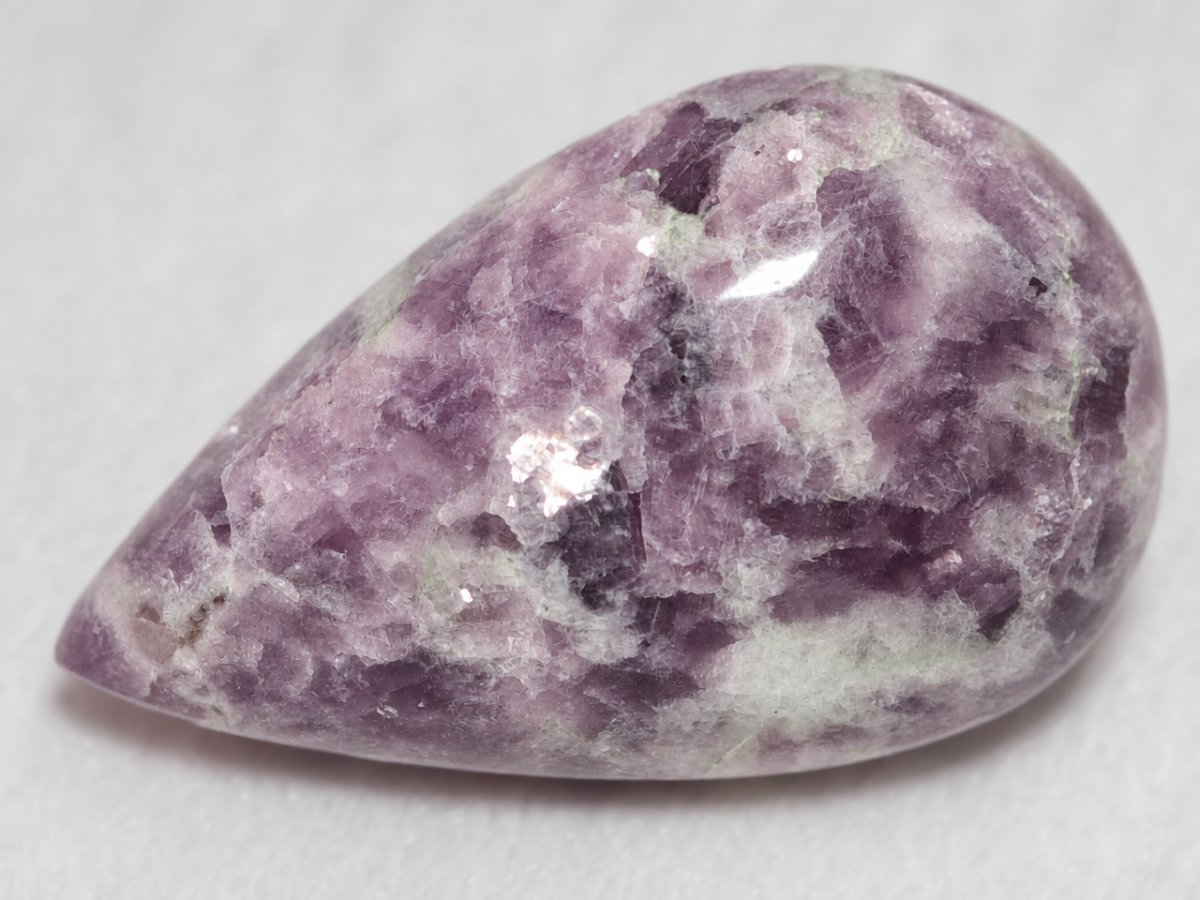
- Good polish: A smooth, even polish is important because cabochons rely on surface quality for their appeal.
- Clean outline and symmetry: Especially for calibrated or matching jewelry designs, check that the outline is neat and the dome is well proportioned.
Unlike transparent faceted gems, lepidolite should not be judged primarily by sparkle. Color harmony, polish quality and the overall look of the stone are more useful buying criteria.
Common Cuts and Shapes
Cabochon is the most important cut style for lepidolite. A cabochon has a polished, rounded top rather than facets, which suits stones chosen for color and pattern. Oval and round shapes are common choices because they are easy to set and work well in pendants, earrings and brooches.
Pear shapes can be attractive for pendant drops, while cushion, freeform and octagon shapes may suit custom jewelry or collector layouts. Freeform pieces can be especially useful when the cutter wants to preserve an appealing natural color pattern. Carvings and pencil-shaped pieces are also encountered, typically for decorative or collector use rather than conventional ring mounting.
Durability and Jewelry Suitability
Durability is the most important practical consideration when buying lepidolite. With a Mohs hardness of 2.5 to 4, it is much softer than many everyday jewelry gemstones. This means it can scratch more easily and should be protected from knocks, rough wear and contact with harder materials.
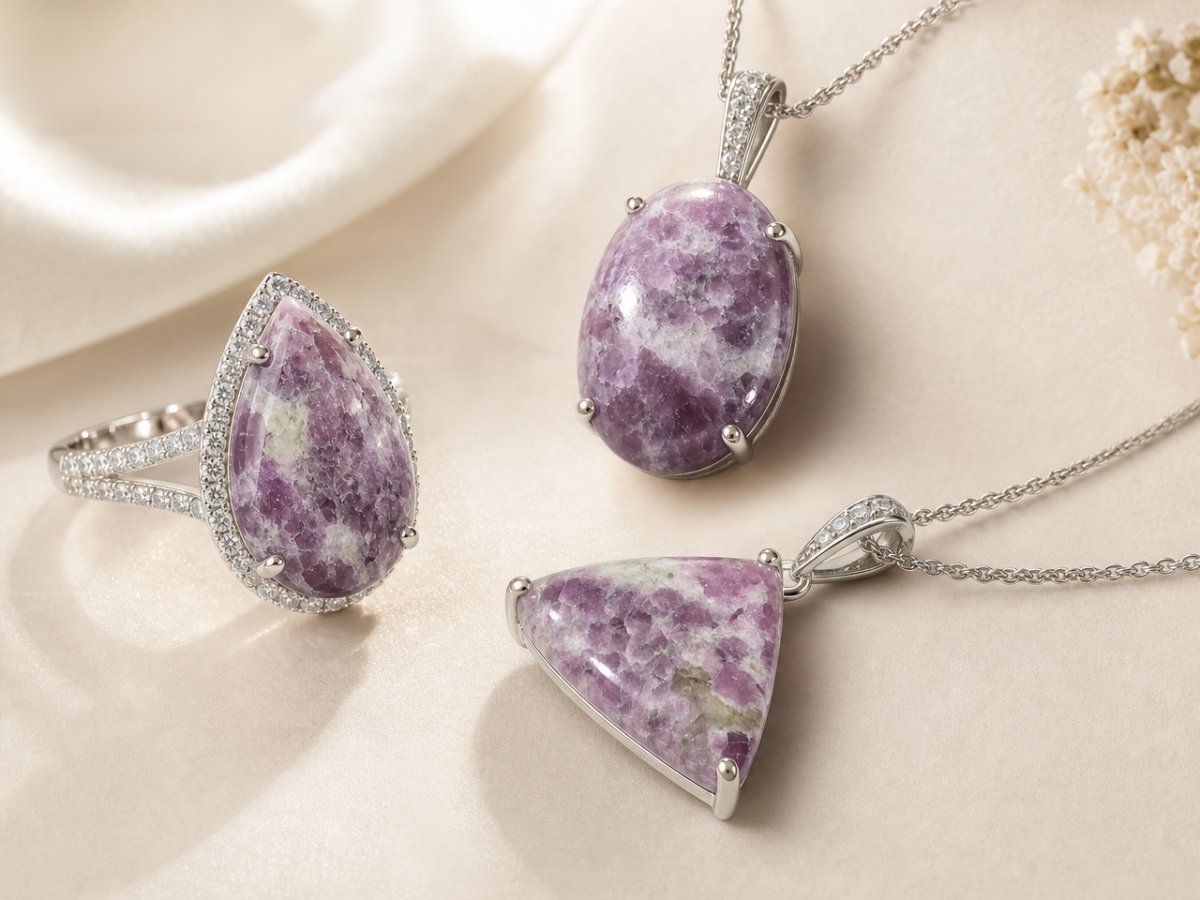
Lepidolite is best suited to jewelry that is worn with care, especially pendants and necklaces. Brooches and earrings can also be good options because they usually experience less abrasion than rings or bracelets. Collector rings are possible, but they should be treated as occasional-wear pieces and set in a way that protects the stone from impact.
If you are buying lepidolite for a ring, consider whether the wearer is comfortable with extra care. A protective bezel or recessed setting is generally more practical than an exposed design. For daily-wear rings, harder gemstones are usually more suitable.
Treatments and Disclosure
Lepidolite is commonly offered untreated. This is helpful for buyers who prefer natural color and straightforward disclosure. As with any gemstone purchase, buy from a seller that clearly states treatment information and provides accurate photos and measurements.
When shopping online, review the individual stone rather than relying only on the gemstone name. At GemSelect, for example, buyers can compare specific lepidolite gems by color, shape, size and image so the stone selected matches the intended design.
Origins
Lepidolite is associated with several gem sources, including Brazil and Madagascar, both important origins. It is also known from Afghanistan, the United States, Mozambique, Namibia and Russia.
For most buyers, origin is secondary to appearance, cut quality and suitability for use. If origin matters to you for collecting or design reasons, look for stones sold with clear origin information. Otherwise, choose the lepidolite that offers the color, pattern, shape and size that best fit your project.
Gemological Properties
The following properties can help buyers, jewelers and collectors understand lepidolite and distinguish it from harder or more brilliant gemstone materials:
| Gemstone family | Mica |
|---|---|
| Chemical formula | K(Li,Al)₃(Si,Al)₄O₁₀(F,OH)₂ |
| Crystal system | Monoclinic |
| Mohs hardness | 2.5-4 |
| Refractive index | 1.560-1.610 |
| Specific gravity | 2.78-2.90 |
The hardness figure is the most useful property for jewelry decisions. Refractive index and specific gravity are more relevant for gemological identification than for everyday buying, but they help define lepidolite as a distinct gem material.
How to Choose Lepidolite: Practical Buying Checklist
1. Start with the intended use
For a pendant, necklace, brooch or earrings, lepidolite can be a practical decorative choice if worn with care. For a ring, be more cautious and choose a protective design intended for occasional wear.
2. Select the color and pattern
Violet and purple are classic choices, while pink tones and multicolor stones can create a softer or more artistic appearance. Choose the individual stone that looks best to you rather than searching for a rigid grading category.
3. Check the cut and polish
Cabochons should have a pleasing dome, clean outline and smooth polish. For matching designs, compare dimensions carefully. For freeform or carved pieces, make sure the shape works with the setting or display purpose.
4. Match size to the setting
Lepidolite can make an eye-catching focal stone, especially in pendants. Because it is soft, larger exposed surfaces should be protected from rough contact. Designers should allow for secure settings that do not put unnecessary pressure on the stone.
5. Confirm treatment information
Untreated lepidolite is common, but disclosure still matters. Choose sellers that provide clear gemstone details and images of the exact stone where possible.
Care Tips for Lepidolite
Clean lepidolite gently with a soft cloth and avoid rough scrubbing. Because it is a soft mica gemstone, store it separately from harder gems to prevent scratches. Avoid impact, pressure and abrasive cleaners. For jewelry, remove lepidolite before sports, heavy work or activities where the stone could be knocked.
Summary
Lepidolite is a distinctive violet to purple mica gemstone that rewards buyers who focus on color, pattern, polish and appropriate use. It is most practical in pendants, necklaces, earrings and brooches, while rings should be considered collector or occasional-wear pieces. Choose untreated stones with clear disclosure, and prioritize protective design and careful handling to enjoy lepidolite at its best.
