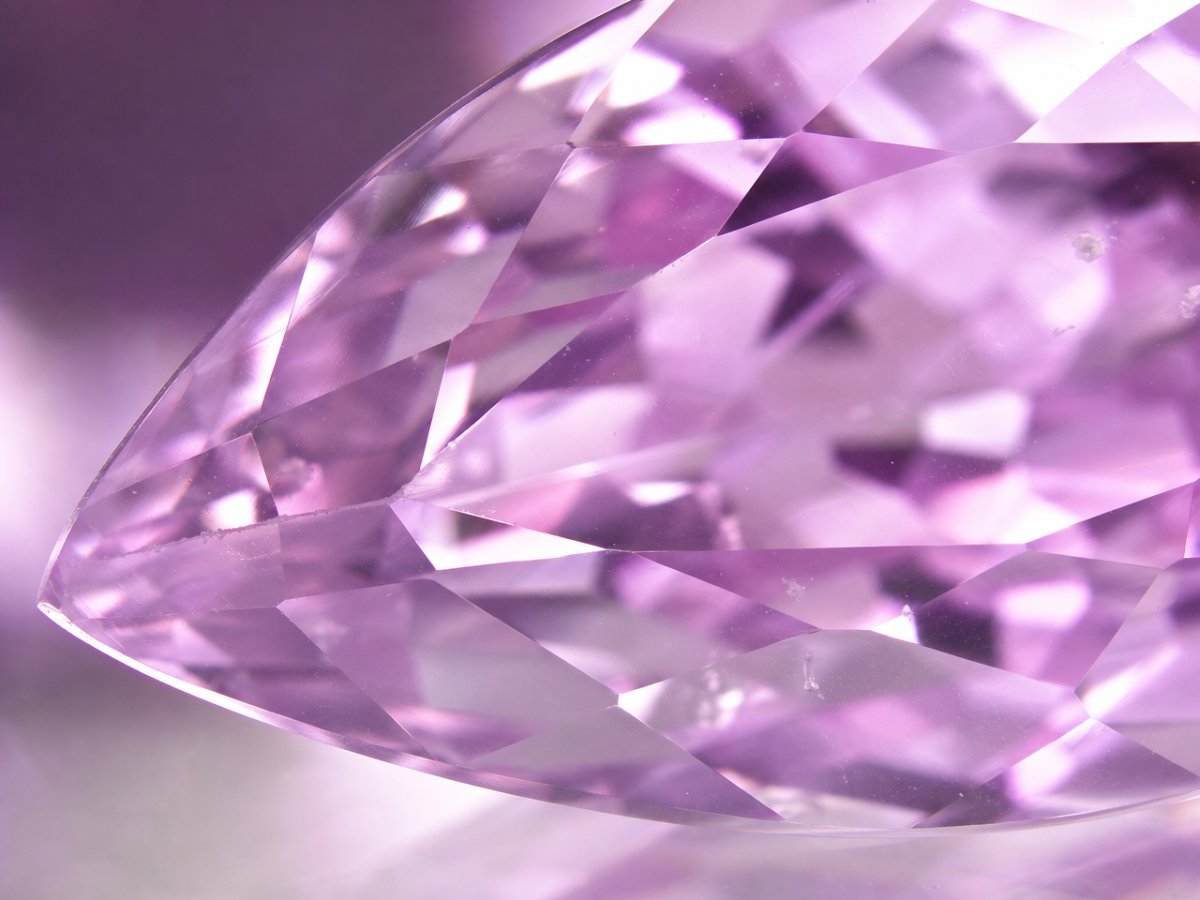


Kunzite is a gemstone for buyers who enjoy delicate color, elegant cutting and a softer, romantic appearance in jewelry. Its best-known colors range from pink through purple and violet, making it especially attractive for pendants, necklaces and earrings where color and size can be appreciated without the same level of exposure to knocks as some everyday rings.
This buying guide explains the main points to consider before purchasing kunzite: color, cut, shape, clarity, size, treatments, origin, durability and jewelry use. It is written for practical buying decisions rather than abstract grading. When comparing kunzite gemstones, the most useful approach is to look at the whole stone: does the color appeal to you, is the cut attractive, is the gem transparent and clean enough for your design, and is it suitable for the way you plan to wear it?
What Is Kunzite?
Kunzite belongs to the spodumene mineral family. Its chemical formula is LiAlSi2O6, and it crystallizes in the monoclinic crystal system. For buyers, the most important practical facts are its color range, its common cutting styles and its durability profile.
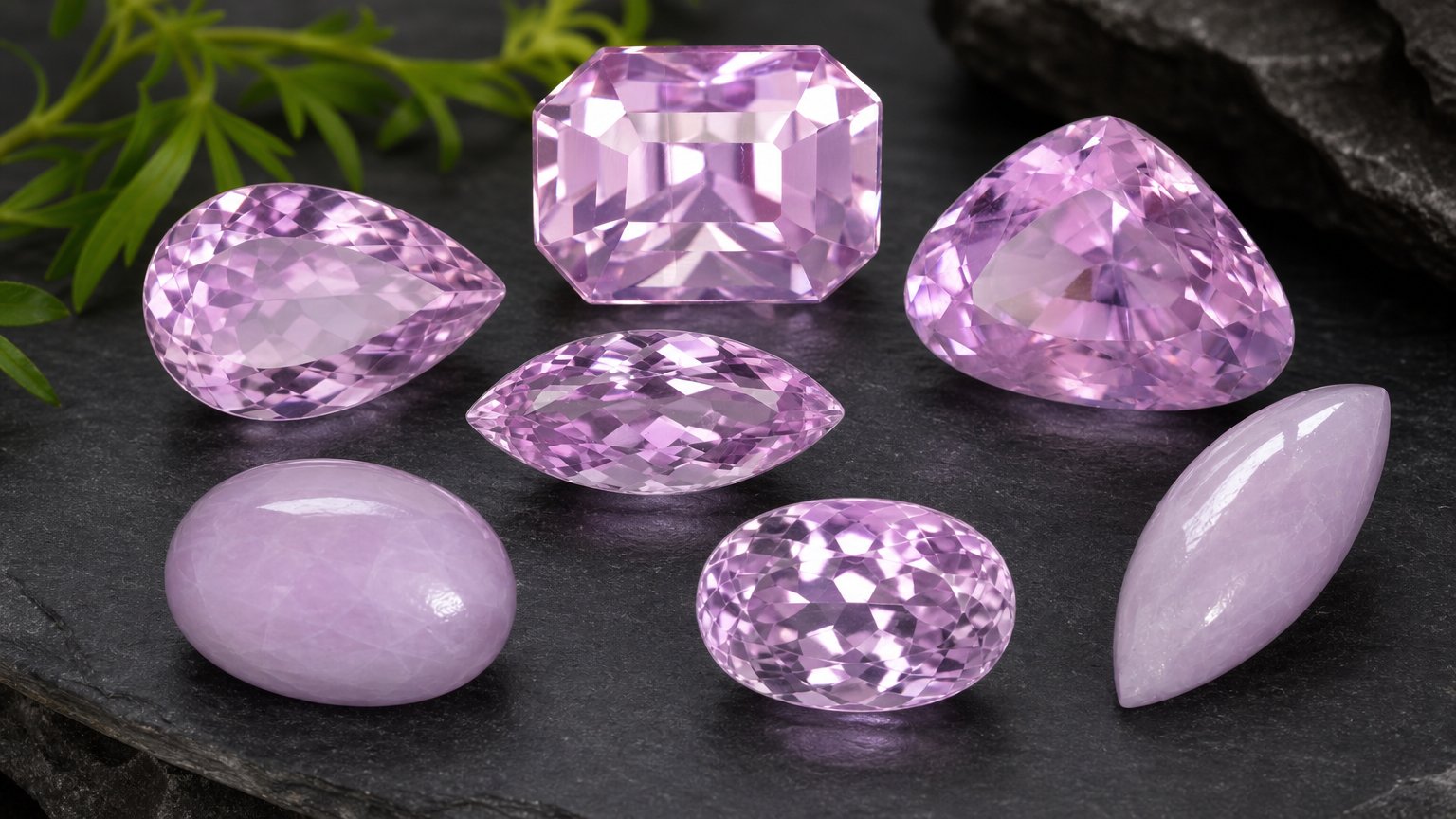
Gem-quality kunzite is known for pink, purple and violet colors. It is commonly faceted to display brightness and color, though cabochon-cut kunzite is also available. Step cuts are seen as well, especially in shapes that suit long or geometric crystals and designs.
Kunzite Color and Appearance
Color is usually the first quality buyers notice in kunzite. The most typical and important color is pink, followed by purple and violet tones. Some stones have a gentle pastel look, while others show stronger saturation. The right choice depends on personal taste and the jewelry design.
Pink Kunzite
Pink is the color most strongly associated with kunzite. Buyers looking for classic kunzite generally focus on stones with a pleasant, visible pink appearance. In online listings, compare photos carefully and consider whether the color appears strong enough for the intended setting. A pale stone can look elegant in a refined pendant, while a more noticeable pink may stand out better in earrings or a larger necklace centerpiece.
Purple and Violet Kunzite
Purple and violet tones give kunzite a slightly cooler appearance. These colors can be attractive for buyers who want something different from a traditional pink gemstone but still want a soft, refined color. When comparing purple or violet kunzite, pay attention to evenness of color across the face of the stone and how the hue works with the metal color and surrounding gems in the design.
How to Judge Color When Buying
There is no need to rely on a complicated grading system. Instead, ask practical questions: Is the color attractive to you? Is it visible in the stone size you are buying? Does the gem appear too pale for your purpose, or does it have the soft tone you want? If buying a pair or set, do the stones match closely enough in hue and intensity?
Clarity and Transparency
Clarity refers to the presence or absence of internal features and surface-reaching marks. With any transparent gemstone, inclusions can affect appearance, especially if they are large, dark or located in the center of the stone. For kunzite, buyers should examine photos and descriptions to judge whether inclusions are distracting when viewed face-up.
A practical standard is simple: for jewelry, the gemstone should look clean and attractive at normal viewing distance. Some internal characteristics may be acceptable if they do not interfere with beauty, transparency or the intended design. For collectors, close-up clarity may be more important, while jewelry buyers may prioritize color, cut and overall face-up appearance.
Cut Styles and Shapes
Cut has a major influence on how kunzite looks. A well-chosen cut can enhance color, brightness and outline, while a poorly proportioned cut may make a stone appear flat, windowed or less lively. Kunzite is commonly faceted, which means the gem has polished flat surfaces designed to reflect light and show the stone’s color.
Faceted Kunzite
Faceted kunzite is the most common choice for buyers. Faceting works well for transparent material and is suitable for many jewelry styles. When reviewing a faceted kunzite, look for balanced proportions, a pleasing outline and attractive light return across the face of the gem. The stone should not appear overly shallow or excessively deep for its shape.
Cabochon Kunzite
Cabochon kunzite has a smooth, domed top rather than facets. Cabochons can be appealing for softer, more understated jewelry designs. This cutting style may suit buyers who prefer a calm glow over sparkle. When buying a cabochon, check that the dome is even, the polish is smooth and the outline is symmetrical.
Step-Cut Kunzite
Step cuts use long, parallel facets that create a more architectural appearance. They can emphasize clarity and shape rather than strong sparkle. Because step cuts often reveal the interior of a gemstone clearly, buyers should pay close attention to transparency and visible inclusions.
Popular Shapes
Kunzite is commonly available in cushion and oval shapes, both of which are versatile for pendants, necklaces and earrings. Marquise, octagon, pear and trillion shapes are also seen and can create more distinctive designs. Baguette, heart, round and square shapes may suit specific jewelry concepts or matching layouts.
Shape choice is partly aesthetic and partly practical. Ovals and cushions are easy to use in many settings. Pear and marquise shapes create length and elegance in pendants and drop earrings. Octagon and baguette shapes offer a clean geometric look, especially when combined with step cutting.
Size and Carat Weight
When buying kunzite, consider both carat weight and millimeter dimensions. Carat weight tells you how heavy the gemstone is, while dimensions tell you how large it will look in a setting. Two stones with the same weight can look different in size if one is cut deeper and the other is cut with a broader face.
For pendants and necklaces, larger kunzite gems can show color well and become the focus of the design. For earrings, matching size, shape and color is important. For rings and bracelets, size should be considered together with setting protection and wear habits.
Origins of Kunzite
Kunzite is associated with several important sources. Afghanistan and Brazil are especially prominent origins, with Pakistan also recognized. Madagascar and Mozambique are additional sources buyers may encounter.
Origin can be interesting to collectors and buyers who prefer gemstones from particular localities. However, for most jewelry purchases, the individual gemstone’s appearance should remain the priority. A beautiful kunzite should be judged by its color, cut, clarity, size, treatment disclosure and suitability for the intended jewelry, rather than origin alone.
Gemological Properties Buyers Should Know
Kunzite has a Mohs hardness of 6.5 to 7. The Mohs scale measures resistance to scratching, not resistance to impact. This means kunzite has reasonable scratch resistance for jewelry, but it still deserves thoughtful handling and appropriate setting choices.
Its refractive index is 1.660 to 1.676. Refractive index is a measurement related to how light bends as it enters a gem. For buyers, this helps explain why cutting and polish are important: good cutting helps the stone make the most of its optical properties.
Kunzite has a specific gravity of 3.15 to 3.21. Specific gravity describes density compared with water. While this is more important for gem identification than everyday buying, it is part of the gemological profile that separates kunzite from other gemstones.
Durability and Everyday Wear
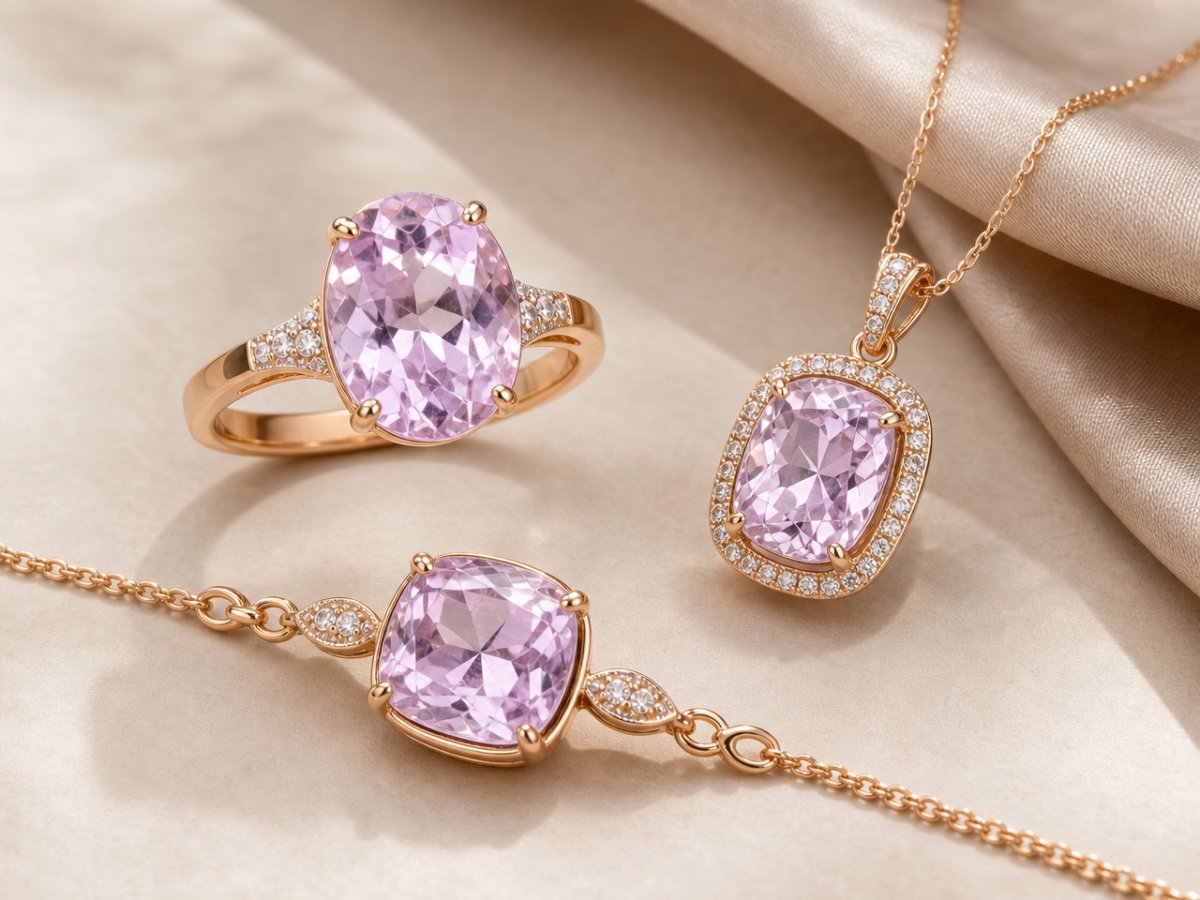
Durability is one of the most important buying considerations for kunzite jewelry. With a hardness of 6.5 to 7, kunzite can be used in jewelry, but it should be matched to the right design and wearing habits. Necklaces and pendants are excellent choices because they are less exposed to hard knocks than rings and bracelets. Earrings are also a good option for the same reason.
Rings and bracelets are possible, but they require more care because they are more likely to contact desks, counters, door handles and other hard surfaces. If choosing kunzite for a ring, consider protective settings and avoid wearing it during activities that could subject the stone to impact or abrasion. For bracelets, be especially mindful because wrist jewelry is frequently exposed to contact.
Kunzite Treatments
Many buyers prefer untreated gemstones when available, and untreated kunzite is an important category. Heat treatment and irradiation are also associated with kunzite, though they are less emphasized than untreated material in the available knowledge for this guide.
Treatment is not automatically a reason to avoid a gemstone, but it should be disclosed clearly. When buying, check the treatment information provided by the seller. At GemSelect, treatment disclosure is an important part of comparing gemstones because it helps buyers understand exactly what they are purchasing.
If untreated status matters to you, look specifically for stones described as untreated. If a stone has been treated, consider whether the color, appearance and price are still appropriate for your needs. The key is transparency: buyers should be able to make an informed choice.
Best Jewelry Uses for Kunzite
Kunzite is especially well suited to necklaces and pendants. These designs allow the stone’s pink, purple or violet color to be displayed prominently while reducing exposure to daily knocks. A faceted oval or cushion kunzite can make an elegant pendant center stone, while pear and marquise shapes can create a graceful hanging design.
Earrings are also a strong choice, particularly when matching pairs are available. Because earrings are worn away from the hands, they are less likely to suffer impact than rings or bracelets. For designers, kunzite earrings can work as studs, drops or dangles depending on size and cut.
Bracelets and rings can be attractive but should be chosen with care. These jewelry types experience more contact during wear. If you select kunzite for a ring or bracelet, choose a setting that offers some protection and reserve the piece for occasions where it will not be exposed to rough use.
Practical Kunzite Buying Checklist
1. Choose the Color You Love
Start with color. Decide whether you prefer classic pink, cooler purple or violet tones. Compare stones side by side when possible, and consider how the color will look in the finished jewelry.
2. Examine the Cut and Shape
Look for a pleasing outline, good symmetry and attractive face-up appearance. Faceted stones should show life and balance. Cabochons should have smooth polish and an even dome. Step cuts should have clean lines and good transparency.
3. Check Clarity Visually
Use the photos and description to decide whether inclusions are noticeable or distracting. For jewelry, a stone that looks attractive to the eye is usually more important than microscopic perfection.
4. Compare Dimensions, Not Just Carat Weight
Review the millimeter measurements. A gem’s face-up size determines how it will appear in the design. This is especially important for earrings, calibrated settings and pendant layouts.
5. Review Treatment Disclosure
Confirm whether the kunzite is untreated or has been treated by heat or irradiation. Choose according to your preferences and the information provided.
6. Match the Stone to the Jewelry Type
For pendants, necklaces and earrings, kunzite is a natural fit. For rings and bracelets, plan for protective settings and careful wear.
Summary
Kunzite is a beautiful spodumene gemstone known for pink, purple and violet colors. Buyers should focus on the overall harmony of color, cut, clarity, size and treatment disclosure. Faceted stones are the most common, with cabochons and step cuts also available. Cushion and oval shapes are especially versatile, while pear, marquise, octagon and trillion shapes offer distinctive design options.
For jewelry, kunzite is particularly well suited to necklaces, pendants and earrings. Rings and bracelets can be made with kunzite, but they require more care because of greater exposure during wear. By considering both beauty and practicality, buyers can choose kunzite with confidence and select a gemstone that suits their style, setting and expectations.