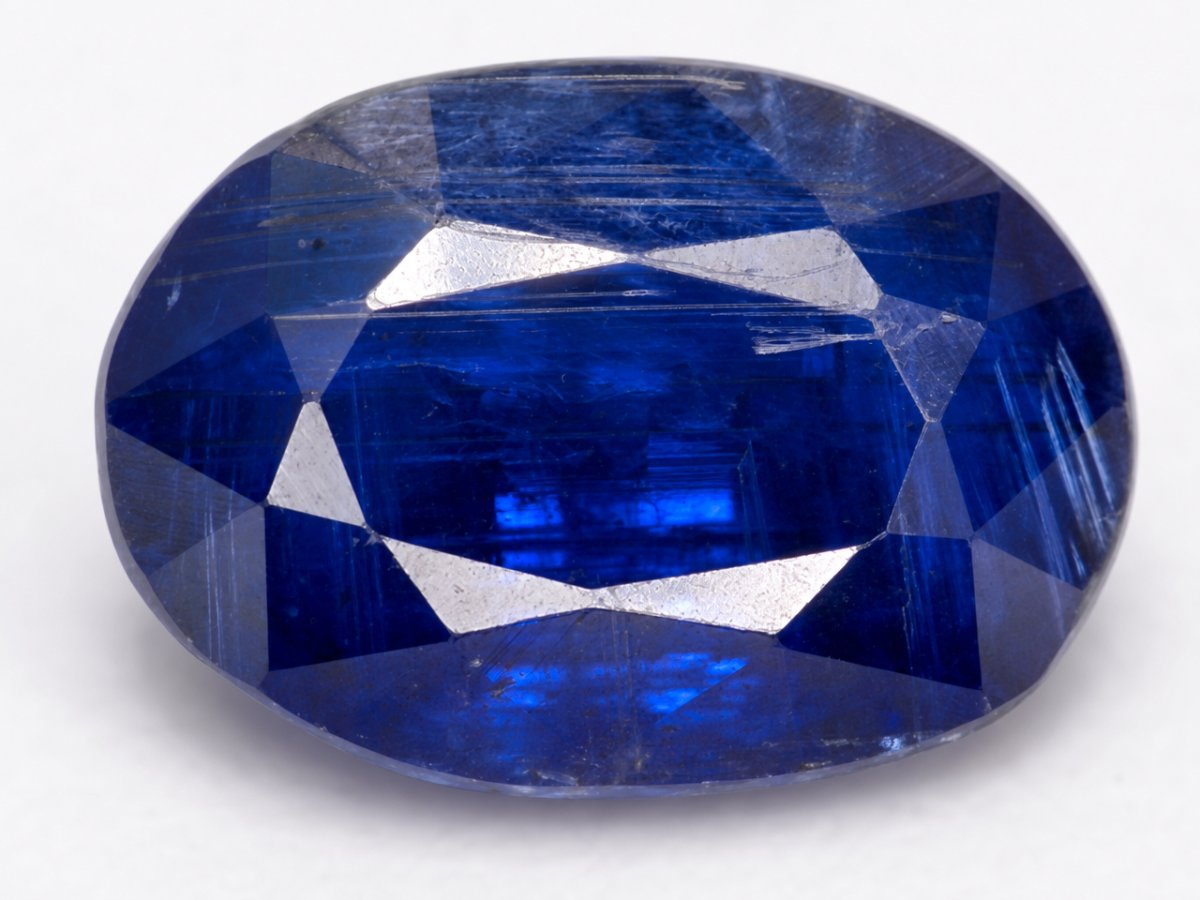


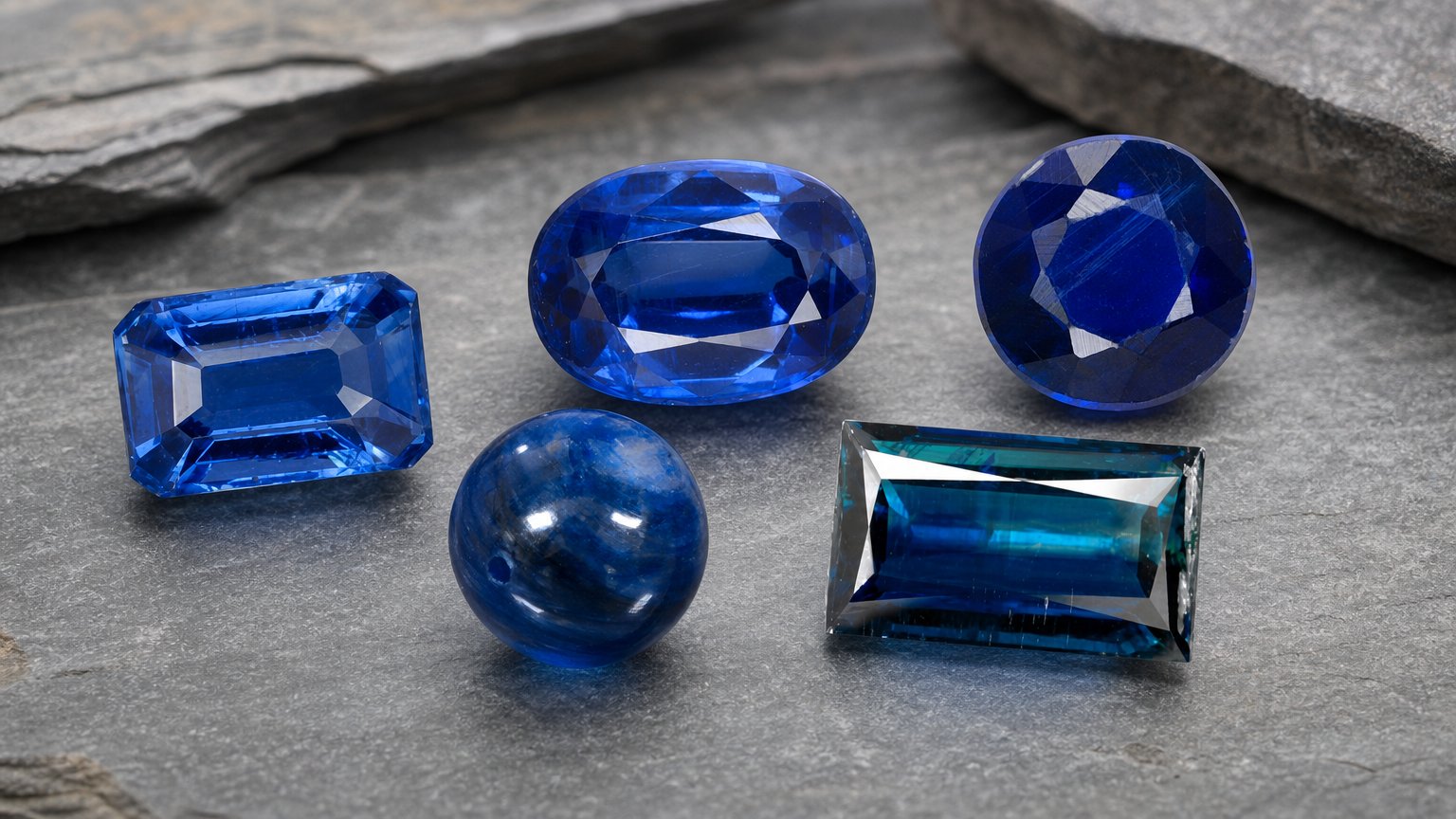
Kyanite is best known as a blue gemstone, although it can also occur in green, white, yellow and colorless forms. Its appeal is closely tied to its calm color, often sapphire-like appearance and the fact that fine stones are commonly found untreated. In meaning and symbolism, kyanite is mainly understood through modern gemstone culture rather than through a long record of ancient royal, religious or ceremonial use.
For collectors, jewelry designers and gemstone enthusiasts, kyanite occupies an interesting position: it is a natural mineral with a distinctive visual identity, important sources in countries such as Nepal, Brazil and Kenya, and a contemporary symbolic language centered on clarity, balance and composed expression. These meanings should be understood as tradition, folklore or personal interpretation, not as scientific fact.
What Kyanite Represents
Because blue is kyanite's most recognized color, its symbolism is often connected with the broader cultural language of blue gemstones. Blue gems have long been associated in many decorative traditions with calmness, trust, reflection and mental focus. Kyanite's vivid to soft blue tones make it easy to see why modern gemstone enthusiasts often describe it as a stone of clear thought and peaceful communication.
In contemporary crystal and gemstone traditions, kyanite is commonly associated with balance, alignment and honest self-expression. These ideas are symbolic rather than medical or scientifically proven. They are best understood as meanings people attach to the gem because of its color, appearance and personal significance.
Green, white, yellow and colorless kyanite can suggest different visual moods. Green kyanite may feel more connected to nature and renewal, while white or colorless material has a lighter, cleaner appearance. However, blue remains the color most strongly identified with kyanite in the gem trade and in modern symbolism.
Historical Background
Kyanite does not have the same widely documented ancient history as gemstones such as sapphire, ruby, emerald or diamond. It is better known today as a collector's gemstone and jewelry gem than as a stone with a long record in classical mythology or royal regalia. This makes its history different from many traditional precious stones: its cultural identity is largely modern, shaped by mineral collecting, gem cutting and contemporary jewelry design.
One reason kyanite has a more specialized gem history is its unusual structure. Kyanite has directional hardness, meaning it can be softer in one direction and harder in another. This property is important to cutters and helps explain why attractive faceted kyanite is appreciated by people who understand the skill involved in bringing out its color and brilliance. While this is a gemological fact rather than a symbolic one, it has influenced how kyanite is viewed: as a gem that rewards careful cutting and knowledgeable handling.
Fine kyanite is often found untreated, which also contributes to its modern appeal. For buyers who value natural color, an untreated gemstone can carry a sense of authenticity. In meaning-focused terms, that naturalness can reinforce kyanite's contemporary associations with clarity and sincerity.
Geographic Associations and Modern Identity
Kyanite is associated with several important sources, including Nepal, Brazil, Kenya, India, Myanmar and Tanzania. Nepal is especially notable in the modern gem market, and blue kyanite from this region has helped strengthen the gemstone's reputation among collectors and designers.
These origins are part of kyanite's modern story rather than evidence of a single ancient cultural tradition. Unlike gems that became symbols of specific dynasties, religions or historic ceremonies, kyanite's significance today comes more from its beauty, availability from diverse sources and appreciation among people looking for distinctive blue gems.
Kyanite in Folklore and Modern Gemstone Belief
Most symbolic claims about kyanite belong to modern gemstone folklore. It is often regarded as a stone of mental clarity, calm speech and inner balance. Some people choose it as a reminder to communicate thoughtfully or to remain centered during stressful situations. These are personal and cultural interpretations, not verified effects.
Kyanite's blade-like crystal habit also contributes to its modern symbolism. Even when cut as an oval, pear, cushion or other gem shape, many enthusiasts associate the mineral with direction, alignment and focus. This connection comes from the way people visually and symbolically interpret the mineral, rather than from documented ancient use.
For this reason, kyanite is a good example of how gemstone meaning can develop in the modern era. A gem does not need centuries of legend to become meaningful. Its color, rarity in fine quality, natural character and the experience of wearing or collecting it can all become part of its symbolic identity.
Kyanite in Contemporary Jewelry Culture
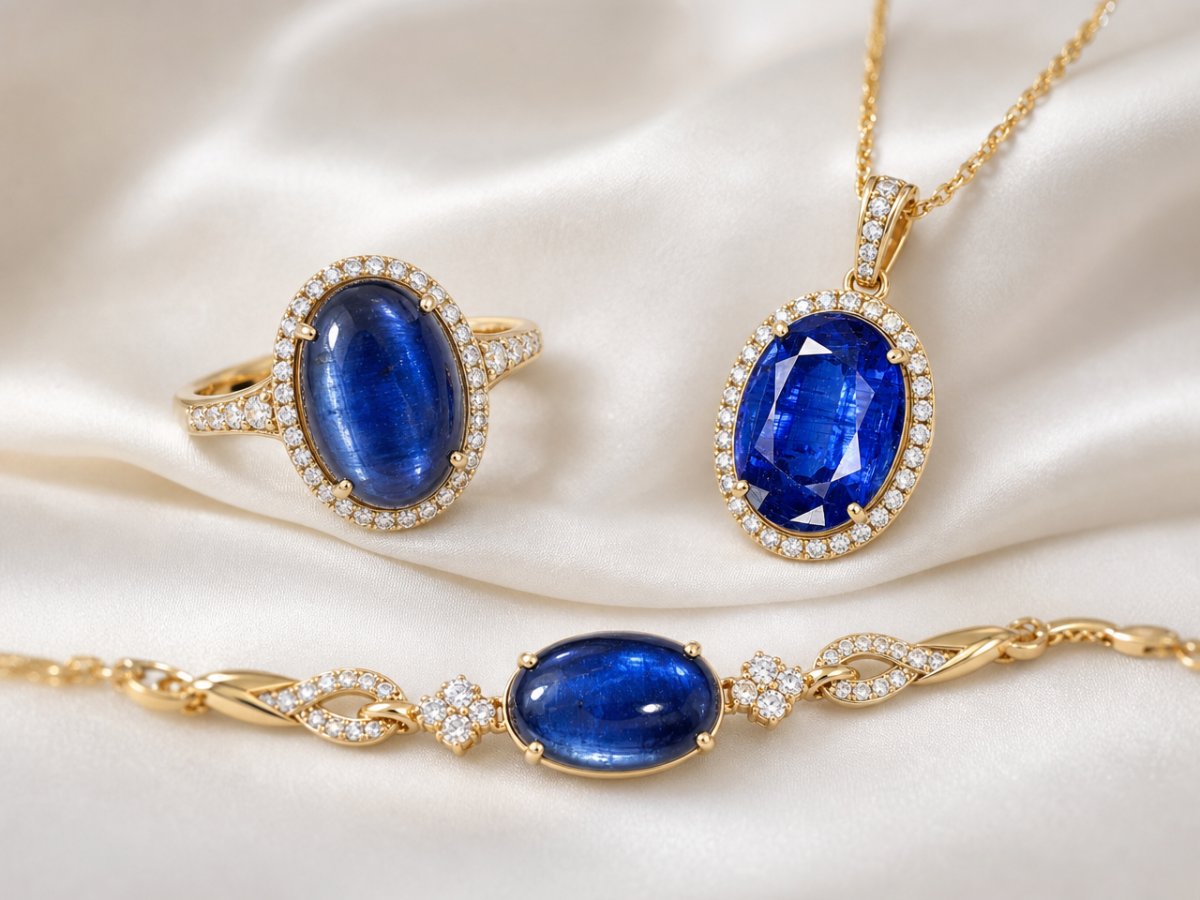
Although this guide focuses on meaning and history rather than jewelry advice, modern jewelry use has helped shape how people experience kyanite. The gem is often seen in necklaces and pendants, where its blue color can be displayed clearly. Earrings are also common, while rings, bracelets and cufflinks are more specialized uses.
In symbolic terms, wearing kyanite near the face or neckline often reinforces its modern association with calm expression and personal presence. Designers may choose kyanite for its cool blue color, but many wearers also value the quiet, thoughtful feeling the gem suggests.
How Kyanite Is Viewed Today
Today, kyanite is appreciated as a distinctive alternative to more familiar blue gemstones. Its meaning is less about ancient legend and more about modern values: natural beauty, individuality, clarity and understated elegance. For collectors, it offers mineralogical interest. For jewelry lovers, it offers an appealing blue gem that is often untreated. For people who enjoy gemstone symbolism, it represents calm focus and balanced expression.
At GemSelect, kyanite is best understood as a gemstone with a contemporary identity: visually striking, naturally appealing and symbolically linked with the qualities many people see in blue gemstones. Its history may be less ancient than some famous gems, but its modern significance is clear.
Summary
Kyanite's meaning is rooted in its blue color, natural character and modern gemstone appreciation. It is not primarily known for ancient ceremonial use or long-standing royal symbolism. Instead, it has become meaningful through contemporary collecting, jewelry design and personal symbolism. When discussed responsibly, kyanite can be described as a gem traditionally associated in modern belief with clarity, balance and calm communication, while its documented identity remains that of a beautiful mineral gemstone found in several important global sources.