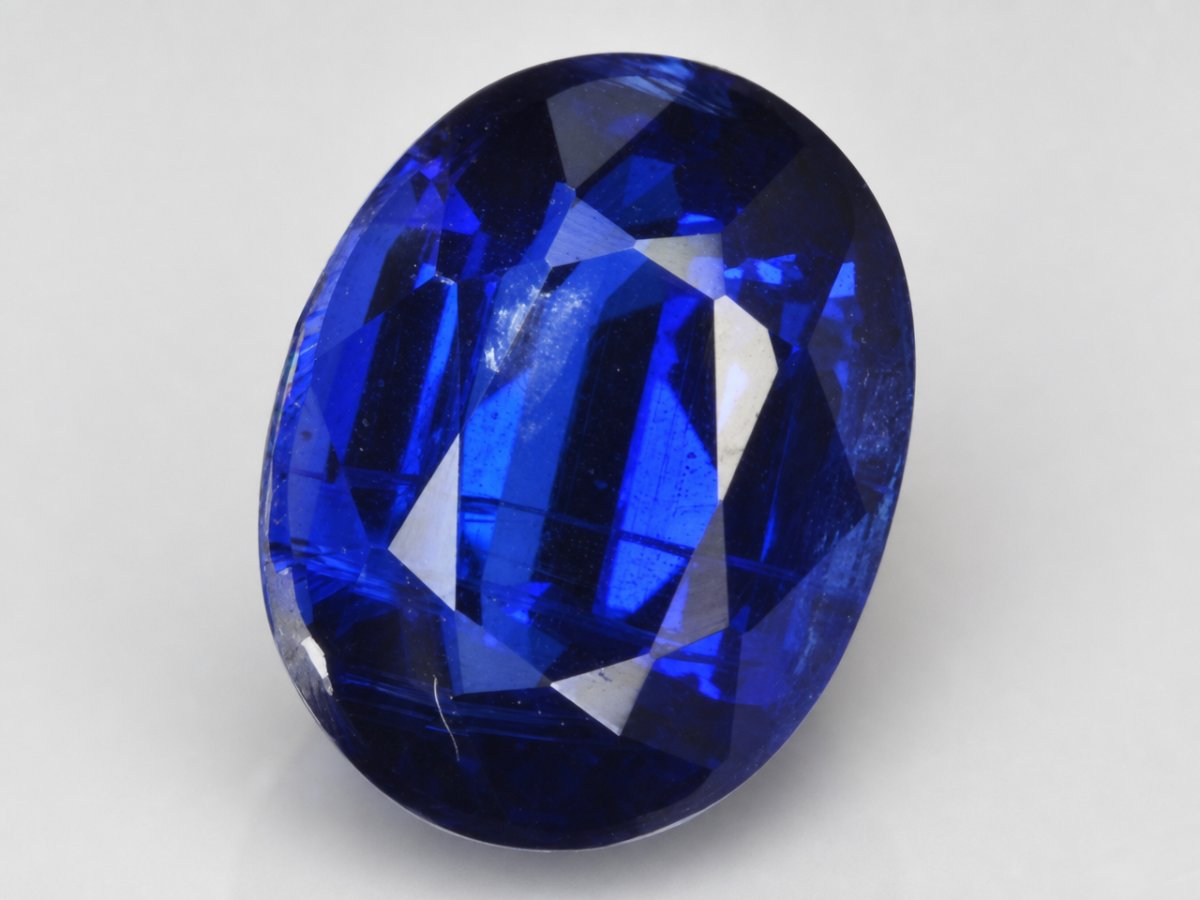


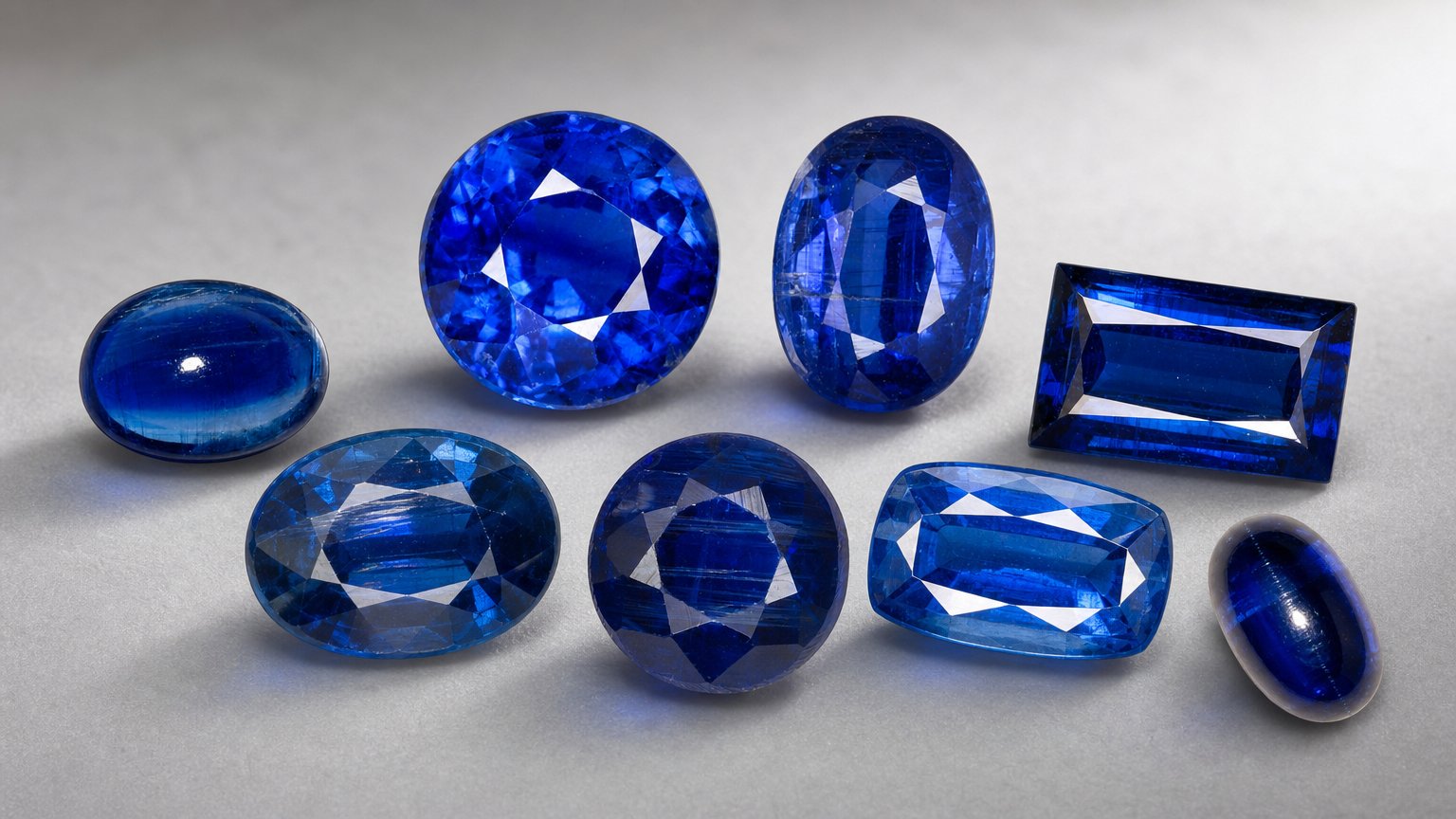
Kyanite is a distinctive gemstone for buyers who want strong color, interesting gemology and a less conventional choice for jewelry. It is best known in blue, but it can also occur in green, white, yellow and colorless varieties. For many shoppers, the appeal of kyanite lies in its clean, elegant appearance when well cut, especially in faceted stones used for pendants, necklaces and earrings.
Buying kyanite requires a little more care than buying some everyday jewelry gems because its hardness is unusual: it measures about 4 to 4.5 on the Mohs scale along certain axes and about 6 to 7 across other axes. This directional hardness affects how the gem should be cut, set, worn and cared for. A beautiful kyanite can be an excellent purchase, but the best choice depends on how you plan to use it.
This guide explains the main factors to consider before buying kyanite: color, clarity, cut, shape, durability, treatments, origin and jewelry use. The goal is to help you compare stones confidently and choose a gem that fits your design, budget and wearing habits.
What Is Kyanite?
Kyanite is a gemstone variety associated with the kyanite mineral. Its chemical formula is Al₂SiO₅, and it belongs to the triclinic crystal system. From a buyer’s point of view, kyanite is especially interesting because it combines attractive colors with a notable gemological feature: variable hardness depending on crystal direction.
Gem-quality kyanite is commonly cut as faceted gemstones, though cabochons are also available. The gem’s refractive index, 1.712–1.734, is one reason well-cut stones can show a lively appearance. Its specific gravity is 3.53–3.70, which is a gemological measurement used in identification rather than a feature most jewelry buyers will notice directly.
When buying, it is helpful to think of kyanite as a gem that rewards careful selection. Color and cutting quality are immediately visible, while durability and setting style determine how practical the stone will be in finished jewelry.
Kyanite Color and Appearance
Blue Kyanite
Blue is the most important and widely recognized color for kyanite. Buyers looking for a classic kyanite appearance usually begin with blue stones, comparing tone, saturation and evenness of color. In practical terms, tone describes how light or dark the gem appears, while saturation describes the strength or intensity of the color.
When comparing blue kyanite, look at the gem under more than one lighting condition. A stone that looks bright and attractive in one environment may appear darker or less lively in another. This is useful advice for any colored gemstone purchase and especially important when choosing a gem online from photos and videos. At GemSelect, reviewing the listed stone details and images can help you compare individual pieces more accurately.
Green, White, Yellow and Colorless Kyanite
Although blue receives the most attention, kyanite is also known in green, white, yellow and colorless forms. These colors can be appealing for collectors, designers and buyers who want a less expected gemstone look. Green kyanite may suit nature-inspired designs, while white, yellow and colorless stones can be useful where a lighter or more neutral gem is desired.
Because personal preference plays a large role in colored gemstone buying, the best kyanite color is not simply the darkest or the brightest. The best choice is the one that looks attractive in the intended setting and complements the wearer’s style. If the gem will be used with metal or accent stones, consider how the body color will appear next to those design elements.
Clarity: What Buyers Should Look For
Clarity refers to the presence or absence of internal features and surface-reaching marks visible in a gemstone. For kyanite, as with other colored gemstones, the goal is usually to find a stone that looks attractive to the unaided eye. A gem does not need to be flawless under magnification to be a good jewelry stone, but visible features can affect the overall appearance.
When evaluating clarity, start with the face-up view because that is how the gem will usually be seen in jewelry. Look for interruptions that distract from the color, reduce transparency or draw the eye away from the shape. Small internal features may be acceptable if the color is pleasing and the cut is attractive. In cabochons, clarity is judged differently because the rounded polish emphasizes surface smoothness, color and overall visual balance rather than sparkle.
For online buying, use clear photographs, videos where available and the seller’s disclosure information. If a stone is intended for a high-visibility pendant or ring, clarity may matter more than it would for small accent stones or earrings viewed from a normal distance.
Cut and Shape: How Kyanite Is Fashioned
Cut is one of the most important buying factors for kyanite. A good cut improves face-up color, symmetry and brightness, while a poor cut can make even an attractive color look dull or uneven. Kyanite is commonly faceted, and faceted stones are often the first choice for buyers who want brilliance and a refined jewelry appearance.
Faceted Kyanite
Faceted kyanite is cut with flat, polished faces that reflect light back to the viewer. Popular shapes include oval and pear shapes, both of which work well in pendants, necklaces and earrings. Cushion and octagon shapes are also commonly seen, while marquise, round and trillion shapes may appear in more specific designs.
When comparing faceted stones, look for balanced proportions, good symmetry and a pleasing outline. The stone should not appear overly shallow, overly deep or visibly lopsided. In colored gems, cut is not only about sparkle; it also controls how evenly the color is displayed across the gem.
Cabochon Kyanite
Kyanite is also cut as cabochons. A cabochon has a smooth, rounded top rather than facets. This style can be a good choice when the appeal of the stone is its body color, smooth polish and softer visual character. Cabochons are especially useful in jewelry designs where a calmer, less reflective surface is desired.
When buying a kyanite cabochon, check that the dome is even, the polish is smooth and the shape is balanced. The base should sit well in a setting, and the surface should not show distracting abrasions or chips.
Emerald Cuts and Octagonal Shapes
Emerald cuts and octagonal forms can suit kyanite well when the material has attractive transparency and color. Step-style cutting emphasizes clean lines and broad flashes rather than many small sparkles. This makes the overall quality of the color and clarity easier to see, so buyers should inspect these stones carefully for visible internal features and cutting symmetry.
Size and Carat Weight
Kyanite is available in a range of sizes, and the right size depends on the jewelry project. A large pendant stone can make a strong visual statement, while smaller matched stones may be better for earrings or multi-stone designs. Carat weight is useful for comparison, but it should not be considered alone. Millimeter dimensions, cut proportions and face-up appearance are often more important when planning jewelry.
Two stones of the same carat weight can look different in size if one is cut deeper than the other. Always check the dimensions as well as the weight, especially when buying a stone for an existing setting. For pairs, such as earrings, compare shape, size, color and overall appearance rather than relying only on carat weight.
Gemological Properties Buyers Should Know
Several kyanite properties are useful for identification and for understanding how the gem behaves in jewelry. Its refractive index is 1.712–1.734, and its specific gravity is 3.53–3.70. These values are mainly used by gemologists and sellers to help identify and describe the gemstone.
The property most relevant to buyers is hardness. Kyanite’s Mohs hardness is 4 to 4.5 along certain crystal axes and 6 to 7 across other axes. This means it does not wear uniformly in all directions. The practical result is that kyanite should be handled with more care than gems with consistently high hardness.
The triclinic crystal system and chemical formula Al₂SiO₅ are part of kyanite’s mineral identity. While most buyers will focus on beauty and durability, these details are useful for collectors and anyone comparing kyanite with other gemstones.
Durability and Everyday Wear
Durability is a key consideration when buying kyanite. The gem’s directional hardness means it can be more vulnerable to scratching or damage in some orientations. This does not make kyanite unsuitable for jewelry, but it does mean buyers should choose jewelry styles carefully.
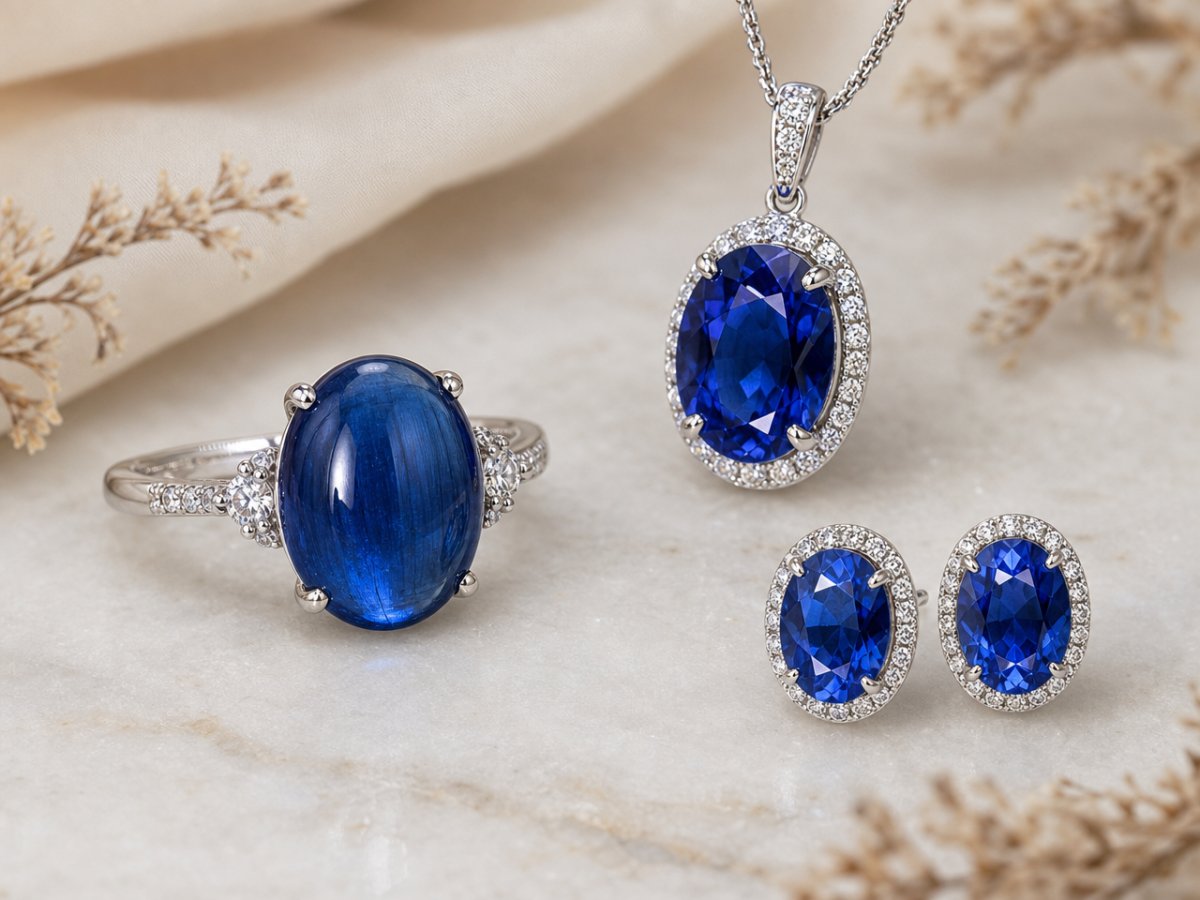
Kyanite is best suited to jewelry that receives moderate protection, such as pendants, necklaces and earrings. These styles are less exposed to knocks and abrasion than rings or bracelets. For a ring, a protective setting and mindful wear are important. A kyanite ring should be treated as a special-occasion or careful-wear piece rather than a gem for rough daily activity.
Bracelets also need caution because they are frequently exposed to impact against desks, counters and other surfaces. If kyanite is used in a bracelet, a design that protects the stone and reduces direct contact is preferable. Cufflinks can also be suitable when worn carefully, as they typically face less abrasion than rings but can still be knocked during use.
Kyanite Treatments
Kyanite is commonly offered as untreated. For buyers, this is an important point because treatment disclosure helps you understand exactly what you are purchasing. An untreated gemstone has not been altered by a treatment process to change or improve its appearance.
When buying any colored gemstone, ask for clear treatment information. Reputable sellers should disclose known treatments or state when a gem is untreated. If you are purchasing a significant stone, keep the invoice or product documentation for your records, especially if the gem will be set in custom jewelry.
Kyanite Origins
Kyanite is associated with several important origins, including Nepal, Brazil, Kenya, India, Myanmar and Tanzania. Origin can be interesting to collectors and buyers who enjoy knowing where a gemstone comes from, but it should be considered alongside the visible qualities of the individual stone.
Nepal is especially notable among kyanite origins, while Brazil and Kenya are also important sources. India, Myanmar and Tanzania are additional origins buyers may encounter. However, origin alone should not replace careful evaluation of color, clarity, cut, size and durability. A well-cut stone with attractive color is often more relevant to jewelry use than origin information by itself.
If origin matters to you, buy from a seller that provides clear product details. Be aware that origin identification may require documentation, and not every gemstone listing will include confirmed country of origin. For most buyers, the smartest approach is to treat origin as one useful detail rather than the main purchasing factor.
Best Jewelry Uses for Kyanite
Necklaces and Pendants
Necklaces and pendants are among the best uses for kyanite. They display the gemstone prominently while keeping it away from much of the impact and abrasion that rings and bracelets experience. A faceted oval, pear or cushion kyanite can work beautifully as a pendant centerpiece, while cabochons can create a smoother, more understated look.
Earrings
Earrings are also a practical choice for kyanite because they are generally protected during wear. Matching pairs should be judged for similar color, size, shape and brightness. Exact matches are not always necessary for every design, but a well-matched pair creates a more balanced finished piece.
Rings and Bracelets
Kyanite can be used in rings and bracelets, but buyers should be realistic about wear. These jewelry types are more exposed, so a protective setting is recommended. Avoid wearing kyanite rings or bracelets during activities that involve impact, pressure, tools, sports or heavy cleaning.
Cufflinks
Cufflinks are a more specialized use for kyanite. They can be attractive in dress accessories, particularly when the stones are set securely. As with other jewelry types, careful wear and storage help preserve the polish and edges.
Practical Kyanite Buying Checklist
1. Choose the Color First
Start by deciding whether you want the classic blue appearance or one of kyanite’s other colors, such as green, white, yellow or colorless. Compare tone and saturation, and choose a color that remains attractive in the intended lighting and jewelry design.
2. Inspect the Cut
Look for symmetry, good proportions and a pleasing face-up appearance. In faceted stones, check that the gem is lively and not overly dark or shallow-looking. In cabochons, look for a smooth polish and an even dome.
3. Consider Clarity in Context
Decide how important eye-clean appearance is for your project. A pendant centerpiece may require a cleaner-looking stone than a small accent gem. Do not judge clarity under magnification alone; consider how the stone looks at normal viewing distance.
4. Match Shape to Jewelry Design
Oval and pear shapes are versatile and common choices. Cushion and octagon shapes can provide a more structured appearance, while round, marquise and trillion shapes may suit specific designs. If you already have a setting, confirm dimensions carefully.
5. Think About Durability Before Setting
Because kyanite has directional hardness, jewelry use matters. Pendants, necklaces and earrings are generally safer choices. Rings and bracelets should be designed to protect the gem and worn with extra care.
6. Confirm Treatment Disclosure
Kyanite is commonly untreated, but you should still check treatment information before buying. Clear disclosure helps ensure that the stone you receive matches your expectations.
7. Review Origin as Supporting Information
Origin can add interest, especially for collectors, but it should not outweigh visible quality. Evaluate the individual gem first, then consider origin as an additional detail.
Care Tips After Buying Kyanite
After purchase, kyanite should be stored and worn with care. Keep it separate from harder gemstones and jewelry pieces that could scratch it. A soft pouch or lined jewelry box compartment is a sensible choice.
Clean kyanite gently with a soft cloth and mild soapy water when needed, then dry it carefully. Avoid harsh chemicals, rough handling and situations where the stone may be knocked. If the gem is mounted in jewelry, inspect the setting periodically to make sure the stone remains secure.
Summary: How to Buy Kyanite with Confidence
The best kyanite purchase balances beauty with practicality. Start with color, especially if you want the classic blue look, then compare clarity, cut, shape and size. Give special attention to durability because kyanite’s hardness varies by direction. For jewelry, pendants, necklaces and earrings are especially suitable, while rings and bracelets require protective settings and careful wear.
Untreated kyanite is commonly available, and origins such as Nepal, Brazil, Kenya, India, Myanmar and Tanzania may be of interest. Ultimately, choose the individual stone that offers the most appealing appearance for your intended use. A carefully selected kyanite can be a distinctive and rewarding gemstone for custom jewelry, collecting or personal enjoyment.