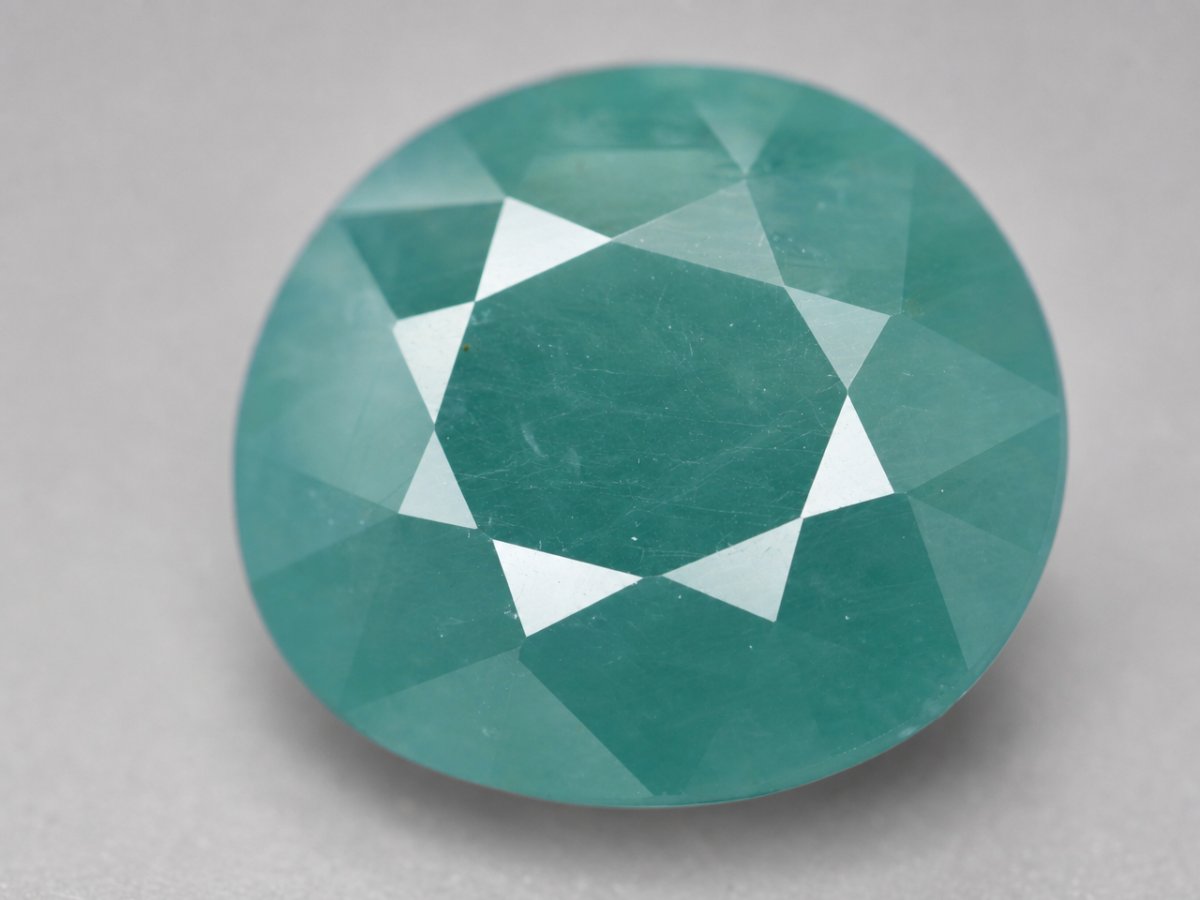


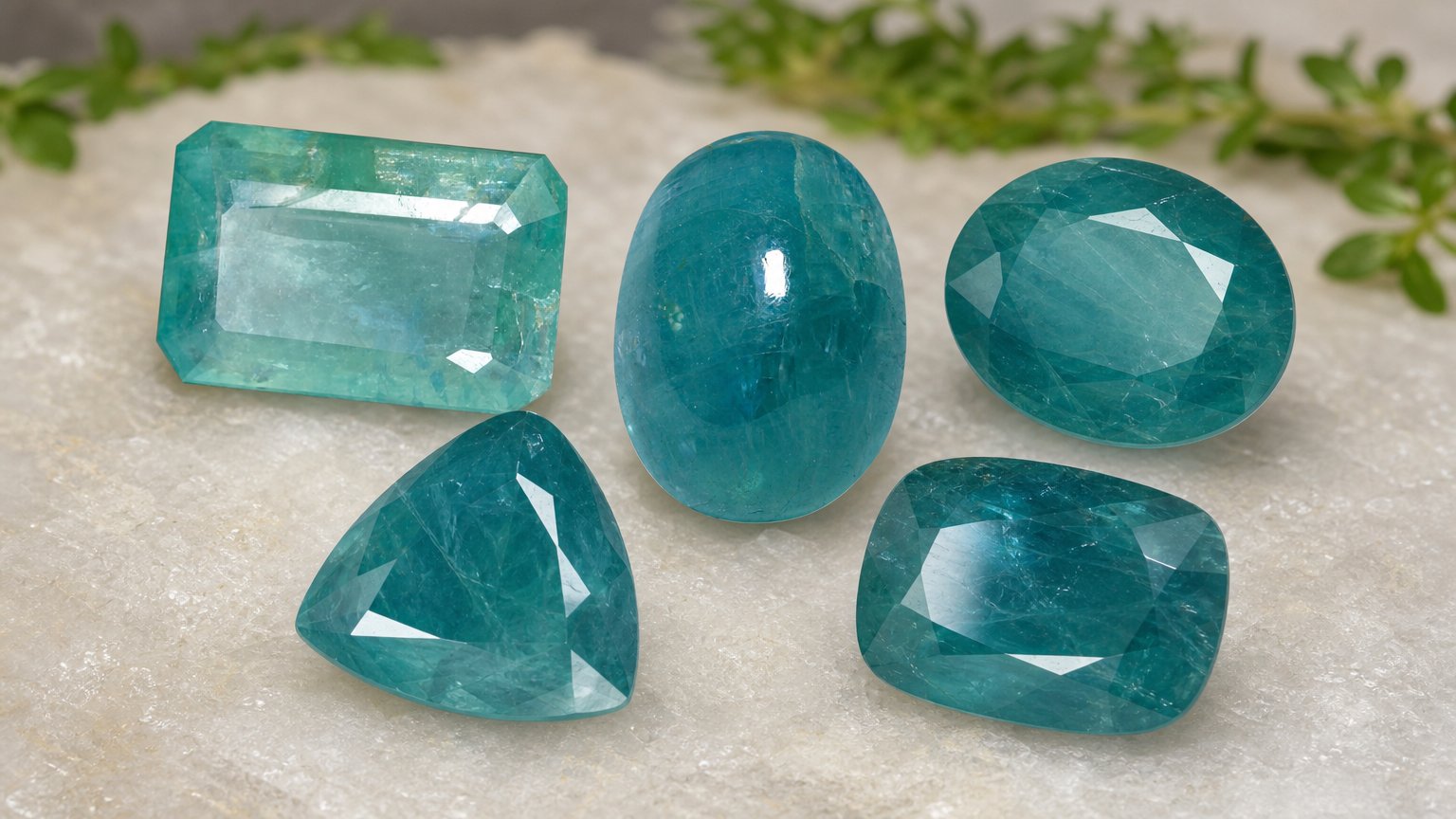
Grandidierite is a distinctive borosilicate gemstone best known for green, teal and blue body colors. For buyers, its appeal is usually visual first: the stone can offer a fresh green to blue-green look that works well in custom jewelry, especially pendants, rings and necklaces. A confident purchase, however, depends on more than color alone. You should also understand how cut style, shape, clarity, size, treatment disclosure, durability and origin affect the suitability of a particular gem for your project.
This buying guide explains the practical points to check before purchasing Grandidierite. It is written for gemstone buyers, jewelry designers, jewelers and collectors who want to compare stones clearly and avoid relying only on a single photograph or headline description.
What Is Grandidierite?
Grandidierite is a borosilicate mineral with the chemical formula MgAl₃(BO₃)(SiO₄)O₂. It crystallizes in the orthorhombic crystal system and has gemological properties that place it among durable colored gemstones suitable for carefully chosen jewelry designs.
Important measured properties include a Mohs hardness of 7.5, a refractive index range of 1.583–1.639 and a specific gravity of 2.85–3.00. These values are useful for gemological identification and also help buyers understand how the gem may perform in jewelry. Hardness, in particular, is relevant when deciding whether a stone is appropriate for a ring or better suited to a pendant or necklace.
Color and Appearance: What to Look For
Color is the first feature most buyers notice in Grandidierite. The key color range includes green, teal and blue, with green being especially important. Teal tones are also highly relevant to the gemstone’s appearance, while blue may appear as part of the overall color impression in some stones.
When comparing Grandidierite, look at the dominant color and any secondary tones. A stone described as green may lean toward blue-green or teal depending on lighting and photography. If possible, view images taken in more than one lighting condition, or ask for a short video. Colored gemstones can appear different under daylight, indoor light and strong direct light, so a single image may not tell the full story.
Hue, Tone and Saturation
Three basic color terms help buyers evaluate Grandidierite more accurately:
- Hue is the basic color family, such as green, teal or blue.
- Tone describes how light or dark the stone appears.
- Saturation refers to the strength or intensity of the color.
For buying purposes, choose the balance that suits your design. A lighter teal stone may look bright and lively in a delicate pendant, while a deeper green gem may give a stronger visual presence in a custom ring. There is no need to force every purchase into a single “best” category; the right choice depends on the color you prefer, the metal color, the jewelry style and the intended use.
Check Color Distribution
Even color across the face of the gem is usually easier to set and match in jewelry. When examining photos, look for areas that appear noticeably darker or lighter. Some variation can be natural in colored gems, but strong unevenness may affect the overall look once the stone is mounted.
Clarity and Transparency
The Knowledge Snapshot for Grandidierite does not define a specific clarity grade, so buyers should use practical visual evaluation. Ask: Is the stone transparent, translucent or more opaque? Are inclusions obvious when viewed face-up? Do any internal features distract from the color or brilliance?
Inclusions are natural internal characteristics found in many gemstones. They may look like tiny crystals, lines, veils or clouds. In a faceted stone, inclusions that are visible in the center of the gem can affect the visual appeal more than small features near the edge. In a cabochon, inclusions may be less distracting if they do not interrupt the smooth color or surface appearance.
For online buying, clear images are essential. At GemSelect, comparing the face-up photo, dimensions and description can help you judge whether the clarity suits your design. If the stone is for a ring, inspect clarity more carefully because hands are viewed close-up and receive more attention than many pendant designs.
Cut Styles and Shapes
Cut has a major effect on how Grandidierite displays color and light. Faceted cuts are especially important for this gemstone. A well-executed faceted cut can improve brightness, show the color clearly and give the stone a finished look suitable for fine jewelry.
Cabochons are also used, particularly when a smooth, polished surface better suits the material or the design. Step cuts can create a clean, elegant appearance with broad flashes of light rather than a highly sparkling look. Checkerboard and Portuguese cuts may also be encountered, offering more decorative faceting patterns.
Common Shapes
Oval and pear shapes are especially relevant for Grandidierite. Both shapes can make efficient use of the rough and create attractive outlines for pendants and rings. Cushion and round shapes are also seen and can work well in classic jewelry designs. Octagon and trillion shapes may appear in more distinctive custom pieces.
When choosing a shape, think about the setting before you buy. Pear shapes are attractive for pendants and drop designs. Ovals are versatile and can be used in rings, pendants and necklaces. Cushions offer a softer square or rectangular outline, while rounds provide a traditional look. Octagons suit step-cut styles and geometric designs, and trillions can create a more modern appearance.
Cut Quality Checklist
Use the following practical checks when comparing Grandidierite cuts:
- Face-up appearance: Does the stone look balanced and appealing from the top?
- Symmetry: Are the outline and facet arrangement even?
- Windowing: Can you see through the center too easily, making the color look weak?
- Extinction: Are there large areas that remain dark in normal viewing?
- Proportions: Is the stone too deep or too shallow for the intended setting?
These are general colored-gem buying checks, but they are very useful for Grandidierite because the best purchase is usually the stone that combines pleasing color with a cut that displays that color well.
Size, Carat Weight and Measurements
Carat weight tells you how much the gemstone weighs, but measurements tell you how large it will appear in jewelry. Grandidierite has a specific gravity of 2.85–3.00, which is a gemological density range. Because gemstones differ in density and cutting proportions, two stones of the same carat weight may not have the same face-up size.
Always compare the millimeter dimensions as well as the carat weight. This is especially important for custom jewelry, where the stone must fit a design or a pre-planned setting. For rings, check length, width and depth. For pendants, face-up size may be the main visual priority, but depth still matters because it affects how the stone sits in the mounting.
Origin: Madagascar, Namibia and Sri Lanka
Madagascar is the most important origin to know for Grandidierite in this guide. Namibia and Sri Lanka are also associated with the gemstone, though they are less central in the supplied origin information.
Origin can interest collectors and may be relevant when a seller provides reliable documentation. However, for most jewelry buyers, the visible qualities of the individual stone should remain the priority: color, cut, clarity, size and suitability for the setting. Do not assume that origin alone guarantees appearance. Two stones from the same country can still differ significantly in color and overall look.
If origin matters to your purchase, ask whether it is stated by the seller and whether any supporting documentation is available. If your main goal is a beautiful finished jewel, evaluate the gemstone on its own merits first.
Gemological Properties Buyers Should Understand
Gemological data may seem technical, but several properties are useful for buyers:
- Mineral association: Grandidierite is a borosilicate gemstone.
- Chemical formula: MgAl₃(BO₃)(SiO₄)O₂.
- Crystal system: Orthorhombic.
- Mohs hardness: 7.5.
- Refractive index: 1.583–1.639.
- Specific gravity: 2.85–3.00.
The refractive index helps gemologists identify the stone and understand how it bends light. Specific gravity helps describe density. The crystal system and formula are primarily identification details, but they also place Grandidierite within a clear mineralogical context.
Durability and Everyday Wear
With a Mohs hardness of 7.5, Grandidierite has good scratch resistance compared with many softer gemstones. This makes it suitable for several jewelry types, including pendants, necklaces and carefully designed rings.
Hardness is not the only durability factor, though. Jewelry durability also depends on cut, setting style, exposure to knocks and how the piece is worn. A ring gemstone is more exposed to impact than a pendant. If you choose Grandidierite for a ring, consider a protective setting, especially if the stone has pointed ends, such as a pear shape, or corners, such as an octagon or cushion. Bezels, partial bezels and well-designed prongs can help protect vulnerable edges.
For pendants and necklaces, Grandidierite is generally easier to protect because these pieces usually experience less abrasion and impact than rings. Custom jewelry is an excellent route because the setting can be designed around the exact stone dimensions, outline and intended wear pattern.
Treatments and Disclosure
The relevant treatment information for Grandidierite is untreated. For buyers, this means you should expect clear treatment disclosure and should keep any seller-provided information with your purchase records.
Untreated colored gemstones appeal to many buyers because their color and appearance have not been modified by gem treatments. Still, do not rely on assumptions. Before purchasing, check the product description and ask if treatment status is stated. Reputable gemstone buying is based on transparent disclosure, especially when the stone is intended for custom jewelry or collecting.
Jewelry Uses and Setting Ideas
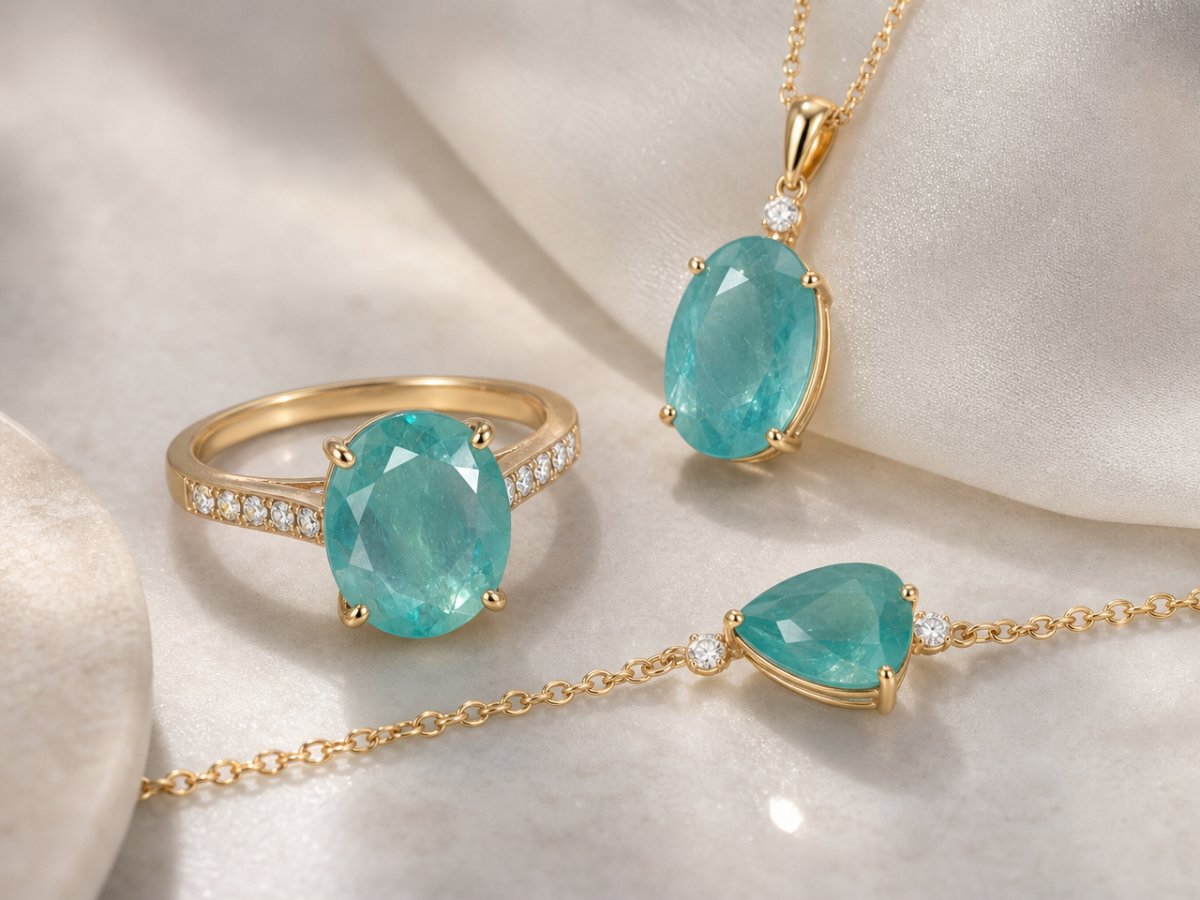
Grandidierite is especially well suited to custom jewelry. Custom design lets the jeweler match the setting to the exact stone shape, size and cut style, which is useful for gems that may appear in ovals, pears, cushions, rounds, octagons and trillions.
Pendants and Necklaces
Pendants are a strong option because they show the gemstone prominently while keeping it away from much of the contact that rings experience. Pear-shaped Grandidierite can be especially attractive in drop pendants, while oval and cushion shapes work well in classic centered designs. Necklaces can also use Grandidierite as a focal gem, particularly when the design highlights its green to teal color.
Rings
Grandidierite can be used in rings, but the design should match the wearer’s lifestyle. A ring worn occasionally or with care is a more conservative choice than one worn daily during active work. If selecting a ring stone, inspect the cut and edges carefully, choose a secure setting and avoid designs that leave exposed points or corners vulnerable to impact.
Metal and Design Considerations
Metal color can influence how the gemstone appears. White metals may emphasize cooler teal or blue impressions, while yellow or warmer metals can create contrast with green and teal stones. This is a design consideration rather than a gemological rule, so compare visual options if possible.
Practical Grandidierite Buying Checklist
Before purchasing Grandidierite, use this checklist to compare options clearly:
- Color: Decide whether you prefer green, teal or a more blue-leaning appearance.
- Photos and video: Look for images that show the stone face-up and, if possible, under different lighting.
- Clarity: Check whether inclusions are visible and whether they affect the beauty of the stone.
- Cut: Faceted stones are common, but cabochons and step cuts may be ideal for certain designs.
- Shape: Ovals and pears are especially important, while cushion, round, octagon and trillion shapes provide additional design choices.
- Measurements: Compare millimeter dimensions, not only carat weight.
- Treatment: Confirm that the stone is described as untreated and keep disclosure details.
- Origin: Note origin if provided, especially Madagascar, but prioritize the individual stone’s appearance.
- Jewelry use: Match the gem to the setting type, with extra care for rings.
- Return and setting plans: Make sure the stone suits your jeweler’s requirements before finalizing a custom design.
Buying Online with Confidence
When buying Grandidierite online, clear information is your best protection. Look for accurate photographs, dimensions, carat weight, shape, cut style and treatment status. If you are selecting a gemstone for a custom piece, share the measurements with your jeweler before ordering or before the return period ends.
GemSelect provides gemstone listings intended to help buyers compare individual stones by their visible appearance and stated details. For a gemstone like Grandidierite, where color and cut are central to the buying decision, comparing several stones side by side can be more useful than looking for a single generalized description.
Summary
Grandidierite is a green to teal to blue borosilicate gemstone with a Mohs hardness of 7.5 and a strong role in custom jewelry. The most important buying factors are color preference, cut quality, clarity, size measurements, treatment disclosure and suitability for the intended jewelry type. Madagascar is the key origin to know, with Namibia and Sri Lanka also associated with the gem.
For most buyers, the best Grandidierite is not defined by one factor alone. Choose the stone that offers the color you enjoy, a cut that displays that color attractively, clear disclosure and dimensions that fit your design. With careful comparison, Grandidierite can be a rewarding choice for distinctive pendants, rings, necklaces and custom jewelry.