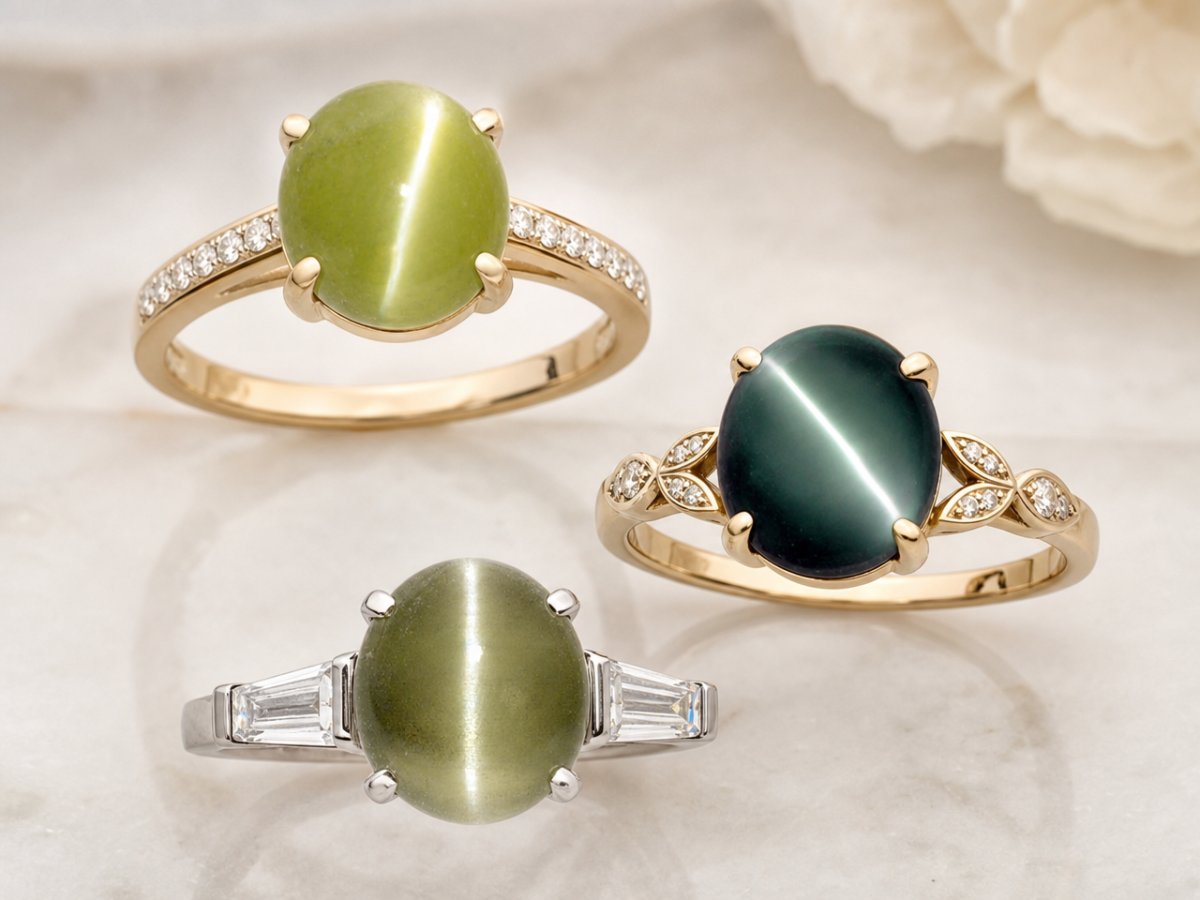


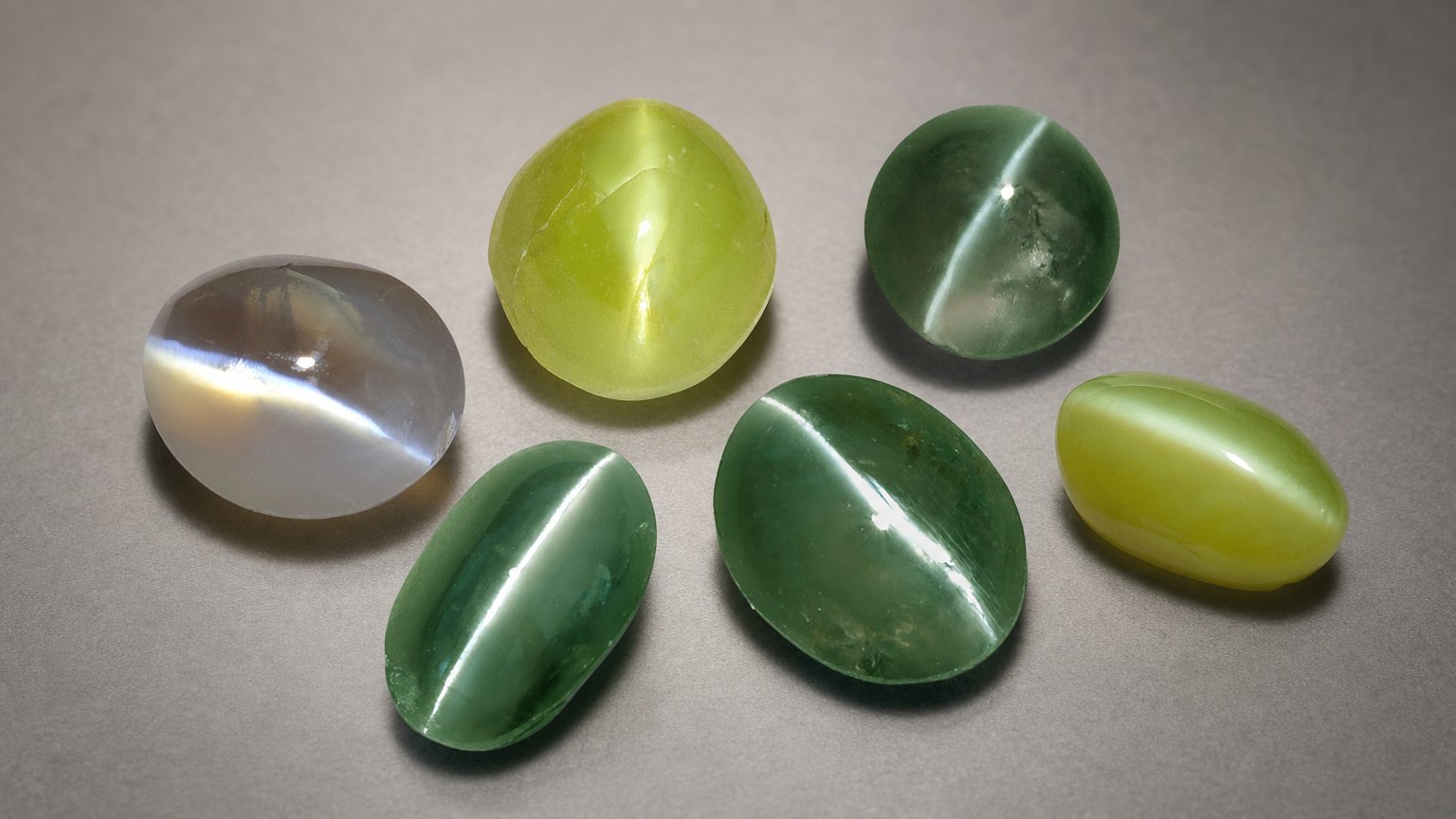
Chrysoberyl cat's eye is bought for one defining feature: a bright, narrow band of light that seems to glide across the surface of the gem. For buyers, the most important decision is not simply color or size, but how well the stone displays this cat's eye effect in a properly cut cabochon.
This guide explains the practical factors to compare before buying chrysoberyl cat's eye, including appearance, cut, durability, treatment status, origin and jewelry suitability.
What Is Chrysoberyl Cat's Eye?
Chrysoberyl cat's eye is a variety of chrysoberyl, a beryllium aluminum oxide with the chemical formula BeAl₂O₄. It crystallizes in the orthorhombic system and has gemological properties that make it especially suitable for jewelry: a Mohs hardness of 8.5, refractive index of 1.744-1.755 and specific gravity of 3.70-3.80.
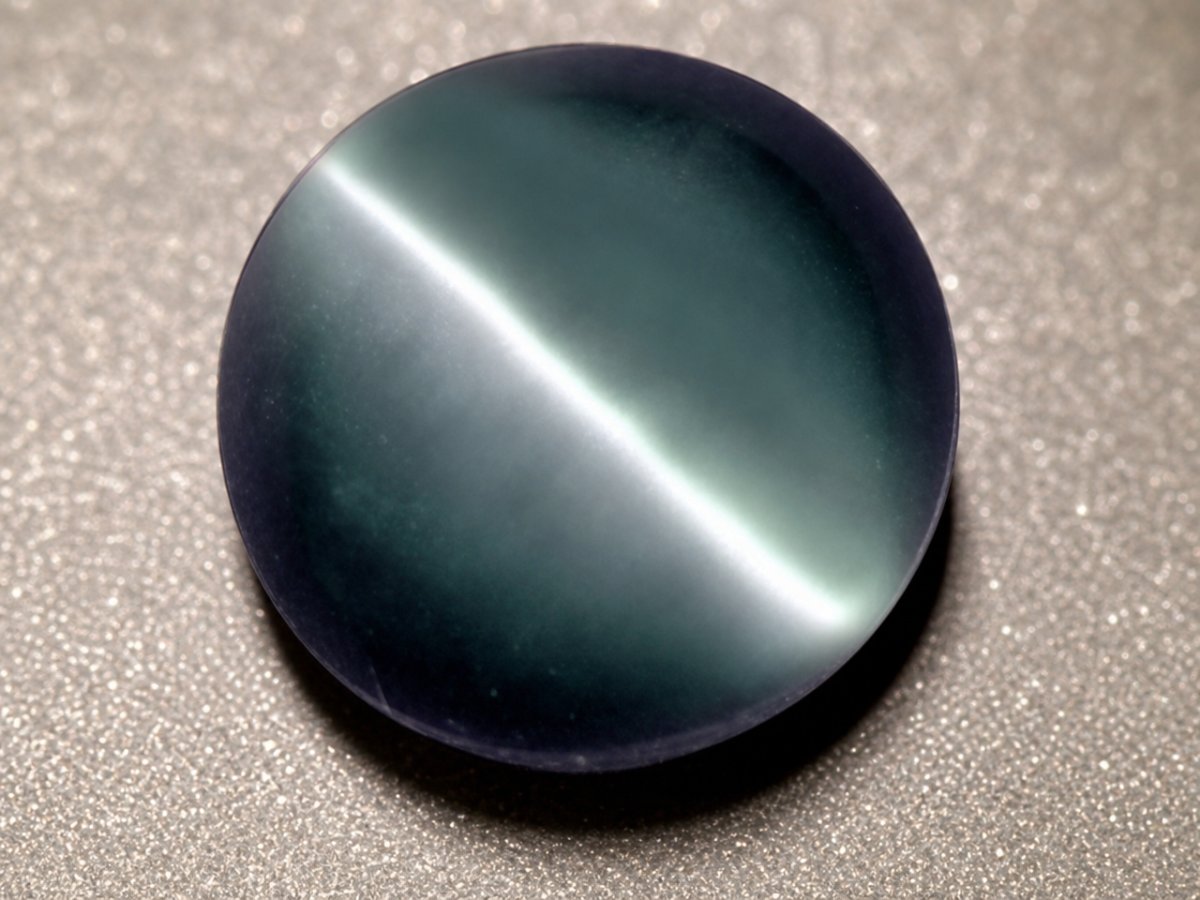
The term "cat's eye" refers to chatoyancy, an optical effect seen when light reflects from fine, parallel internal features within a cabochon-cut gem. In a well-cut stone, this reflection appears as a distinct line that moves as the gem or light source moves.
The Cat's Eye Effect: The Main Buying Factor
When comparing chrysoberyl cat's eye gems, first judge the eye itself. A desirable eye should be clearly visible, reasonably straight and well centered across the dome of the cabochon. It should look sharp rather than blurry, and it should move smoothly when the stone is tilted.
View the gem under a single direct light source if possible. Diffused lighting can make the effect harder to assess. Rotate the stone and check that the eye remains attractive from normal viewing angles, especially if the gem will be mounted in a ring or pendant.
Color and Overall Appearance
Chrysoberyl cat's eye is known in green and yellow colors, with brown also seen and gray occurring less prominently. Color preference is personal, but buyers should look for a body color that complements the cat's eye line rather than hides it.
A strong contrast between the body color and the eye usually makes the effect easier to see. If the stone is too dark, the eye may not stand out clearly; if it is too pale or low in contrast, the effect may appear weak. Balance is the key: choose a color you enjoy, but do not sacrifice a crisp eye for color alone.
Cut: Why Cabochon Matters
Chrysoberyl cat's eye is commonly cut as a cabochon because the rounded surface helps display chatoyancy. Faceting is not the usual choice for this optical effect; the dome of the cabochon is what allows the moving line of light to be seen clearly.
Oval and round shapes are common and practical choices. Cushion shapes may also be available, while freeform cuts are less standard. Whatever the outline, inspect the dome: it should be smooth and well proportioned, not overly flat or uneven. The eye should sit across the highest part of the dome rather than drifting awkwardly to one side.
Clarity and Surface Quality
With chrysoberyl cat's eye, clarity should be judged differently from transparent faceted gems. The internal features that help create chatoyancy are part of the gem's visual character. The question is whether any inclusions, cracks or surface-reaching features distract from the eye or affect durability.
Look for a clean, polished surface and an attractive, uninterrupted eye. Small internal features may be acceptable if they do not weaken the appearance or interfere with the line of light.
Durability and Jewelry Use
With a Mohs hardness of 8.5, chrysoberyl cat's eye is a durable gemstone and suitable for many jewelry styles. It is a strong choice for rings and pendants, where the cat's eye effect can be easily viewed. It can also be used in earrings and necklaces, and in selected designs such as bracelets, brooches and cufflinks.
For rings and bracelets, choose protective settings that shield the cabochon from hard knocks. Although chrysoberyl is hard, any gemstone can be chipped or damaged by impact. Pendants and earrings usually face less abrasion and are excellent options for showing the moving eye effect.
Treatments and Buying Confidence
Chrysoberyl cat's eye is commonly sold as untreated. Buyers should still check the treatment disclosure for the specific stone they are considering. A clear listing should identify the gem as chrysoberyl cat's eye and state its treatment status.
When purchasing online from GemSelect or another gemstone supplier, compare photos carefully and review the stone's dimensions, weight, shape and treatment information. For cat's eye gems, images and videos are especially useful because the visual effect is the heart of the gem.
Origins
Important sources for chrysoberyl cat's eye include Brazil and Sri Lanka, with additional material known from India, Madagascar, Myanmar, Tanzania and Zambia. Origin can be interesting to collectors, but for most jewelry buyers, the visible quality of the eye, the body color, cut and overall condition should carry more weight than country of origin alone.
How to Choose the Right Chrysoberyl Cat's Eye
Start with the eye: choose a stone with a sharp, centered and lively line. Next, compare body color and contrast. Green and yellow stones are well known, while brown and gray tones may appeal to buyers who prefer warmer or more subdued colors.
Then evaluate the cabochon cut. The outline should suit your jewelry design, and the dome should support the eye effect. Finally, confirm practical details: untreated status, measurements, durability for the intended setting and whether the shape works for your design. A beautiful loose gem is only the right purchase if it also suits how it will be worn.
Summary
Chrysoberyl cat's eye is a distinctive and durable gemstone where the moving eye effect is the central buying feature. A well-chosen stone combines a clear, centered eye with pleasing green, yellow, brown or gray body color, a well-made cabochon cut and suitable size and shape for the intended jewelry. Focus on appearance first, then confirm treatment disclosure, origin information and setting suitability before you buy.