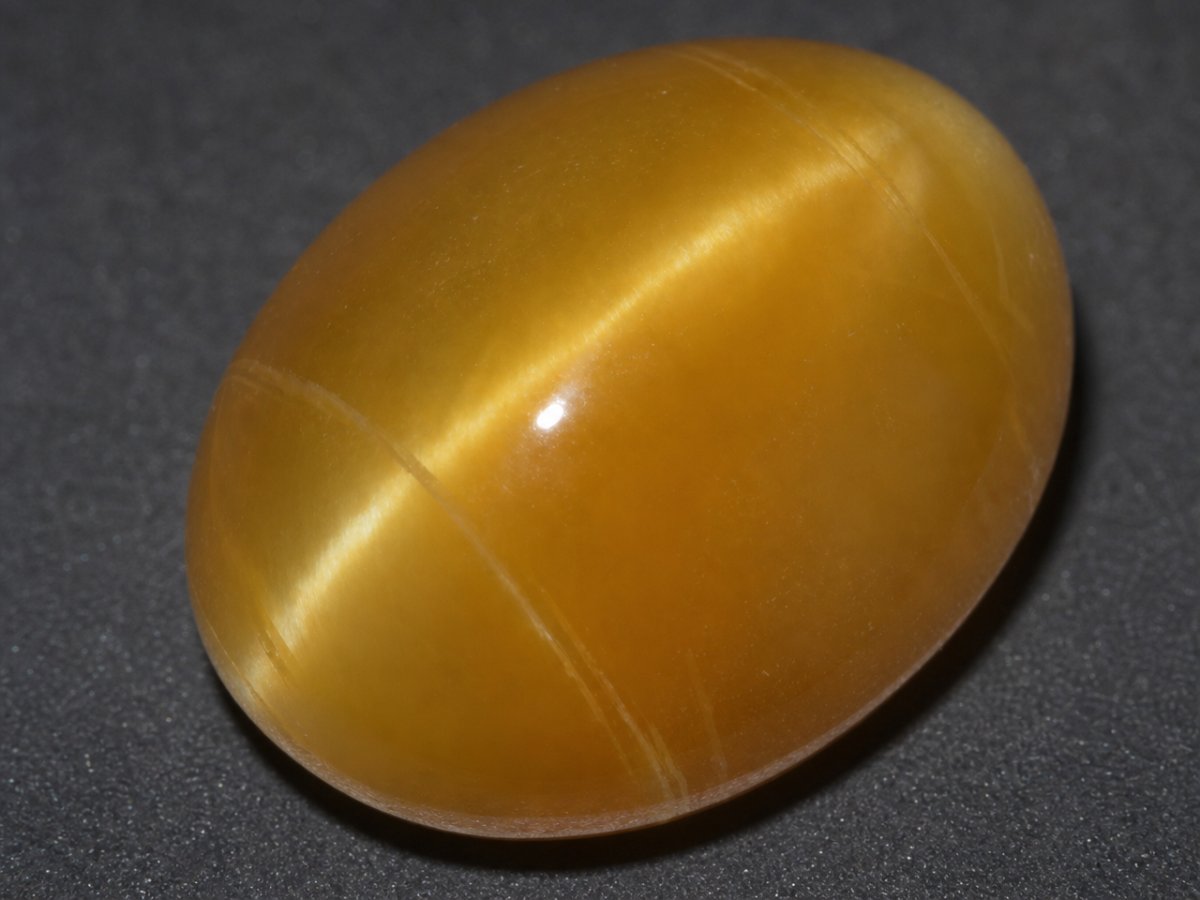


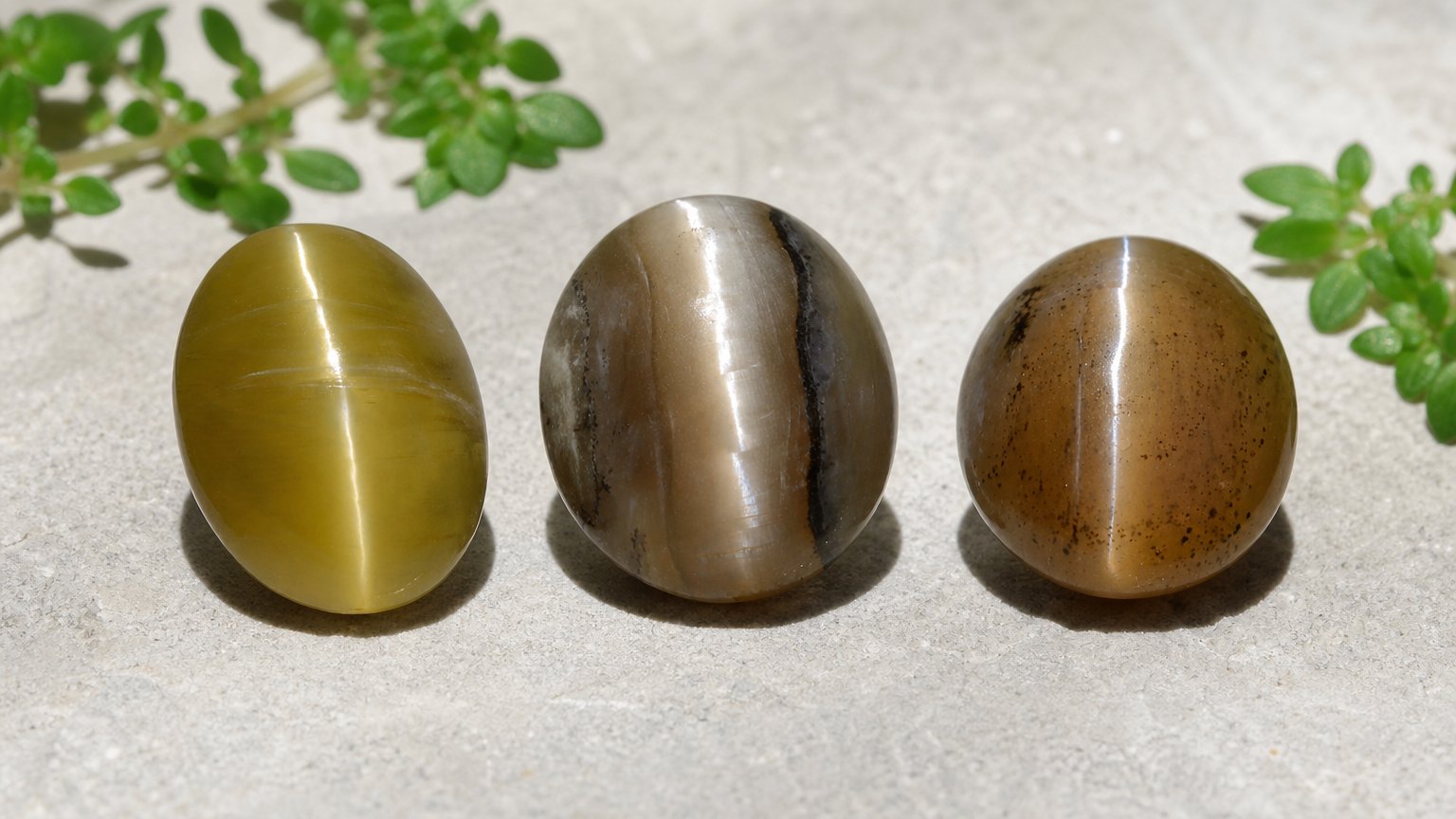
Cat's Eye Opal is an opal variety valued for its distinctive cat's eye effect: a bright, narrow band of light that appears to glide across the surface when the stone is moved. For buyers, the most important considerations are the strength and placement of this eye, the body color, the quality of the cabochon cut and whether the gem is suitable for the intended jewelry design.
This guide explains the practical details to check before buying Cat's Eye Opal, whether you are choosing a single collector's stone, a pendant gem, a ring stone or matching pieces for jewelry production.
What Is Cat's Eye Opal?
Cat's Eye Opal is a variety of opal, a hydrated silica gem with the chemical formula SiO₂·nH₂O. Unlike crystalline gemstones, opal is amorphous, meaning it does not have a regular crystal structure. Its gemological properties include a Mohs hardness of 5.5 to 6.5, refractive index of 1.37 to 1.52 and specific gravity of 1.98 to 2.20.
The feature that separates Cat's Eye Opal from ordinary opal is chatoyancy, the optical effect commonly called the cat's eye. This effect is best seen in a domed cabochon, where a concentrated line of reflected light appears across the top of the stone.
How to Judge the Cat's Eye Effect
The cat's eye is the most important visual feature to assess. A desirable stone should show a clear, visible line under direct light. The eye should be reasonably centered, easy to see and able to move across the dome as the gemstone is tilted.
When comparing stones, look for three practical qualities:
- Sharpness: A crisp eye usually looks more dramatic than a broad or blurry band.
- Placement: A centered eye is generally more attractive, especially for rings and pendants where symmetry matters.
- Visibility: The effect should be noticeable without needing extreme lighting or a very specific viewing angle.
Because chatoyancy depends strongly on the cut, two stones with similar color can look very different. Always evaluate Cat's Eye Opal in motion, not from a single still image alone when possible.
Color and Appearance
Cat's Eye Opal is known in warm body colors such as brown, gold and yellow, with orange also seen. Darker appearances such as black and gray occur as well, while green and red are less emphasized colors. The best choice depends on the design goal: golden and yellowish stones often give a warm, classic look, while brown, gray or black stones can appear more understated or contemporary.
Color should be considered together with the cat's eye. A strong eye on a slightly less vivid body color may be more visually appealing than a richer colored stone with a weak or poorly placed eye. For jewelry, choose a color that contrasts well with the metal and setting style; for example, a golden or yellow Cat's Eye Opal can stand out beautifully in simple pendant designs.
Cut, Shape and Proportions
Cat's Eye Opal is most commonly cut as a cabochon. This smooth, domed cut is essential for showing the cat's eye effect properly. Faceted cuts are not the usual choice for this gemstone because the optical band is displayed best across a curved surface.
Oval and round shapes are especially common and practical. Ovals work well in rings, pendants and necklaces because they create an elegant line and can make the eye appear longer. Round cabochons are useful for balanced, symmetrical designs and matching pairs. Cushion, freeform and pear shapes may also be found and can be attractive when the eye is well aligned with the shape.
When inspecting a cabochon, check that the dome is smooth, the outline is pleasing and the base sits well for setting. A dome that is too flat may not display the eye strongly, while an uneven dome can make the eye appear distorted.
Clarity and Surface Quality
For Cat's Eye Opal, buyers should focus less on transparent clarity and more on how clean and attractive the surface appears. The stone should have a good polish, an appealing body color and a cat's eye that is not interrupted by obvious surface issues.
Small natural features may be acceptable if they do not distract from the eye or weaken the appearance of the cabochon. However, chips, cracks, dull polish or damage near the top of the dome are more concerning because they affect both beauty and durability.
Origins
Cat's Eye Opal is associated with several origins, with Madagascar and Tanzania being important sources. Brazil is also known, while Australia and the United States are additional origins. For most buyers, visual quality should matter more than origin alone unless the source is part of a collection focus.
If origin is important to you, buy from a seller that provides clear product information. At GemSelect, individual gemstone listings are designed to help buyers compare stones by their actual appearance, measurements and disclosed details rather than relying on origin as the only decision factor.
Treatments and Disclosure
Cat's Eye Opal is commonly offered as untreated. Treatment disclosure is important with any gemstone because enhancements can affect care expectations, pricing and buyer confidence. When purchasing, look for clear treatment information and avoid listings that leave this detail vague.
If you are buying for a custom jewelry project or resale, keep the treatment status with your records. This is especially useful when matching stones or communicating gemstone details to a client.
Durability and Care
With a Mohs hardness of 5.5 to 6.5, Cat's Eye Opal is softer than many everyday jewelry stones. It can be worn in jewelry, but it should be treated with reasonable care. Pendants, necklaces, earrings and brooches are generally lower-impact choices because they are less exposed to knocks than rings.
Cat's Eye Opal can be used in rings, but protective settings are recommended, especially for frequent wear. Bezel settings or designs with good edge protection can help reduce the risk of chipping. Avoid wearing opal rings during heavy work, sports or activities where the stone may be struck.
For care, clean gently with a soft cloth and avoid harsh chemicals, ultrasonic cleaning, steam cleaning and sudden temperature stress. Store Cat's Eye Opal separately from harder gems to prevent scratches.
Best Jewelry Uses
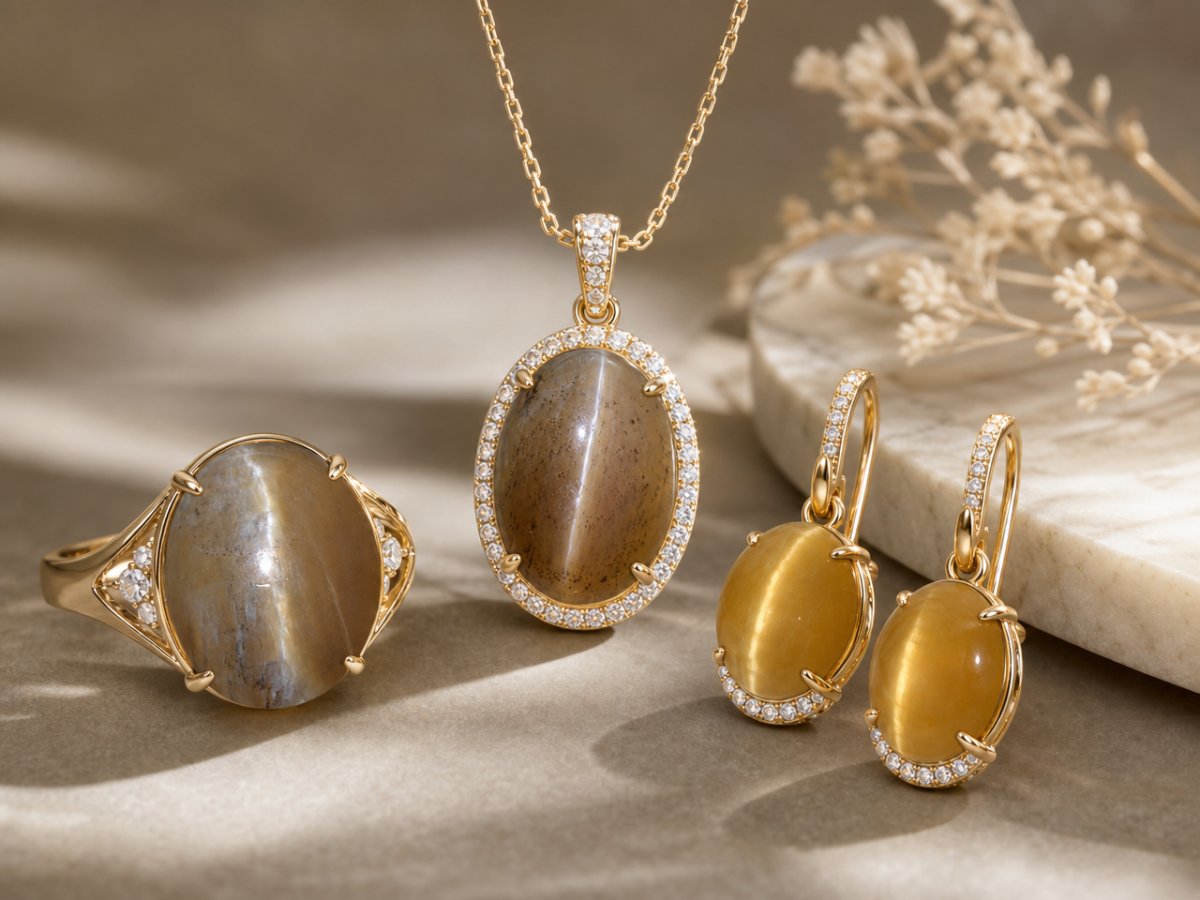
Cat's Eye Opal is especially suitable for pendants and rings, where the moving eye effect can be appreciated easily. In a pendant, the stone is protected from much of the impact that rings receive, making it a practical choice for regular enjoyment. In rings, the gem should be set thoughtfully and worn with care.
Necklaces, earrings and brooches are also good options. Earrings may require careful matching if you want a pair, because both color and the direction of the eye should look balanced. Freeform cabochons can be attractive in artistic brooches or one-of-a-kind designer pieces.
Practical Buying Checklist
Before choosing a Cat's Eye Opal, consider the following points:
- Cat's eye quality: Choose a stone with a visible, well-positioned and attractive eye.
- Color: Decide whether you prefer warm gold, yellow, brown or orange tones, or a darker black or gray appearance.
- Cut: Look for a well-polished cabochon with a smooth dome that supports the eye effect.
- Shape: Oval and round cabochons are versatile; freeform and pear shapes suit more individual designs.
- Surface condition: Avoid stones with obvious chips, cracks or polish problems.
- Jewelry use: Choose pendants, necklaces, earrings or brooches for easier wear; use protective settings for rings.
- Treatment disclosure: Confirm whether the gemstone is untreated and keep that information for your records.
- Measurements: For jewelry, check dimensions as well as carat weight, because cabochon height and outline affect setting fit.
Summary
A good Cat's Eye Opal should combine an appealing body color with a clear, attractive eye and a well-shaped cabochon. Brown, gold and yellow tones are especially associated with this gemstone, while darker and more unusual colors can offer different design possibilities. Because opal is moderately soft, jewelry style and setting protection are important buying decisions.
For the most confident purchase, compare stones by appearance, cut quality, dimensions, treatment disclosure and intended use. A stone with a strong eye and a durable, well-planned setting will usually be the most satisfying choice for both collectors and jewelry wearers.