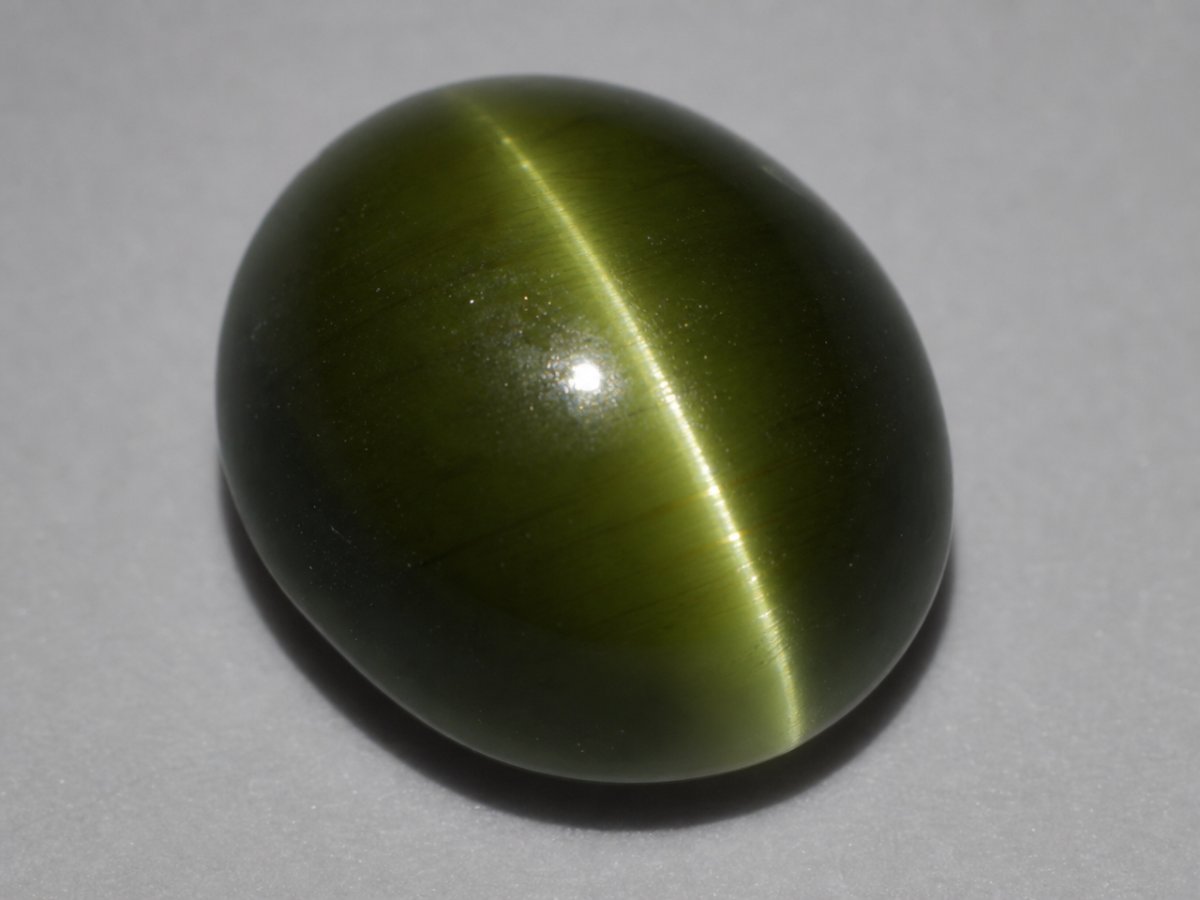


Cat's Eye Apatite is chosen for its chatoyancy: the narrow band of light that seems to glide across the surface of the gem like a cat's eye. For buyers, the most important decisions are not only color and size, but also the strength of the eye, the quality of the cabochon cut and whether the gem is suitable for the jewelry design you have in mind.
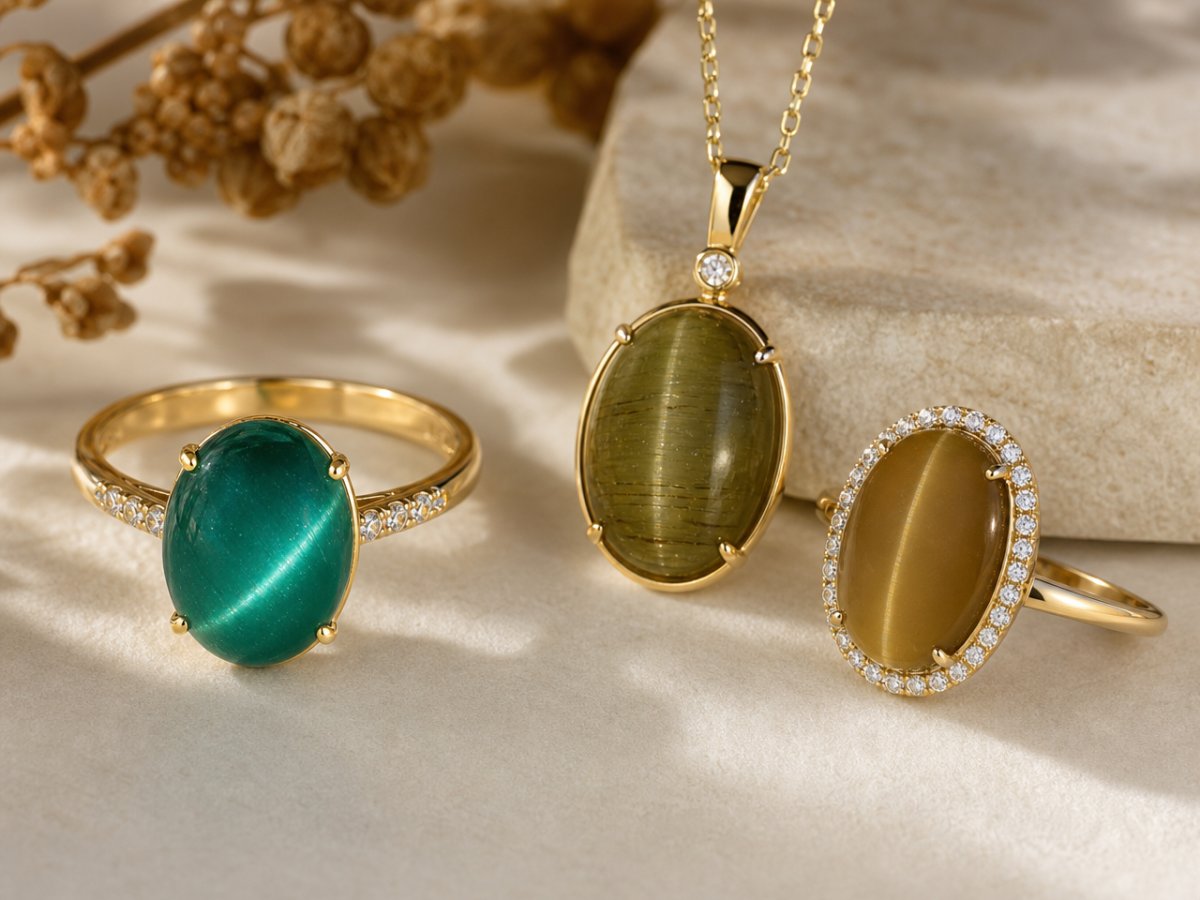
Because apatite has a Mohs hardness of 5, Cat's Eye Apatite is best selected with realistic expectations about wear. It can make distinctive jewelry, especially pendants, necklaces and earrings, but rings need more care and protective settings.
What Is Cat's Eye Apatite?
Cat's Eye Apatite is a chatoyant variety of apatite, a calcium phosphate mineral with the chemical formula Ca₅(PO₄)₃(F,Cl,OH). The cat's-eye appearance is revealed when the gem is cut as a cabochon rather than faceted. A cabochon has a smooth, domed top, which allows light to reflect from aligned internal features and create a bright line across the stone.
Apatite crystallizes in the hexagonal crystal system and has a refractive index of 1.632-1.649 and specific gravity of 3.16-3.23. These gemological properties are useful for identification, but most buyers will judge an individual Cat's Eye Apatite by appearance, cut quality, size and condition.
Color and Cat's-Eye Appearance
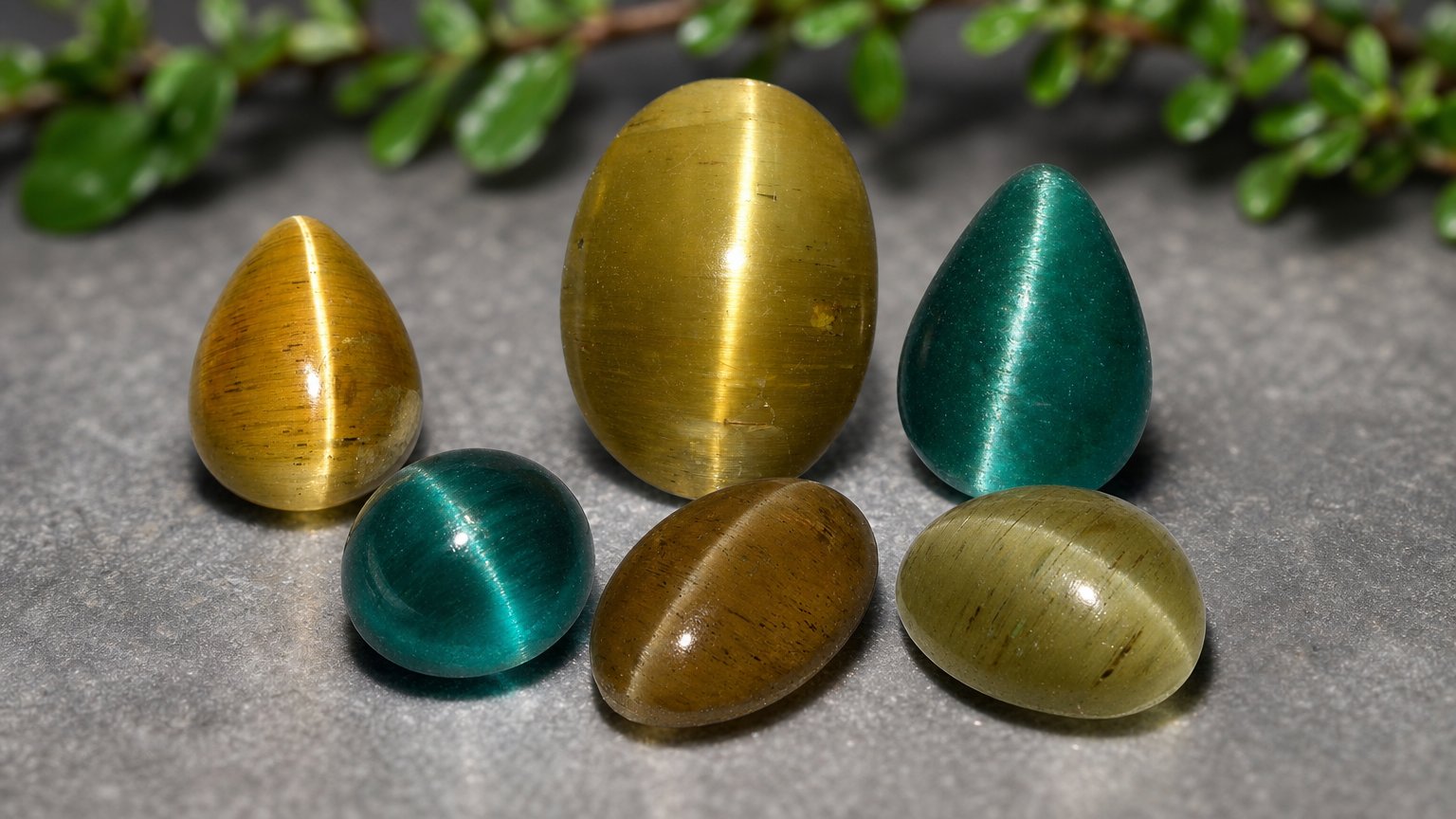
Cat's Eye Apatite is known in brown, yellow, gray and blue. Brown is especially associated with this gem, while yellow is also a common and attractive option. Gray and blue stones may appeal to buyers looking for a cooler or more unusual look.
Color should be judged together with the cat's-eye effect. A good stone should show a visible, well-positioned band of light on the dome. When comparing stones, look for:
- A sharp eye: A narrow, distinct line is usually more attractive than a broad or blurry one.
- Good centering: The eye should run across the top of the cabochon rather than sit too far to one side.
- Movement: The line should shift as the stone or light source moves.
- Balanced body color: The color should complement the eye rather than make it difficult to see.
Very dark body color can reduce the visibility of the eye, while very pale color may make the gem look less dramatic. The best choice depends on whether you prefer strong contrast, warm earthy tones or a softer appearance.
Cut, Shape and Size Considerations
Cabochon is the essential cut style for Cat's Eye Apatite. Faceting is not the right choice when the goal is to display the cat's-eye effect. The dome should be smooth and even, with enough height to focus the light line clearly.
Oval cabochons are especially common and practical because they display the eye well and fit many jewelry designs. Round shapes are also seen, while freeform shapes can appeal to designers seeking a more individual look. Cushion shapes may be available but are less central to the typical appearance of this gem.
When assessing size, do not focus only on carat weight. Cabochons can vary in dome height and depth, so two stones of the same weight may look different when set. For matched earrings or symmetrical designs, compare face-up size, shape and eye direction as well as carat weight.
Origins
Cat's Eye Apatite is associated with several important sources, including Kenya and Myanmar, with Brazil and Madagascar also known for material. India and Sri Lanka are additional origins connected with this gem.
For most buyers, origin is secondary to visible quality. A well-cut cabochon with attractive color and a distinct eye is usually more meaningful for jewelry selection than origin alone. If origin is important to your purchase, choose a seller that clearly discloses available source information.
Treatments and Buying Confidence
Cat's Eye Apatite is commonly offered as untreated. This is useful for buyers who prefer gems whose appearance is not dependent on enhancement. As with any gemstone purchase, treatment disclosure should be clear before you buy.
When shopping online, review the photos carefully and check whether the cat's-eye effect is visible in the listed images. Since chatoyancy depends strongly on lighting and orientation, multiple images or a clear description can help you understand how the stone may appear in person.
Durability and Jewelry Use
With a Mohs hardness of 5, Cat's Eye Apatite is softer than many everyday jewelry stones. It can be scratched by harder materials and should be protected from hard knocks. This does not prevent it from being used in jewelry, but it does affect the best type of setting and how often the piece should be worn.
Pendants and necklaces are excellent choices because they receive less impact than rings. Earrings are also suitable because they are less exposed to abrasion. Rings are possible, especially collector rings or occasional-wear designs, but they should be worn carefully. A protective setting can help reduce contact with hard surfaces.
For care, store Cat's Eye Apatite separately from harder gemstones and avoid rough handling. Clean gently with a soft cloth and mild soapy water when needed. Avoid harsh cleaning methods, especially when the setting or stone condition is uncertain.
How to Choose Cat's Eye Apatite
Use the following priorities when comparing stones:
- First, evaluate the eye. The cat's-eye line is the defining feature. Choose a stone with a visible, attractive line that suits the design.
- Then choose color. Brown and yellow are key colors, while gray and blue can offer a different style. Pick a color that still allows the eye to stand out.
- Inspect the cabochon cut. Look for a smooth dome, pleasing outline and good symmetry, especially in oval and round stones.
- Consider jewelry suitability. Pendants, necklaces and earrings are safer choices for regular wear; rings require more caution.
- Check disclosure. Confirm that the stone is represented accurately, including treatment status and any available origin information.
When browsing GemSelect or comparing any reputable seller's inventory, focus on the individual gem rather than relying only on name, carat weight or origin. The best Cat's Eye Apatite for you is the one with the right balance of eye strength, color, shape, size and intended use.
Summary
Cat's Eye Apatite is a distinctive apatite gemstone valued for its chatoyant eye and warm to cool color range. The strongest buying factors are the sharpness and placement of the eye, the quality of the cabochon cut and the suitability of the stone for the planned jewelry. Its Mohs hardness of 5 makes it better suited to pendants, necklaces and earrings than heavy-use rings, but careful setting and wear can make it a rewarding choice for collectors and jewelry designers.