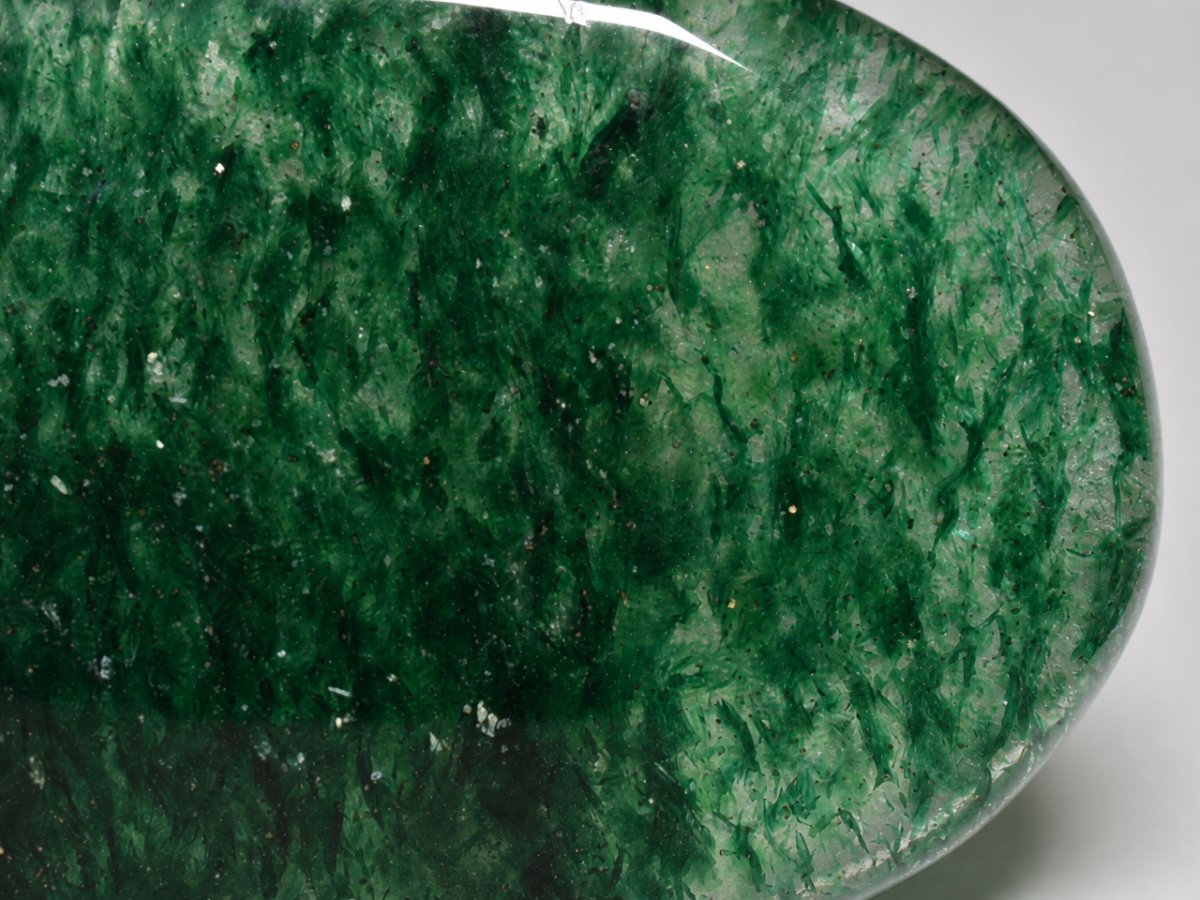


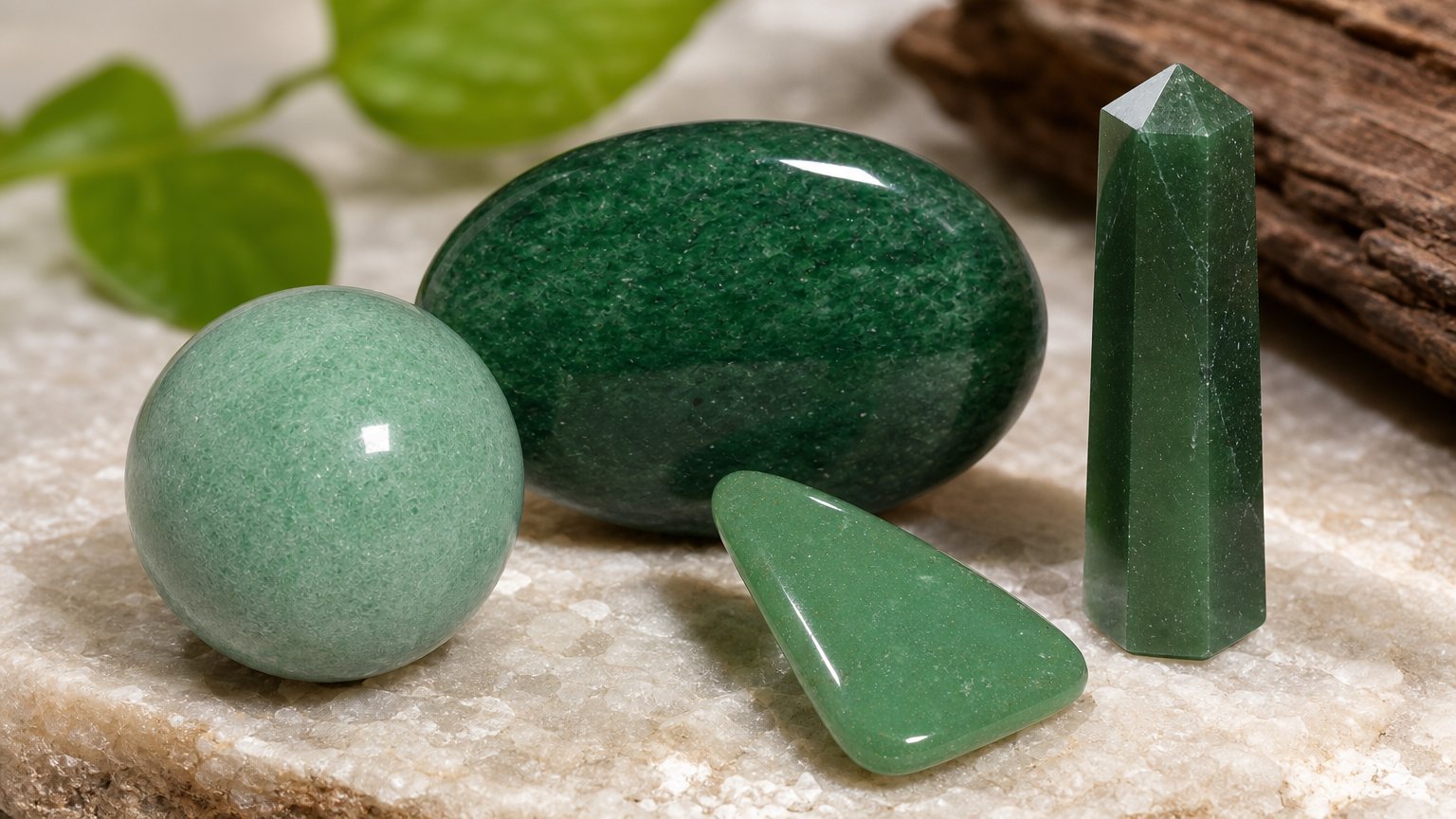
Aventurine is best known as a green gemstone with a natural, earthy character, although it can also occur in red, yellow, blue, brown and orange. As a variety associated with quartz and quartzite, it has the familiarity of the quartz family while offering a distinctive ornamental appeal.
For many people, aventurine's meaning comes from its color, its smooth polished appearance and its long-standing role as a decorative gemstone. This guide focuses on the gemstone's cultural and symbolic appeal, while clearly separating supported facts from personal, folkloric or modern interpretations.
What Aventurine Represents
Aventurine is commonly appreciated as a gemstone of natural beauty, simplicity and quiet character. Its most recognized color is green, a color that in general symbolism is often connected with nature, renewal and balance. These associations come from broad cultural color symbolism rather than from a single documented historical tradition specific to aventurine.
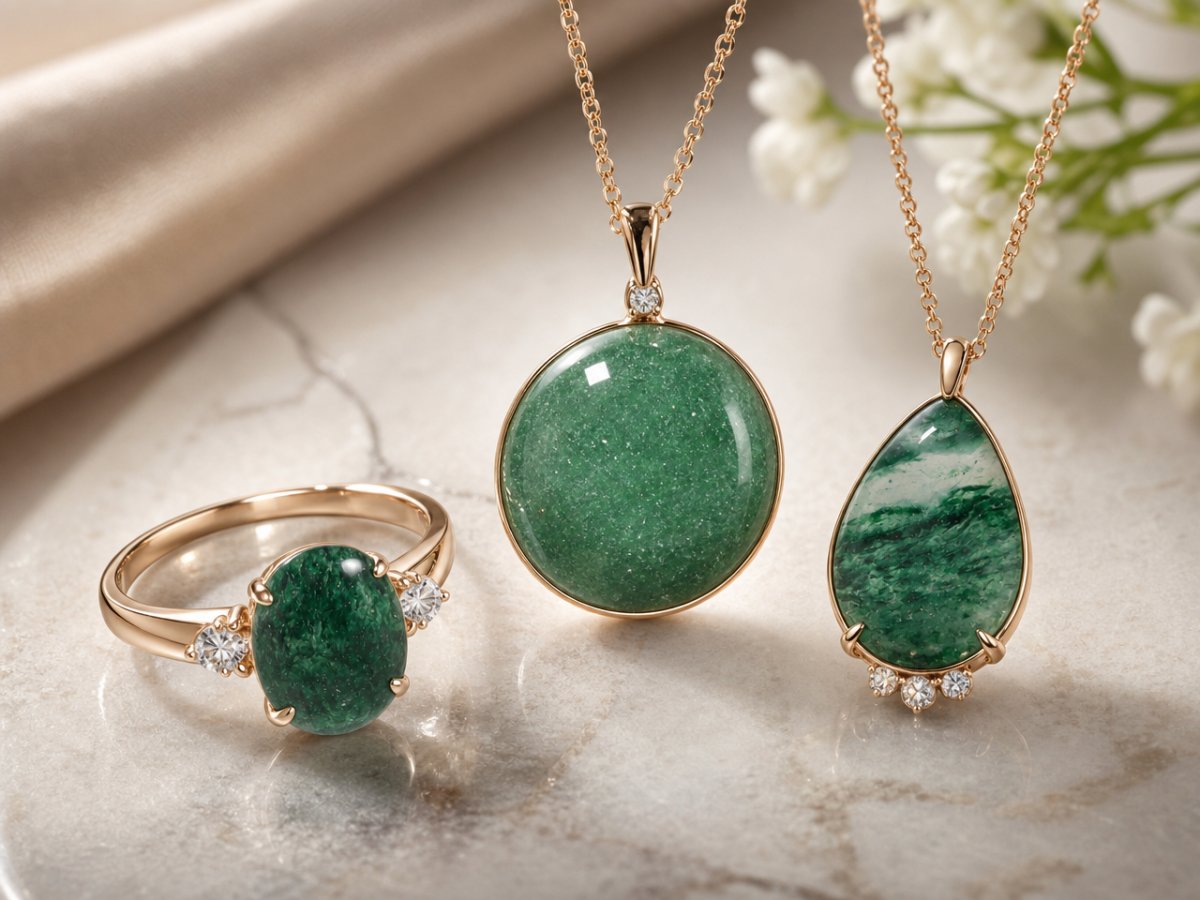
Because aventurine is often cut as cabochons, carvings and polished forms, its meaning is also shaped by touch and appearance. Smooth, rounded surfaces give the stone a calm visual presence, making it popular for pendants, necklaces and other jewelry that keeps the gemstone visible and close to the wearer.
Aventurine and the Quartz Family
Aventurine is a variety of quartz and is associated with quartzite. This connection matters symbolically because quartz gemstones have been widely valued as ornamental materials across many cultures. Aventurine's identity within this broader mineral family helps explain its appeal as a familiar yet distinctive gemstone.
Its composition is silicon dioxide, written as SiO₂, the same basic chemical formula associated with quartz. For a meaning and history guide, the important point is not the technical data itself, but the way aventurine combines quartz-family familiarity with color and texture that feel more organic and decorative than highly transparent gems.
Color and Symbolic Impression
Green aventurine is the best-known and most strongly identified form of the gemstone. Its green color gives it a fresh, natural look that many buyers choose for understated jewelry and meaningful personal pieces.
Other aventurine colors include red, yellow, blue, brown and orange. These colors can change the emotional impression of the stone: warmer red, yellow and orange pieces can feel more expressive, while blue and brown varieties often appear quieter or more earthy. These are visual and design interpretations, not fixed historical meanings.
Historical and Cultural Context
The verified historical picture for aventurine is best understood through its identity as an ornamental quartz-related gemstone and through its important sources. Notable origins include Brazil and India, with additional material associated with China, Russia and Tanzania. These regions contribute to aventurine's modern availability and its presence in the international gemstone trade.
Unlike some gemstones that are closely tied to a specific ancient empire, royal collection or religious tradition, aventurine's significance is more general and material-based: it is valued for color, polish and decorative beauty. Where legends or spiritual meanings are attached to aventurine today, they should be understood as traditions or personal beliefs rather than documented scientific facts.
Folklore, Tradition and Modern Belief
In modern gemstone culture, aventurine is often chosen for its gentle appearance and the personal meaning a wearer gives to it. Some people use gemstones symbolically in meditation, intention-setting or personal rituals. Such uses belong to folklore, spirituality or individual practice and should not be treated as medical or scientific claims.
This distinction is important. Aventurine can be meaningful as a gift, keepsake or personal symbol without requiring unsupported claims. Its significance may come from its green color, its connection to nature, its quartz identity, or simply the memory attached to a particular piece.
Aventurine Today
Today, aventurine is appreciated by gemstone buyers, jewelry designers and collectors who like colored gemstones with an organic character. It is commonly seen in necklaces, pendants, rings, brooches and earrings, especially in polished forms that emphasize its color and surface.
Many aventurine gemstones are untreated, which can add to their appeal for buyers who prefer gems presented in their natural state. In the context of meaning, this supports the way aventurine is often viewed: a gemstone valued for straightforward natural beauty rather than dramatic rarity or heavy enhancement.
Conclusion
Aventurine's meaning is rooted in its green color, quartz-family identity and accessible ornamental beauty. Its strongest modern symbolism is personal and visual: nature, calmness, simplicity and the charm of a polished gemstone with an earthy character. While aventurine may appear in modern folklore and spiritual traditions, those meanings should be understood as cultural or personal interpretations, not proven facts.