


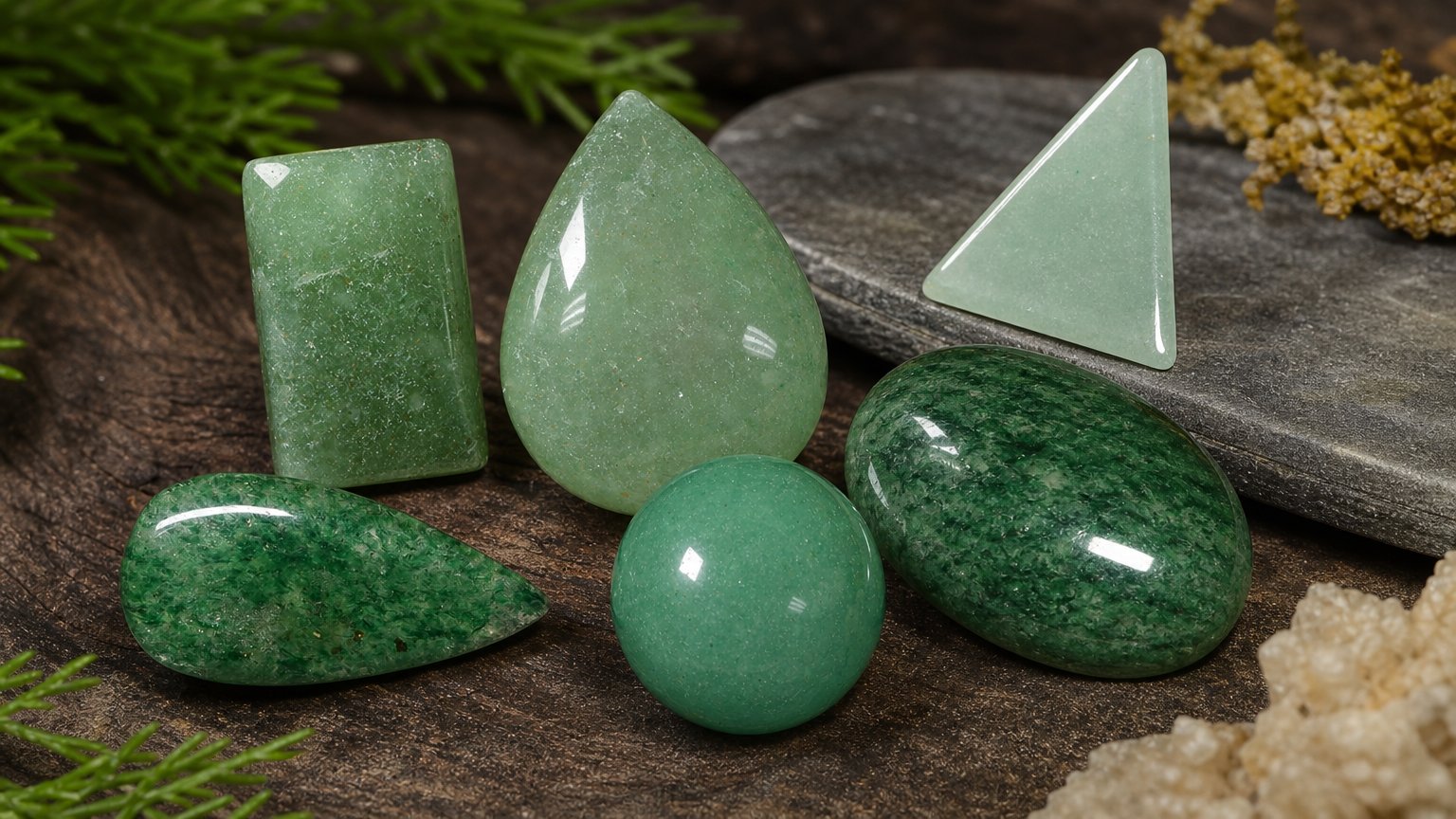
Aventurine is a practical and attractive gemstone for buyers who want natural color, wearable durability and versatile design options. It is best known in green, but it can also occur in red, yellow, blue, brown and orange. For many buyers, aventurine is appealing because it works well in simple everyday jewelry as well as larger statement pieces, especially necklaces and pendants.
This buying guide explains the main factors to consider before purchasing aventurine: color, cut, shape, size, durability, treatments, origin and jewelry use. The goal is to help you compare stones confidently and choose the right gem for your project, collection or finished jewelry piece.
What Is Aventurine?
Aventurine is a quartz-family gemstone with the chemical formula SiO₂. It is associated with quartzite and belongs to the broader quartz group, one of the most familiar mineral families used in gemstones. Aventurine has a Mohs hardness of 7, a refractive index of 1.544–1.553 and a specific gravity of 2.64–2.69. Its crystal system is trigonal.
For buyers, these gemological details are useful because they help explain how aventurine behaves in jewelry. A hardness of 7 gives it good resistance to scratching compared with many softer decorative stones. At the same time, like any gemstone, it should still be protected from hard knocks, rough handling and poor settings.
Why Buyers Choose Aventurine
Aventurine is often selected for its approachable beauty and design flexibility. It is commonly cut as cabochons, which show the stone with a smooth, rounded top rather than a faceted surface. This style suits the material well and makes it easy to use in pendants, necklaces, rings, earrings and brooches.
Buyers may also choose aventurine because it is commonly available untreated. When a gemstone is untreated, its appearance has not been altered by a treatment process. This is an important point for buyers who prefer natural, straightforward gem descriptions. As with any gemstone purchase, you should still check the seller's listing or disclosure for the specific stone you are considering.
Aventurine Color: What to Look For
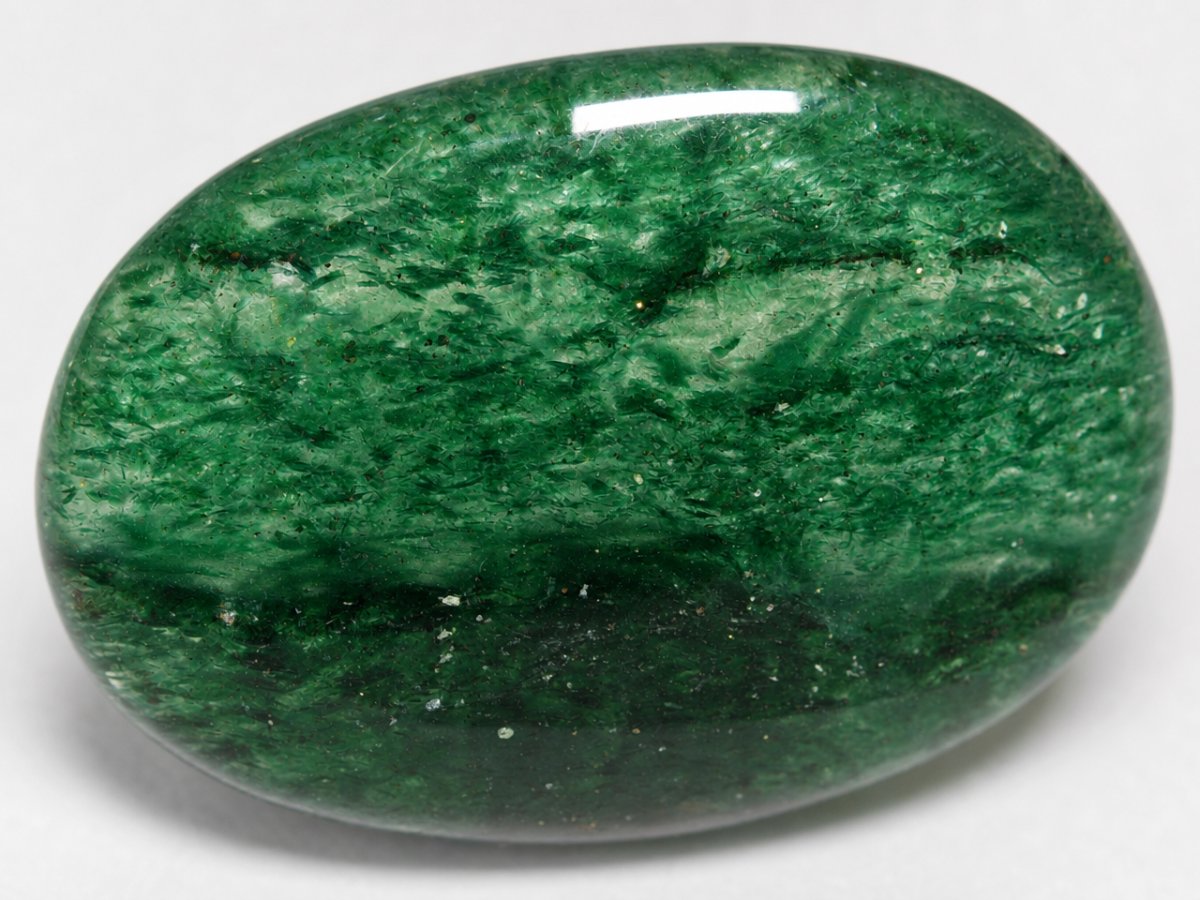
Color is the first characteristic most buyers notice in aventurine. Green is the most recognized and prominent color for this gemstone, and it is often the starting point for shoppers comparing aventurine gems. When choosing green aventurine, look for a color that suits your intended design: softer greens can look calm and understated, while richer greens can create a stronger visual focal point.
Aventurine is also known in red, yellow, blue, brown and orange. Red and yellow aventurine can be good choices for warm-toned jewelry designs, while blue, brown and orange examples offer different styling possibilities. Because color preference is personal, the most important buying step is to compare the actual stones rather than relying only on a color name.
Color Consistency
When comparing aventurine, pay attention to how evenly the color appears across the gem. Some buyers prefer a uniform look, especially for matched earrings, bead strands or symmetrical jewelry designs. Others may prefer natural variation if it gives the stone more character. Neither choice is automatically better; it depends on the jewelry style and the buyer's taste.
Matching Stones for Jewelry
If you are buying multiple aventurine stones for a necklace, earrings or a set of jewelry, matching is important. Compare the stones for color family, tone, shape and size. A pair of earrings will usually look best when the two stones are close in appearance, while a necklace may allow more variation if the design is intentionally graduated or mixed.
Cut and Shape
Cut is one of the most important practical factors when buying aventurine. The most common cut is the cabochon. A cabochon has a polished, domed surface and a flat or gently curved back, depending on the stone and design. This cut is popular because it gives aventurine a smooth, wearable profile and works well in many jewelry settings.
Aventurine may also be found in carving cuts and pencil forms. Carvings can be appealing for collectors, pendants and decorative jewelry, while pencil cuts are more specialized and may suit particular design concepts. For most jewelry buyers, however, cabochons remain the most important category to understand.
Popular Shapes
Common aventurine shapes include oval, round and cushion. These shapes are versatile and easy to use in standard jewelry settings. Oval cabochons are especially useful for pendants and rings because they create an elegant outline without being too difficult to set. Round stones are excellent for earrings, simple rings and symmetrical designs. Cushion shapes offer a softer square or rectangular look and can be attractive in both modern and vintage-inspired jewelry.
Fancy shapes and pear shapes are also found and can make a piece feel more distinctive. Baguette and trillion shapes may appear as well, though they are less central to typical aventurine buying. When choosing a shape, consider both appearance and setting practicality. A shape that looks beautiful loose should also fit securely into the jewelry design you plan to use.
Evaluating Cabochon Quality
When evaluating an aventurine cabochon, look at the outline, dome, polish and base. The outline should be symmetrical unless the design is intentionally freeform. The dome should look balanced, not too flat unless the setting requires a low profile. The surface should be well polished, with no distracting scratches or dull areas. The back should be suitable for setting, especially if the stone will be mounted in a bezel or other close-fitting design.
Size and Proportion
Aventurine is suitable for a wide range of sizes. Smaller stones can be used for earrings, delicate rings or accent designs, while larger cabochons are well suited to pendants, necklaces and brooches. Size should be chosen according to both design and wearability.
For pendants and necklaces, larger aventurine stones can work well because these jewelry types are less exposed to impact than rings. For rings, consider a size that is comfortable and not too raised above the finger. A large high-domed cabochon may look attractive but can be more likely to catch on objects if worn frequently.
When buying online, compare the measurements in millimeters rather than relying only on carat weight. Cabochons with the same weight can appear different in face-up size depending on their depth and shape. GemSelect listings typically provide dimensions, which are especially helpful when planning a custom setting or matching stones.
Clarity and Surface Condition
Aventurine is generally judged more by overall appearance than by the type of clarity grading used for transparent faceted gemstones. For buying purposes, inspect the face-up look of the stone. Choose a gem that has an attractive color, pleasing shape and good polish, and avoid stones with obvious surface damage, open cracks or distracting flaws that affect the intended design.
Because aventurine is commonly cut as a cabochon, surface condition is especially important. A clean polish helps the stone look finished and professional. If the gem will be used in jewelry, also check the edges. Chips or uneven edges can make setting more difficult and may affect the final appearance.
Aventurine Treatments
Aventurine is commonly offered untreated. This means buyers can often find stones whose color and appearance are presented without enhancement. Untreated status is attractive to many collectors and jewelry buyers because it makes the gem description simpler and more transparent.
However, treatment disclosure should always be checked stone by stone. A trustworthy seller should state whether a gem is untreated or if any treatment is known. When buying aventurine, review the product details and ask for clarification if the treatment status is important to you.
Origin: Does It Matter?
Aventurine is known from several origins, with Brazil and India being especially important sources. China is also associated with aventurine, and material is known from Russia and Tanzania as well. Origin can be interesting for collectors and buyers who like to know where their gemstones come from.
For most jewelry buyers, appearance and suitability should matter more than origin alone. A well-cut, attractive aventurine from one locality may be a better purchase for your design than a less suitable stone from another. Unless you are buying specifically for collection purposes, focus first on color, cut, size, polish, treatment disclosure and how the stone will be used.
Gemological Properties and What They Mean for Buyers
The key gemological properties of aventurine help buyers understand its identity and performance. Its chemical formula is SiO₂, connecting it to the quartz family. Its refractive index of 1.544–1.553 describes how the stone bends light, while its specific gravity of 2.64–2.69 relates to density. Its trigonal crystal system is part of its mineral structure.
These figures are most important for identification and gemological reference. For everyday buying, the most practical property is hardness. Aventurine's Mohs hardness of 7 means it has good scratch resistance for many jewelry uses. It should still be worn with normal care, especially in rings and bracelets, where gemstones are more likely to be bumped.
Durability and Care
Aventurine is durable enough for many jewelry styles, particularly necklaces, pendants, earrings and brooches. These pieces are usually less exposed to impact than rings. Aventurine can also be used in rings, but ring settings should be chosen carefully to protect the stone during wear.
For rings, a bezel setting or another protective design can help shield the edge of a cabochon. Avoid wearing aventurine rings during heavy work, sports or activities where the stone may strike hard surfaces. Even gemstones with good hardness can chip or break if hit at the wrong angle.
Clean aventurine gently with mild soap, lukewarm water and a soft cloth or soft brush. Rinse carefully and dry before storing. Keep it separate from harder gemstones that may scratch it and from jewelry pieces with sharp metal edges. Good storage habits help preserve polish and reduce accidental damage.
Best Jewelry Uses for Aventurine
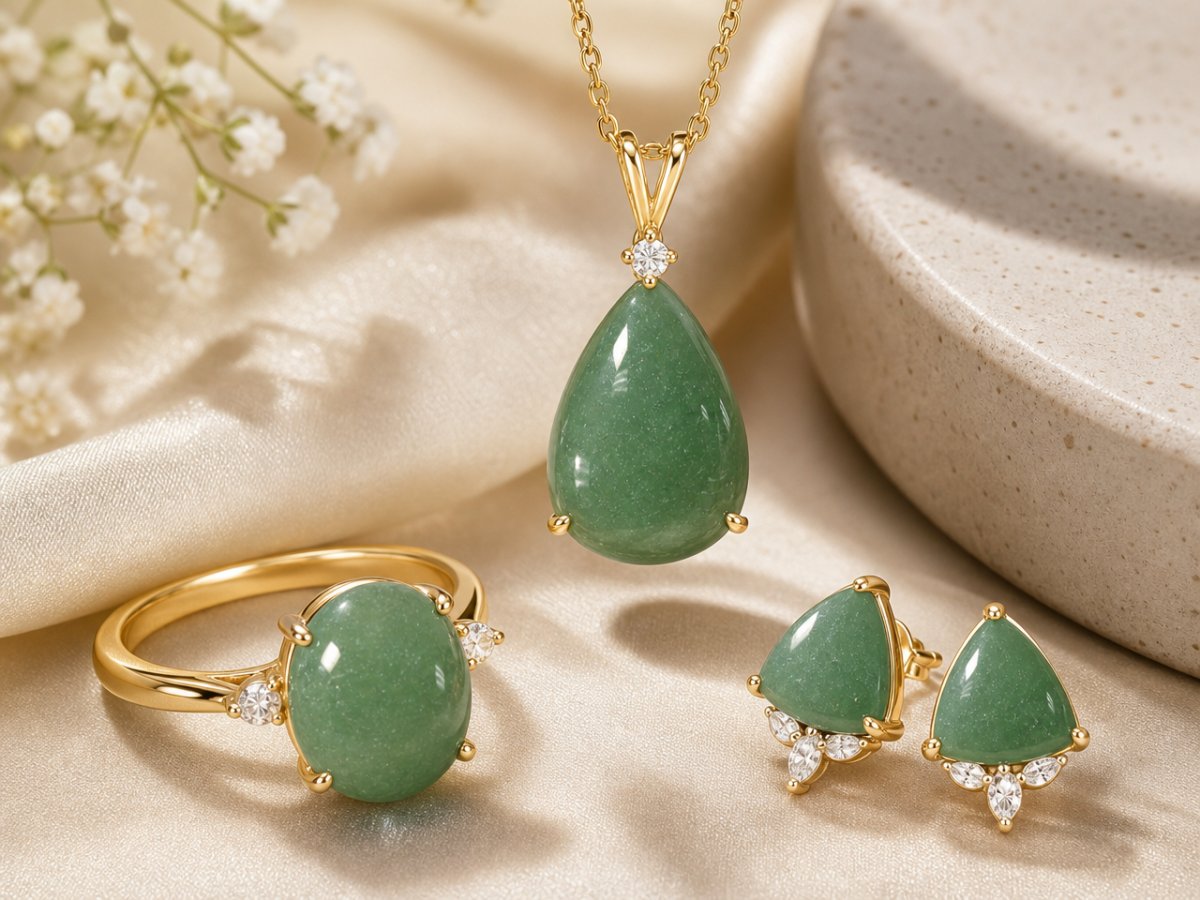
Aventurine is especially well suited to necklaces and pendants. These uses allow the stone's color and smooth cabochon surface to be seen clearly while keeping it away from the heaviest daily wear. Larger cabochons can make effective pendant centerpieces, while smaller stones can be used in repeated designs or matched sets.
Rings are also a popular option, particularly for buyers who enjoy cabochon gemstone rings. Choose a secure setting and consider how often the ring will be worn. For occasional wear, a more exposed design may be acceptable; for frequent wear, protection becomes more important.
Earrings and brooches are also good choices. Earrings benefit from matched shapes and colors, while brooches can accommodate larger or more decorative aventurine pieces. Because brooches are not usually subject to the same impact as rings, they can be a practical way to use larger stones or carved designs.
How to Buy Aventurine: Practical Checklist
1. Choose Your Preferred Color
Start with color. Green is the classic choice, but red, yellow, blue, brown and orange aventurine may suit different designs. Decide whether you want a subtle tone, a stronger color or a matched group of stones.
2. Decide on the Jewelry Type
The intended jewelry use affects the best size, shape and setting. Pendants and necklaces can handle larger stones. Earrings usually need matching pairs. Rings require more attention to protection and comfort.
3. Prioritize Cabochon Quality
Since cabochons are the most common cut for aventurine, inspect the dome, outline and polish. A good cabochon should look balanced and finished, with an attractive face-up appearance.
4. Check Measurements Carefully
Use millimeter dimensions to judge fit, especially for custom jewelry. Carat weight alone does not tell you whether a cabochon will fit a setting or match another stone.
5. Review Treatment Information
Aventurine is commonly untreated, but treatment status should still be confirmed for the specific stone. Clear disclosure is part of a confident purchase.
6. Consider Origin as Supporting Information
Origins such as Brazil, India, China, Russia and Tanzania may be of interest, but origin should not replace direct evaluation of the gemstone's color, cut and condition.
7. Inspect for Wearability
Look for a smooth polish, sound edges and a shape that will be easy to set securely. This is especially important for rings and custom jewelry projects.
Common Buying Mistakes to Avoid
One common mistake is buying by color name only. Because gemstone photos, lighting and individual stones can vary, always examine the actual image and measurements when possible. Another mistake is ignoring depth and profile. A stone may have the right face-up size but be too deep or too shallow for the intended setting.
Buyers should also avoid assuming that all shapes are equally easy to mount. Standard ovals, rounds and cushions are often simpler to design around than unusual fancy shapes. Fancy shapes can be beautiful, but they may require more careful setting work.
Finally, do not overlook surface condition. A cabochon depends heavily on polish and smoothness for its visual appeal. Minor natural variation may be acceptable, but obvious chips, cracks or dull surfaces can reduce the success of the finished jewelry piece.
Summary
Aventurine is a quartz-family gemstone valued by buyers for its range of colors, practical hardness and versatility in jewelry. Green is the best-known color, while red, yellow, blue, brown and orange provide additional design choices. Cabochons are the most common cut, with oval, round and cushion shapes being especially useful for jewelry.
When buying aventurine, focus on attractive color, a well-polished cabochon surface, suitable shape, accurate measurements and clear treatment disclosure. Aventurine is commonly untreated and can be used successfully in necklaces, pendants, earrings, brooches and rings when the setting is appropriate. By comparing the actual stone rather than relying on a single factor, buyers can choose aventurine with confidence.
