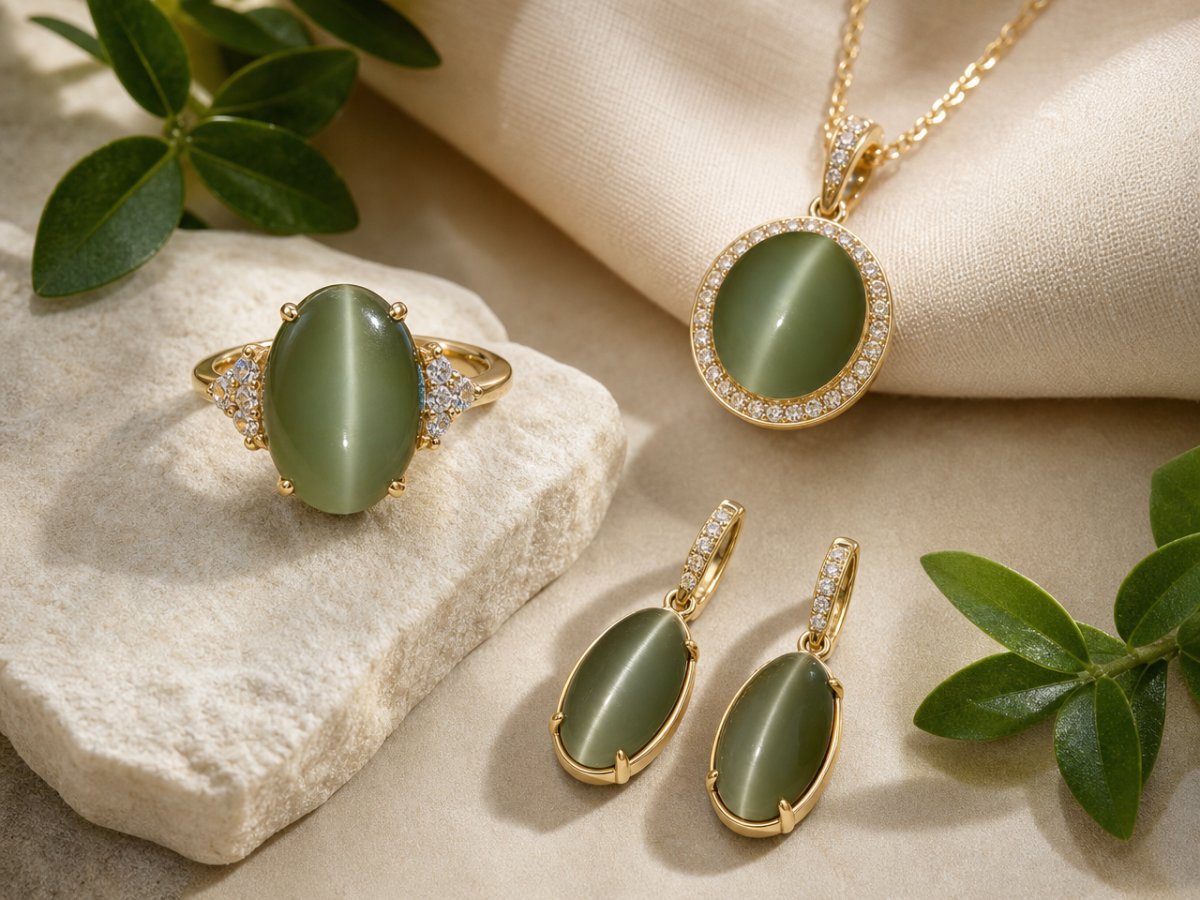


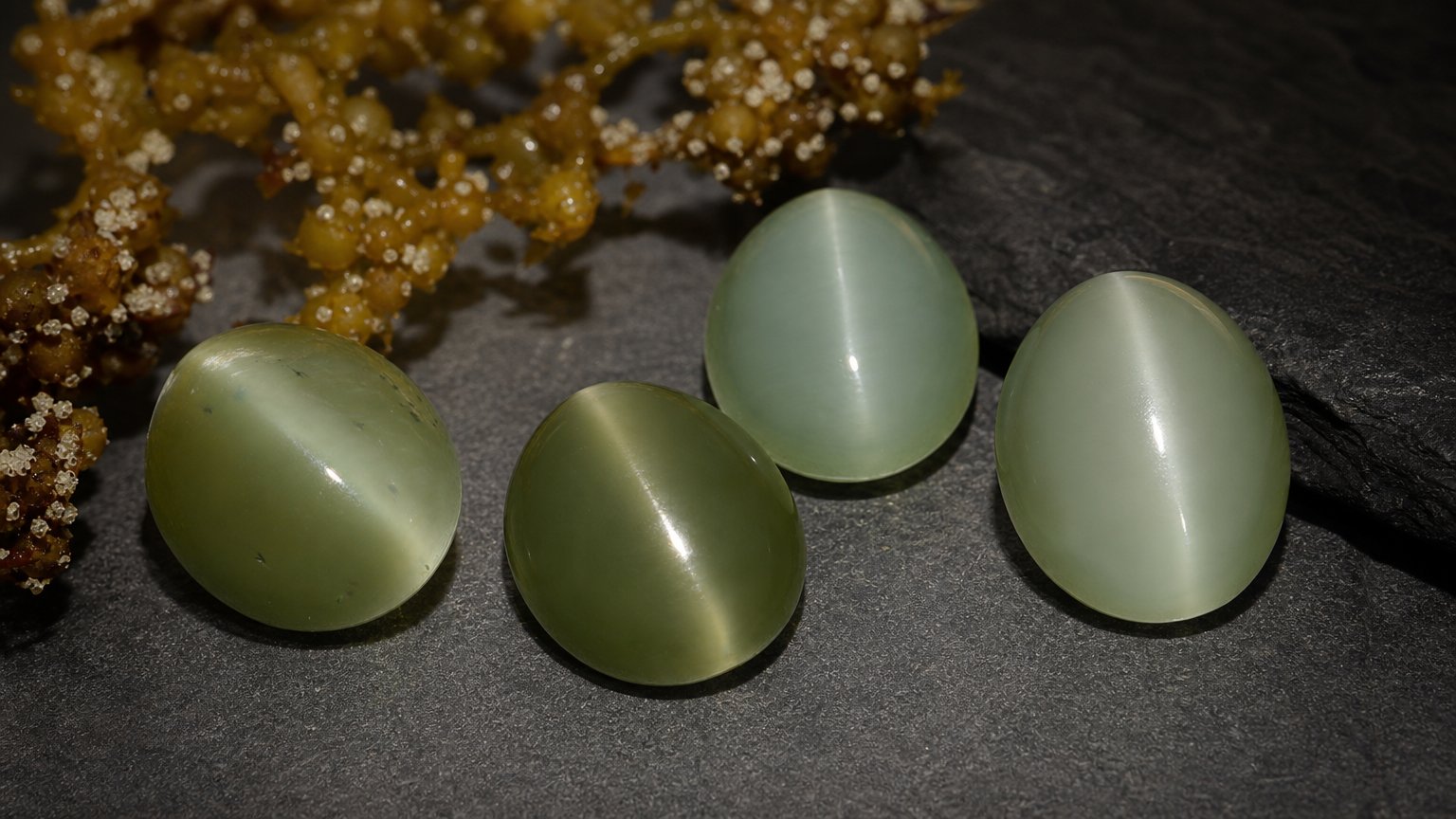
Actinolite cat's eye is a distinctive gemstone chosen for its moving band of light, known as chatoyancy. For buyers, the most important decision is not simply color or size, but the quality of the cat's eye effect and how well the cabochon has been cut to display it.
This guide explains what to look for when buying actinolite cat's eye, including color, cut, durability, treatments, origin and jewelry suitability, so you can compare stones with confidence.
What Is Actinolite Cat's Eye?
Actinolite is an amphibole silicate gemstone with the chemical formula Ca₂(Mg,Fe)₅Si₈O₂₂(OH)₂. When the material contains aligned internal structures that reflect light in a narrow band, it can show the cat's eye effect. This optical phenomenon is best seen when the gemstone is cut as a cabochon rather than faceted.
Actinolite cat's eye is appreciated by collectors and jewelry designers who want a natural-looking gemstone with a visible optical effect. It is not normally bought for high brilliance like a faceted gem; it is bought for its silky surface appearance, body color and sharp eye.
Color and Appearance
Green is the most important and commonly associated color for actinolite cat's eye. Buyers may also encounter gray tones, and some stones can show yellowish coloration. The most attractive choice depends on personal preference, but the color should look even and appealing when viewed face-up.
Because the cat's eye effect is the main feature, color should be judged together with chatoyancy. A pleasant green stone with a centered, bright eye will usually be more visually satisfying than a larger stone with weak or poorly placed chatoyancy.
How to Judge the Cat's Eye Effect
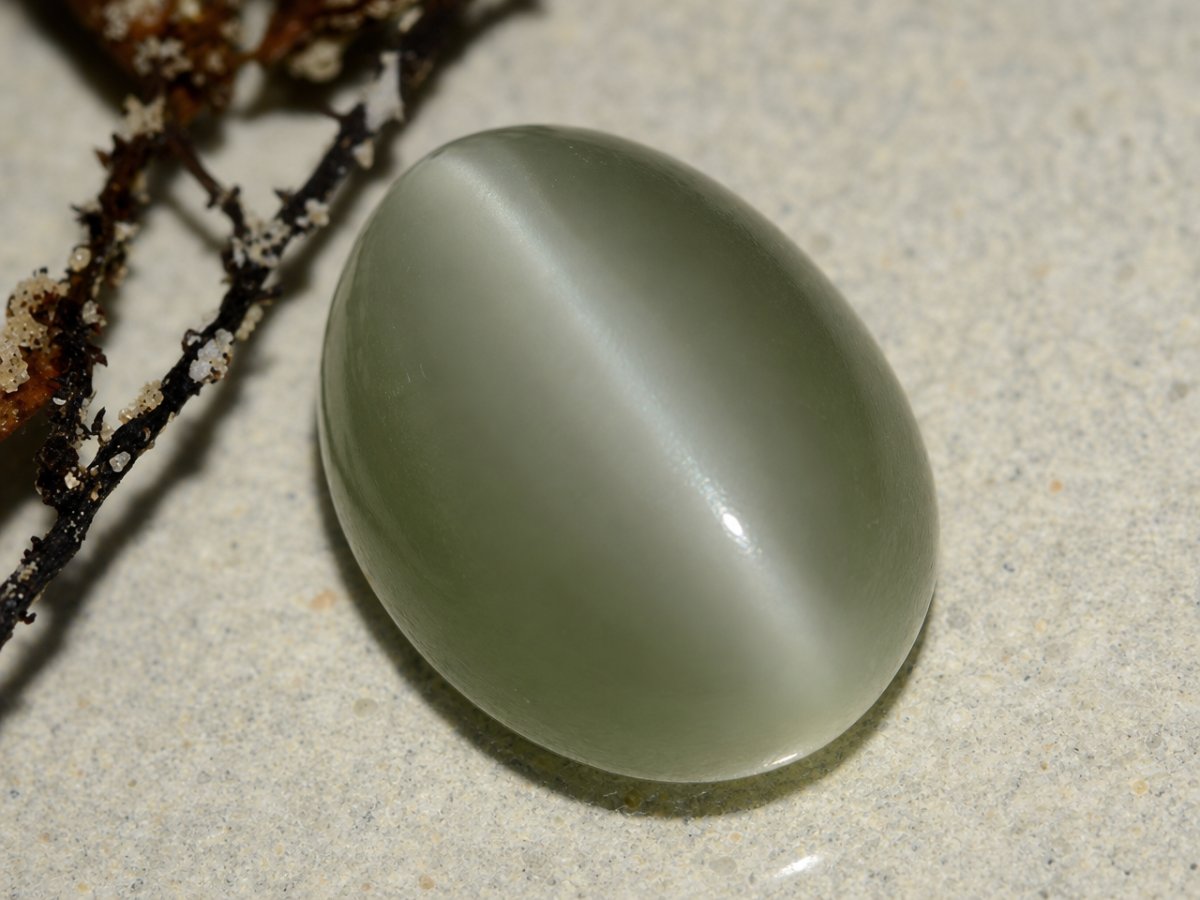
When comparing actinolite cat's eye gemstones, look for a narrow, clear band of light across the dome of the cabochon. The eye should be easy to see under direct light and should appear centered when the gem is viewed face-up. A soft or blurry eye can still be attractive, but a sharp eye gives the stone a stronger visual presence.
The eye should also move as the stone or light source moves. This movement is part of the appeal of chatoyant gemstones and is a useful sign that the cabochon has been oriented effectively.
Cut: Why Cabochon Quality Matters
Actinolite cat's eye is most commonly cut as a cabochon. This smooth, domed cut is essential because it allows the internal structures to reflect light as a single line. Faceting is not the preferred style for displaying this gemstone's cat's eye effect.
Oval and round shapes are especially common and practical. Pear shapes are also seen, while cushion and freeform cuts may appeal to designers who want a less traditional look. Whatever the shape, the dome should be well proportioned, the base should sit securely in a setting, and the eye should run attractively across the top of the stone.
Clarity and Surface Quality
For cat's eye gems, clarity is judged differently than for transparent faceted stones. Internal features can be part of the reason the cat's eye effect appears, so a completely inclusion-free look is not the goal. Instead, buyers should check whether surface-reaching fractures, pits or uneven polishing distract from the appearance or affect setting durability.
A good actinolite cat's eye should have a clean enough surface to show the eye clearly. The dome should be smoothly polished, because scratches or dull polish can weaken the optical effect.
Size and Shape Considerations
Larger cabochons can show the cat's eye effect dramatically, but size should not be chosen at the expense of a strong eye. A smaller stone with a centered, lively line can be a better choice than a larger cabochon with a faint or off-center band.
For rings, consider whether the stone's height and dome shape are practical for the setting. For pendants and necklaces, larger or more elongated cabochons can be used more freely because they are less exposed to impact.
Origins
Actinolite cat's eye is associated with several gemstone-producing countries. Important origins include Brazil and India, with Sri Lanka and Tanzania also known sources. Material may also be associated with Madagascar, Myanmar and the United States.
For most buyers, origin should be secondary to appearance, cut and condition unless a particular source is specifically important to the collection. A well-cut stone with strong chatoyancy is generally a more practical buying target than origin alone.
Gemological Properties
The following gemological properties help identify actinolite cat's eye and understand its behavior as a jewelry stone:
| Gemstone family | Amphibole silicate |
|---|---|
| Chemical formula | Ca₂(Mg,Fe)₅Si₈O₂₂(OH)₂ |
| Crystal system | Monoclinic |
| Mohs hardness | 5-6 |
| Refractive index | 1.614-1.641 |
| Specific gravity | 3.03-3.18 |
These values are useful for gemological reference, but buyers should still prioritize visible quality factors: color, polish, shape, symmetry and the strength of the cat's eye.
Durability and Jewelry Use
With a Mohs hardness of 5-6, actinolite cat's eye requires more care than harder everyday ring stones. It can be worn in jewelry, but it should be protected from hard knocks, rough wear and abrasive contact with harder gems or surfaces.
Pendants and necklaces are especially suitable because they are less exposed to impact. Rings can be attractive, but protective settings and occasional wear are sensible choices. Earrings are also practical because they receive relatively little abrasion. Bracelets need more caution because wrist jewelry is more likely to be bumped. Brooches can work well when the design protects the cabochon.
Treatments
Actinolite cat's eye is commonly offered untreated. This is helpful for buyers who prefer natural gemstones without enhancement. As with any gemstone purchase, review the seller's treatment disclosure before buying.
When shopping at GemSelect or comparing loose stones elsewhere, check that the product details clearly describe the gemstone and any known treatment status. Transparent disclosure is especially important for buyers selecting gems for custom jewelry or collections.
Practical Buying Checklist
- Look for a clear cat's eye: The line should be visible, preferably narrow, and well positioned on the dome.
- Check the cabochon cut: A smooth dome, good polish and balanced shape help the eye appear at its best.
- Choose color thoughtfully: Green is the key color, while gray and yellow tones may suit different design preferences.
- Inspect surface condition: Avoid stones with obvious chips, cracks or poor polish that distract from the eye.
- Match the stone to the jewelry: Pendants, necklaces and earrings are low-risk options; rings need protective settings.
- Confirm treatment information: Actinolite cat's eye is commonly untreated, but disclosure should still be checked.
Summary
The best actinolite cat's eye gemstone is the one that balances attractive body color with a strong, well-centered eye and a properly polished cabochon. Green stones are especially characteristic, but overall appearance matters more than color name alone.
For jewelry, choose the setting with the gemstone's moderate hardness in mind. Pendants, necklaces and earrings are practical choices, while rings should be designed to protect the cabochon. If you focus on chatoyancy, cut quality, surface condition and clear treatment disclosure, actinolite cat's eye can be a rewarding and distinctive gemstone purchase.