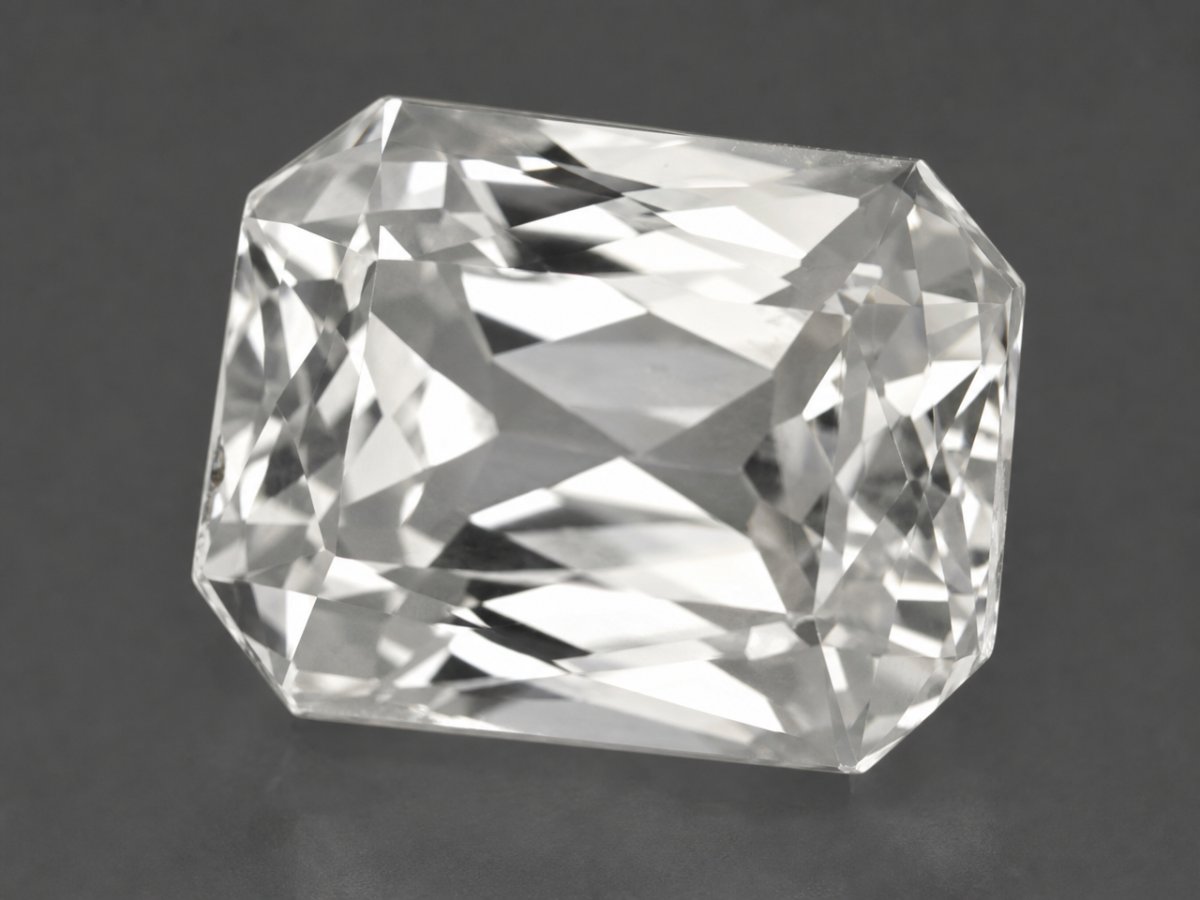


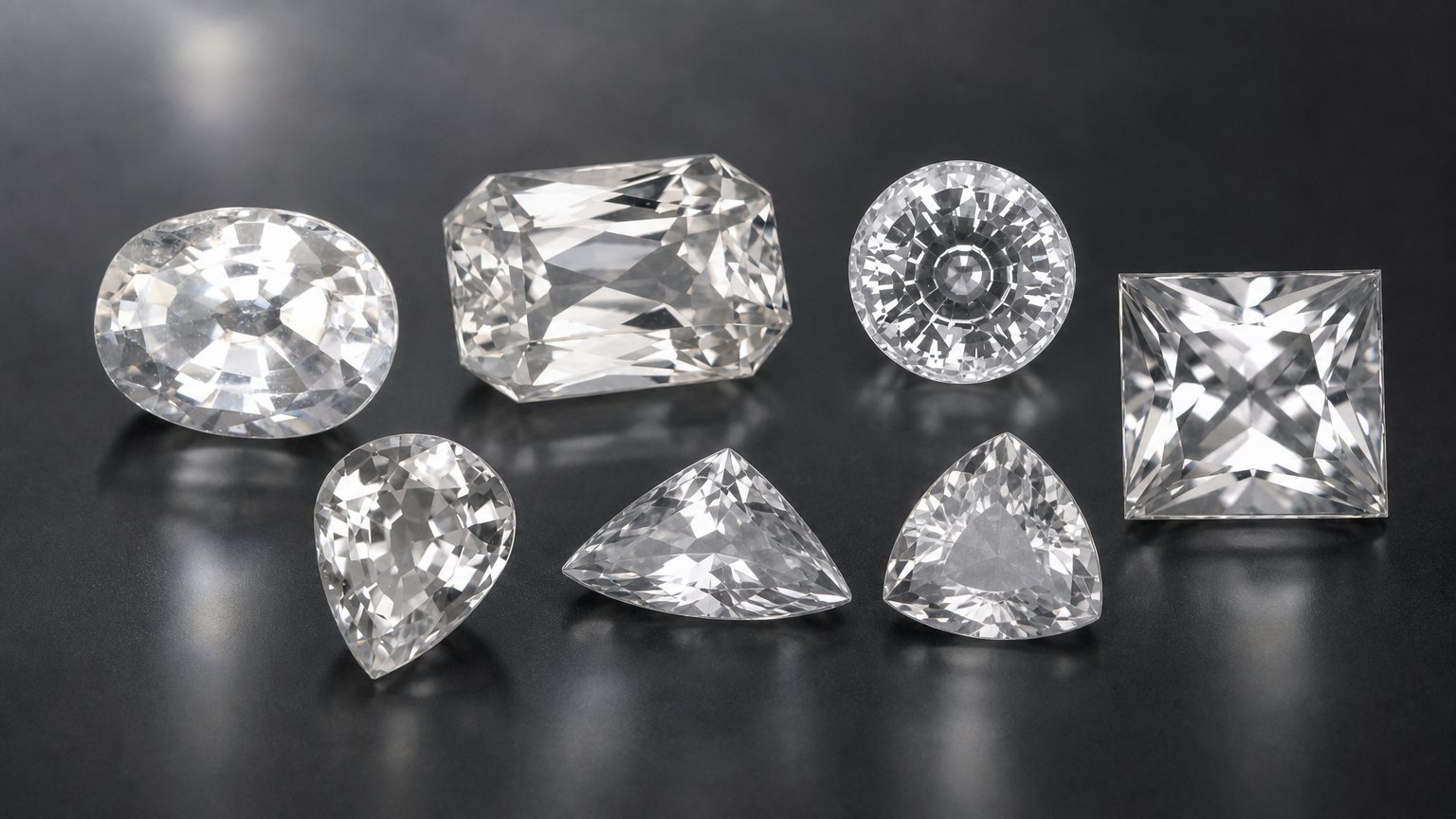
White sapphire is a white variety of sapphire, the gem family best known for durable corundum gemstones. For buyers, its appeal is straightforward: a clean, bright appearance, excellent hardness and versatility in jewelry ranging from everyday rings to earrings and pendants.
Choosing a good white sapphire is mostly about appearance and suitability. Color, clarity, cut quality, shape, treatment disclosure and jewelry setting all affect how the gem will look and perform. This guide explains the main points to check before buying.
What Is White Sapphire?
White sapphire is a variety of sapphire and belongs to the mineral species corundum. Its chemical formula is Al₂O₃, and it crystallizes in the trigonal crystal system. Like other sapphires, it is valued for durability as well as beauty.
In practical buying terms, white sapphire is selected for a white, bright look rather than for strong body color. Because the gemstone is light in appearance, cut and clarity become especially important: inclusions, poor symmetry or a dull cut are more noticeable than they might be in a darker gem.
Color and Appearance: What to Look For
The key color consideration is the overall white appearance. Buyers usually look for a stone that appears clean, bright and even across the face of the gem. View the gemstone from the top as well as from the side, because some stones may look different depending on lighting and angle.
For white sapphire, transparency and liveliness are important. Since there is little body color to hide internal features, a more transparent stone with good cutting will usually look more attractive in jewelry. If buying online, compare clear photos and check the exact measurements as well as the carat weight.
Cut, Shape and Sparkle
White sapphire is commonly faceted, and many stones are cut in styles designed to return light effectively. Diamond-cut styles are also used, especially for round gems where brilliance is a priority. Cabochon-cut white sapphires exist, but faceted stones are the main choice for buyers seeking sparkle.
Popular shapes include round and oval, both of which are practical for rings, earrings and pendants. Cushion and pear shapes are also common choices for buyers who want a softer or more distinctive outline. Marquise, octagon and square shapes may be appealing when the design calls for a more geometric or elongated look.
When judging cut, look for balanced proportions, even outline, neat facet alignment and good face-up brightness. A white sapphire that is too shallow or too deep may appear less lively. For matched jewelry such as earrings, pay attention to shape, size, color and cutting style so the pair looks consistent.
Clarity Considerations
Clarity matters because white sapphire does not have strong color to distract from inclusions. Small natural inclusions are common in many gemstones, but the most important question is whether they are easily visible and whether they affect the beauty of the stone.
For rings and engagement rings, inspect the center area of the gem carefully, as this is where the eye is drawn first. For earrings or pendants, minor inclusions may be less noticeable once worn. Always evaluate clarity together with cut: a well-cut stone with minor inclusions can look better than a cleaner stone with poor brightness.
Durability and Everyday Wear
White sapphire has a Mohs hardness of 9, making it one of the harder jewelry gemstones. This is a major reason it is used in rings and engagement rings, where the stone may be exposed to regular contact and wear.
Hardness is not the only durability factor, so good jewelry design still matters. Protective settings, secure prongs and appropriate care are especially important for rings and bracelets. Earrings, necklaces and pendants usually experience less impact, making them very suitable uses for white sapphire.
Treatments: Untreated and Heat-Treated White Sapphire
White sapphire may be untreated or heat treated. Heat treatment is a common gemstone treatment used for sapphire, while untreated stones are also available. For buyers, the main point is disclosure: the treatment status should be clearly stated before purchase.
Do not assume that every white sapphire is untreated. If treatment status is important to you as a collector, designer or engagement ring buyer, ask for the available information and choose a seller that provides clear gem details. GemSelect lists treatment information where available so buyers can compare stones more confidently.
Origins of White Sapphire
White sapphire is associated with several sources, including Madagascar and Sri Lanka, which are especially important origins. Other known origins include Tanzania, Australia, Cambodia, Myanmar and Thailand.
Origin can be interesting to collectors and may be part of a gemstone's story, but for most jewelry buyers the visible quality of the individual stone should come first. Color, clarity, cut, size, treatment disclosure and measurements are usually more useful decision points than origin alone.
Gemological Properties
White sapphire's key gemological properties help explain why it performs well in jewelry. It has a Mohs hardness of 9, a refractive index of 1.762-1.770 and a specific gravity of 4.00. These values identify it as a corundum gemstone and support its reputation as a durable, wearable choice.
For buyers, the most practical of these properties is hardness. Refractive index relates to how a gemstone bends light, which is one factor in visual brightness, but the quality of the cut remains essential to the final appearance.
Best Jewelry Uses for White Sapphire
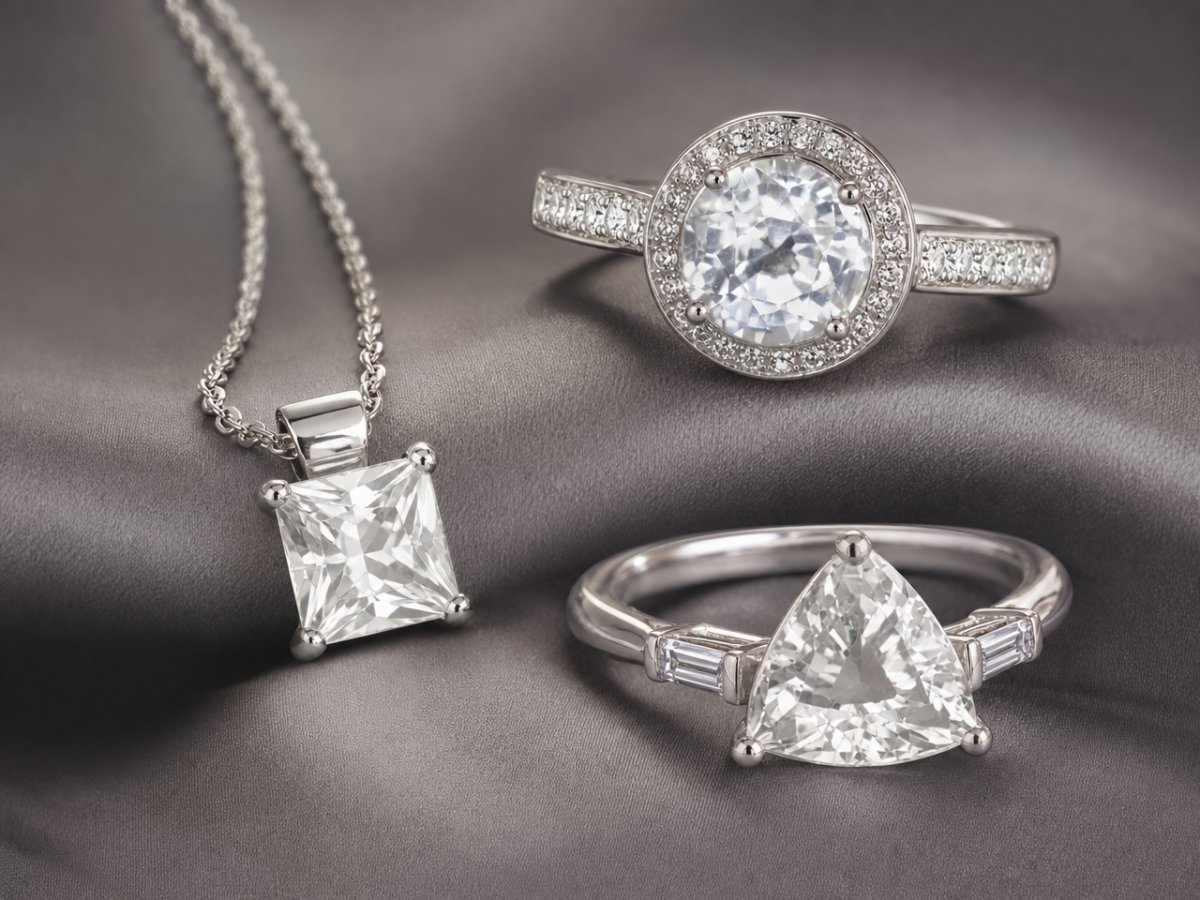
White sapphire is especially well suited to rings because of its hardness and clean appearance. It is also used in engagement rings, where buyers often want a durable white gemstone with a refined look.
Earrings are another strong use because white sapphire can add brightness near the face and matched pairs are widely useful in classic jewelry designs. Pendants, necklaces and bracelets are also suitable, though bracelets should be set securely because wrist jewelry receives more knocks than earrings or pendants.
Practical Buying Checklist
1. Decide how the stone will be worn
For daily rings or engagement rings, prioritize durability, secure setting style, good cut and visible clarity. For earrings or pendants, you may have more flexibility with size and minor inclusions because the stones are viewed from a greater distance.
2. Check the face-up appearance
Look at the gemstone as it will appear in jewelry. A good white sapphire should look bright, balanced and pleasing from the top. Avoid choosing by carat weight alone, because two stones of the same weight can face up at different sizes depending on depth and proportions.
3. Compare dimensions as well as carat weight
Measurements are especially important when replacing a stone, designing a setting or matching pairs. Shape also affects perceived size: oval and pear shapes may look different on the hand than round or cushion shapes of similar weight.
4. Review clarity in relation to use
For a center stone, choose a gem that looks clean and attractive without obvious distracting inclusions. For side stones, earrings or pendants, exacting clarity may be less critical if the overall look is harmonious.
5. Confirm treatment disclosure
Ask whether the white sapphire is untreated or heat treated. Both may be valid choices, but the treatment status should be clearly communicated.
6. Choose a shape that suits the setting
Round and oval shapes are versatile and easy to use in many jewelry designs. Cushion and pear shapes offer a different style while remaining practical. More angular or elongated shapes can be excellent when they fit the design and are protected appropriately.
Summary
A well-chosen white sapphire should offer a clean white appearance, attractive brightness, suitable clarity and a cut that works well in the intended jewelry design. Its Mohs hardness of 9 makes it a practical gemstone for rings, including engagement rings, as well as earrings, pendants, necklaces and bracelets.
When buying, focus on the individual stone rather than a single label. Compare photos, measurements, shape, treatment information and how the gem will be set. With those details in mind, white sapphire can be a confident and versatile choice for many jewelry styles.