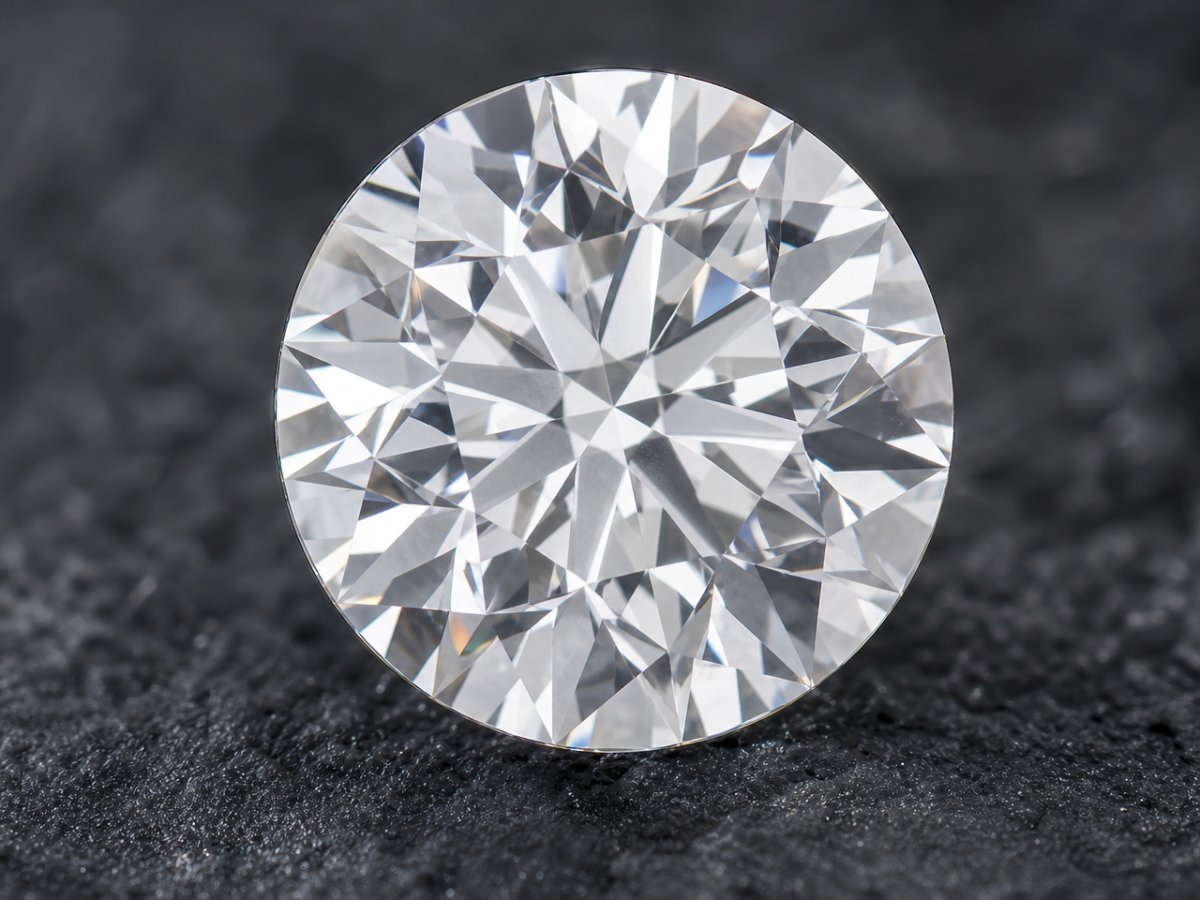


White diamond is one of the most recognized gemstones for fine jewelry, especially engagement rings. Its appeal comes from a bright white appearance, excellent hardness and the brilliant light performance associated with well-cut diamond.
This guide focuses on the practical points that matter when buying a white diamond: appearance, cut, clarity, size, treatments, durability and suitable jewelry use.
What Is White Diamond?
White diamond is a variety of diamond composed of carbon, with the chemical formula C. It crystallizes in the cubic crystal system and has a Mohs hardness of 10, making it the hardest standard gemstone material.
Its refractive index is 2.417, which helps explain why a well-cut diamond can show strong brightness and lively reflections. For buyers, this means cut quality and overall appearance should be judged carefully, not just size.
Color and Appearance
White diamonds are chosen for their clean, bright, white appearance. When comparing stones, look at the face-up color rather than relying only on a description. Some stones may appear whiter, while others may show subtle warmth depending on lighting, cut and setting metal.
If the diamond will be set in white metal, color differences may be easier to notice. In yellow or warm-toned metal, a slightly warmer-looking stone may still appear attractive. Matching color is especially important for pairs, such as diamond earrings, and for multi-stone rings or bracelets.
Cut, Shape and Light Performance
Cut has a major effect on how a white diamond looks. A well-proportioned faceted diamond returns more light to the eye, while a poorly cut stone can look flat even if the material itself is attractive.
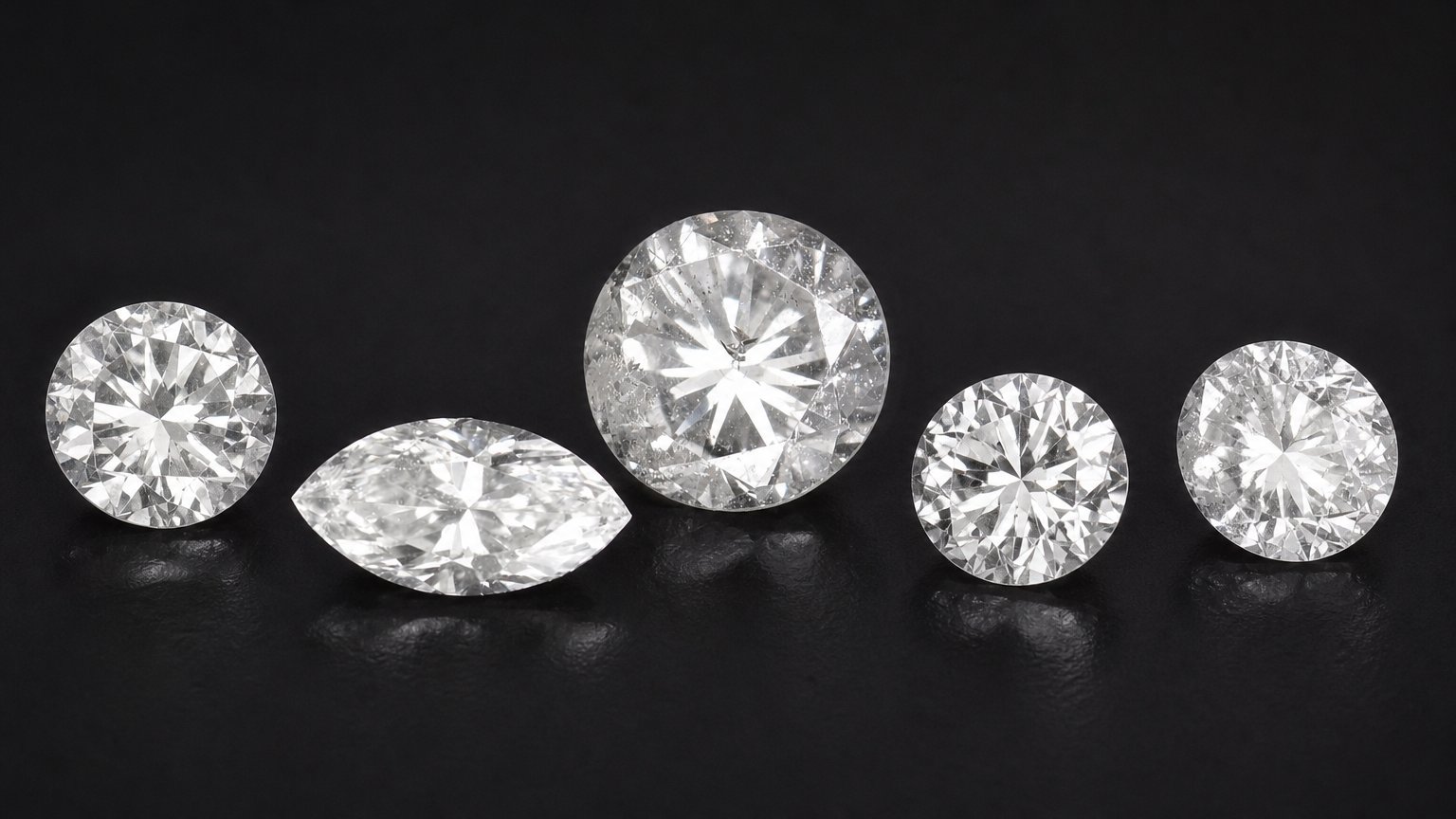
Round diamonds are especially common and popular because they suit many designs and emphasize brilliance. Other attractive shapes include oval, pear, baguette, cushion, marquise, octagon, square and trillion. Asscher, princess and step-cut styles are also associated with white diamond jewelry.
Brilliant-style cuts tend to emphasize sparkle, while step cuts and baguettes show broad flashes and a more architectural look. Step cuts can make clarity and color easier to see, so inspect them carefully if you want a very clean appearance.
Clarity: What to Check Before Buying
Clarity refers to internal inclusions and surface features. For most jewelry buyers, the practical question is whether the diamond looks clean to the unaided eye in normal viewing conditions.
Inspect the stone from the top and sides. Pay attention to inclusions near the center, dark marks, surface-reaching features or anything that distracts from the overall brightness. In smaller stones or brilliant cuts, minor inclusions may be less noticeable; in larger stones and step cuts, they may be easier to see.
Size and Proportion
Diamond size should be considered together with cut and shape. A larger diamond is not automatically the best choice if it appears dull, poorly proportioned or visibly included.
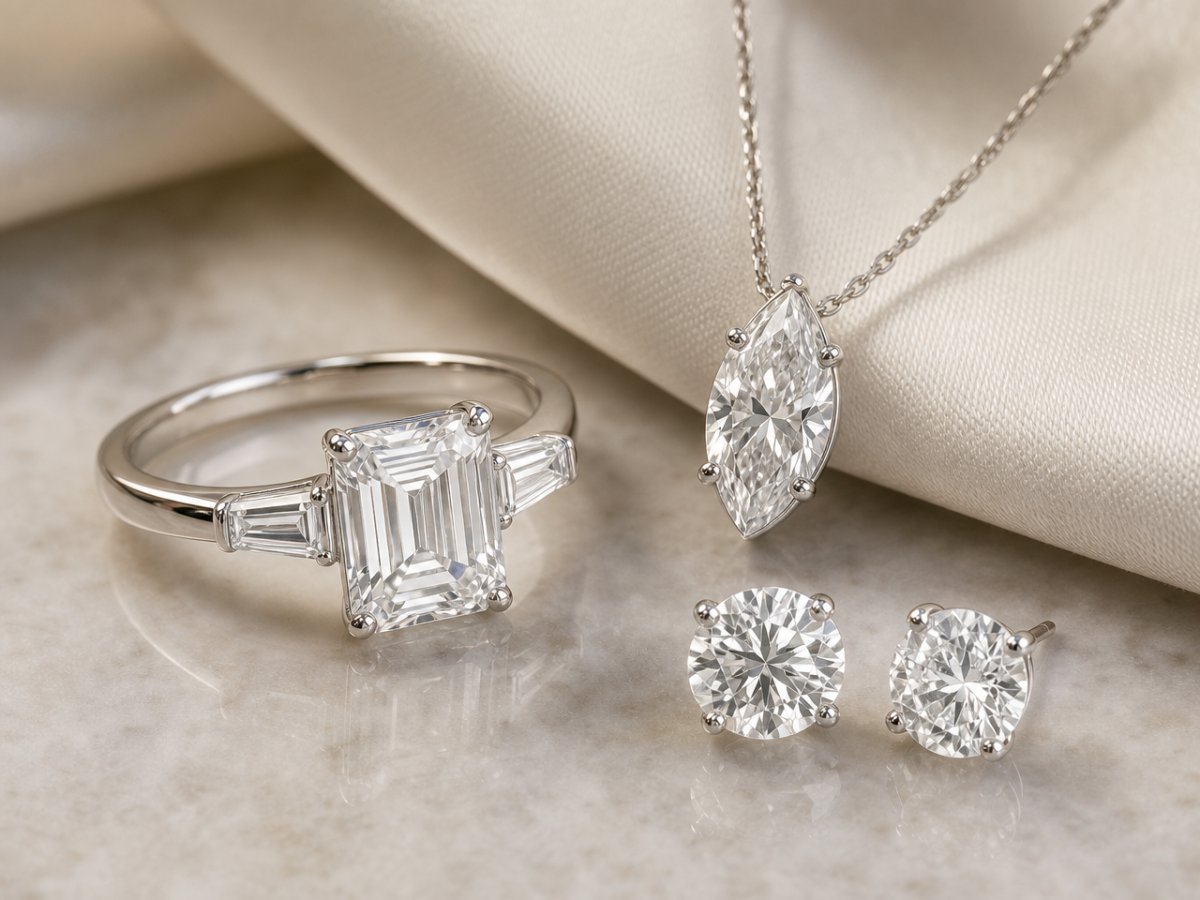
For rings and engagement rings, consider how the stone will sit on the hand and whether the shape suits the setting. Oval, pear and marquise shapes can appear elongated, while round and cushion shapes give a more balanced outline. Baguettes and small rounds are often used as side stones or accents.
Treatments and Disclosure
White diamonds are commonly sold as untreated, and untreated stones are an important option for buyers who prefer natural, unenhanced material. However, some diamonds may be treated.
High Pressure High Temperature (HPHT) treatment can be used to alter a diamond's appearance. Laser drilling may be used to reach inclusions and improve the visible look of a stone. These treatments should be disclosed clearly because they affect how the diamond is evaluated and compared.
When buying from GemSelect or any reputable seller, review the product details carefully and ask for clarification if a treatment status is not clear.
Durability and Everyday Wear
With a Mohs hardness of 10, white diamond is highly resistant to scratching and is well suited to everyday jewelry, including engagement rings and frequently worn rings.
Hardness does not mean a gemstone is impossible to damage. Any fine gemstone can be chipped or loosened by a hard impact, so protective settings and sensible care are still important, especially for pointed shapes such as pear, marquise or trillion.
Origins
White diamonds are associated with several important producing countries, including Botswana, Canada, Russia, South Africa, Congo and Namibia. Origin may be of interest to collectors or buyers with sourcing preferences, but appearance, treatment disclosure, durability and suitability for the intended jewelry design are usually the more practical buying factors.
Best Jewelry Uses for White Diamond
White diamond is especially popular for engagement rings because it combines a bright appearance with exceptional hardness. It is also widely used in earrings, rings, bracelets, necklaces and pendants.
For earrings and pendants, exact durability demands are lower than for rings, so buyers can focus more on matching, shape and visual impact. For bracelets and rings, choose secure settings because these pieces are more exposed to knocks and abrasion during wear.
Practical Buying Checklist
- Look at overall appearance first: choose a diamond that looks bright, lively and pleasing to your eye.
- Prioritize cut: cut quality strongly affects brilliance and beauty.
- Check face-up color: make sure the white appearance suits the setting and any matching stones.
- Inspect clarity: decide whether inclusions are visible or distracting in normal viewing.
- Confirm treatment status: untreated, HPHT-treated and laser-drilled diamonds should be identified clearly.
- Match shape to purpose: round is versatile; step cuts, baguettes and fancy shapes create different design effects.
- Consider setting protection: especially for rings and pointed shapes.
Summary
A good white diamond purchase balances beauty, durability and transparency of information. Focus on the stone's visible brightness, color, clarity, cut style, treatment disclosure and how it will be worn. With a hardness of 10 and a classic white appearance, white diamond remains a strong choice for engagement rings and many types of fine jewelry.