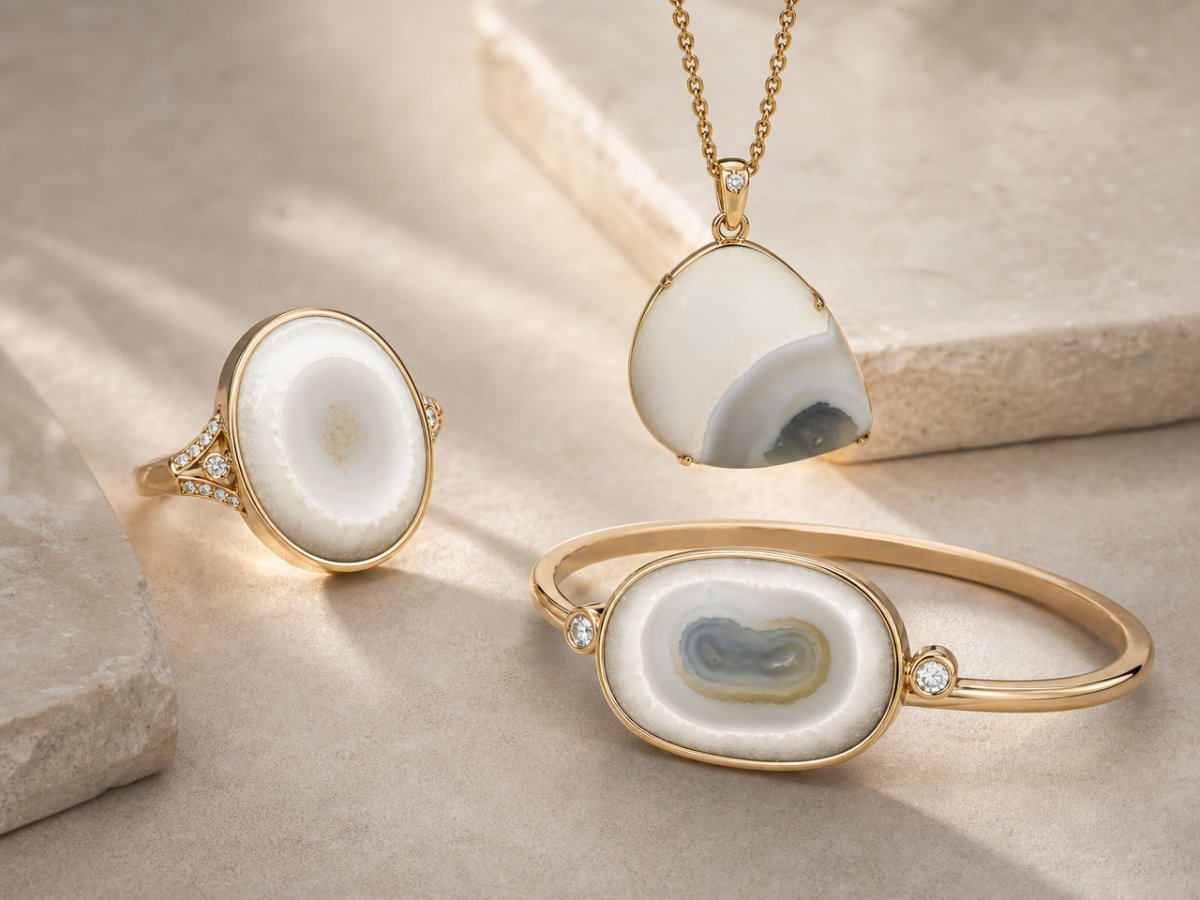


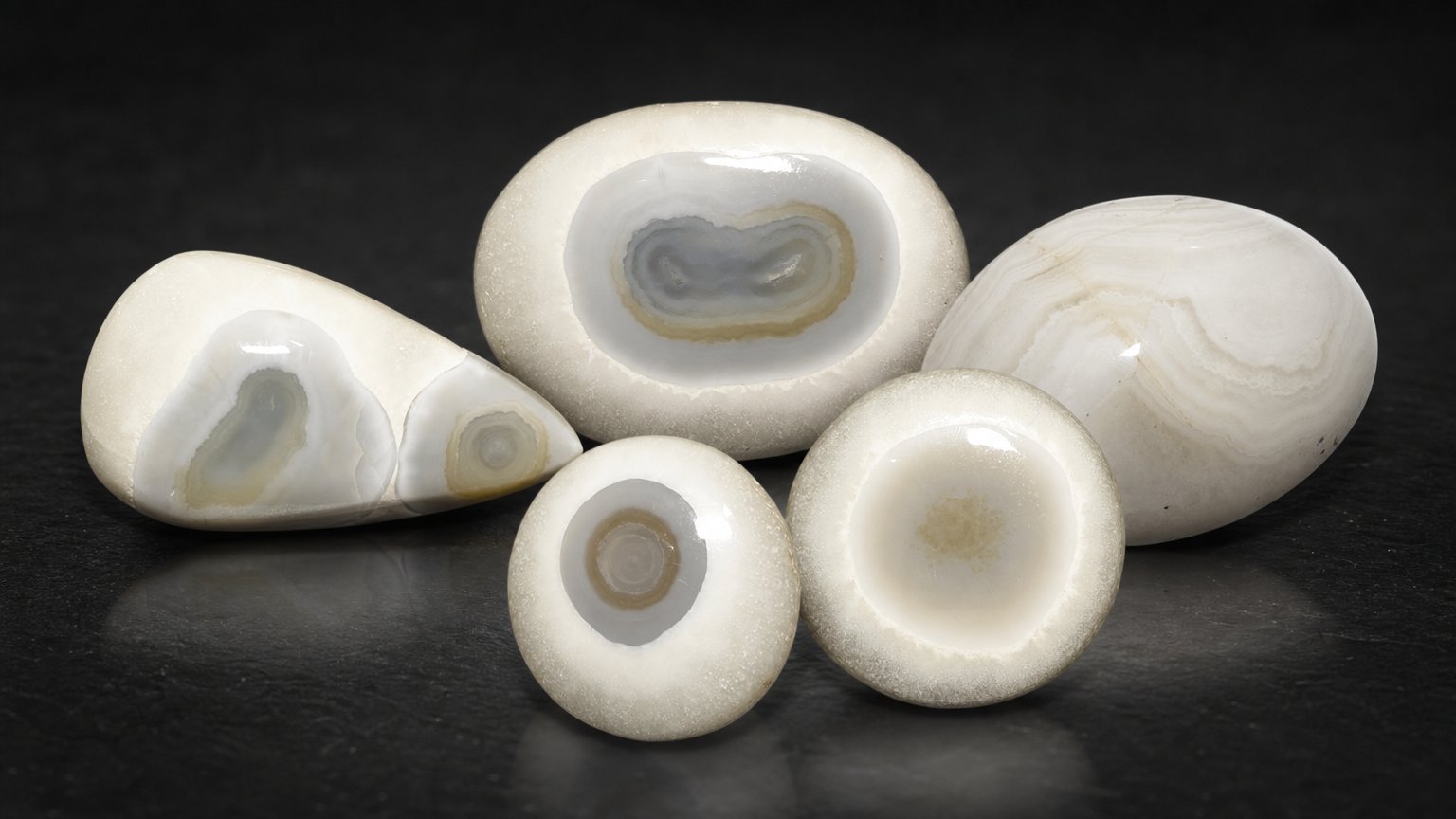
White agate is a white variety of agate in the quartz family, valued by buyers who want a clean, neutral gemstone for everyday jewelry designs. Its practical appeal comes from its simple color, good wearable hardness and availability in smooth cabochons, beads, carvings and slices.
When buying white agate, the most important decisions are appearance, cut quality, treatment disclosure and suitability for the jewelry style you have in mind. This guide explains what to look for so you can choose confidently.
What Is White Agate?
White agate is a variety of agate associated with quartz. Its chemical formula is SiO₂ and it belongs to the trigonal crystal system. For shoppers, the key point is that white agate offers the appearance of a light, versatile gemstone with the durability expected from quartz-family material.
Because white agate is commonly cut as cabochons, slices and carvings rather than faceted gems, buyers should judge it less like a diamond or sapphire and more by overall visual appeal, surface finish, shape, size and how well the piece suits the intended design.
Color and Appearance: What to Check Before Buying
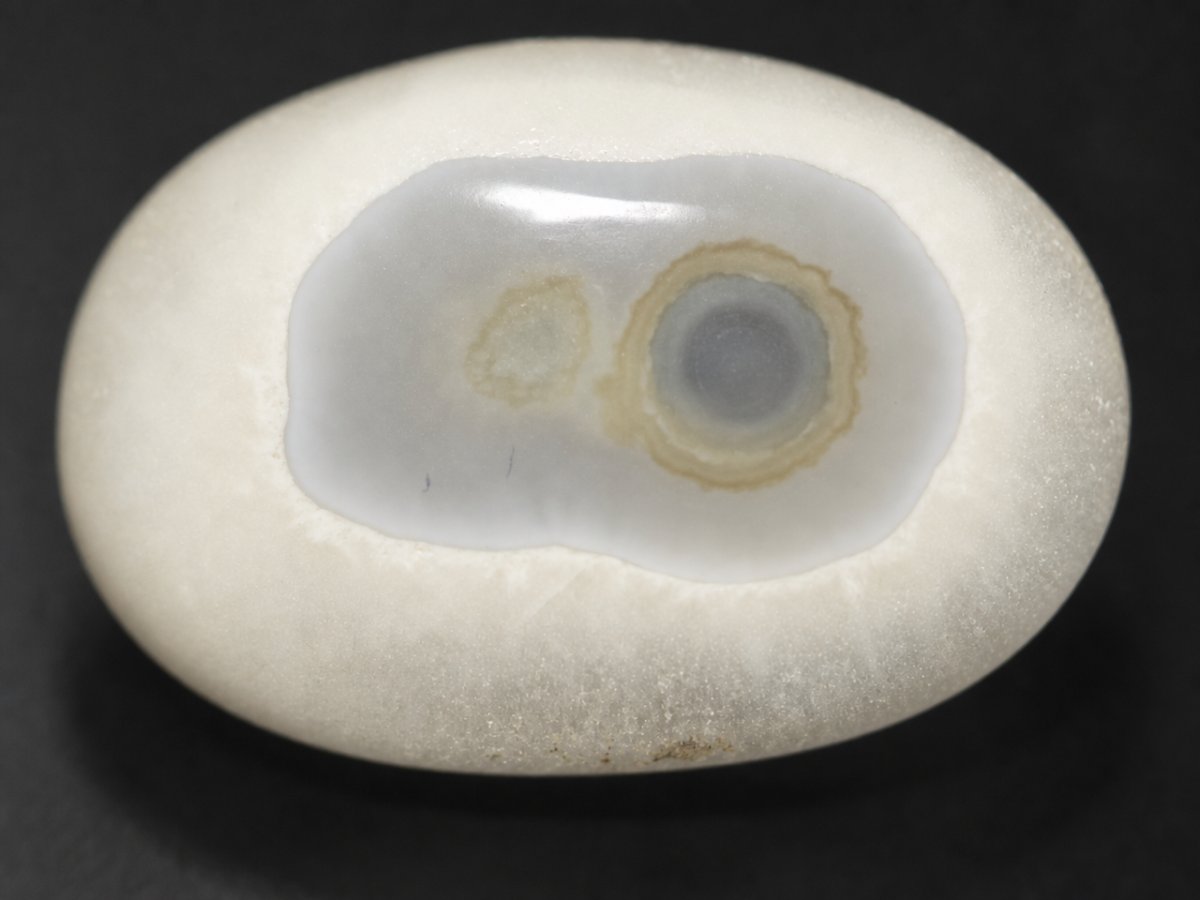
The defining color of white agate is white. In a buying context, look for the type of white appearance that works best for your design: a clean, even white for minimalist jewelry, or a more natural-looking white surface if you prefer organic character.
Examine product photos carefully for consistency of color, distracting marks, visible fractures, uneven polish or areas that may not suit the setting. With lighter stones, small surface details can be more noticeable, so a good polish and pleasing face-up appearance are especially important.
Best Cuts and Shapes for White Agate
Cabochons are the most common cut for white agate. A cabochon has a smooth domed top rather than facets, which suits agate well and gives jewelry a soft, polished look. Oval and round cabochons are especially practical because they are easy to set and work across many jewelry styles.
Cushion and pear shapes are also useful choices when you want a slightly more decorative outline. White agate may also be offered as slices or carved pieces, including freeform shapes, carved animals and carved flowers. These can be attractive for statement pendants, collector pieces or custom jewelry where the shape itself is part of the design.
Durability and Everyday Wear
White agate has a Mohs hardness of 6.5 to 7. This makes it suitable for many jewelry types, including bracelets, necklaces, earrings and pendants. Its hardness is helpful for regular wear, but it should still be protected from hard knocks, rough handling and contact with harder gemstones or abrasive surfaces.
Bracelets and rings receive more impact than earrings or necklaces. If you choose white agate for a ring, consider a protective setting and remove the ring during activities that could scratch or chip the stone. For bracelets, smooth beads or well-set cabochons are practical options, but they should still be stored separately from harder gems.
Treatments: Untreated and Dyed White Agate
White agate is commonly available untreated, and dyed material also exists. Treatment disclosure matters because it helps you understand exactly what you are buying and how to care for it. If natural, untreated material is important to you, check the treatment information before purchase.
For dyed gemstones, use gentle care and avoid harsh chemicals, prolonged soaking or aggressive cleaning. When shopping at GemSelect, review the individual gemstone details so you can compare treatment status along with size, shape and photos.
Origins of White Agate
White agate is associated with several origins, with Brazil being an important source. Madagascar and Uruguay are also notable, and material may also come from India, Indonesia and the United States.
For most buyers, origin is usually less important than appearance, cut, treatment disclosure and whether the stone fits the jewelry project. If origin matters to you for collecting or design reasons, choose stones where the source information is clearly provided.
Gemological Properties
White agate has a refractive index of 1.530 to 1.540 and a specific gravity of 2.58 to 2.64. These measurements are mainly useful for gemological identification rather than everyday shopping, but they help distinguish agate as a quartz-family gemstone.
For practical buying, the Mohs hardness of 6.5 to 7 is the most relevant property because it relates directly to wearability and care.
Choosing White Agate for Jewelry
White agate is well suited to bracelets and necklaces, where its neutral color can be used in single-stone designs, matched layouts or bead-style jewelry. It also works well in earrings and pendants because the white color is easy to coordinate with different metals and other gemstones.
Brooches and rings are also possible uses. For rings, pay closer attention to the setting style and intended wear. A ring worn occasionally has different durability demands than a daily-wear ring.
White Agate Buying Checklist
- Choose the right color look: Decide whether you want a clean, even white or a more natural-looking stone with visible character.
- Inspect the polish: Smooth cabochons and carvings should have an attractive surface finish without distracting scratches or dull areas.
- Match the cut to the design: Oval and round cabochons are versatile; slices, freeforms and carvings are better for distinctive designs.
- Check size and proportions: Make sure the dimensions fit your setting, bracelet layout or pendant design, not just the carat weight.
- Review treatment disclosure: Look for untreated or dyed status, especially if natural treatment status is important to you.
- Consider jewelry wear: Necklaces, pendants and earrings are lower-impact choices; bracelets and rings need more care.
Summary
White agate is a practical, versatile gemstone for buyers who want a white quartz-family stone in cabochons, beads, carvings or slices. Focus on the visible quality of the individual stone: color, polish, shape, size and treatment information. With a hardness of 6.5 to 7, it is suitable for many jewelry types when worn and stored with reasonable care.