


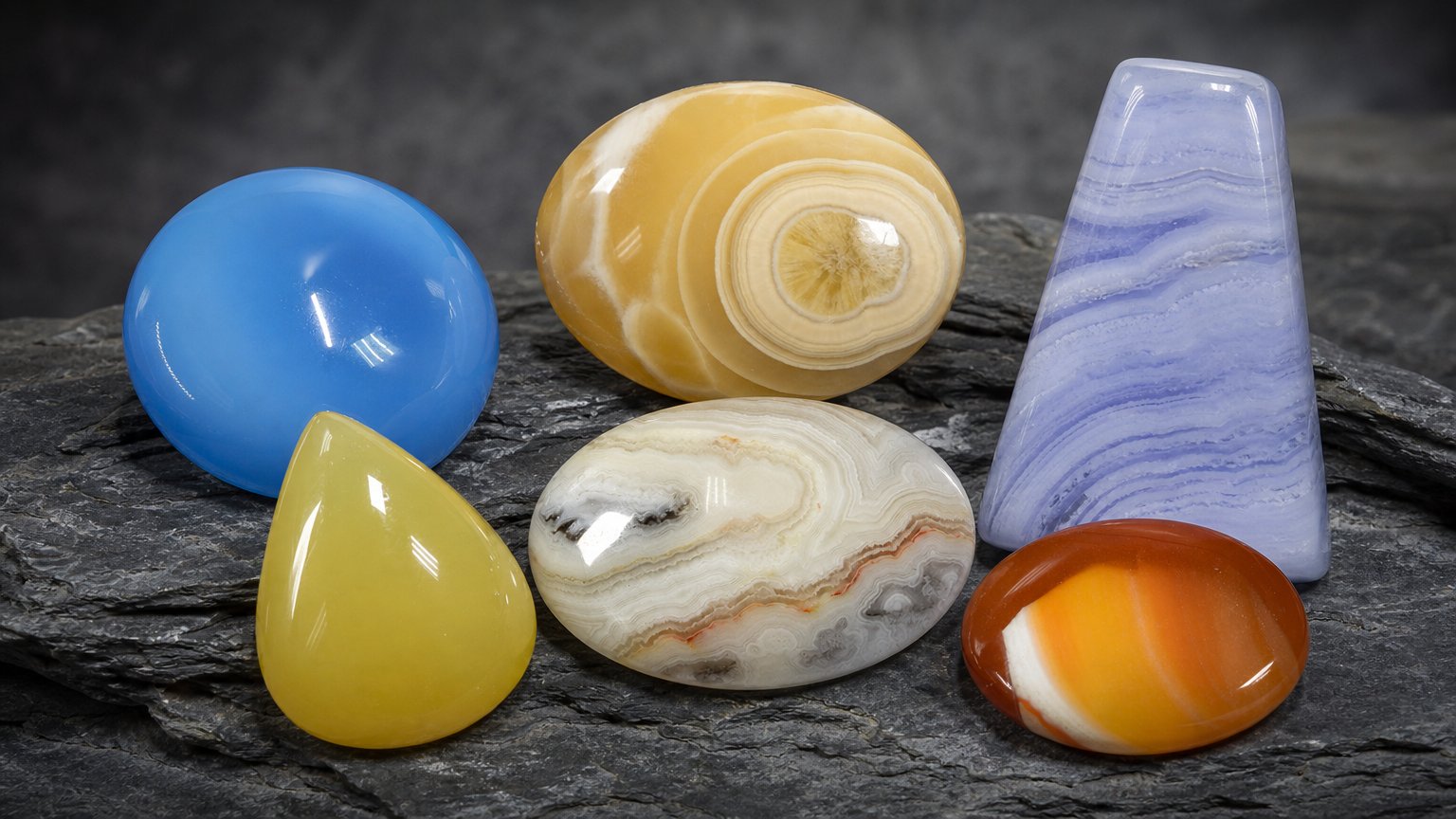
Agate is a practical and appealing choice for buyers who want a quartz gemstone with strong everyday usability and a wide range of decorative possibilities. Whether you are selecting a single cabochon for a ring, matching stones for earrings, or calibrated gems for a jewelry project, the best purchase is the one that fits your design, budget and expectations.
This buying guide explains the key points to consider before purchasing agate: what it is, how its gemological properties affect use, why cabochons are especially common, and how to judge quality from a buyer’s perspective. The goal is not to make agate complicated, but to help you compare stones confidently and choose pieces that will work well in real jewelry or a collection.
What Is Agate?
Agate is associated with the quartz mineral family and has the chemical formula SiO₂. Quartz gems are valued in jewelry because they combine attractive appearance with reliable durability. Agate shares important quartz characteristics, including a Mohs hardness of 6.5 to 7, making it suitable for many types of jewelry when worn with reasonable care.
From a buying standpoint, agate is often selected for its visual character rather than for rarity in a narrow technical sense. Individual stones may differ significantly in appearance, so photographs, measurements and cut quality are especially important when buying online. If you are purchasing from GemSelect or another gemstone supplier, review the individual listing carefully instead of assuming that all agate gems will look alike.
Agate Gemological Properties Buyers Should Know
Gemological data helps explain how a gemstone behaves and how it can be identified. For most buyers, these figures are not the only reason to choose a stone, but they do provide useful context for durability, handling and confidence.
Mineral family and composition
Agate is part of the quartz family and is composed of silicon dioxide, written as SiO₂. This is the same basic chemical formula associated with quartz. The crystal system is trigonal, a structural detail used in mineral classification. While most jewelry buyers do not need to identify the crystal system visually, it helps place agate within a well-known and widely used gemstone group.
Hardness: 6.5 to 7 on the Mohs scale
Agate has a Mohs hardness of 6.5 to 7. The Mohs scale compares resistance to scratching; a higher number means a material is harder to scratch with common abrasive materials. This range gives agate good scratch resistance for many jewelry uses, especially compared with softer gems.
Hardness does not mean a gemstone is indestructible. A stone can resist scratching but still chip or crack if struck sharply, especially at exposed edges or points. For agate, the combination of good hardness and the common use of rounded cabochon cutting makes it a practical option for jewelry, but protective settings and sensible wear are still recommended.
Refractive index: 1.530 to 1.540
Agate has a refractive index of 1.530 to 1.540. Refractive index measures how light bends as it enters a gemstone. In transparent faceted gems, this can be closely tied to brilliance and sparkle. Agate is commonly cut as a cabochon, where the smooth domed surface and overall appearance are usually more important than faceted brilliance.
For buyers, refractive index is most useful as an identification property. It helps gemologists confirm that a stone fits expected quartz-related values. It should not be treated as a shopping score where one agate is automatically better than another because of a tiny difference within the expected range.
Specific gravity: 2.58 to 2.64
Specific gravity describes relative density. Agate’s specific gravity range is 2.58 to 2.64. In practice, this affects how heavy a stone feels for its size, though cut proportions can make two stones of the same carat weight look different in face-up dimensions.
When buying, pay attention to both carat weight and millimeter measurements. Carat weight tells you mass, while dimensions tell you whether the stone will fit a setting or design. For cabochons especially, depth can vary, so two agates with similar length and width may not weigh the same.
Why Cabochons Are Common for Agate
The most important cut style to know for agate is the cabochon. A cabochon is a gemstone cut with a smooth, polished, non-faceted surface, usually with a rounded top and a flat or slightly curved base. This style emphasizes surface appearance, shape, polish and the natural visual character of the material.
Cabochon cutting is practical for agate because it presents the stone in a clean, wearable form. Instead of relying on many small facets for sparkle, a cabochon depends on symmetry, polish and the way the dome displays the stone. For buyers, that means you should evaluate an agate cabochon differently from a faceted gem.
What to look for in an agate cabochon
Start with the outline. The shape should suit the intended jewelry design and should look balanced when viewed face-up. Ovals, rounds and other cabochon shapes should have smooth curves without awkward flat spots unless the shape is intentionally freeform.
Next, look at the dome. A well-cut cabochon should have an even, pleasing rise rather than a lopsided or uneven surface. The dome does not need to be extremely high, but it should appear intentional and well finished. A very shallow cabochon may have a different look from a high-domed one, so choose based on the style you want and the setting you plan to use.
Polish is also critical. The surface should appear smooth and clean, with no distracting scratches or dull areas visible in the listing images. Since cabochons present a broad polished surface, finishing quality has a major effect on appearance.
Durability and Wearability
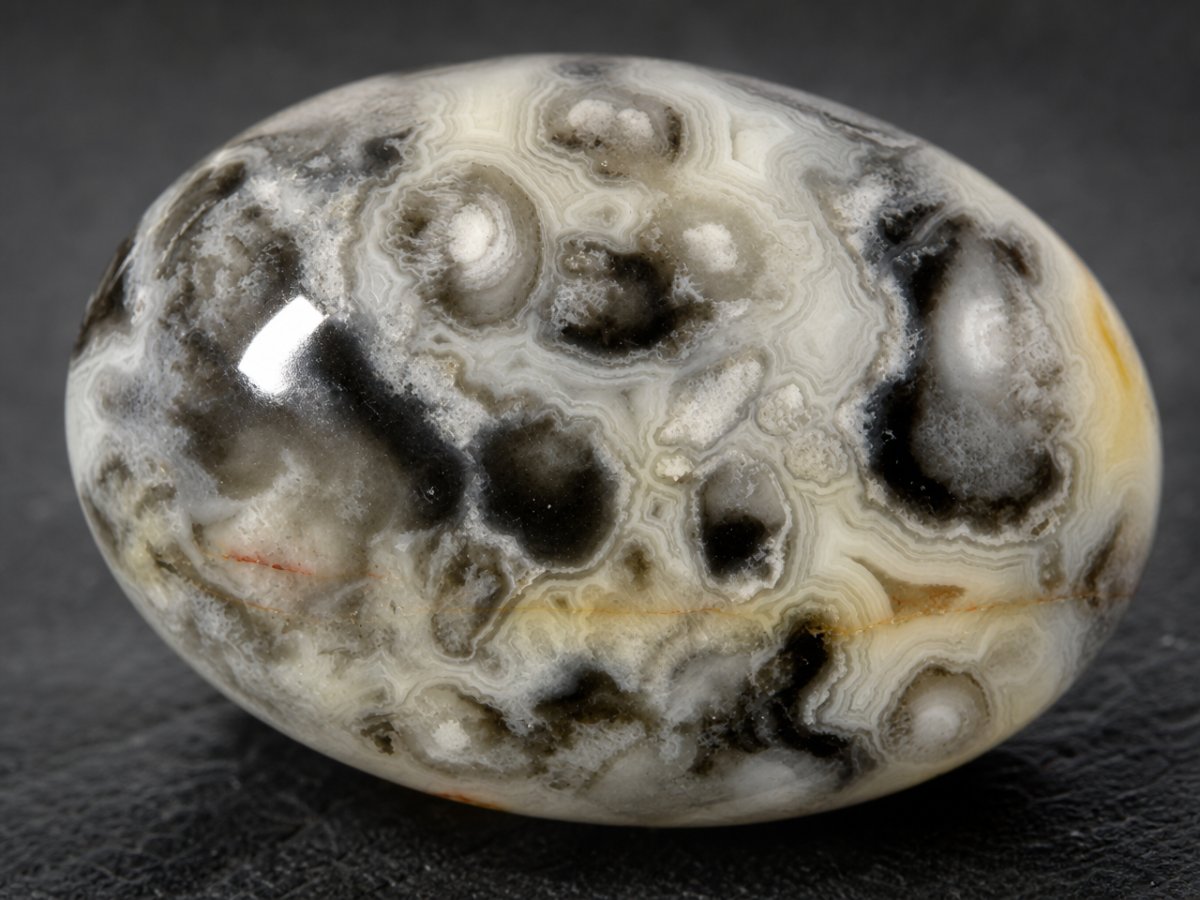
Agate’s hardness of 6.5 to 7 gives it good durability for a wide range of jewelry. It can be used in pieces that are worn often, provided the design protects the stone from hard impacts and excessive abrasion. The rounded profile of cabochons can be helpful because there are no sharp facet junctions to abrade in the same way as on a faceted gem.
Rings receive more knocks than pendants, earrings or brooches, so setting choice matters. If you are buying agate for a ring, consider a setting that protects the edge of the cabochon. Bezel-style settings are often practical for cabochons because they hold the stone around the perimeter, though the best setting depends on the design and stone dimensions.
For earrings, pendants and necklaces, agate is generally easier to wear because those jewelry types are less exposed to daily impact. For bracelets, use extra care because wrist jewelry often contacts desks, counters and other hard surfaces.
How to Buy Agate: Practical Selection Criteria
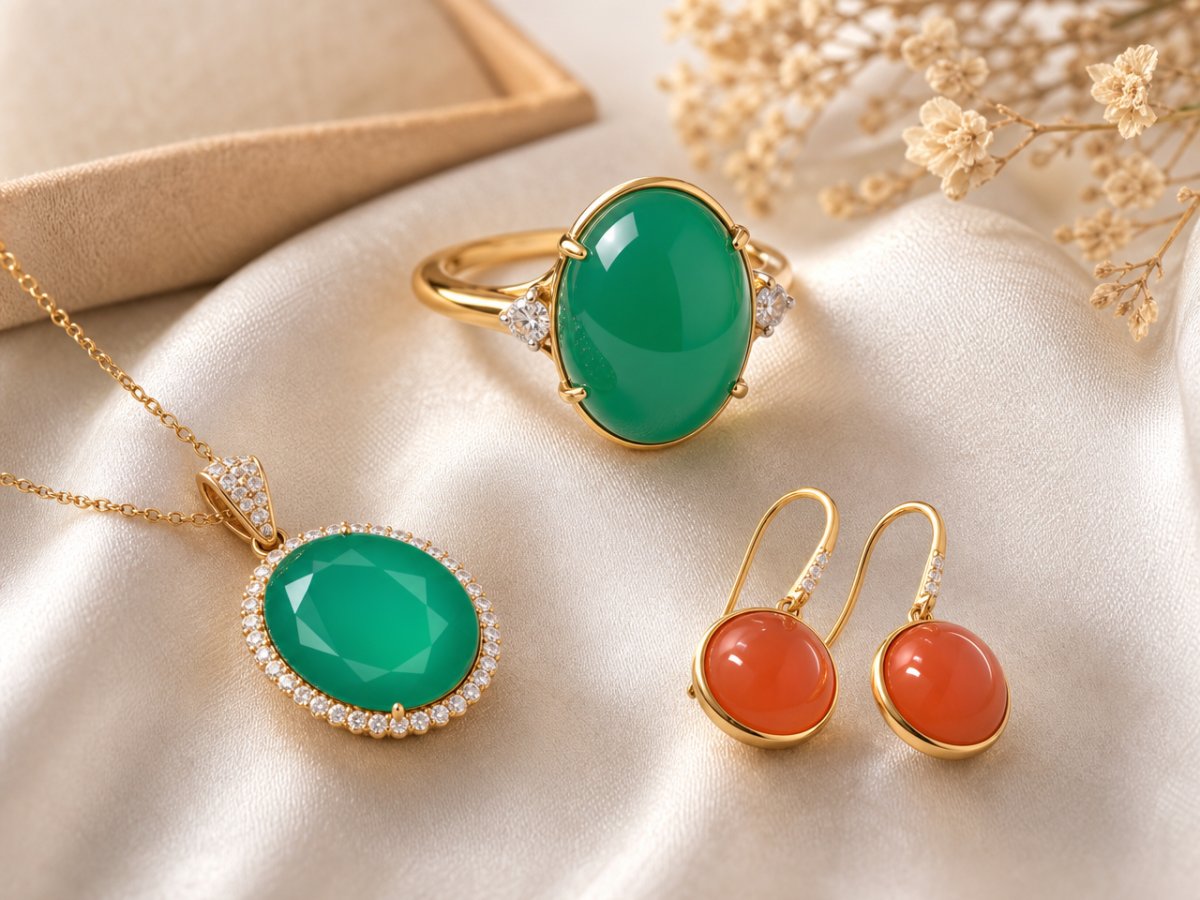
Because agate purchases are often driven by appearance and design suitability, the most important buying questions are practical: Does the stone look attractive to you? Is it well cut? Is the size correct? Does the listing provide the information needed to make a confident decision?
1. Choose by appearance, not just carat weight
Carat weight is useful, but it should not be the only factor. With cabochons, the face-up size and proportions are often more important for jewelry design. A deeper stone may weigh more without looking much larger from the top. Always compare the length, width and depth in millimeters.
When buying for a specific setting, measurements are essential. A stone that is close in carat weight may still be unsuitable if the outline or depth does not match the mount. For custom jewelry, share the exact dimensions with your jeweler before ordering if there is any doubt.
2. Inspect the cut and shape
Cut quality affects both beauty and usability. A cabochon should sit properly in a setting, have a pleasing outline and show an even polish. If the base is very uneven or the dome is noticeably off-center, setting the stone may be more difficult and the finished jewelry may look less refined.
Matched pairs or sets require extra attention. If you are buying agate for earrings or symmetrical designs, compare the stones for size, outline, dome height and overall appearance. Even small differences can be visible when two stones are worn side by side.
3. Evaluate the polish and surface condition
A good polish gives agate a clean, finished look. Look for a smooth reflection across the surface and avoid stones with obvious scratches, chips or dull patches unless the listing clearly shows them and the price reflects the condition. Surface condition is especially important for cabochons because there are no facets to distract the eye.
If you are buying online, enlarge the images and view the stone from more than one angle when possible. Reputable sellers provide individual gemstone photos, measurements and clear descriptions so you can evaluate the actual stone you are purchasing.
4. Match the stone to the jewelry purpose
The best agate for a pendant may not be the best agate for a ring. A dramatic larger cabochon can work well in a pendant where it has room to be seen. A ring stone may need a more compact shape and a secure setting. Earrings require attention to matching and weight, especially if the stones are large.
For jewelry designers, agate can be a useful design stone because cabochons are available in many shapes and sizes. Select stones with consistent dimensions if you are producing repeat designs, and choose unique individual pieces when the design is meant to be one of a kind.
5. Consider value in practical terms
Agate value should be considered in relation to appearance, size, cutting quality, polish, condition and suitability for your project. A stone that perfectly fits a design may be a better purchase than a larger stone that requires a new setting or does not match the intended style.
Do not judge agate only by price per carat. For cabochons, workmanship and face-up appeal often matter more than weight alone. A well-proportioned, well-polished cabochon in the right size can be the smarter buy.
Buying Agate Online
Online buying works well when the listing gives you enough information. For agate, review the individual photos carefully and confirm the dimensions, shape, weight and cut style. Since cabochon gems are three-dimensional objects, depth matters. A stone that looks suitable from the top may sit too high or too low for a particular setting if the depth is not considered.
When browsing GemSelect, use the product details to compare stones based on the needs of your project. If you are buying multiple stones, keep notes on dimensions and shape so that your final selection is consistent. For designers, calibrated or closely matched sizes can save time at the bench.
Also consider return policies and whether the seller identifies the gemstone clearly. A trustworthy buying experience depends on accurate descriptions, clear images and transparent specifications.
Care and Maintenance
Agate is durable enough for many jewelry applications, but proper care will help keep it looking its best. Store agate separately from harder gemstones and materials that could scratch it. A soft pouch or lined jewelry box compartment is a simple way to reduce abrasion.
Clean agate jewelry gently with mild soapy water and a soft cloth or soft brush. Rinse well and dry thoroughly before storage. Avoid harsh handling, sudden impacts and abrasive cleaning materials. If the stone is set in jewelry, care for the entire piece according to the needs of the metal and setting as well as the gemstone.
Common Buying Mistakes to Avoid
Ignoring millimeter dimensions
Many buyers focus on carat weight first, but cabochons must fit by measurement. Always check length, width and depth, especially when replacing a stone or buying for a ready-made setting.
Assuming all cabochons are cut equally
Cabochon quality varies. Look for symmetry, a pleasing dome, smooth outline and good polish. These features strongly influence the finished look of the jewelry.
Buying unmatched stones for paired jewelry
For earrings or balanced designs, stones should be closely matched in size, shape and overall appearance. If they are not sold as a pair, compare them carefully before purchasing.
Choosing a setting without considering wear
Agate has good hardness, but rings and bracelets still need protective design. If the jewelry will be worn frequently, choose a setting that supports and protects the stone.
Summary
Agate is a quartz gemstone with a Mohs hardness of 6.5 to 7, a refractive index of 1.530 to 1.540 and a specific gravity of 2.58 to 2.64. These properties help make it a practical gemstone for jewelry and a familiar choice for buyers who appreciate cabochon-cut stones.
The most important buying factors are visual appeal, cabochon quality, polish, condition, dimensions and suitability for the intended design. Rather than buying by carat weight alone, compare the actual measurements and examine the individual stone. A carefully chosen agate cabochon can be an attractive, wearable and versatile addition to a jewelry project or gemstone collection.
