


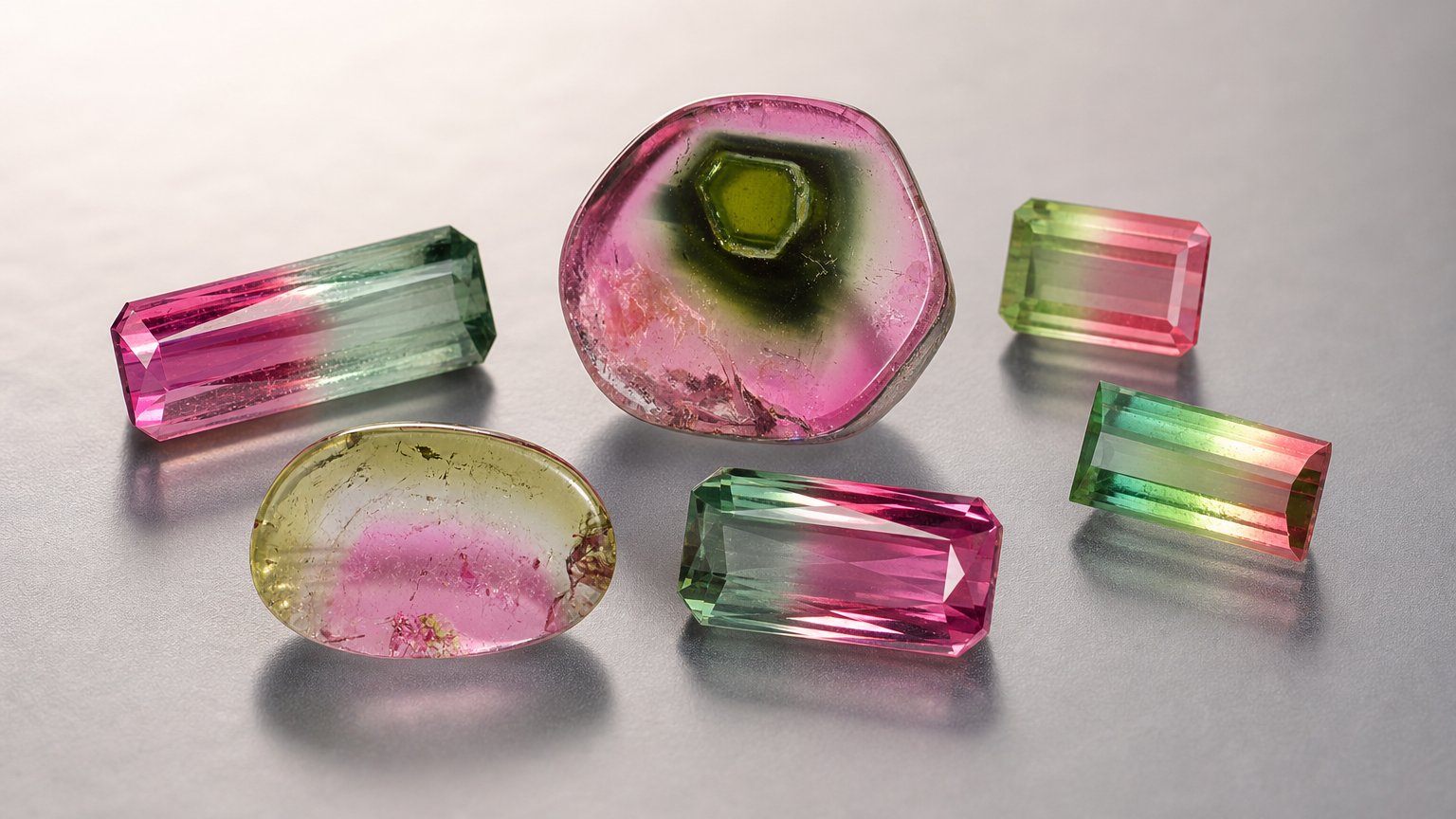
Watermelon Tourmaline is a multicolor variety of tourmaline prized by buyers who want a gemstone with natural-looking character, visible color zoning and strong design appeal. Unlike gems that are evaluated mainly by a single body color, Watermelon Tourmaline is usually chosen for the way its different color areas interact within the stone. This makes buying it a little different from buying many traditional gemstones: the most appealing stone is often the one with the most attractive pattern, balance and cut for your intended jewelry design.
This guide explains what to look for before purchasing Watermelon Tourmaline, including color appearance, cut style, shape, clarity expectations, origin, treatment status and jewelry suitability. It is written for gemstone buyers, jewelers, collectors and designers who want practical, purchase-focused guidance without relying on invented grading terms or exaggerated claims.
What Is Watermelon Tourmaline?
Watermelon Tourmaline is a variety of tourmaline and is associated with the mineral species elbaite. For buyers, the most important identifying feature is its multicolor appearance. The appeal comes from natural color zoning rather than from a single uniform color. This zoning can be displayed in different ways depending on how the rough crystal is cut.
Because each Watermelon Tourmaline shows its color arrangement differently, two stones with the same weight or outline may look very different in jewelry. Some gems are selected because their zoning is bold and graphic, while others are chosen for a softer, more blended multicolor effect. When comparing stones, examine the actual face-up appearance rather than relying only on carat weight, shape or inventory category.
Color and Appearance: The Most Important Buying Factor
Color is the main reason most people buy Watermelon Tourmaline. Since it is known for a multicolor appearance, buyers should pay close attention to the arrangement, contrast and visibility of the color zones. A good purchase is not simply the most saturated or the largest stone; it is the stone whose color pattern works best for your taste and jewelry purpose.
Color zoning and pattern
Look at how the colors are distributed across the gem. In slice cuts, the pattern may be displayed broadly across the surface, making the gem especially interesting for pendants or statement designs. In cabochons, the domed surface can soften and emphasize the color transitions. In faceted gems, the reflections from the facets may break up the zoning, which can create sparkle but may make the pattern less direct.
For online buying, view all available photos and measurements carefully. A single image can show the general appearance, but additional images or video can help you understand whether the color zones are symmetrical, uneven, dramatic or subtle. None of these is automatically better; the right choice depends on whether you want a natural free-form look, a more balanced pattern, or a stone that fits a specific jewelry layout.
Transparency and visual texture
Watermelon Tourmaline can be appreciated in different appearances depending on the cut. Transparent or more open-looking material may be attractive in faceted gems, while material with visible internal features may still be very appealing in cabochons or slices if the color pattern is strong. Rather than judging every stone by the same standard used for transparent faceted gems, consider whether the internal features distract from or add character to the overall design.
Cut Styles: Cabochons, Slices and Faceted Stones
Cut is especially important with Watermelon Tourmaline because the cutter must decide how to display the multicolor structure. The most common and practical styles are cabochon and slice cut, while faceted gems are also available and can be attractive when the material suits that style.
Cabochon Watermelon Tourmaline
Cabochons have a smooth, polished, domed surface rather than a faceted crown. This style is well suited to stones where the color pattern is the main feature. A cabochon can make the gem feel organic and wearable, and it can be a strong choice for pendants, earrings and rings where a smooth profile is desired.
When buying a cabochon, check that the dome is even, the polish is clean and the outline suits the setting you have in mind. The color should be positioned attractively when viewed from the front. Also pay attention to the base and thickness, because a very thick stone may sit high in a setting, while a very thin one may need careful mounting.
Slice-cut Watermelon Tourmaline
Slice cuts are especially associated with Watermelon Tourmaline because they can present the gem’s multicolor pattern clearly. These stones are often chosen for pendants and artistic jewelry where the natural zoning is meant to be seen as a design feature.
When evaluating a slice, look for an attractive outline, good polish and a color arrangement that is pleasing across the full surface. Fancy shapes are common, and the natural-looking silhouette can be part of the appeal. Slice cuts may vary more in outline and thickness than calibrated stones, so designers should check the dimensions carefully before planning a setting.
Faceted Watermelon Tourmaline
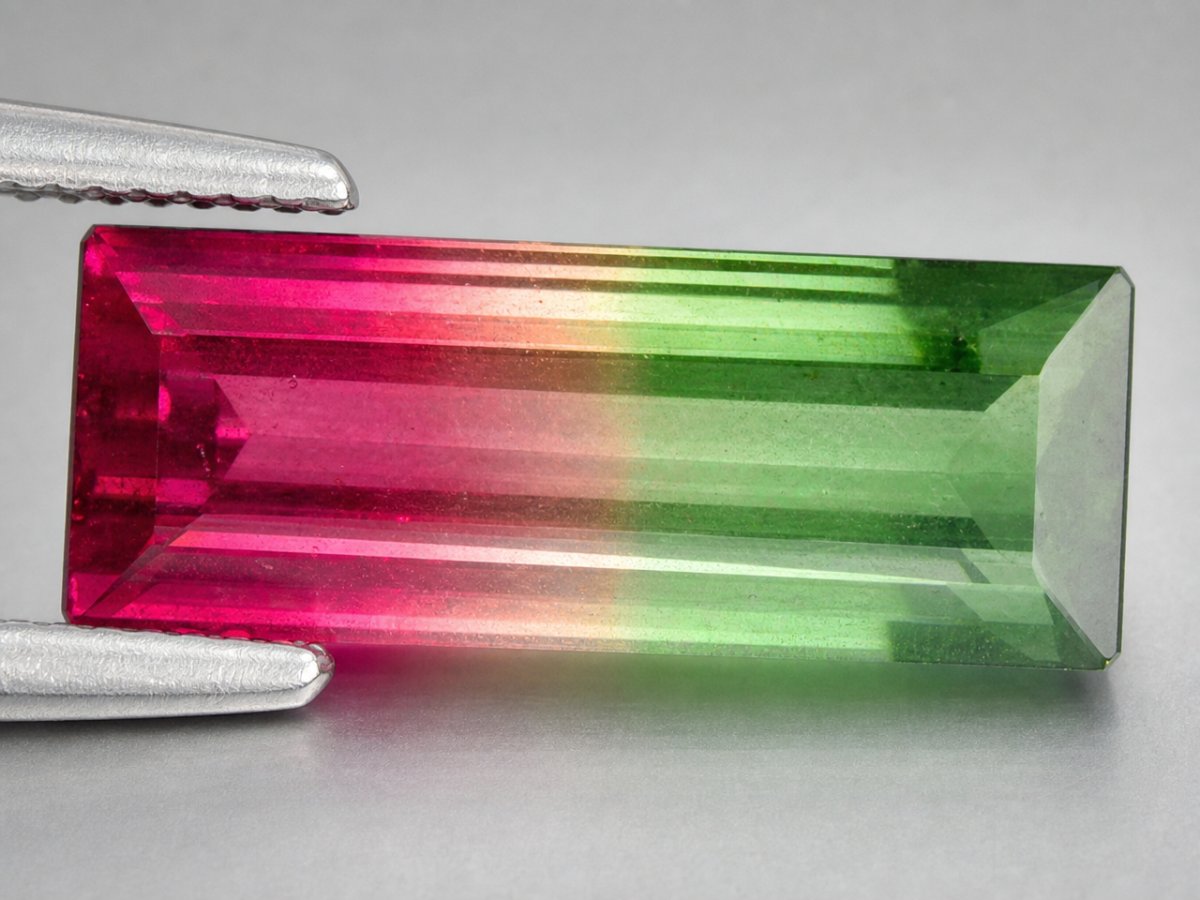
Faceted Watermelon Tourmaline can be a good choice when you want more brilliance and a more traditional gemstone look. Faceting adds reflections, but those reflections can change how the color zoning appears. In some gems, the facets enhance contrast; in others, they may make the multicolor pattern less obvious.
For faceted stones, examine the face-up view, not only the shape name. Octagon, cushion, oval and pear shapes may all be encountered, with fancy shapes and octagons being especially relevant choices. The best faceted stone for you is the one that balances pleasing outline, visible color and suitable proportions for your jewelry project.
Shape and Size Considerations
Watermelon Tourmaline is often found in fancy shapes and octagons, with cushion and oval shapes also useful for many designs. Pear shapes may be selected when the layout calls for a directional or drop-style look. Because the visual pattern is so important, shape should be chosen to support the color rather than simply to follow a standard jewelry format.
When comparing sizes, remember that carat weight does not always tell you how large the gem will look once set. Slice cuts, cabochons and faceted stones can distribute weight differently. Always check millimeter dimensions, depth and face-up area. This is especially important for earrings, where matching size and visual balance matters, and for rings, where the height of the stone affects wearability.
Clarity: What Buyers Should Expect
For Watermelon Tourmaline, clarity should be judged in relation to the cut and the intended use. A faceted gem is usually evaluated more strictly for distracting inclusions because brilliance and transparency are part of the appeal. Cabochons and slices, on the other hand, are often purchased for color pattern and overall character, so internal features may be more acceptable if they do not weaken the appearance or interfere with the design.
Useful buying questions include: Are the inclusions obvious from normal viewing distance? Do they interrupt the main color pattern? Are there surface-reaching features near edges or corners that could affect setting? Does the stone still look attractive in the style of jewelry you plan to make? A practical evaluation is often more helpful than trying to force Watermelon Tourmaline into a single clarity expectation.
Origins of Watermelon Tourmaline
Watermelon Tourmaline is associated with several important origins. Afghanistan and Brazil are especially notable sources, and material is also associated with Madagascar, Mozambique, Nigeria and Pakistan. Origin can be interesting for collectors and may be part of a gem’s story, but buyers should still focus first on the individual stone’s appearance, cutting and suitability for the intended use.
Unless a specific origin is documented, avoid assuming where a stone is from based only on color or appearance. For most jewelry buyers, the most important factors are the visible multicolor pattern, cut quality, treatment disclosure and how well the gem fits the design. Collectors who need origin information should look for clear seller disclosure and, where appropriate, independent documentation.
Treatments and Disclosure
Watermelon Tourmaline is commonly offered as untreated. This is an important point for buyers who prefer gems without enhancement. When shopping, read the treatment information carefully and choose sellers who disclose treatment status clearly.
At GemSelect, treatment disclosure is an important part of helping buyers compare gemstones with confidence. If a stone is listed as untreated, that means the purchasing decision can focus more directly on the natural appearance, cut, size and intended jewelry use. For significant purchases or collector-focused buying, you may also choose to request or review any available gemological documentation.
Durability and Everyday Wear
Watermelon Tourmaline is used in pendants, earrings, rings and necklaces, but each jewelry type exposes the gem to different levels of wear. Pendants and necklaces are often practical choices because they usually experience less impact than rings. Earrings are also a good option for showcasing color while keeping the stones relatively protected during normal wear.
Rings require more consideration because hands are exposed to knocks, pressure and contact with hard surfaces. If you choose Watermelon Tourmaline for a ring, consider a protective setting style and avoid wearing it during activities where the stone could be struck or abraded. This is sensible advice for many colored gemstones, particularly stones with distinctive cuts, edges or slices.
Care should be gentle and practical. Avoid harsh handling, store the gem or jewelry separately from harder items, and clean with care according to the setting and seller guidance. If the stone has thin edges, an unusual outline or visible internal features, ask a jeweler to set and inspect it carefully.
Best Jewelry Uses
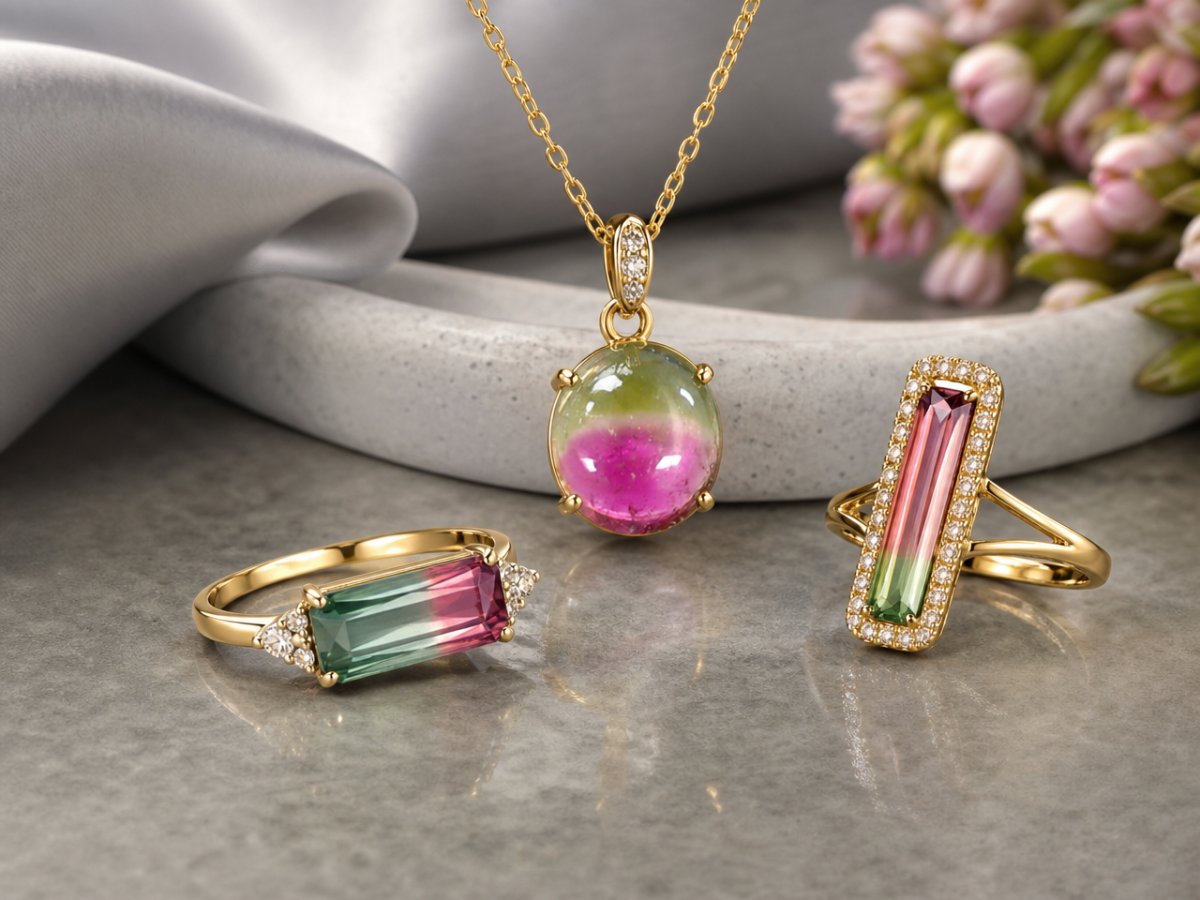
Watermelon Tourmaline is especially well suited to pendants because a pendant allows the multicolor pattern to be displayed prominently with less exposure to impact. Slice cuts and cabochons can be particularly effective in pendant designs, from simple bezel settings to more artistic custom pieces.
Earrings are another attractive use, especially when two stones can be matched for size, outline or overall color balance. Exact matching may be difficult because each Watermelon Tourmaline pattern is individual, so designers often choose complementary pairs rather than identical ones.
Rings can be beautiful, especially with cabochon or carefully chosen faceted stones, but they should be designed with wear in mind. Necklaces can also use Watermelon Tourmaline effectively, either as a central focal gem or as part of a multistone design where the color zoning adds interest.
How to Buy Watermelon Tourmaline with Confidence
1. Start with the visual pattern
The most important question is simple: do you like the way the stone looks? With Watermelon Tourmaline, the individuality of the multicolor pattern is central to its appeal. Look for a pattern that appears intentional, balanced or expressive depending on your design goal.
2. Choose the cut for the jewelry design
Select a slice cut when the color pattern itself should be the main focus. Choose a cabochon for a smooth, wearable gem with a softer presentation. Consider a faceted stone if you want more sparkle and a more classic gemstone style.
3. Check measurements, not only carat weight
Because Watermelon Tourmaline appears in different cuts and shapes, millimeter dimensions are essential. This is especially true for custom settings, matched earrings and pendants where the outline matters.
4. Review clarity in context
Do not reject a stone only because it has internal features. Instead, decide whether those features affect beauty, durability or setting. In cabochons and slices, color pattern may matter more than high transparency.
5. Confirm treatment disclosure
Since Watermelon Tourmaline is commonly offered untreated, clear treatment information should be part of your buying checklist. Choose sellers who make this easy to understand.
6. Match the stone to the setting
Thin slices, fancy outlines and stones with corners need thoughtful settings. A jeweler can help decide whether a bezel, prong or custom mounting is most appropriate for the shape and intended wear.
Summary
Watermelon Tourmaline is a distinctive multicolor tourmaline variety associated with elbaite. Buyers should focus on the individual stone’s color zoning, cut style, shape, clarity in context and jewelry suitability. Cabochons and slice cuts are especially important because they often display the multicolor pattern clearly, while faceted stones can add brilliance for buyers who prefer a more traditional gem appearance.
Afghanistan and Brazil are prominent origins, with Madagascar, Mozambique, Nigeria and Pakistan also associated with this gemstone. Watermelon Tourmaline is commonly untreated, making clear disclosure an important part of the buying process. Whether you are choosing a pendant centerpiece, a pair of earrings, a ring stone or a necklace gem, the best purchase is one that combines an appealing pattern with practical dimensions and a setting appropriate for the way the jewelry will be worn.
