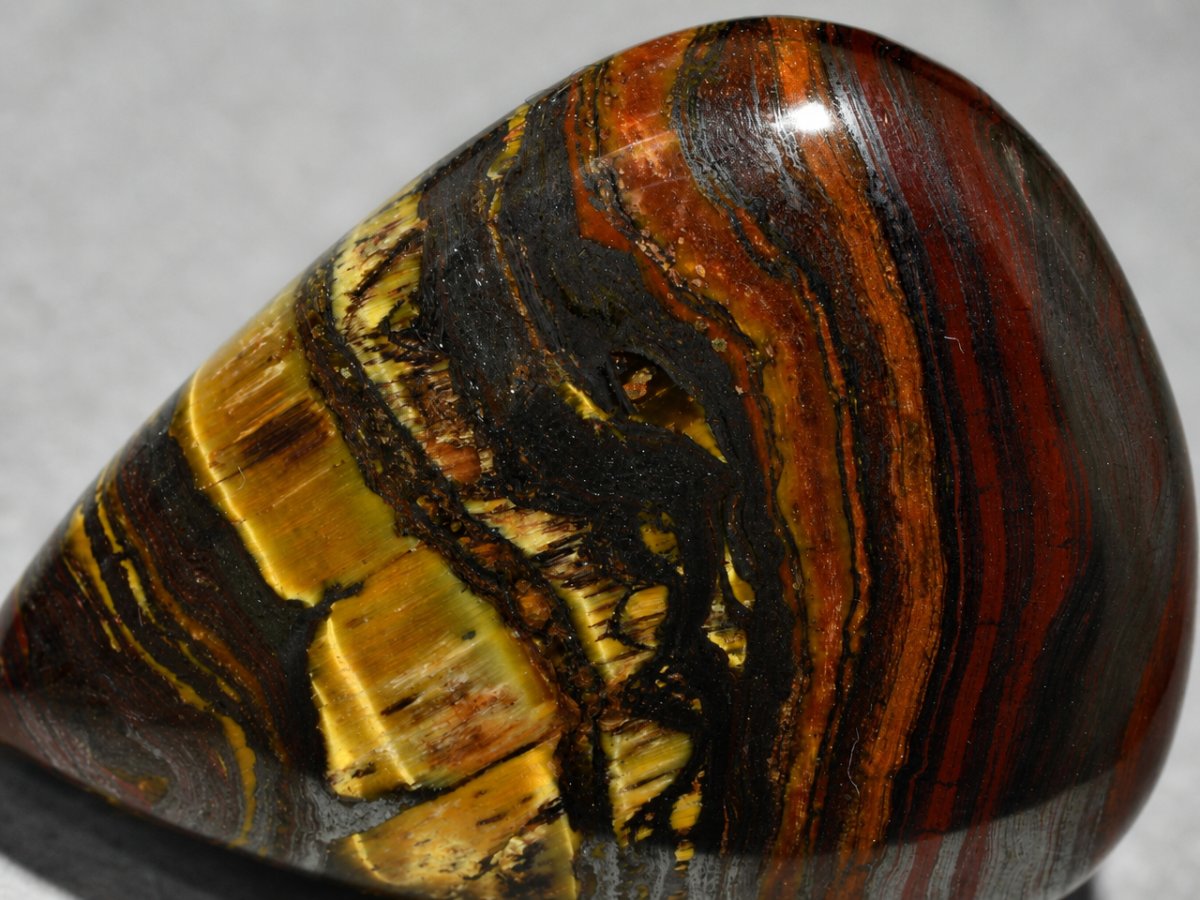


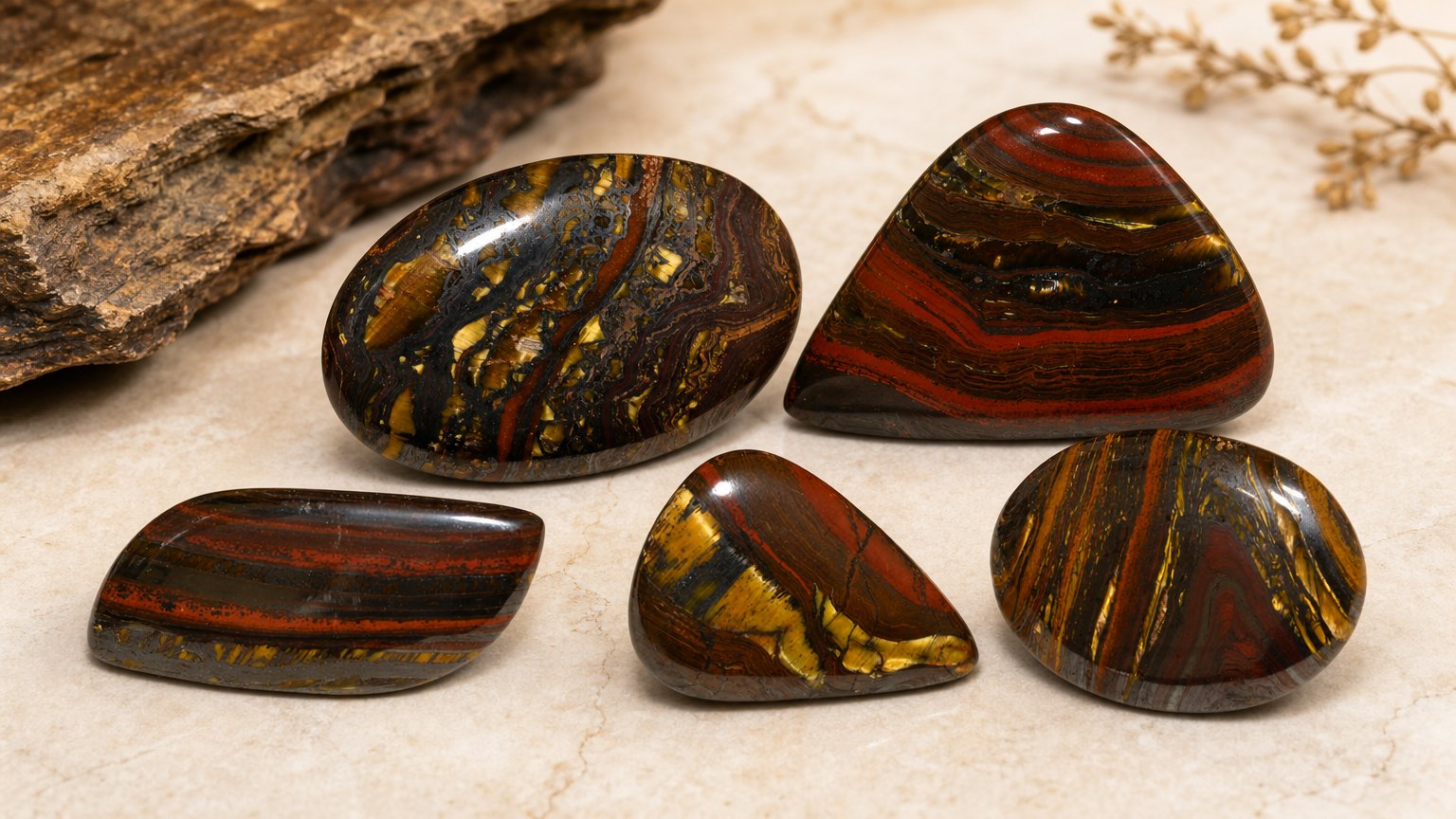
Tiger's Eye Matrix is chosen for its earthy color, natural pattern and practical durability. For buyers, the most important decision is usually visual: selecting a stone with an attractive balance of brown tiger's eye and multicolor matrix features, then matching the cut and size to the intended jewelry design.
This guide explains the buying factors that matter most, including appearance, cut, durability, treatment status, origin and jewelry suitability, so you can compare Tiger's Eye Matrix gemstones with confidence.
What Is Tiger's Eye Matrix?
Tiger's Eye Matrix is a variety of Tiger's Eye associated with quartz and iron oxide. Its gemological composition is represented by SiO₂ for quartz and Fe₂O₃ for hematite, giving it a strong connection to both quartz-based material and iron-rich components.
The term matrix is useful for buyers because it signals that the stone is appreciated not only for a single uniform color, but also for the natural mixture and patterning within the material. This makes each gemstone visually individual, especially in cabochons, slices and freeform pieces.
Color and Appearance: What to Look For
The main color to expect in Tiger's Eye Matrix is brown, often combined with multicolor areas. When choosing a stone, look first at the overall face-up impression. A good purchase is one where the color distribution, contrast and pattern appeal to you and suit the jewelry design you have in mind.
Because Tiger's Eye Matrix is valued for natural pattern, there is no single ideal look for every buyer. Some people prefer a more even brown appearance, while others want stronger multicolor contrast and a more dramatic matrix effect. For matched jewelry, such as earrings or multi-stone necklaces, pay attention to whether the stones share a similar tone, pattern scale and outline.
Cut and Shape Choices
Cabochon is the most common cut for Tiger's Eye Matrix. A cabochon has a smooth, polished dome rather than facets, making it well suited to patterned gem materials. When buying a cabochon, check that the dome looks balanced, the polish is even and the outline is suitable for the setting.
Oval and round shapes are especially common and easy to use in pendants, necklaces, earrings and rings. Cushion and pear shapes are also useful when a design needs a softer outline or a more distinctive profile. Baguette and freeform shapes may appeal to designers who want a less traditional layout or a stone that follows the natural pattern of the rough.
Carving cuts and slice cuts are also seen in Tiger's Eye Matrix. Carvings emphasize shape and artistic form, while slices can highlight larger areas of natural pattern. For these cuts, inspect the surface polish, edge finish and the way the pattern is positioned across the stone.
Durability and Everyday Wear
Tiger's Eye Matrix has a Mohs hardness of 6.5 to 7. This makes it durable enough for many jewelry uses, especially necklaces, pendants, earrings and brooches, where the stone is less exposed to knocks and abrasion.
Rings and bracelets are also possible, but they receive more contact during wear. If you are buying Tiger's Eye Matrix for a ring or bracelet, consider a protective setting and avoid designs that leave exposed edges vulnerable to impact. As with most gemstones, it is wise to store pieces separately to prevent scratching from harder materials.
Treatments and Buying Confidence
Tiger's Eye Matrix is commonly available as untreated material. For buyers, this is a straightforward advantage: the appearance you are choosing is natural to the material rather than the result of routine enhancement.
When purchasing, review the seller's treatment disclosure. GemSelect clearly lists relevant gemstone details where available, helping buyers compare stones based on size, cut, color, origin and treatment information.
Origins
Important sources for Tiger's Eye Matrix include Australia and South Africa. Mexico is also known as an origin, while India is another source associated with this material.
For most buyers, origin is secondary to appearance, cut quality, size and treatment disclosure. Unless you are collecting by locality, choose the stone that best fits your design and visual preference rather than relying on origin alone.
Key Gemological Properties
Tiger's Eye Matrix belongs to the quartz-related family of gem materials and has a trigonal crystal system. Its refractive index is 1.54 to 1.55, and its specific gravity is 2.60 to 2.71. These properties are mainly useful for identification and gemological reference rather than everyday buying decisions.
For jewelry buyers, the most practical property is hardness. At 6.5 to 7 on the Mohs scale, Tiger's Eye Matrix offers good wearability when matched with appropriate jewelry settings and sensible care.
Best Jewelry Uses
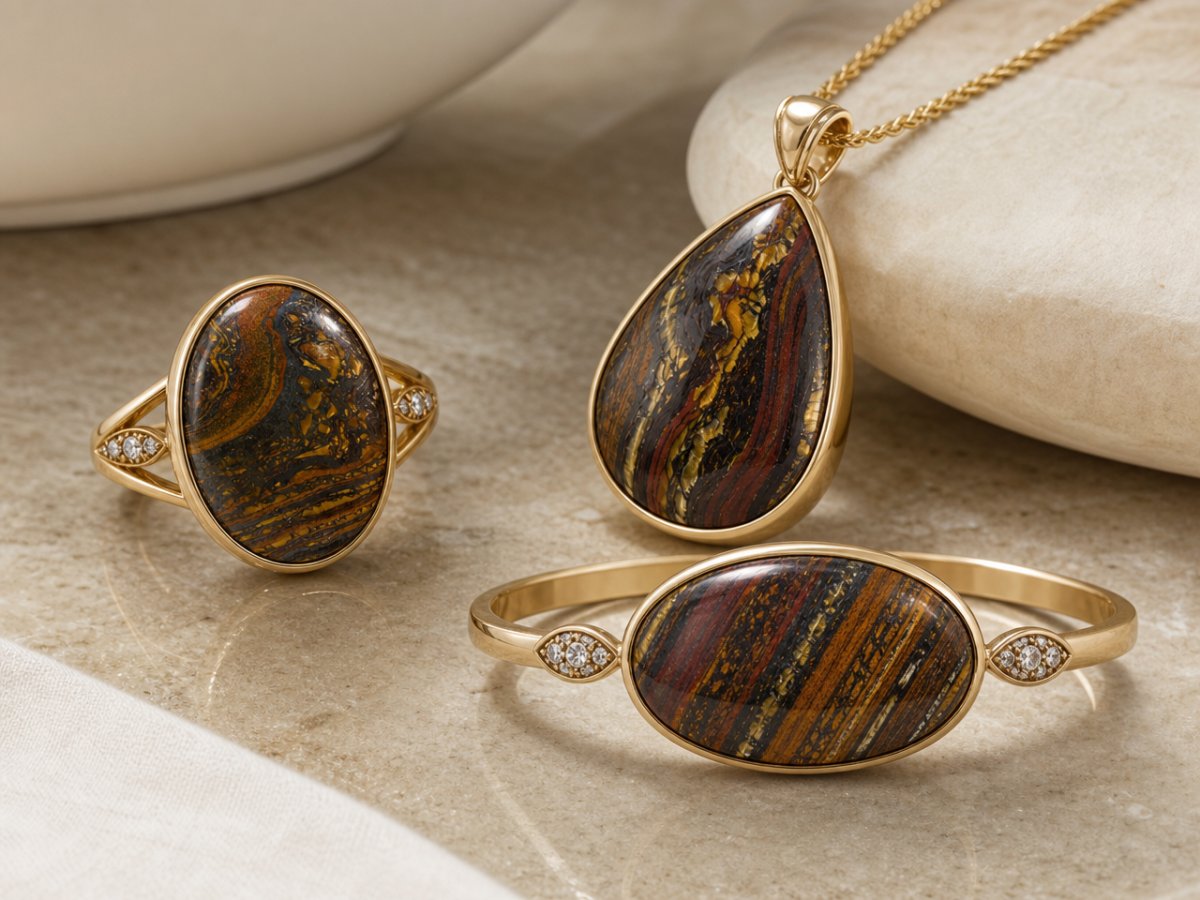
Tiger's Eye Matrix is especially well suited to necklaces and pendants because these designs give the stone enough visible area to show its brown and multicolor pattern. Larger cabochons, slices and freeform pieces can work particularly well as focal stones.
Earrings are a good option when the stones are reasonably matched in color and outline. Rings can be attractive, especially with oval or round cabochons, but they should be worn with more care than pendant stones. Bracelets and brooches are also suitable when the design protects the stone and allows the pattern to be seen clearly.
Practical Buying Checklist
- Choose the pattern first: Look for a pleasing balance of brown and multicolor areas.
- Check the cut: Cabochons should have an even polish, balanced dome and clean outline.
- Match the shape to the design: Oval and round stones are versatile, while pear, cushion, freeform and slice cuts can create a more distinctive look.
- Consider the jewelry use: Pendants and necklaces are low-risk choices; rings and bracelets need more protective settings.
- Review treatment disclosure: Tiger's Eye Matrix is commonly untreated, but it is still best to confirm the listing details.
- Buy matched stones carefully: For earrings or multi-stone layouts, compare tone, size, pattern and shape.
Summary
The best Tiger's Eye Matrix gemstone is the one with an appealing natural pattern, a well-executed cut and the right size and shape for your jewelry project. Brown and multicolor appearance is central to its character, while cabochons remain the most practical and popular cut style. With good hardness, commonly untreated availability and strong suitability for pendants and necklaces, Tiger's Eye Matrix is a practical choice for buyers who appreciate patterned gemstones with an earthy look.