

Swiss Blue Topaz is a blue variety of topaz chosen by buyers who want a clean, bright-looking gemstone for everyday jewelry designs, statement pieces and matching sets. It is especially popular in earrings, pendants and rings because its blue color works well in both classic and modern settings. For buyers, the most important points to understand are color appearance, cut quality, treatment disclosure, shape, size, and how the stone will be used in jewelry.
This buying guide explains what to look for before purchasing Swiss Blue Topaz, whether you are selecting a single loose stone, a calibrated pair for earrings, or a larger gemstone for a pendant or cocktail ring. The goal is not to make the stone seem complicated, but to help you compare options confidently and ask the right questions.
What Is Swiss Blue Topaz?
Swiss Blue Topaz is a variety of the gemstone topaz known for its blue color. The name Swiss Blue describes a recognized blue appearance in the topaz category; it should not be treated as a country-of-origin statement. Swiss Blue Topaz may be associated with several sources, including Brazil, Madagascar, Myanmar, Pakistan, Nigeria and Sri Lanka, with Brazil being especially important in the trade.
For most buyers, Swiss Blue Topaz is best understood as a color category within topaz. When comparing stones, focus first on the visual qualities you can see: color, brightness, transparency, cutting style, proportions and overall appeal. Origin can be interesting, but the practical buying decision is usually driven by beauty, suitability for the jewelry design and clear treatment information.
Color and Appearance
Color is the main reason buyers choose Swiss Blue Topaz. The verified color for this gem is blue, and the most desirable stone for your project is the one with the shade, tone and brightness that suits the design. Because jewelry is worn in changing lighting conditions, it is useful to view photos carefully and, when possible, compare stones under different light sources.
Choosing the Right Blue
When evaluating Swiss Blue Topaz, look for a blue that appears attractive and even across the face of the gem. Some stones may show a lighter or deeper impression depending on cut, size and viewing angle. A well-cut stone should return light in a lively way rather than appearing flat or overly dark in the center.
For matching jewelry, color consistency becomes especially important. A pair of earrings, a pendant-and-ring set, or multiple stones in a bracelet should be selected for similar tone and saturation. Even small differences can be noticeable when stones are placed side by side.
Transparency and Visible Inclusions
Swiss Blue Topaz is commonly purchased for a clean, transparent look. When buying, inspect the gem image and description for anything that interrupts the face-up appearance. Inclusions are natural features found in many gemstones, but for a bright blue faceted stone, most buyers prefer a gem that looks clean to the unaided eye.
For larger stones, take extra time to review the center and edges. A small inclusion near the edge may be hidden by a setting, while a mark in the center can be more visible. Clarity should be considered together with color and cut; a lively, well-proportioned stone can be more attractive than a poorly cut stone that is technically cleaner.
Cut Styles and Shapes
Cut has a major effect on how Swiss Blue Topaz looks in jewelry. The cutting style determines how light reflects inside the stone, while the shape determines the outline and how the gem fits into a design.
Common Cut Styles
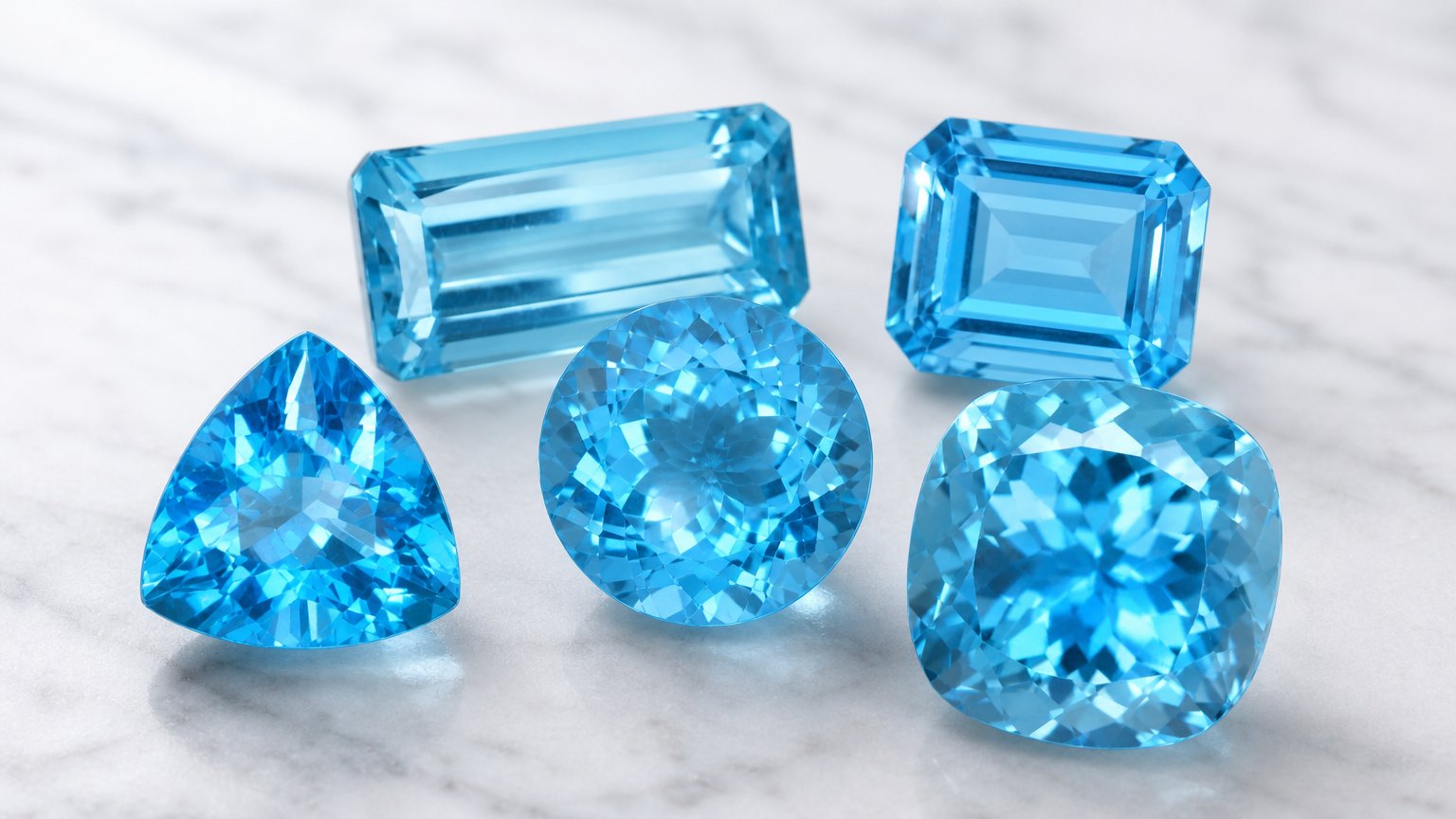
Swiss Blue Topaz is most often seen as a faceted gemstone, with emerald cuts being especially common. An emerald cut uses step-like facets and is often paired with an octagon outline, giving the gem a refined geometric look. This style is a strong choice for rings, pendants and cufflinks where clean lines are part of the design.
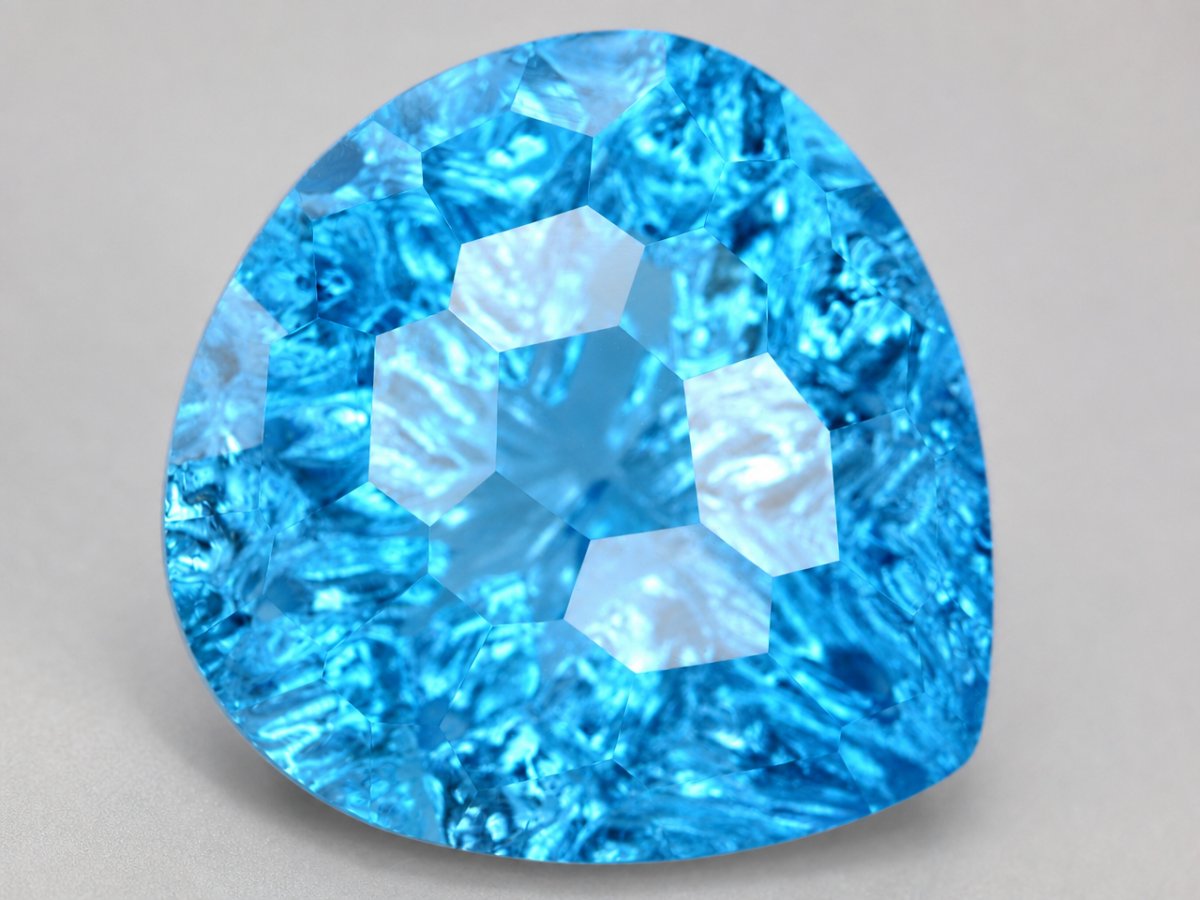
Other cutting styles can create different effects. Checkerboard cuts add a patterned surface that can make the crown of the stone look more textured and reflective. Concave cuts use curved facets to create a distinctive play of light. Portuguese cuts use many facets and can give the stone a rich, sparkling appearance. Cabochons, which have a smooth domed surface rather than facets, are also seen, although faceted stones are the more typical choice for buyers seeking brilliance.
Buff top styles combine a smooth top with a faceted pavilion, offering a mix of cabochon softness and faceted reflection. Step cuts may appeal to buyers who prefer a more architectural style rather than a glittering appearance.
Popular Shapes
Octagon, oval and round shapes are among the most important options for Swiss Blue Topaz. Octagon shapes suit emerald cuts and tailored designs. Ovals are versatile and can make an elegant pendant or ring center stone. Rounds are easy to use in classic jewelry and matching pairs.
Cushion, pear and square shapes are also useful for designers who want a slightly different outline. Pear shapes are attractive in pendants and drop earrings, while cushions can soften the look of a ring. Baguette, heart, marquise, trillion and other fancy shapes may be chosen when the design calls for a more distinctive silhouette.
Size and Proportions
When buying Swiss Blue Topaz, do not judge size by carat weight alone. Carat weight measures weight, not face-up dimensions. Two stones of the same weight can look different in size depending on how they are cut. Always review the millimeter measurements, especially if the gemstone must fit an existing setting.
For earrings, matching dimensions and shape are often more important than reaching a specific carat weight. For pendants, a larger face-up size may be desirable because the stone is viewed from a distance. For rings, balance is important: the stone should suit the hand, the setting and the intended wear.
Proportions matter because they affect appearance. A stone that is cut too deep may look smaller from the top than expected, while one that is too shallow may lose brightness. Look for a balanced outline, an even shape and a pleasant face-up appearance.
Treatments and Disclosure
Treatment is one of the most important buying considerations for Swiss Blue Topaz. This gemstone is commonly associated with irradiation, and heat treatment is also important. These treatments are used in the blue topaz category and should be disclosed clearly by the seller.
For buyers, the key point is transparency. A treated gemstone is not automatically a poor choice, but you should know what you are buying. GemSelect lists treatment information where applicable so buyers can compare stones with more confidence.
What to Ask Before Buying
Before purchasing Swiss Blue Topaz, check whether the stone is described as irradiated, heat treated or untreated. If a stone is represented as untreated, request clear confirmation because untreated material is less commonly emphasized in this category. For significant purchases, a gem report or additional documentation may be useful, especially when treatment status is important to the buyer.
Treatment disclosure is also important for jewelers and designers because it helps them provide accurate information to their own customers. Clear descriptions build trust and reduce confusion after the sale.
Origins of Swiss Blue Topaz
Swiss Blue Topaz may be associated with several origins. Brazil is especially important, while Madagascar, Myanmar and Pakistan are also known sources. Nigeria and Sri Lanka are additional origins connected with this gemstone category.
Origin can be a meaningful detail for collectors and for buyers who enjoy knowing the background of a gem. However, when selecting Swiss Blue Topaz for jewelry, the visible quality of the gemstone and the reliability of treatment disclosure are usually the most practical points to evaluate. If origin is important to you, look for a seller who provides that information clearly rather than assuming it from the trade name.
Durability and Everyday Wear
Swiss Blue Topaz is used in many jewelry types, including rings, pendants and earrings. As with any gemstone, the right setting and sensible care help protect its beauty over time. Rings receive more impact than pendants or earrings, so the setting should protect the stone from knocks, especially if it will be worn often.
For active lifestyles, consider designs that hold the gemstone securely and protect exposed edges. Octagon and emerald-cut stones can look elegant in rings, but their corners should be properly protected by the setting. Pendant and earring settings usually experience less direct impact, making them excellent choices for showcasing the blue color.
Cleaning should be gentle. Avoid harsh handling, sudden blows and storage where stones can rub against each other. A soft cloth, mild cleaning approach and separate storage are practical habits for preserving the finish of polished gemstones.
Jewelry Uses
Swiss Blue Topaz is highly adaptable. Its blue color works well in white metals, yellow metals and mixed designs, and it can be used as a center stone or accent depending on the piece.
Earrings and Stud Earrings
Earrings are one of the strongest uses for Swiss Blue Topaz. Round, oval and octagon stones can be matched for studs, drops or dangle earrings. When buying a pair, compare color, shape, size and cut style. A close match is more important than small differences in weight.
Pendants and Necklaces
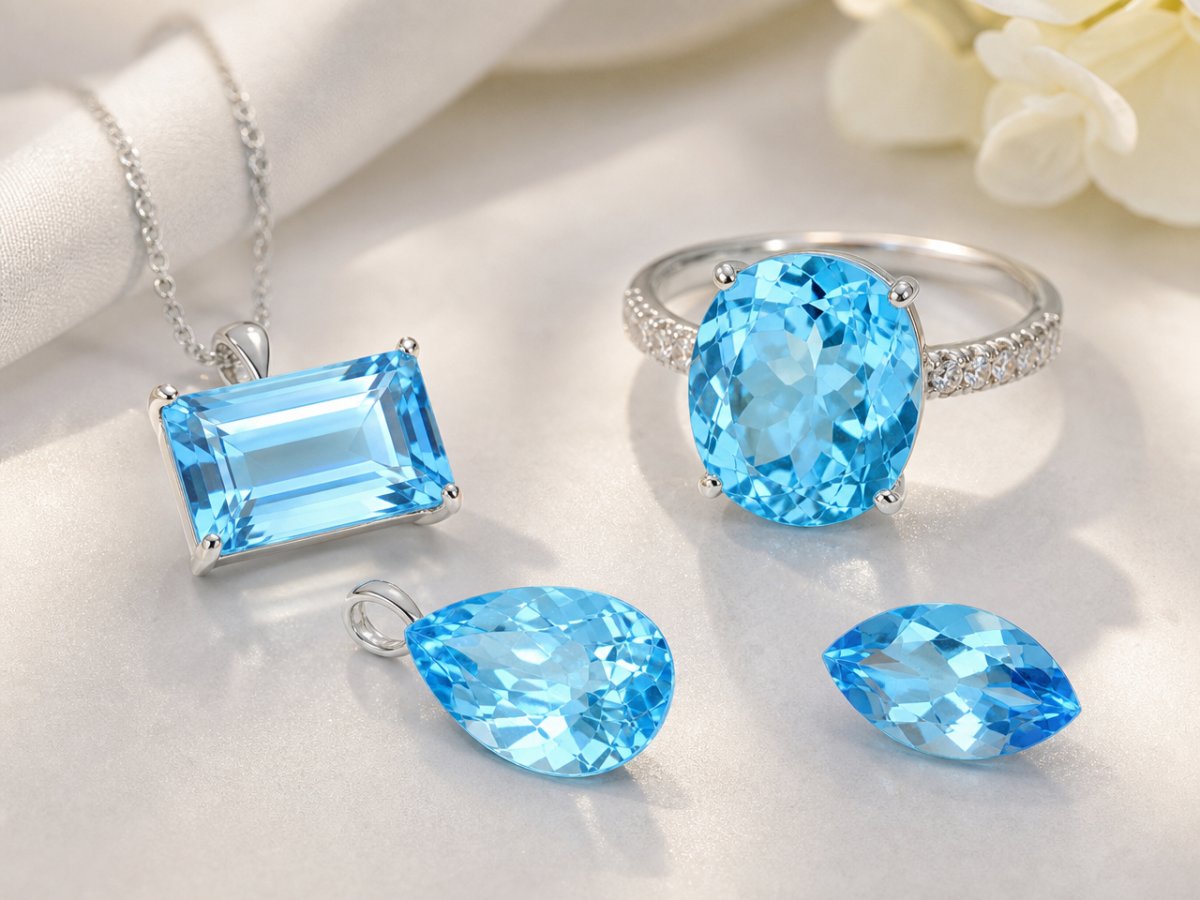
Pendants and necklaces allow Swiss Blue Topaz to be viewed clearly and protected from much of the impact that rings experience. Ovals, pears, rounds and cushions are all practical choices. For a pendant, choose a stone with an attractive face-up appearance because it will often be viewed from the front.
Rings and Cocktail Rings
Swiss Blue Topaz can make an attractive ring stone, especially when the design supports and protects the gem. Cocktail rings often use larger gemstones and can highlight the vivid presence of blue topaz. For rings, pay close attention to setting style, stone height and whether the design suits the wearer’s daily habits.
Bracelets and Cufflinks
Bracelets and cufflinks can also feature Swiss Blue Topaz, but they require thoughtful design. Bracelets are more exposed to knocks, so secure settings are important. Cufflinks often suit geometric stones such as octagons, squares and baguettes, especially when a clean, tailored look is desired.
Practical Buying Checklist
Use the following points when comparing Swiss Blue Topaz gemstones:
- Color: Choose a blue that looks even, appealing and suitable for the jewelry design.
- Cut: Look for good brightness, symmetry and a style that fits the purpose, such as emerald cut, oval faceted or round faceted.
- Shape: Octagon, oval and round shapes are especially common, while pear, cushion, square and fancy shapes offer design variety.
- Clarity: Inspect photos and descriptions for visible inclusions or features that affect the face-up look.
- Measurements: Check millimeter size, not only carat weight, especially for calibrated settings.
- Treatment: Confirm whether the stone has been irradiated, heat treated or described as untreated.
- Origin: Consider origin if it matters to you, but do not assume it from the Swiss Blue name.
- Jewelry use: Match the stone and setting to the intended wear, especially for rings and bracelets.
How to Compare Loose Swiss Blue Topaz Online
When shopping online, clear information is essential. Review the gemstone photos, shape, dimensions, carat weight, cut style and treatment disclosure. If you are buying stones for a pair or set, compare them side by side and pay attention to tone and size.
For jewelers and designers, loose stones offer flexibility. You can choose exact dimensions for a setting, match stones for earrings, or select a cut style that supports the design concept. At GemSelect, buyers can review individual gemstone details before choosing the stone that best suits their project.
If you are uncertain between two stones, ask which feature matters most for your design. For a pendant, the face-up color and outline may be most important. For a ring, proportions, setting protection and overall balance may matter more. For earrings, matching is the priority.
Summary
Swiss Blue Topaz is a blue variety of topaz suited to many jewelry designs, especially earrings, pendants and rings. Buyers should focus on attractive blue color, clean appearance, suitable cut, accurate dimensions and clear treatment disclosure. Brazil is an important origin, with additional sources including Madagascar, Myanmar, Pakistan, Nigeria and Sri Lanka, but origin should be considered alongside the gem’s visible quality and documentation.
A confident purchase comes from matching the gemstone to its intended use. Choose a lively faceted stone for sparkle, an emerald or step cut for a tailored look, or a distinctive shape for a custom design. With careful comparison and proper setting choices, Swiss Blue Topaz can be a versatile and beautiful gemstone for many types of jewelry.