


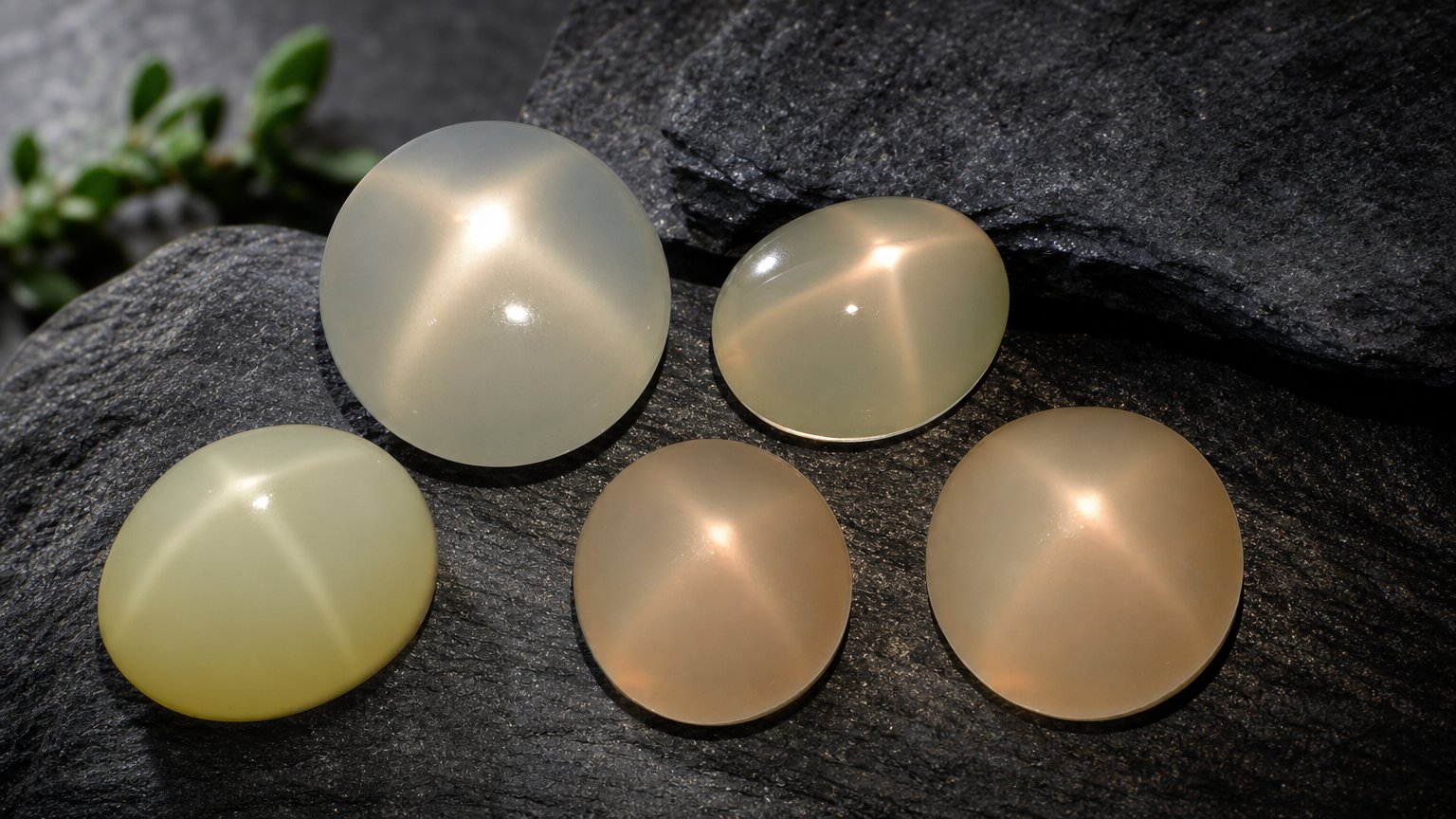
Star Moonstone is a distinctive member of the moonstone family, valued by buyers who enjoy soft body colors combined with a star-like optical effect. It is most often selected as a cabochon gemstone for pendants, rings, necklaces and occasional brooch designs. Because its beauty depends on appearance rather than brilliance, buying Star Moonstone is different from buying a faceted transparent gem. The key is to judge the stone face-up, under good lighting, and to balance color, star visibility, shape, size, surface condition and intended jewelry use.
This guide explains the practical points to consider before purchasing Star Moonstone, including its colors, common cuts, origins, gemological properties, durability and treatment status. Whether you are choosing a single gem for a custom ring or matching stones for a pendant and necklace design, the goal is the same: choose a stone that looks attractive, is suitable for the setting, and is clearly represented by the seller.
What Is Star Moonstone?
Star Moonstone is a variety of moonstone, and moonstone belongs to the feldspar mineral group. Feldspar gems are known for attractive optical effects, and Star Moonstone is bought for the way light interacts with the stone when it is cut and polished correctly. The word star describes a star-like reflection that can appear across the curved surface of the gem.
The verified chemical formula for Star Moonstone is KAlSi₃O₈, and its crystal system is monoclinic. For most jewelry buyers, those details are less important than the way the gemstone looks and wears, but they confirm that Star Moonstone is part of a recognized mineral family with defined gemological properties.
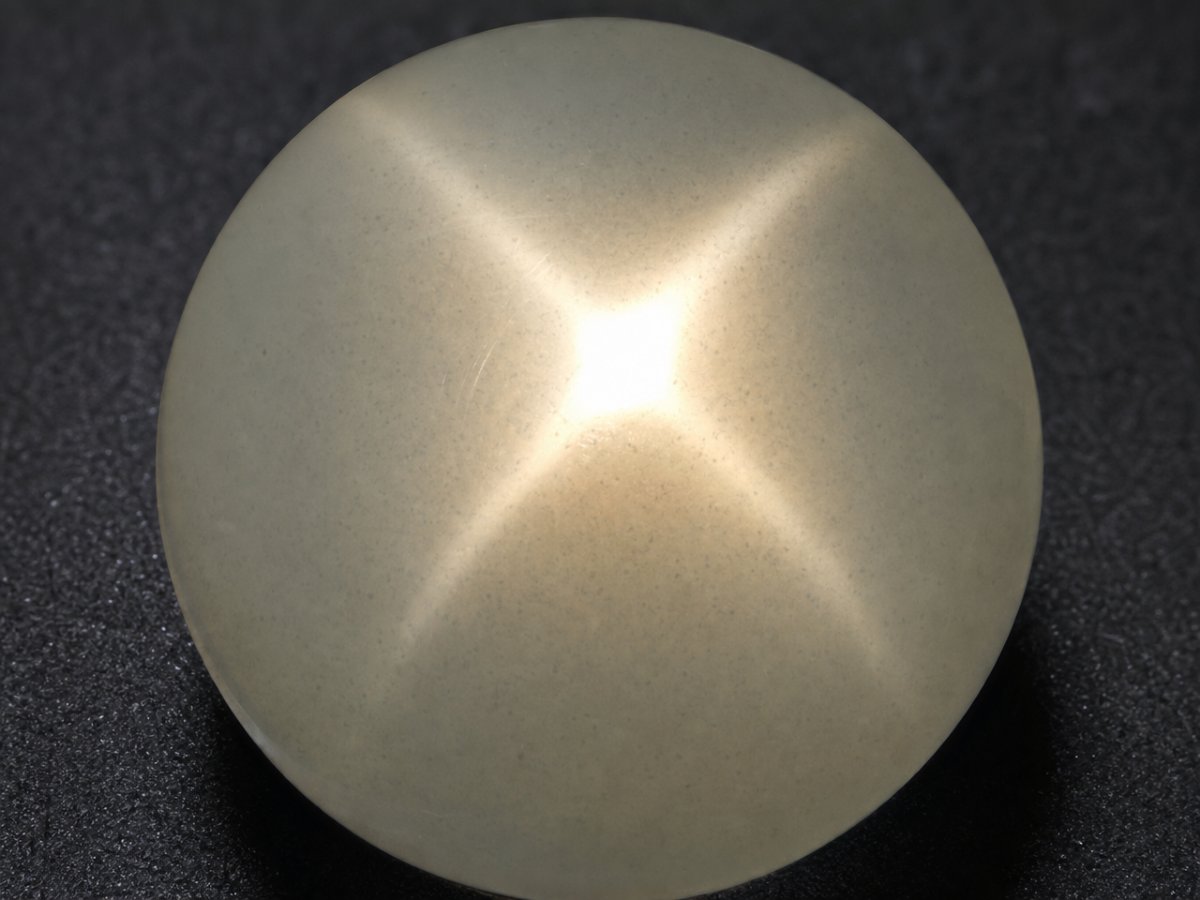
Unlike gems that are primarily judged by sparkle from faceting, Star Moonstone is generally cut as a cabochon. A cabochon has a smooth, domed top rather than flat facets. This dome is important because it helps display the optical effect and gives the stone its soft, glowing appearance.
Color and Appearance: What Buyers Should Look For
Star Moonstone is known in warm and neutral body colors. Brown and orange are especially prominent colors for this gemstone, with yellow also seen. Gray and white examples occur as well, while pink may be encountered less frequently. The body color is the underlying color you see when looking at the gemstone, while the star effect is the light pattern that appears on the surface when the stone is moved under a direct light source.
Choosing Color
Color preference is personal, but it should be judged together with the star effect. A pleasing Star Moonstone usually has a body color that appears even and attractive from the top. Brown and orange stones can have a warm, earthy look that suits yellow gold, rose gold and many artisan designs. Yellow stones can feel bright and cheerful, while gray and white stones often offer a softer, more neutral appearance. Pink stones, when available, may appeal to buyers who want a gentler pastel tone.
When comparing stones, look for color that complements your design. A pendant or large ring can show a stronger body color well, while a necklace with multiple stones may require closer color matching. If you are buying online, compare the stated color, photos and dimensions rather than relying on color name alone, because lighting and screen settings can influence how a gemstone appears.
Evaluating the Star Effect
The star effect is one of the main reasons to buy Star Moonstone. View the stone under a focused light and slowly tilt it. A well-displayed star should be visible from the face-up position and should move naturally across the dome as the light changes. In many buying situations, a centered and distinct star is more desirable than a faint or poorly placed one, but personal taste and overall appearance matter.
Because Star Moonstone is a natural gemstone, expect variation. Some stones may have a bold star, while others show a softer optical effect. A softer star is not necessarily unattractive if the color, shape and polish are appealing, but buyers should understand what they are paying for and choose the appearance they prefer.
Clarity and Surface Features
Star Moonstone is not usually purchased for perfect transparency. Instead, it is judged by overall face-up beauty. Internal features may contribute to its optical appearance, so buyers should not use the same clarity expectations they would apply to a transparent faceted gem. However, surface-reaching cracks, large chips, uneven polish or distracting blemishes can affect durability and appearance.
Before purchasing, inspect the cabochon from the top and side. Check that the dome is smooth, the polish is even, and the base is suitable for setting. If the stone will be used in a ring, pay special attention to the surface condition because rings receive more daily contact than pendants or brooches.
Cut and Shape: Why Cabochons Matter
The most common cut for Star Moonstone is the cabochon. This is not just a style choice; it is the cut that best supports the stone’s optical character. A properly formed cabochon should have a balanced dome, good symmetry and a clean outline. If the dome is too low, the star may not show as effectively. If it is poorly centered or uneven, the gem may be harder to set and may not look balanced in jewelry.
Oval shapes are especially common and practical. An oval cabochon offers a classic look, fits many ring and pendant settings, and gives enough surface area for the star to be appreciated. Round Star Moonstone is also used, particularly for simple rings, earrings or symmetrical pendant designs. Cushion shapes can give a softer, antique-inspired outline, while pear shapes are useful for pendants and drop-style designs.
When choosing shape, consider both appearance and setting availability. Standard ovals and rounds are often easier for jewelers to incorporate into ready-made settings, while cushion and pear shapes may require more custom planning. If you are commissioning jewelry, provide the jeweler with accurate millimeter dimensions rather than relying only on carat weight.
Size and Proportions
Star Moonstone is typically bought by dimensions as much as by weight. Cabochons can vary in dome height, so two stones with the same carat weight may face up differently. A higher dome may weigh more without looking much larger from the top. For jewelry design, the length, width and height of the gemstone are especially important.
For a ring, make sure the cabochon is not so high that it becomes impractical for regular wear. For a pendant, a larger or higher-domed stone may be easier to accommodate and can create a strong focal point. For necklaces using multiple gemstones, matching size, shape, color and star visibility becomes more important than maximizing individual carat weight.
Origins of Star Moonstone
Important origins for Star Moonstone include India and Sri Lanka, with Madagascar also known as a source. Myanmar is another origin associated with this gemstone. Origin can be interesting for collectors and may be noted in gem listings, but buyers should focus first on the individual stone’s visible quality, accurate description and suitability for jewelry.
Do not assume that origin alone determines beauty. Star Moonstone should be evaluated stone by stone. A gem from any recognized source may be more or less attractive depending on its color, star effect, cut, polish and condition. If origin is important to you, look for clear seller disclosure and keep any documentation with your purchase records.
Gemological Properties
Understanding the basic properties of Star Moonstone helps buyers make sensible choices for jewelry and care. The following values are useful for identification and durability considerations.
| Property | Star Moonstone Information |
|---|---|
| Gemstone family | Moonstone, feldspar group |
| Chemical formula | KAlSi₃O₈ |
| Crystal system | Monoclinic |
| Mohs hardness | 6–6.5 |
| Refractive index | 1.518–1.526 |
| Specific gravity | 2.55–2.63 |
The Mohs hardness of 6–6.5 means Star Moonstone is suitable for many types of jewelry, but it is not as hard as sapphire, ruby or diamond. It can be scratched by harder materials and should be worn with reasonable care. Its refractive index and specific gravity are more relevant to gemologists, but they help distinguish it from other materials when identification is needed.
Durability and Care
Star Moonstone can be worn in jewelry, but setting choice matters. Pendants and necklaces are generally safer because they are less exposed to knocks and abrasion. Rings are popular, but they should be designed with protection in mind, especially if the ring will be worn frequently. A bezel setting or other protective design can help shield the edges of the cabochon.
For care, avoid harsh handling. Store Star Moonstone separately from harder gems that could scratch it. Clean it gently with mild soap, lukewarm water and a soft cloth or soft brush. Avoid abrasive cleaners and rough cloths. If the stone is mounted in jewelry, check the setting periodically to make sure the cabochon remains secure.
Buyers choosing Star Moonstone for everyday rings should be realistic. It can be beautiful in a ring, but it is better suited to mindful wear than to heavy daily activity. Remove the ring before gardening, sports, household cleaning or work that may expose the stone to impact.
Treatments and Disclosure
Star Moonstone is commonly associated with untreated material. For buyers, this makes disclosure straightforward but still important. A reliable seller should state the treatment status clearly. If a listing describes a Star Moonstone as untreated, keep that information with your purchase records, especially for higher-value jewelry projects or collector pieces.
At GemSelect, treatment information is an important part of gemstone listings because buyers need to know what they are purchasing. When comparing gems from any seller, review the product details carefully and ask questions if the treatment status is not clear.
Jewelry Uses for Star Moonstone
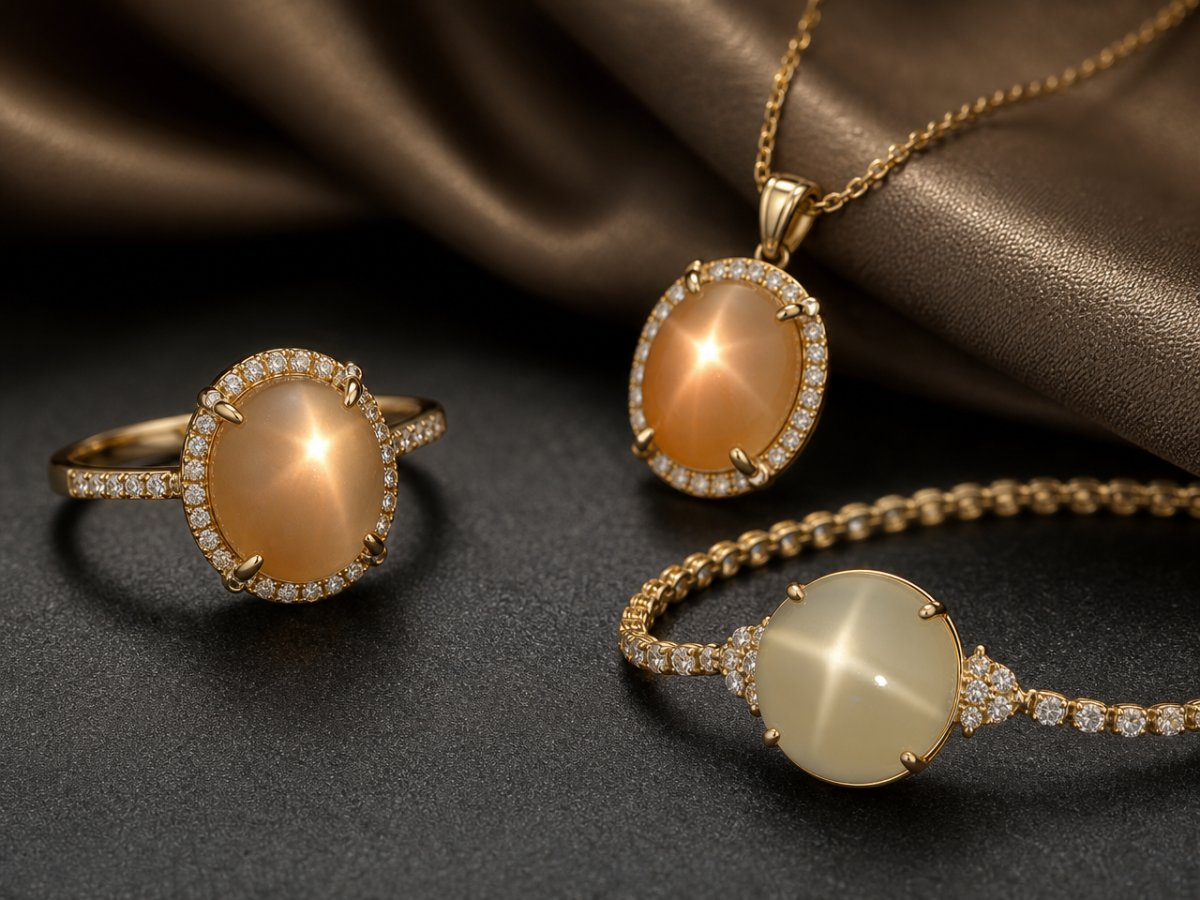
Star Moonstone is well suited to designs that allow the cabochon surface to be seen clearly. Pendants and rings are among the most common choices. A pendant lets the gemstone sit in a protected position while still showing its color and star effect. A ring brings the gem into daily view, but it needs a thoughtful setting to reduce exposure to impact.
Necklaces can use Star Moonstone as a single focal cabochon or as part of a coordinated design. Matching multiple stones requires attention to body color, shape and size, and it may be challenging if a consistent star effect is desired across every gem. Brooches are also possible and can be a good use for larger cabochons because they are decorative and less likely to experience hard wear.
Designers should consider metal color carefully. Warm brown, orange and yellow Star Moonstone can pair well with warm-toned metals, while gray and white stones can work nicely in cooler or more neutral designs. The best choice depends on the specific stone and the intended style.
How to Buy Star Moonstone: Practical Checklist
1. View the Stone Face-Up
Because Star Moonstone is chosen for appearance, judge it from the angle it will be seen in jewelry. Look at the body color, the star effect and the general balance of the cabochon.
2. Check the Star Under Direct Light
A focused light source helps reveal the star. Tilt the stone slowly and see how the star moves. Decide whether you prefer a strong, distinct star or a softer, more subtle effect.
3. Examine the Cabochon Cut
Look for an even dome, smooth polish and good symmetry. Oval and round cabochons are versatile, while cushion and pear shapes can suit more specific designs.
4. Consider the Jewelry Type
For pendants and necklaces, you may prioritize size and visual impact. For rings, prioritize durability, secure setting design and a cabochon height that will not be easily knocked.
5. Confirm Treatment Status
Star Moonstone is commonly untreated, but the listing should say so. Clear treatment disclosure is part of a confident purchase.
6. Compare Dimensions, Not Only Carat Weight
Cabochons vary in dome height, so millimeter measurements are essential. Make sure the length, width and height work for your chosen setting.
7. Buy the Individual Stone, Not Just the Origin
India, Sri Lanka, Madagascar and Myanmar are associated with Star Moonstone, but origin should not replace visual inspection. The best choice is the stone that meets your color, cut, star and design requirements.
Star Moonstone as a June Birthstone Option
Moonstone is associated with June, and Star Moonstone can be a distinctive choice for buyers looking for a June birthstone with an unusual optical effect. Its soft appearance and cabochon style make it different from many traditional faceted birthstone gems. For a birthstone gift, pendants are a practical choice, while rings should be selected with care and set protectively.
Conclusion
Buying Star Moonstone is about understanding how the gemstone performs visually. Focus on the body color, the visibility and placement of the star, the quality of the cabochon cut, and the intended jewelry use. Brown and orange are important colors, with yellow, gray, white and pink also seen. Oval cabochons are especially common, and pendants and rings are popular uses.
With a Mohs hardness of 6–6.5, Star Moonstone is wearable but benefits from thoughtful care and protective settings, especially in rings. India and Sri Lanka are important origins, with Madagascar and Myanmar also associated with the gemstone. Untreated material is common, but treatment disclosure should always be confirmed. By evaluating each stone on its own merits, buyers can choose Star Moonstone with confidence and select a gem that suits both their taste and their jewelry design.
