

Star diopside is bought for its distinctive star-like appearance, usually seen in dark cabochon-cut gems. For buyers, the most important questions are practical ones: Is the star visible and attractive? Is the cabochon well cut? Is the gem suitable for the jewelry design you have in mind? This guide explains the key factors to check before choosing a star diopside gemstone.
What Is Star Diopside?
Star diopside is a variety of diopside, a calcium magnesium silicate with the chemical formula CaMgSi₂O₆. It belongs to the monoclinic crystal system and is known in the gem trade for cabochon gems that show a star effect when viewed under direct light.
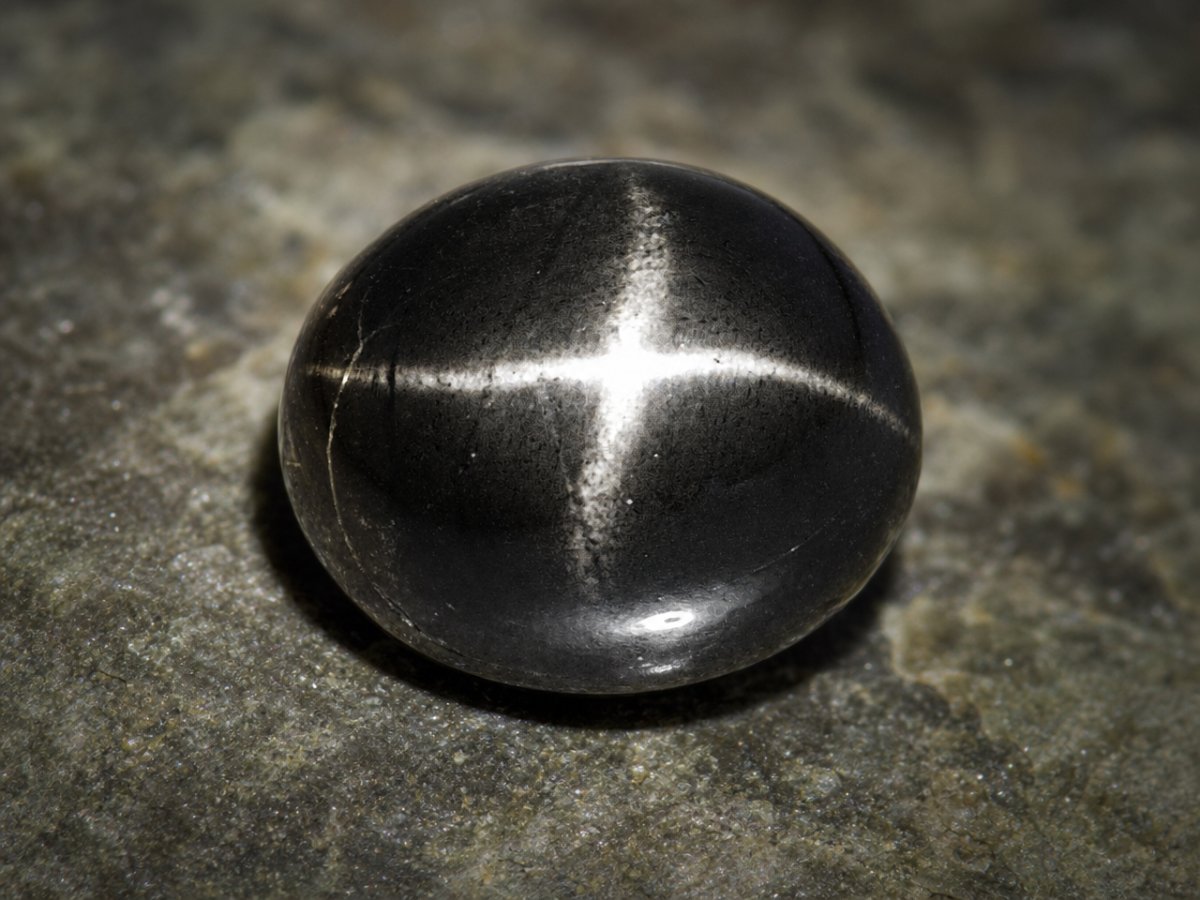
Unlike faceted gems, star diopside is normally cut with a smooth domed top. This cabochon cut is essential because it presents the optical effect across the surface of the stone. When buying, judge the gem face-up under a single strong light source, then rotate it to see how the star responds.
Color and Appearance
Black is the most typical and important color for star diopside. Gray stones are also seen, and some material may show green tones. Because the star effect is the main visual feature, buyers should consider both body color and the visibility of the star together.
A good-looking star diopside should have a pleasing contrast between the star and the body color. On very dark stones, the star should still be easy to see. On gray or greenish stones, check that the overall appearance remains attractive and not dull or uneven.
What to Look for in the Star
- Visibility: The star should be apparent under direct light, not only in one very specific position.
- Centering: A centered star is generally more visually balanced, especially for rings and pendants.
- Movement: As the stone is moved, the star should appear to move across the dome rather than look flat or lifeless.
- Surface quality: Scratches, chips or an uneven dome can distract from the effect.
Cut, Shape and Proportions
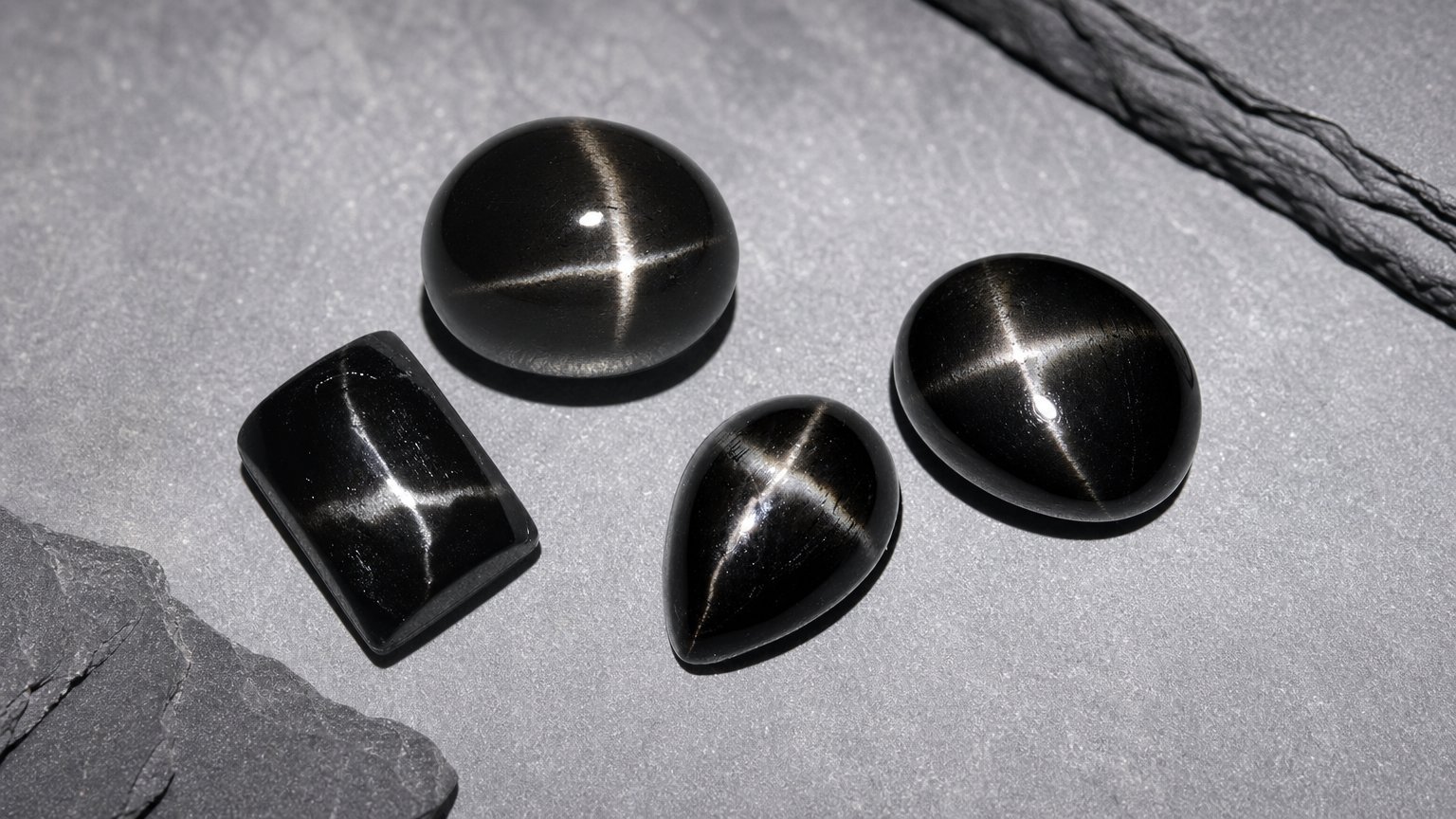
Star diopside is most commonly cut as a cabochon. Oval and round shapes are especially common because they work well with the domed surface and are easy to use in jewelry settings. Pear shapes are also seen, while cushion and baguette outlines may be available in some selections.
For buying purposes, the quality of the cabochon is more important than the outline alone. Look for a smooth, even dome, good symmetry and a polished surface. A dome that is too flat may not display the star well, while an overly high dome may be harder to set or less comfortable in some jewelry designs.
Durability and Everyday Wear
Star diopside has a Mohs hardness of 5.5 to 6.5. This gives it moderate durability, but it is not as hard as many traditional everyday ring stones. It can be used in rings, but the design should protect the gem from hard knocks and abrasion.
Pendants, earrings, brooches and necklaces are often practical choices because they are less exposed to impact than rings or bracelets. Bracelets can be attractive, but they require more care because wrist jewelry is more likely to hit hard surfaces.
For rings, consider protective settings and avoid wearing star diopside during heavy work, sports or activities where the stone may be scratched or struck. Clean with mild soap, lukewarm water and a soft cloth or brush, then dry carefully.
Treatments and Buying Confidence
Star diopside is commonly offered untreated. This is useful for buyers who prefer gems without enhancement, but treatment disclosure should still be checked when purchasing. A reliable seller should provide clear information about whether the stone is untreated and should show the gem accurately in photos or video when possible.
When comparing stones, do not rely on color alone. A slightly different shade may be less important than a stronger star, better polish or a shape that fits your jewelry design. If you are buying for a matched pair, such as earrings, check that the size, outline, color and star visibility are reasonably consistent between the two stones.
Origins
Important sources for star diopside include India, Madagascar, Sri Lanka, Myanmar and Russia. Origin can be interesting to collectors, but for most jewelry buyers, appearance, cut quality, durability and treatment disclosure are more important than country of origin alone.
If origin matters to you, choose a stone from a seller that clearly states the available origin information. Avoid assuming that one origin is automatically better than another unless the individual gemstone's appearance and quality support the decision.
Gemological Properties
| Gem species | Calcium magnesium silicate |
|---|---|
| Chemical formula | CaMgSi₂O₆ |
| Crystal system | Monoclinic |
| Mohs hardness | 5.5-6.5 |
| Refractive index | 1.664-1.730 |
| Specific gravity | 3.22-3.38 |
Best Jewelry Uses
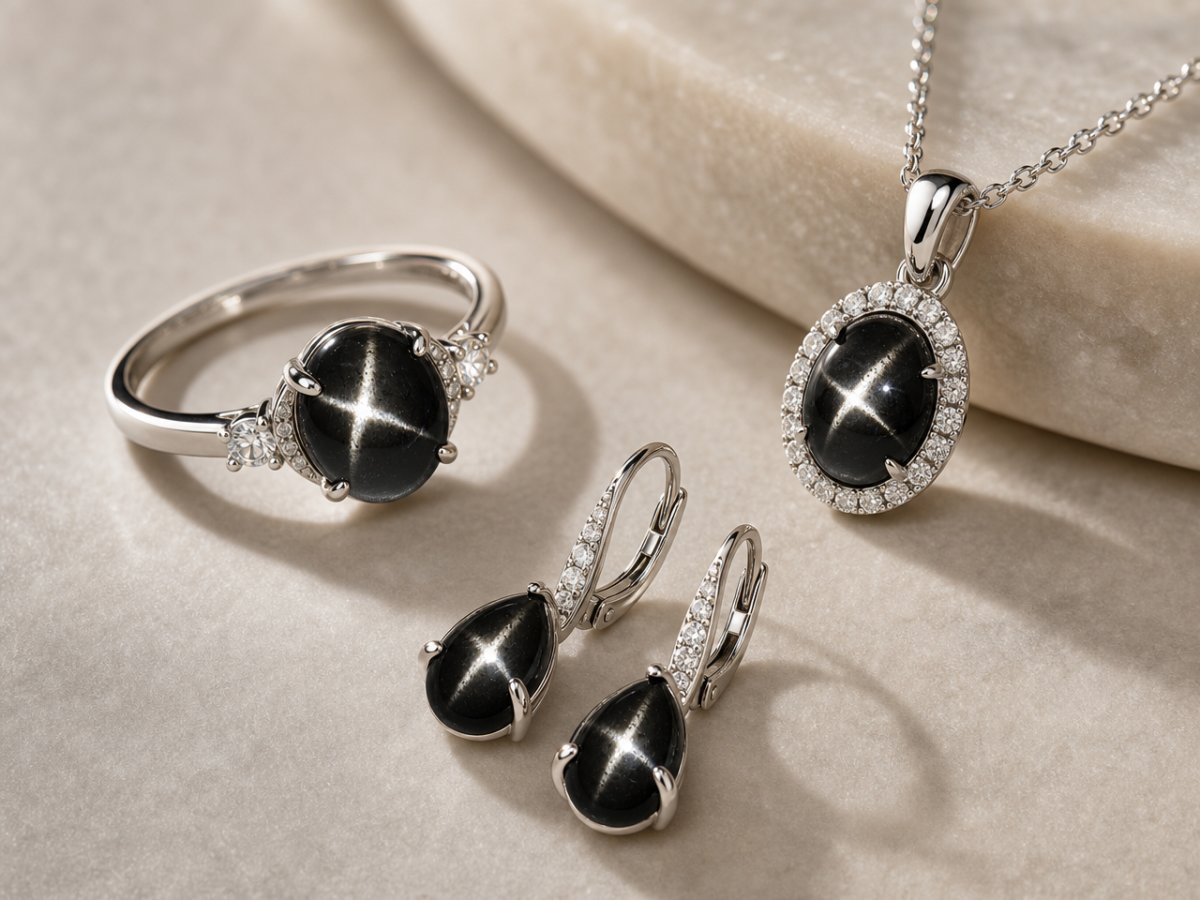
Star diopside can be used in several jewelry styles. Rings are popular because the star effect is easy to admire on the hand, but they should be worn with care. Pendants, earrings and brooches are especially practical because they allow the cabochon to be displayed while reducing the risk of impact.
For necklaces and bracelets, consider how exposed the stone will be. A pendant-style necklace is generally safer than a bracelet, while a bracelet should use secure, protective settings and be reserved for mindful wear.
Star Diopside Buying Checklist
- Choose a cabochon with a clearly visible star under direct light.
- Look for a smooth, well-polished dome with good symmetry.
- Prioritize black stones if you want the classic star diopside appearance, while also considering gray or green tones if they appeal to you.
- Match the shape to your design; oval and round cabochons are especially versatile.
- For rings and bracelets, choose protective settings and plan for careful wear.
- Check treatment disclosure; star diopside is commonly untreated.
- Use origin as supporting information, not as the only reason to buy.
Summary
The best star diopside for you is the stone that combines a clear star, attractive body color, a well-cut cabochon and a suitable size and shape for your jewelry design. Black oval and round cabochons are classic choices, while gray or green-toned stones can offer a different look. Because star diopside has moderate hardness, jewelry style and setting protection are important buying considerations. GemSelect customers can compare individual stones by appearance, dimensions and disclosed treatment information to choose with confidence.