


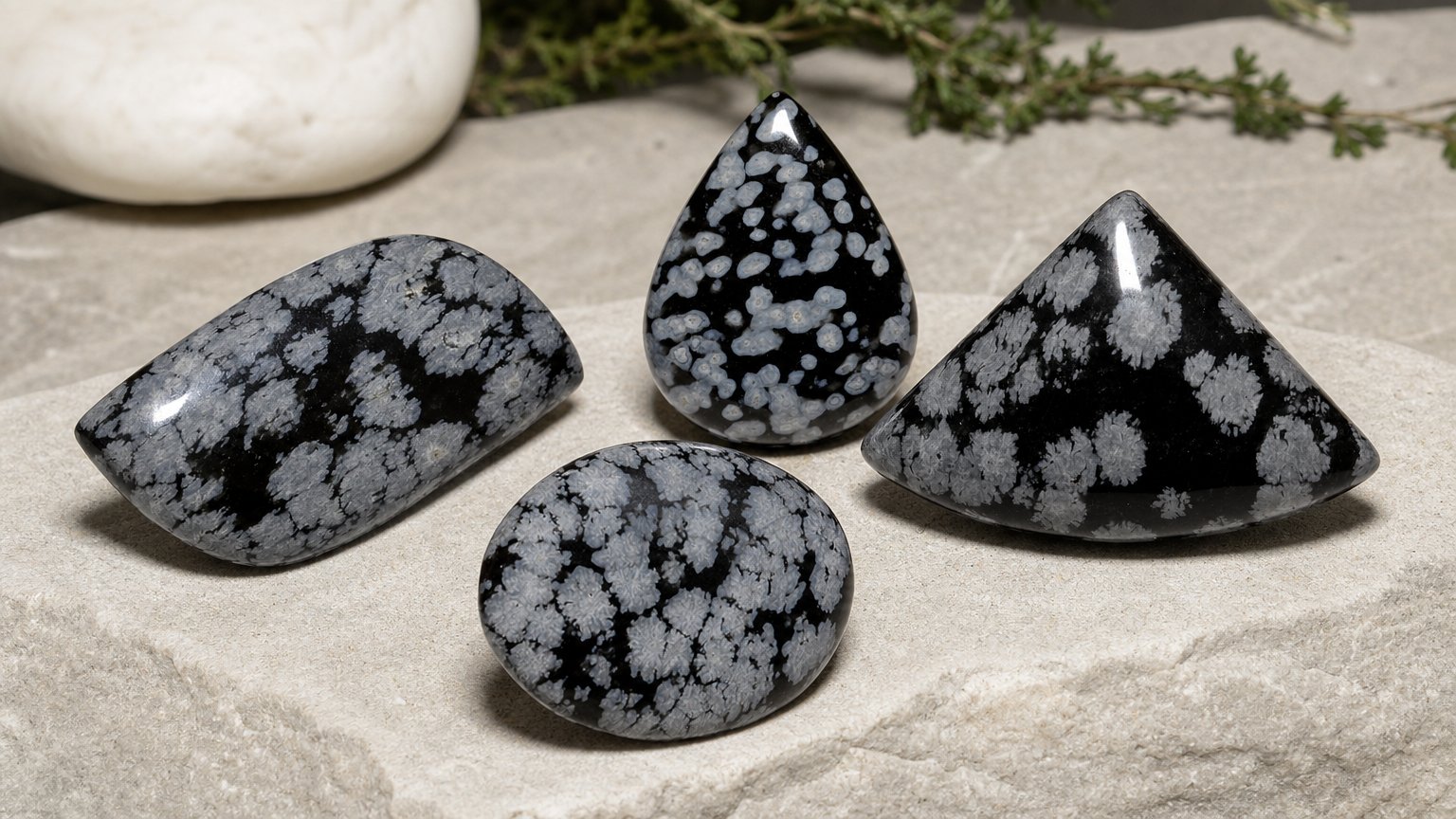
Snowflake Obsidian is chosen for its bold black appearance and distinctive natural patterning. It is a practical choice for buyers who want a dark gemstone with character, especially in cabochons, pendants, rings, earrings, necklaces and artisan jewelry designs.
This buying guide focuses on the factors that matter most when selecting Snowflake Obsidian: appearance, cutting quality, durability, treatment status, origin information and suitability for different jewelry styles.
What Is Snowflake Obsidian?
Snowflake Obsidian is an amorphous gem material, meaning it does not have a crystal structure in the way crystalline gemstones do. Its listed chemical composition is SiO2 + MgO, Fe3O4. For buyers, the most important point is that Snowflake Obsidian is usually selected for its visual pattern and polished surface rather than for brilliance or sparkle.
Unlike transparent faceted gemstones, Snowflake Obsidian is most often cut to display its body color and pattern. This is why cabochons are especially common, with carving cuts and slice cuts also used for decorative and artisan designs.
Color and Appearance: What to Look For
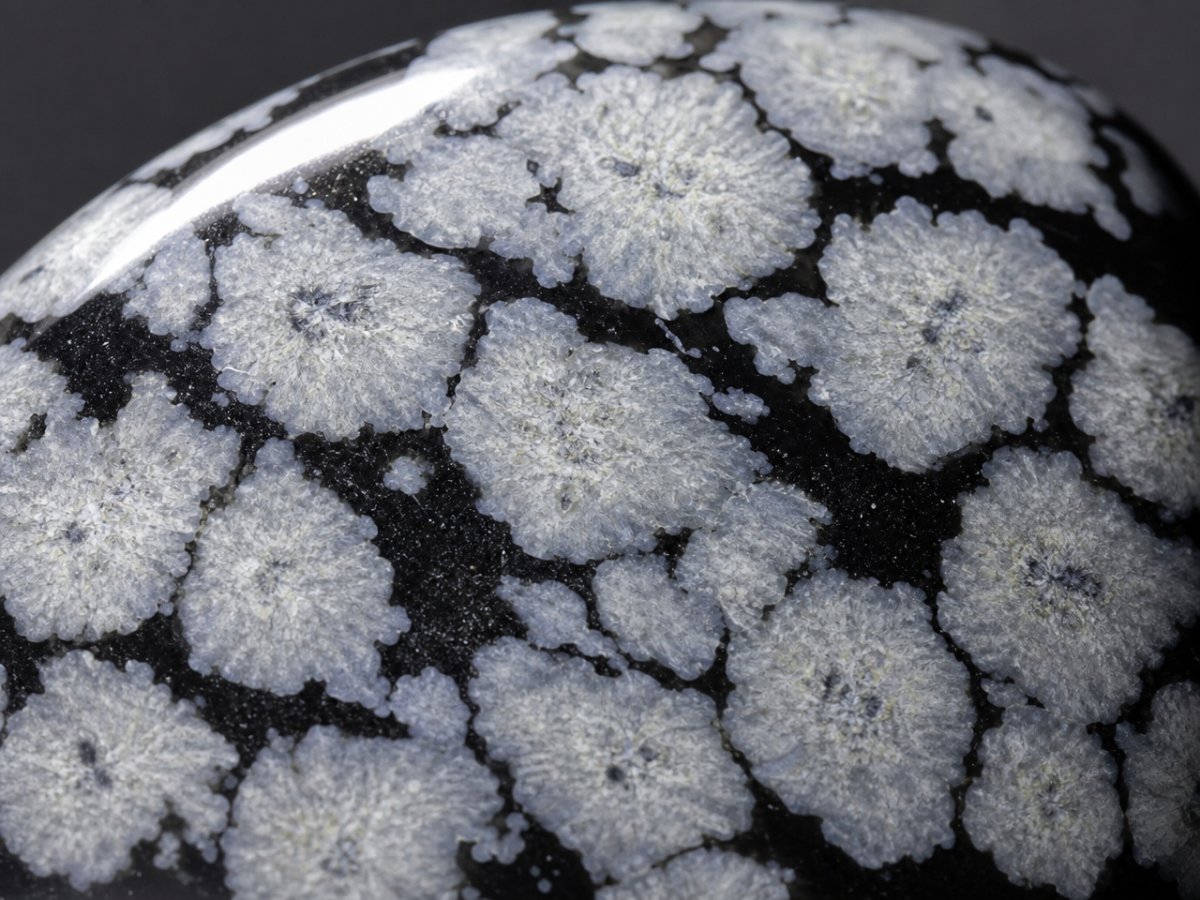
The known base color of Snowflake Obsidian is black. When comparing stones, look at the overall balance of the black body color and the patterning that gives this gem its name. There is no universal grading scale for Snowflake Obsidian, so personal preference plays a large role.
For jewelry, choose a stone with a pattern that suits the design. A pendant or brooch can showcase a larger, more dramatic layout, while earrings often look better when the pair has a reasonably harmonious appearance. For rings, consider how the pattern will look at a smaller viewing distance and whether the setting protects the stone.
Surface Quality and Polish
Because Snowflake Obsidian is commonly sold as cabochons, surface condition is very important. A well-finished stone should have a smooth polish, pleasing outline and no obvious surface damage that distracts from the design. Minor natural variation in appearance is expected, but chips, scratches or uneven polishing can affect both beauty and wearability.
Best Cuts and Shapes for Snowflake Obsidian
Cabochon is the most common and practical cut for Snowflake Obsidian. The smooth domed surface emphasizes the stone's black color and natural pattern without relying on faceted light return. Oval cabochons are especially common and work well in rings, pendants and necklace designs.
Other useful shapes include baguette, cushion and pear. Round, trillion and fancy shapes may also be available, often for more distinctive or custom-style jewelry. Carvings and slices are good options for buyers who want a more artistic or organic appearance.
Durability and Everyday Wear
Snowflake Obsidian has a Mohs hardness of 5 to 5.5. This means it is softer than many popular jewelry gemstones and should be worn with some care, especially in rings. It can be scratched by harder materials, so it is best stored separately from harder gemstones and metals that may rub against its surface.
Pendants, necklaces, earrings and brooches are generally safer choices because they receive less impact and abrasion than rings. Snowflake Obsidian can still be used in rings, but buyers should consider protective settings and avoid wearing the ring during activities where it may be knocked, scraped or exposed to rough handling.
Treatments and Buying Confidence
Snowflake Obsidian is commonly untreated. When buying, look for clear treatment disclosure from the seller. If the stone is described as untreated, that should mean its appearance has not been enhanced by a treatment process.
At GemSelect, treatment information is provided where relevant so buyers can compare gemstones with greater confidence. For Snowflake Obsidian, the main buying decision is usually not treatment complexity, but whether the individual stone has the right appearance, cut, size and condition for the intended jewelry piece.
Origin Information
Important sources for Snowflake Obsidian include Mexico and the United States, with material also associated with Indonesia and India. Origin can be useful for collectors or for buyers who prefer documented provenance, but it should not replace direct evaluation of the stone's appearance and cutting quality.
When shopping, treat origin as one part of the description. For most jewelry buyers, the more practical questions are: Does the stone look attractive? Is the polish good? Is the shape suitable for the setting? Is the size appropriate for the design?
Gemological Properties at a Glance
| Property | Snowflake Obsidian |
|---|---|
| Chemical formula | SiO2 + MgO, Fe3O4 |
| Crystal system | Amorphous |
| Mohs hardness | 5-5.5 |
| Refractive index | 1.45-1.55 |
| Specific gravity | 2.35-2.65 |
These properties are useful for identification and care. From a buyer's perspective, the hardness rating is the most practical number because it affects how the stone should be worn, cleaned and stored.
Jewelry Uses: Choosing the Right Stone for the Design
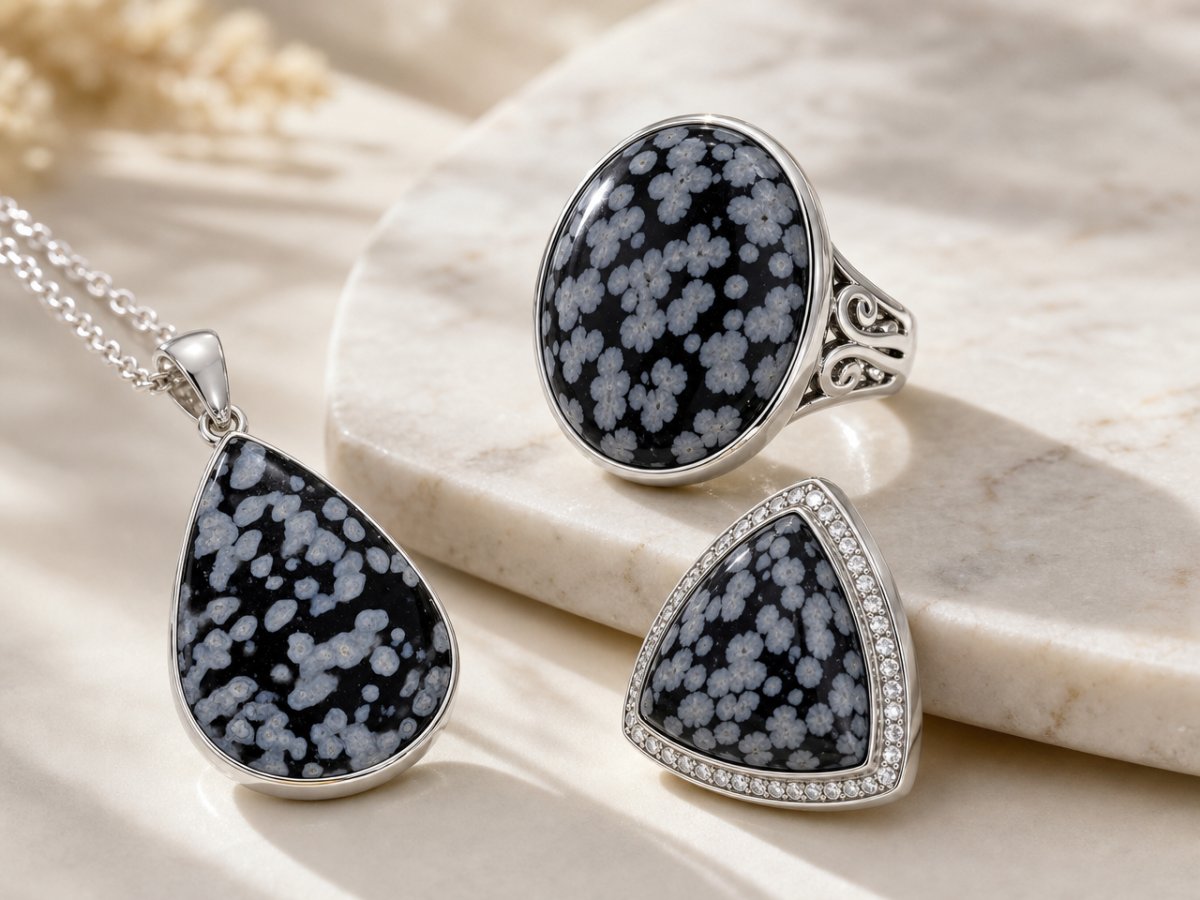
Snowflake Obsidian is well suited to pendants and necklaces because these designs allow the gemstone's pattern to be viewed clearly while reducing exposure to hard knocks. Larger cabochons or slices can be especially effective in pendant designs.
Rings are also popular, but they require more care because hands are exposed to impact and abrasion. A bezel or other protective setting can help guard the edges of the stone. Earrings are a good option for smaller matched stones, while brooches and artisan jewelry can make use of unusual shapes, carvings or slices.
Practical Buying Checklist
- Choose by appearance first: Look for a black body color and a pattern arrangement you genuinely like.
- Inspect the polish: Smooth cabochons should not show distracting scratches, pits or uneven finishing.
- Match the cut to the jewelry: Ovals and cushions are versatile; slices and carvings suit more artistic pieces.
- Consider durability: For rings, choose protective settings and wear with care.
- Check treatment disclosure: Snowflake Obsidian is commonly untreated, but clear seller information is still important.
- Use origin as supporting information: Mexico and the United States are important sources, but beauty and condition should guide most purchases.
Conclusion
The best Snowflake Obsidian for you is the stone whose black color, natural pattern, cut and size fit your jewelry design or collection goal. Cabochons are the safest and most traditional choice, while carvings and slices offer more individuality. Because Snowflake Obsidian has a Mohs hardness of 5 to 5.5, it is best worn thoughtfully and protected from scratches and hard impacts.
For confident buying, focus on visual appeal, polish quality, treatment disclosure and intended use. A carefully chosen Snowflake Obsidian gemstone can be an attractive and distinctive option for pendants, rings, earrings, necklaces, brooches and artisan jewelry.
